



Key Takeaways
APSO stands for Assessment, Plan, Subjective, Objective – a clinical note format that reorders traditional SOAP sections to prioritize clinician decision-making.
The APSO format surfaces clinical conclusions first, helping busy clinicians quickly identify the diagnosis and treatment plan before reviewing supporting patient history.
APSO notes improve EHR readability and provider efficiency, especially in fast-paced clinical settings where time per patient is limited.
Pabau’s digital forms and customizable clinical note templates support APSO documentation workflows across physiotherapy, mental health, and primary care practices.
Download your free APSO note
A structured clinical documentation template covering Assessment, Plan, Subjective, and Objective sections with field prompts and clinical guidance for systematic patient record-keeping.
Download templateHealthcare professionals spend significant time documenting patient encounters after appointments end. Many practices still rely on the traditional SOAP format (Subjective, Objective, Assessment, Plan), which buries the clinician’s conclusions halfway through the note and forces readers to hunt for diagnostic reasoning.
The APSO note format flips this structure entirely. By placing Assessment and Plan first, clinicians can immediately see what the provider concluded and what treatment will follow, before wading through patient history and physical exam findings.
This simple reordering has driven adoption across mental health practices, physiotherapy practices, primary care offices, and integrated health systems.
This guide explains exactly how to use an APSO note in clinical practice, provides worked examples across specialties, and includes a free downloadable template you can start using immediately.
What is an APSO note?
An APSO note is a clinical documentation format used by healthcare providers to record patient assessments in a structured, standardized way. APSO stands for Assessment, Plan, Subjective, Objective – the four core components of a patient encounter record.
Unlike the traditional SOAP format (which lists Subjective, Objective, Assessment, Plan in that order), the APSO note format places the clinician’s assessment and treatment plan first.
This reordering reflects how modern electronic health record (EHR) systems display information, where readers typically want to know what the provider concluded and what happens next before reviewing supporting clinical data.
According to StatPearls, clinical documentation serves multiple purposes: supporting continuity of care between providers, creating a legal record of the clinical encounter, enabling clinical research, and meeting regulatory compliance requirements under HIPAA, CMS, and The Joint Commission standards.
- Assessment: The clinician’s diagnosis, clinical impression, and differential diagnoses based on the subjective and objective data
- Plan: The treatment strategy, medications prescribed, referrals, follow-up appointments, and any procedures or interventions ordered
- Subjective: The patient’s reported symptoms, medical history, chief complaint, and history of present illness in the patient’s own words
- Objective: Measurable clinical findings, including vital signs, physical examination results, laboratory results, and imaging findings
The APSO format was developed to improve readability in busy clinical environments where providers need to quickly identify the clinical decision and next steps without scrolling through extensive supporting data, particularly in settings where appointment schedules are dense and clinicians move rapidly between patients.
APSO note format: Breaking down each section
To write an effective APSO note, you need to understand what belongs in each section and how the information flows. The APSO format forces clinicians to lead with clinical reasoning – placing the diagnostic conclusion and treatment plan in positions of prominence, where they’re impossible to miss.
Assessment (A)
The Assessment section contains your clinical impression and diagnostic reasoning. This is where you synthesize the subjective and objective data and reach conclusions. In an APSO note, this section appears FIRST – before the patient’s history or your examination findings.
- Primary diagnosis or clinical impression (what condition does the patient have?)
- Differential diagnoses (what else could this be, and why did you rule it out?)
- Clinical reasoning (how did you connect the subjective and objective data to reach this conclusion?)
- Severity or stage if applicable (acute vs. chronic, mild vs. severe)
- Any relevant clinical guidelines or evidence supporting your assessment
Plan (P)
The Plan section outlines your treatment strategy and next steps. This appears second in the APSO format, immediately after the Assessment. The reader now knows your diagnosis and can immediately see what you plan to do about it.
- Medications prescribed (with dosage, frequency, duration)
- Non-pharmacological interventions (physical therapy, lifestyle modifications, behavioral strategies)
- Referrals to specialists or allied health professionals
- Follow-up schedule (when the patient returns for re-assessment)
- Imaging or laboratory tests ordered
- Patient education provided (what did you teach the patient about their condition?)
Subjective (S)
The Subjective section captures the patient’s reported experience, medical history, and the reason for the visit. In APSO format, this appears third, after the Assessment and Plan.
- Chief complaint (why is the patient here today?)
- History of present illness (timeline and progression of symptoms)
- Past medical history (relevant previous conditions or treatments)
- Medications currently taking (prescription and over-the-counter)
- Allergies (medications, foods, environmental)
- Social history (occupation, living situation, substance use where clinically relevant)
- Family history (conditions running in the family that might affect current care)
Objective (O)
The Objective section documents measurable, observable clinical findings. This is the supporting data: what you saw, heard, felt, and measured. The physical examination entry starts with general appearance findings, the observation-based picture of the patient recorded before any hands-on exam.
- Vital signs (temperature, blood pressure, heart rate, respiratory rate, oxygen saturation)
- Physical examination findings (what you observed and palpated during the exam)
- Laboratory results (blood work, urinalysis)
- Imaging findings (X-ray, ultrasound, MRI results)
- Diagnostic test results (ECG, spirometry, skin tests)
- Measurements and assessments (range of motion, muscle strength, pain scales)
APSO vs SOAP: Key differences
The fundamental difference between an APSO note and a traditional SOAP note is the order of sections. SOAP notes list Subjective, Objective, Assessment, and Plan in that sequence – meaning readers must work through all the patient history and clinical data before reaching the diagnosis and treatment plan. APSO reverses this to prioritize clinical decision-making.
Many clinicians trained under the traditional SOAP model find APSO notes feel unfamiliar at first. However, a JAMA Internal Medicine study found that clinicians reported higher satisfaction with APSO notes and found information easier to locate, even though the study found no statistically significant difference in the time spent reviewing notes.
Teams using software to manage patient records can pull up prior scores before every reassessment.
APSO note examples by specialty
The APSO format works across healthcare specialties.
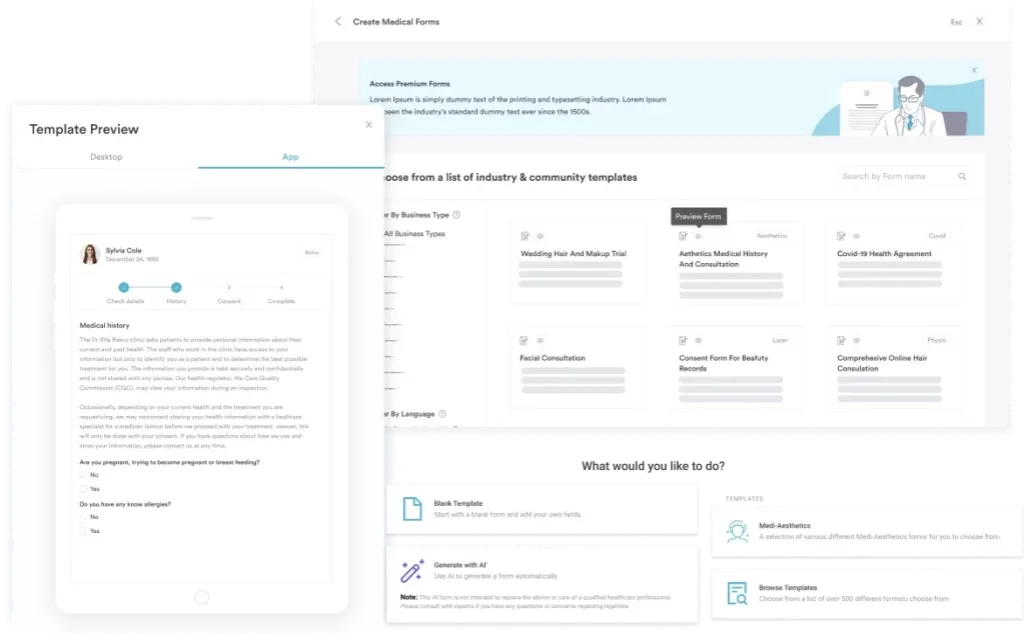
Here are worked examples showing how to structure an APSO note in three common clinical settings. When adapting these examples, use Pabau’s digital forms feature to capture patient information systematically before the appointment, which populates the Subjective section automatically.
APSO note example: Physiotherapy
Assessment: Right knee pain, likely patellofemoral pain syndrome. Pain reproducible on squat test and patellar compression. No effusion or instability noted. Consistent with exercise-induced overuse injury. Patient is a recreational runner, age 34, training for a half marathon.
Plan: Refer to sports medicine physiotherapy, 2x per week for 6 weeks. Recommend activity modification: reduce running distance by 25%, add cross-training (cycling, swimming). Prescribe ice 15 minutes post-activity. Provide quadriceps and hip strengthening exercise sheet. Follow-up in 4 weeks to reassess pain and function. Consider imaging if symptoms worsen.
Subjective: Patient reports sharp right knee pain during running, onset 3 weeks ago. Pain 7/10 during runs, 2/10 at rest. Pain worsens with hill running and downhill walking. No recent trauma. Denies giving way or locking. Plays recreational football 1x weekly, currently training for half marathon 8 weeks away. No previous knee injuries. Takes no regular medications. No allergies.
Objective: Vital signs normal. Right knee exam: mild swelling medial knee, pain on palpation over vastus medialis, negative Lachman test, negative McMurray test.
APSO note example: Mental health
Assessment: Major depressive disorder, moderate severity. Patient meets DSM-5 criteria: depressed mood most days × 6 weeks, anhedonia, sleep disturbance, fatigue, difficulty concentrating, guilt, hopelessness. Denies suicidal ideation or self-harm. No active substance use. Good support system with partner and family. Previous episode 5 years ago, treated with sertraline with good response.
Plan: Initiate sertraline 50 mg daily. Refer to cognitive behavioral therapy, weekly appointments, 12-week course. Provide psychoeducation sheet on depression. Safety planning: patient to contact crisis line if suicidal thoughts emerge. Follow-up appointment in 2 weeks to monitor tolerability. Encourage exercise and sleep hygiene. Consider occupational health referral if work-related factors contributing.
Subjective: Patient presents with 6-week history of persistent low mood, loss of interest in hobbies, poor sleep, fatigue, difficulty concentrating at work. Recent workplace stress after restructuring. Feels hopeless and guilty. Denies suicidal thoughts. Takes no current medications. No known drug allergies. Previous depression episode 5 years ago treated successfully with medication. Lives with supportive partner. Works in IT sector.
Objective: Appearance: grooming adequate, eye contact fair. Mood: depressed affect, slow speech. Thought process: goal-directed but slowed. No hallucinations or delusions. PHQ-9 score 18 (moderate). Vital signs normal. Cognition: oriented × 3, able to do serial 7s. No active substance use noted.
APSO note example: Nursing (primary care)
Assessment: Type 2 diabetes, well controlled on current regimen. HbA1c 6.8%, in target range. No evidence of diabetic complications at 18-month review. Blood pressure 128/76, acceptable control. Continue current management. Patient engaged in self-care, good medication adherence.
Plan: Continue metformin 1000 mg BD and linagliptin 5 mg daily. Repeat HbA1c in 6 months. Refer to optometrist for annual diabetic retinopathy screening. Order annual foot screening and urine microalbumin test. Reinforce diet advice and exercise routine (walking 30 mins daily). Provide updated diabetes self-management education leaflet. Follow-up appointment in 3 months or sooner if any concerns.
Subjective: 56-year-old patient, type 2 diabetes diagnosed 8 years ago. Reports good adherence to medications. No hypoglycaemic episodes. Good diet control, reports eating mostly home-cooked meals. Walks daily 30 minutes. No symptoms of polyuria or polydipsia. Tolerating current medications well. Denies vision changes, numbness in feet, or chest pain. No recent infections. Lives independently.
Objective: Weight 88 kg (stable), height 172 cm, BMI 29.7. BP 128/76 mmHg. HR 72 bpm. Fasting glucose 6.2 mmol/L. HbA1c 6.8%. Urine dipstick negative for protein. Foot examination: no ulcers, normal sensation monofilament test, pedal pulses palpable bilaterally. Visual acuity adequate. No signs of infection.
Why clinicians prefer APSO notes
The APSO format has gained traction across healthcare settings for several concrete reasons. A multi-site implementation study found APSO adoption reached 94% of outpatient notes and 79% of inpatient notes.
Around 80% of clinicians reported satisfaction with the format as both authors and readers. Reduced chart-review time was the rationale offered for the switch, rather than a measured outcome of the rollout.
- Clinical decision visibility: Placing Assessment and Plan first means the reader knows the diagnosis and treatment plan before reviewing supporting data – critical in high-volume settings where minutes matter.
- EHR alignment: APSO format matches how modern electronic health records display information on screen, reducing the need for readers to scroll or hunt through notes.
- Handoff clarity: When nurses, allied health professionals, or on-call providers read an APSO note, they immediately understand what the primary clinician concluded and what treatment is underway.
- Legal defensibility: Clear documentation of clinical reasoning (the Assessment section) provides stronger legal protection in disputed cases, as it shows the clinician’s thought process explicitly.
- Training integration: AI scribes such as Pabau Scribe, can capture dictated encounters and structure them into standardized clinical note formats.
Common challenges when adopting APSO notes
While APSO notes offer significant benefits, adoption is not universally smooth. Clinicians trained exclusively under the SOAP model sometimes find the reordered format disorienting, and some healthcare systems maintain SOAP documentation standards for regulatory or historical reasons.
- Medical education inertia: Most medical and nursing schools teach SOAP format as the standard. New graduates must unlearn SOAP sequencing if transitioning to APSO, adding cognitive load during the transition.
- EHR configuration: Not all electronic health record systems natively support APSO ordering. Some systems enforce SOAP structure in templates, requiring clinicians to manually reorder sections or use workarounds.
- Regulatory ambiguity: CMS documentation guidelines and The Joint Commission standards do not specify SOAP vs. APSO – they require Assessment/Plan and Subjective/Objective elements but not a particular order. Some facilities interpret this conservatively and maintain SOAP to avoid audit risk.
- Interprofessional consistency: When different disciplines on a care team use different documentation formats, continuity of care suffers. Unified adoption across all providers is needed for maximum benefit.
How Pabau supports APSO note documentation
Instead of relying on generic EHR defaults, practices can define their own Assessment, Plan, Subjective, and Objective section prompts, tailored to their specialty (physiotherapy, mental health, nursing, medical aesthetics).
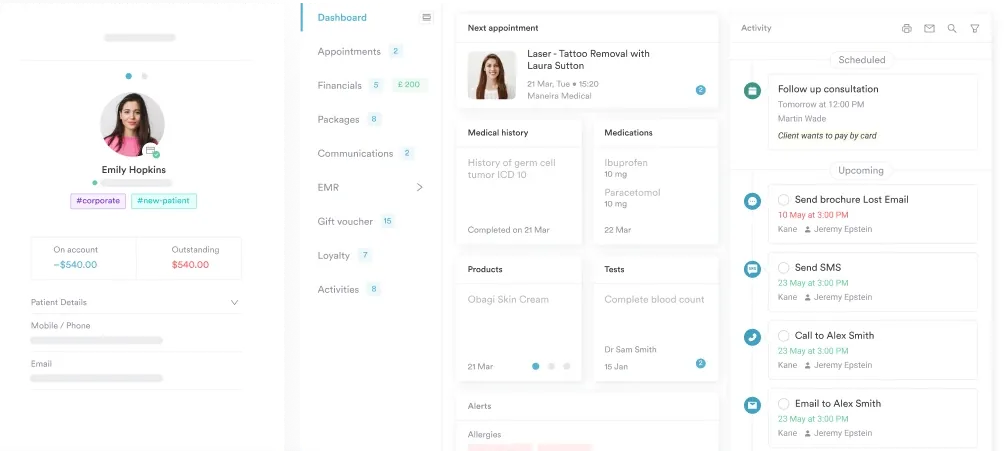
This means clinicians can document in the APSO sequence from day one, without fighting against EHR configuration or workarounds. Mental health practices and physiotherapy practices can codify their APSO workflow directly into patient records, ensuring every clinician on the team documents consistently.
Additionally, Pabau’s digital intake forms pre-populate the Subjective section (patient history, chief complaint, past medical history) before the appointment even begins, so clinicians only need to add their clinical findings and reasoning to complete the note.
Who should use APSO notes
APSO notes work best in practices where time efficiency and clinical readability drive workflow decisions. The format is particularly valuable in:
- High-volume ambulatory settings: Physiotherapy practices, primary care practices, and mental health practices where clinicians see many patients per day and need to review colleague notes quickly.
- Interprofessional teams: Practices where nurses, therapists, and physicians work together and need to quickly understand each other’s clinical decisions and plans.
- Mental health and behavioral health: Psychiatric nursing, psychology, counseling, and psychiatry practices where documented clinical reasoning is particularly important for legal and therapeutic reasons.
- Practices transitioning to modern EHRs: Organizations moving from paper records or legacy systems to cloud-based platforms often redesign workflows around APSO format when they adopt clinical documentation software built for structured notes.
- Teaching practices and residency programs: Some residencies now emphasize APSO format as it reflects modern clinical decision-making and is becoming standard in newer EHR systems.
Pro Tip
Rolling out APSO note documentation across a practice takes time. Start with a pilot group of clinicians, gather feedback on template design, and refine the workflow before requiring the full team to switch over. Use the pilot to capture the data fields every provider needs in the Assessment, Plan, Subjective, and Objective sections, so the eventual rollout runs on a template that already works.
Benefits of APSO note documentation
Beyond workflow efficiency, APSO notes provide concrete clinical and operational benefits. Documentation that leads with clinical reasoning creates safer handoffs between providers, clearer communication with patients, and stronger legal records.
- Reduced clinical errors: When the assessment is visible first, other clinicians can verify the diagnosis and identify potential misdiagnoses before implementing the plan.
- Faster care coordination: Referral recipients immediately see the primary clinician’s diagnostic reasoning and planned interventions, enabling better-informed care transitions.
- Improved compliance documentation: Clear separation of Assessment and Plan sections makes it easier to audit compliance with clinical guidelines and justify clinical decisions to regulators.
- Enhanced patient communication: Clinicians can show patients a completed APSO note, making the reasoning and treatment plan transparent – boosting patient engagement and adherence.
Getting started with APSO note templates
To implement APSO notes in your practice, start by downloading the free template above. Use it to standardize your documentation format and train your team on the APSO sequence, so every note your team creates follows the format automatically, with minimal additional effort.
Clinicians trained on SOAP carry extra cognitive load during the switch, so plan how you deliver that session. A VAK learning styles questionnaire records whether a team member prefers a written protocol, a spoken walkthrough, or a hands-on demonstration.
Related templates
- Alberta Infant Motor Scale Template
- ARFID test
- Arm curl test
- ASIA Impairment Scale

Streamline your clinical documentation
Practice management software like Pabau supports customizable clinical note templates built around the APSO format out of the box. Set up APSO notes for your team in minutes, not weeks.

Conclusion
The APSO note format represents a pragmatic evolution in clinical documentation. By placing clinical decisions first, APSO notes reflect how clinicians think and how busy care teams need to consume information.
Whether you work in physiotherapy, mental health, primary care, or nursing, adopting the APSO format can meaningfully improve documentation efficiency and clinical care quality. Templates and practice management software that natively support the format make the switch easier.
Download the free template and experiment with APSO format in your practice. Most clinicians report a short learning curve and rapid adoption once they see how the reordered format streamlines their workflow and improves note readability across the team.
Ready to put the APSO format to work in your practice? Book a demo to see how Pabau’s customizable clinical note templates can help your team make the switch.
Expert picks

Continue your research
Presenting a patient on ICU rounds? ICU presentation structures a head-to-toe, organ-by-organ report in the order attendings expect.
Want examples of a handover communication tool? SBAR examples show worked SBAR components for nursing handover and written clinical communication.
Want more worked examples? SOAP notes examples walks through sample notes across specialties.
Frequently asked questions
What does APSO stand for in clinical notes?
APSO stands for Assessment, Plan, Subjective, Objective. It is a clinical note format that reorders the traditional SOAP sections to place the clinician’s diagnosis and treatment plan first, before patient history and physical exam findings.
What is the difference between APSO and SOAP notes?
APSO (Assessment, Plan, Subjective, Objective) places clinical conclusions first, while SOAP (Subjective, Objective, Assessment, Plan) lists patient history and exam findings before the diagnosis. APSO optimizes readability in electronic health records where clinicians need to see diagnostic decisions immediately.
When should clinicians use APSO notes instead of SOAP notes?
APSO notes work best in high-volume ambulatory settings, mental health practices, physiotherapy practices, and interprofessional teams where providers need to quickly understand colleague decisions. If your EHR system supports APSO and your team has agreed on the format, APSO improves efficiency compared to traditional SOAP.
Is there a free APSO note template available?
Yes. The free downloadable APSO note template at the top of this guide provides a ready-to-use structure with prompts for each section. Download it and customize it to your practice’s specialty and workflow.
Do EHR systems support APSO note format?
Some modern EHR systems and practice management platforms like Pabau support customizable APSO templates. Legacy systems often enforce SOAP structure by default. If APSO is important to your practice, confirm your EHR vendor supports it before implementing practice-wide.
Are APSO notes used in nursing and allied health?
Yes. Nurses, physiotherapists, occupational therapists, mental health counselors, and other allied health professionals use APSO notes where they practice in modern EHR environments. Many professional standards now recognize APSO as a valid documentation format for all healthcare providers.