Mental health self-care checklist
A mental health self-care checklist is a structured daily tool for tracking the ...

6
Last Updated: Oct 20, 2026

CAGE-AID stands for Cut down, Annoyed, Guilty, Eye-opener. It is a validated four-question screen for both alcohol and drug use.
A score of 2 or more is a positive screen. It calls for a fuller assessment, and it is not a diagnosis on its own.
The screen takes about a minute and patients can complete it themselves. It is validated for primary care, emergency departments, and addiction medicine.
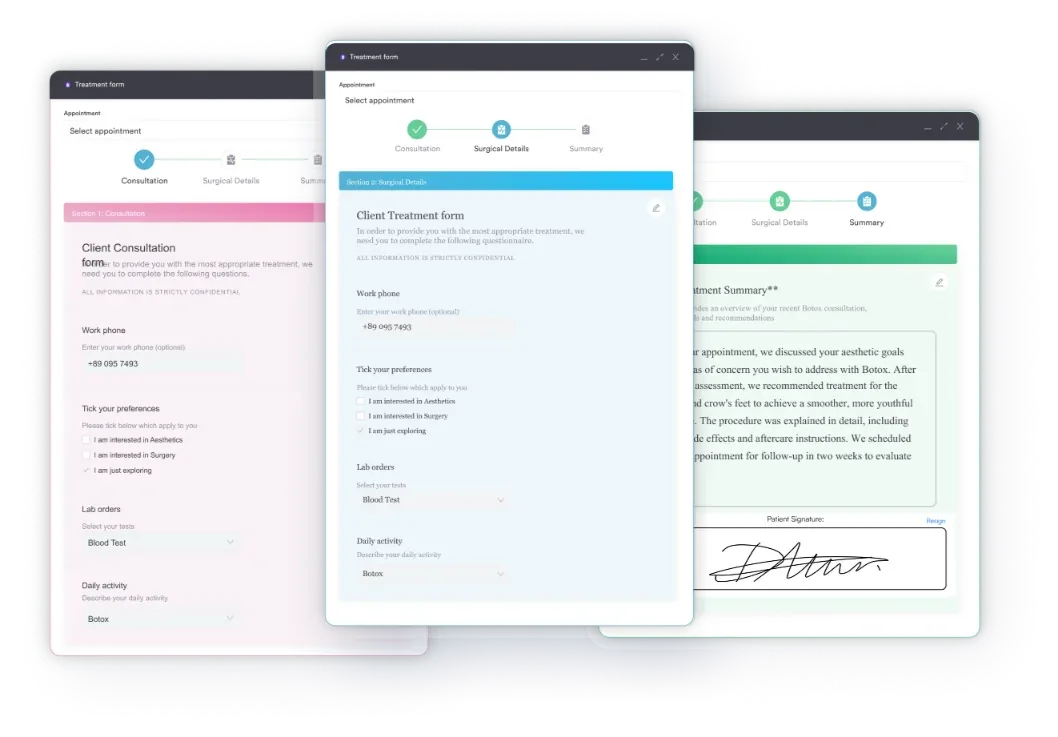
Digital intake forms in practice management software like Pabau score the screen automatically and file the result in the patient record.
A printable copy of the four-question screen, with the scoring key, the interpretation thresholds, and notes on administering it. You can hand it to a patient or load it straight into your digital intake forms.
Download templateThe CAGE-AID questionnaire is a four-question screen for problem alcohol and drug use, and it takes about a minute to complete. A score of 2 or more is a positive screen, which means the patient needs a fuller assessment.
Below you’ll find the four questions in their validated wording, the scoring key, and the thresholds you act on. There’s also a section on what to do in the ten minutes after a positive result. That part decides whether the screen changes anything.
The CAGE-AID is a brief, validated screen for problem alcohol and drug use. Brown and Rounds published it in 1995 as an adaptation of the original CAGE questionnaire. The acronym stands for Cut down, Annoyed, Guilty, Eye-opener. Unlike the original, it asks about drug use alongside drinking.
There are four yes/no items, each worth 1 point. The brevity is deliberate. It lets the screen sit inside a routine history without adding meaningful time to the visit. Validation covers adult populations from office-based primary care through to emergency departments and correctional medicine.
It is a screening tool and nothing more. A positive result flags the need for a diagnostic interview, and sometimes a referral to addiction medicine or specialty treatment. The instrument is validated for screening in adults, but it was never designed to diagnose one.
Each item probes a different dimension of problem use: loss of control, social fallout, guilt, and morning use as a marker of dependence. Patients usually complete the items themselves, though a clinician can read them aloud instead.
The wording is deliberately non-judgmental, which keeps patient defensiveness down. Ask the questions in the same matter-of-fact tone you’d use for a family history, not as a suspicion you’re following up on.
Give 1 point for every “Yes” and 0 for every “No”. The total runs from 0 to 4, and anything at 2 or above is a positive screen.
The cutoff of 2 is the established threshold, and it balances sensitivity against specificity across validation studies. That trade-off is why the screen works well in high-volume settings. Where alcohol alone is the concern, the full AUDIT gives you more detail on quantity and consequences.
Teams using software to manage patient records can pull up prior scores before every reassessment.
Ask the four questions early in the encounter, inside the social or substance use history rather than at the end. Patients answer more openly before the visit has turned into a discussion about a specific complaint. Use a digital intake form, a printed sheet, or a clinician-led interview, whichever fits your setup. Client sessions produce more data than a paper file holds, so software for psychology practices keeps it retrievable.
The screen earns its place in any setting where substance use changes what you do next. That covers a wide range of practices:
Framing matters as much as timing. A line like “I ask every patient about alcohol and drugs so I have the full picture” normalizes the question. That takes the shame out of it, and honest answers are the only thing that makes a four-question screen worth running.
The choice usually comes down to the CAGE-AID or the AUDIT-C questionnaire. Both are validated and both are short, but they measure different things.
Pick the CAGE-AID when you need one screen to cover both alcohol and drugs. It also suits practices where prescription or illicit drug use is common. Pick the AUDIT-C when alcohol is the focus and you want a number you can track over time.
Plenty of practices run both, in sequence. The CAGE-AID goes into intake for everyone, and a positive answer on the drinking items triggers the AUDIT-C for a closer look. Understanding why a patient drinks then shapes the conversation that follows.
Four items buy you speed, and speed costs precision. Knowing where the screen stops is what keeps you from over-reading a score in either direction.
None of that is an argument against using it. The CAGE-AID is still among the most widely trusted brief screens in US practice. The US Preventive Services Task Force recommends routine screening for unhealthy alcohol use in adults. It is a triage instrument, and it does that job in under a minute.
Act on a positive result in the same visit. The patient is in the room, the topic is already open, and a screen that produces no conversation produces nothing at all. Four steps cover most cases.
1. Have the brief conversation. Read the score back, ask what the patient makes of it, and ask what they’d want to change. Five minutes of structured feedback is the intervention with the strongest evidence behind it in primary care.
2. Confirm with a fuller instrument. Follow the drinking items with the AUDIT, and follow the drug items with a substance-specific tool. That gives you severity, which the CAGE-AID never provides.
3. Write down the score and the action. Record the number, the date, and what you did about it. A score sitting in a chart with no documented response is worse than no screen at all.
4. Refer where the need is beyond your scope. Put the referral and the reason in the record, then set a date to check whether the patient got there. A substance abuse treatment plan gives the receiving team something to work from.
The coding side is worth knowing, because it decides whether the work gets paid for. Annual alcohol misuse screening is billed under G0442. A planned brief intervention is reported with H0022.
Ongoing coordination for a patient in treatment falls under H0006. Mapping those codes to your screening pathway before you launch it means the follow-up is funded rather than absorbed.
A fixed template means every clinician asks the same four questions in the same order. That consistency is what makes scores comparable between visits and between staff members. Improvised wording produces answers you can’t compare to anything.
It also holds up under inspection. Accreditation bodies and state licensing boards look for evidence that screening happens systematically rather than when someone remembers. A standard form, consistently filed, is that evidence.
The record protects the clinician too. If a patient later develops a substance use complication, the chart shows the screen was offered and the result acted on. Bear record retention rules in mind here, since that trail only helps you if it still exists.
Start by picking the moment. For most practices that’s initial intake, alongside the rest of the social history. Then decide the format: paper, tablet, or clinician-led.
If you’re moving from paper to digital, give the team a fortnight of practice before go-live. Train them on two things specifically. What a positive score means, and who owns the next step.
Then write the protocol down. It needs to state how often you screen, who administers it, and exactly what happens when a score comes back at 2 or above. Practices that skip this step tend to screen well for a month and then quietly stop.
Many practices still print the screen, add up the points by hand, and file the sheet in a chart. The score never becomes data. Nobody can search it, report on it, or trigger anything from it, and a busy front desk loses sheets.
Pabau builds validated screens like the CAGE-AID into your digital intake forms. The patient answers on a tablet at check-in or on their phone beforehand. The score calculates itself, a positive result is flagged.
From there. The practitioner sees the flag in the note, a follow-up task is assigned, and the referral is logged. That gives psychiatry practices an auditable trail from screen to action, so no positive result quietly goes nowhere.
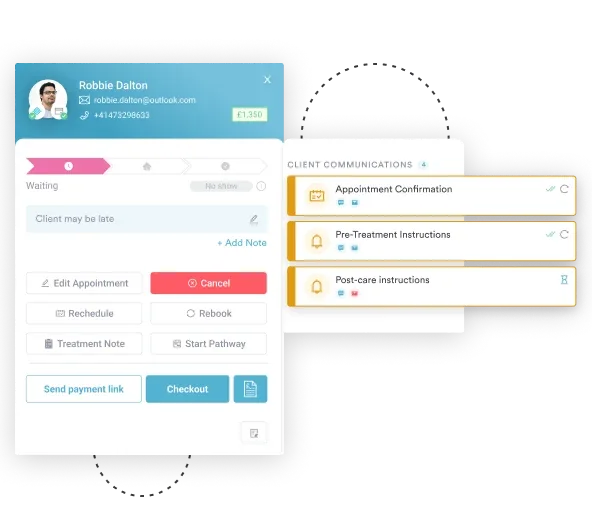

Build validated screens like the CAGE-AID into your intake forms, score them automatically, and trigger the clinical follow-up. No paper sheets, and no manual data entry.

Four questions and a cutoff of 2 will never tell you whether a patient has a substance use disorder. They tell you which patients deserve a longer conversation. That is the entire job, and the CAGE-AID does it in about a minute.
The screen is cheap to run and easy to skip. What decides whether it helps anyone is what happens in the ten minutes after a positive result. Decide that pathway now, write it down, and make the score visible to whoever sees the patient next.
Book a demo to see how Pabau scores validated screens automatically and routes every positive result to the person who needs to act on it.

Ready to move a patient toward change? Readiness for change questionnaire gives you a structured way to gauge motivation after a positive screen.
Screening for prescription opioid risk? Opioid risk tool covers the risk factors a four-question screen never asks about.
Need worksheets for the treatment phase? Substance abuse workbook collects exercises you can hand a patient between sessions.
Building a fuller behavioral health assessment? Comprehensive biopsychosocial assessment sets out the social, medical, and psychological history worth gathering.
Managing a patient through withdrawal? Alcohol withdrawal nursing care plan maps out the monitoring, interventions, and expected outcomes.
CAGE-AID stands for Cut down, Annoyed, Guilty, Eye-opener. Those four words map to the four screening questions. The “AID” suffix means the tool was adapted to include drug use, not alcohol alone.
A total of 2 or more out of 4 is a positive screen. It calls for a fuller diagnostic assessment, and sometimes a referral to addiction medicine or substance use treatment.
Each “Yes” is worth 1 point and each “No” is worth 0. The total runs from 0 to 4. Scores of 0 to 1 are negative, and scores of 2 to 4 are positive.
The original CAGE questionnaire, published in 1984, screens for alcohol use only. The CAGE-AID adaptation arrived in 1995 and asks about drug use alongside drinking. That makes it more useful where polysubstance use is common.
Run it at initial intake and at routine health visits. It suits primary care, emergency departments, mental health practices, and addiction medicine. The US Preventive Services Task Force recommends screening adults for unhealthy alcohol use.
Yes. The CAGE-AID is validated for primary care screening and has been studied across diverse adult populations. It is a recognized brief instrument for detecting alcohol and drug use disorders in office-based practice.
No. The CAGE-AID was developed for alcohol and illicit drug use. Tobacco and nicotine need a separate validated instrument, such as the Fagerström Test for Nicotine Dependence.
The CAGE-AID covers alcohol and drugs in four yes/no items. The AUDIT-C covers alcohol only in three graded items. Use the CAGE-AID for a broad first pass, then the AUDIT-C to quantify drinking.