Nursing narrative note template
A nursing narrative note template is a structured PDF that guides you through re...

2
Last Updated: Oct 21, 2026

The Highly Sensitive Person Scale is a 27-item self-report measure of sensory processing sensitivity, rated from 1 to 7.
No item on the original scale is reverse-scored, so every response is totaled exactly as the patient marked it.
High sensitivity is a trait, not a DSM-5 diagnosis, and no cutoff has been validated across every population.
The widely used three-factor solution covers 25 of the 27 items: ease of excitation, aesthetic sensitivity, and low sensory threshold.
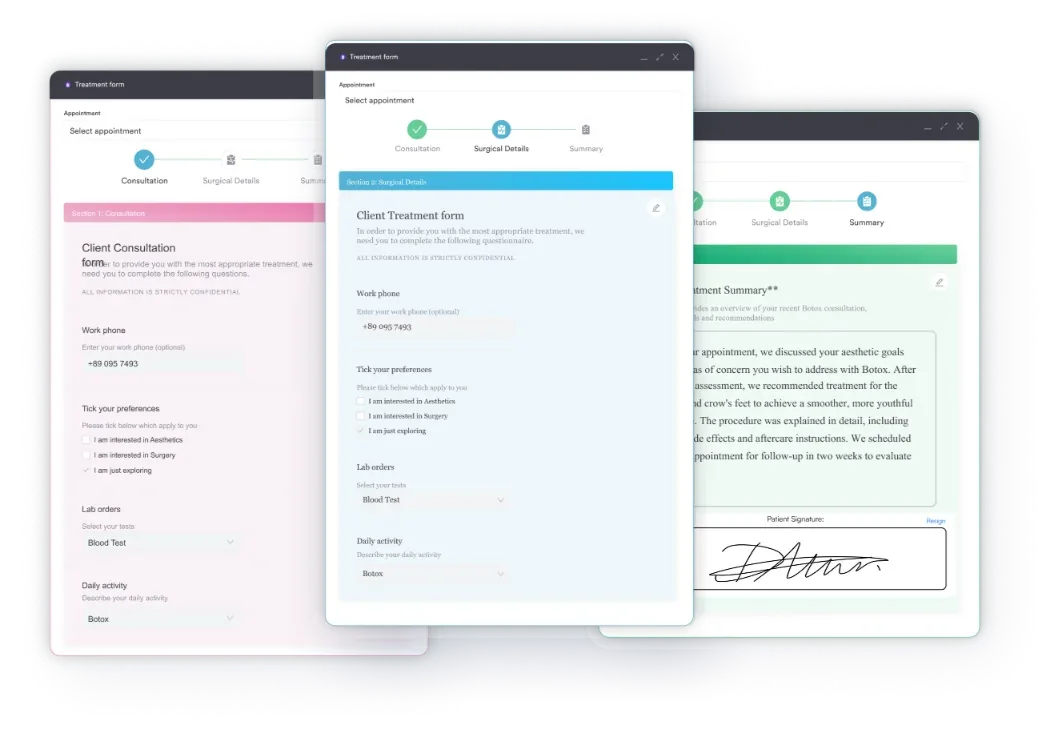
Digital intake forms in practice management software like Pabau send the questionnaire out early and store the score in the client record.
All 27 statements, the 1 to 7 response scale, and space to total each of the three subscales. Print it for the waiting room or send it out before the first session.
Download templateThe Highly Sensitive Person Scale (HSPS) is a 27-item self-report questionnaire that measures sensory processing sensitivity. Elaine Aron and Arthur Aron published it in 1997, and it remains the most widely used measure of the trait. Patients rate each statement from 1 to 7, so a total sits somewhere between 27 and 189.
Sensitivity shapes how patients talk about noise, crowds, pain, and other people’s moods. Roughly 15 to 20 percent of the population scores in the high range. This guide covers what the questionnaire measures, how to score it, and where the evidence stops. You can also run it through digital intake forms instead of paper.
The HSPS measures sensory processing sensitivity, a trait marked by deeper processing of stimuli and stronger reactions to them. High scorers notice subtleties other people miss. They also tire faster in a room that is loud, bright, or busy. Coaches, counselors.
Sensitivity is not a disorder. The DSM-5 does not list high sensitivity as a mental health condition, and the scale was never built to diagnose one. It measures a stable trait that overlaps moderately with neuroticism and introversion while staying distinct from both.
Knowing that a patient sits at the high end explains a lot. It is often why a crowded waiting room derails a session before it starts.
Five clusters of behavior show up repeatedly in the item wording:
These clusters are why a high scorer can look anxious on paper without meeting criteria for an anxiety disorder. A patient who dreads a busy waiting room may be reacting to the room. The Sensory Profile 2 covers related ground in children, so the two measures are easy to confuse.
A 2006 psychometric evaluation found three components rather than one, drawn from 25 of the 27 items. Item allocation shifts between studies, so treat any published item count as approximate. Ease of excitation carries the largest share.
Score each factor separately. A patient who is high on ease of excitation and average on aesthetic sensitivity needs different advice from one with the reverse pattern. That distinction disappears the moment you report only a total.
Pairing this scale with digital measurement tracking turns individual scores into longitudinal trend lines your whole team can read.
A recent revision, the Highly Sensitive Person Scale-Revised (HSP-R), measures six dimensions across 18 items. It was developed on a sample of 1,000 adults in the UK and US.
Sensitivity to positive experiences is the dimension that separates the trait from neuroticism. High scorers are not simply anxious people. Many do well once their environment is calm and predictable, and that is worth saying out loud in a first session.
Scoring takes about five minutes by hand. If your intake packet already includes screeners like the CAGE-AID questionnaire, this one slots in beside them without extra admin.
No cutoff for high sensitivity has been validated across populations. Published thresholds move with the sample and the analysis method, so a line that separates groups in one country may not travel to another. Aron’s own self-test uses a rule of thumb instead: 14 or more true answers on the true or false version suggests high sensitivity. Client sessions produce more data than a paper file holds, so software for psychology practices keeps it retrievable.
One study of 1,773 Korean adults derived two thresholds using latent class analysis, at mean item scores of 3.81 and 4.73. On a 27-item total, those land near 103 and 128. Roughly a third of that sample sat in the high group. Treat the figures as a reference point for one population rather than a diagnostic line.
Record the total and the subscale pattern in the first clinical note. Re-administer at a milestone, such as session 10 or before discharge. The trait itself is stable, so a shift usually reflects better coping rather than a change in sensitivity.
The questionnaire has been validated in dozens of peer-reviewed samples, and the results are consistent on reliability and mixed on structure.
A Mexican validation study shows how much the structure can move. Across 1,050 university students, a principal component analysis produced a two-factor, 17-item version with an alpha of 0.89. The two factors were processed sensitivity and low sensory threshold, not the familiar three.
So the scale reliably measures something. What that something splits into depends on the population you measure. Keep that in mind before you compare one patient’s subscale profile against norms published somewhere else.
The scale is indexed in the American Psychological Association’s PsycTESTS database, which catalogs research instruments. That listing is not a clinical endorsement. No professional body has approved the HSPS as a standard diagnostic assessment, and none needs to for it to be useful at intake.
The HSPS is not a diagnostic instrument, and a high score is not evidence of psychopathology. Sensitivity often sits alongside anxiety, depression, and trauma histories, but it does not cause them. Pair the questionnaire with a formal measure such as the GAD-7 or a depression self-assessment when mood is the presenting concern.
Two methodological criticisms are worth knowing about. Several ease of excitation items read like neuroticism items, which inflates the overlap between the two constructs. And 27 statements is a long form for an intake packet, which is why validated short versions exist.
Neither criticism stops the scale from doing its job. It describes a trait, and it was never meant to label a patient.
Start with psychoeducation. Plenty of high scorers have been told they are too sensitive for years, so naming the trait often lands as a relief. From there the work gets practical. Plan breaks from stimulation, cut the noise where you can, and prepare for events that will drain them.
Worksheets help make the conversation concrete. A defense mechanisms worksheet gives a patient who intellectualizes their reactions something to work through between sessions. Gentle somatic approaches and trauma-informed therapy usually suit sensitive patients better than high-intensity exposure work.
Write the adaptations into the file, not just the score. A colleague reading the record six months later needs to know why sessions were booked early in the day. A treatment plan template and clear progress notes keep that reasoning visible.
Most practices still hand the questionnaire over on paper. Someone prints it, the patient works through it in the waiting room, and a staff member totals the columns by hand. The sheet gets scanned into the file, where nobody ever searches for it again.
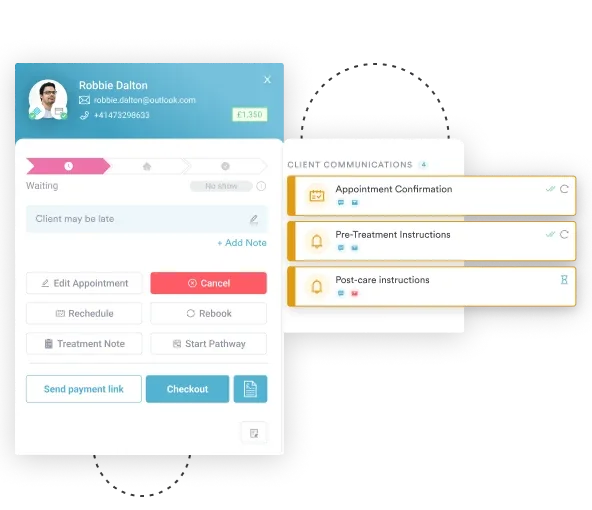
Practice management software like Pabau turns that into a form the patient completes before the session. The questionnaire goes out with the appointment confirmation, and the answers land in the client record. Reminders chase anyone who has not finished it, so the first 10 minutes of the session are not spent scoring.
Because the result lives in the record rather than a scanned PDF, the sensitivity profile travels with the patient.
The profile then reaches a referring physician in plain language, without you retyping what the subscales showed.

Send the questionnaire before the first session, store the score against the client record, and link it to the treatment plan. Your team stops rekeying paper forms.

The HSPS earns its place in an intake packet as long as you read it as a description rather than a verdict. The total tells you how a patient experiences a room. It says nothing about what is wrong with them.
The practical move is to score the subscales, keep the total in context, and write down what you changed in the plan because of it. Patients tend to remember the session where someone finally explained the trait to them.
Book a demo to see how Pabau sends assessments out before the first session and files the results straight into the client record.

Working with couples? Couple communication worksheet gives you structured prompts for sessions where one partner is far more reactive than the other.
Want to lead with what a patient does well? Character strengths assessment balances a sensitivity profile with a strengths-based conversation.
Patients overwhelmed by things they cannot change? Circle of influence worksheet helps them sort what is theirs to act on from what is not.
Running a coaching practice? Coaching evaluation form captures progress in the same structured way a clinical assessment does.
It is a 27-item self-report questionnaire that measures sensory processing sensitivity. Elaine Aron and Arthur Aron published it in 1997, and patients rate each statement from 1 to 7.
No. It is a personality trait found in roughly 15 to 20 percent of people. Sensitivity can sit alongside anxiety or depression, but it does not cause either one.
Patients rate 27 statements from 1 to 7, and every response is totaled as marked. No item is reverse-scored. Totals run from 27 to 189, and published cutoffs vary by population.
No. The questionnaire measures sensitivity, not psychopathology. Use a formal anxiety or mood measure alongside it whenever those symptoms are the presenting concern.
The revised version uses 18 items across six dimensions, including social sensitivity and sensitivity to positive experiences. The original 27-item scale is still the more widely used measure.
Sensory processing disorder is a neurological condition affecting motor coordination and behavior, usually identified in childhood. High sensitivity is a trait on a normal continuum, and the two can occur together.