Sulcus Test: Shoulder Instability Assessment
The sulcus test is an orthopedic special test that checks for inferior glenohume...

3
Last Updated: Oct 22, 2026
An antiplatelet drugs list is a clinical reference that groups the major antiplatelet medications by drug class. It pairs each generic name with its brands, mechanism, indications and monitoring needs.
The core agents are aspirin, the P2Y12 inhibitors clopidogrel, ticagrelor and prasugrel, and dipyridamole. Clinicians use the list for safe prescribing, patient counseling and pre-procedure medication reviews.
Antiplatelets act on platelet function, while anticoagulants act on the coagulation cascade. The classes below also differ in a detail that matters before surgery: Whether the drug binds reversibly or irreversibly.
A printable reference listing the major antiplatelet medications by drug class. Each entry covers generic and brand names, mechanism of action, standard indications and monitoring requirements.
Download template
Antiplatelet drugs reduce platelet aggregation through several pathways, led by COX-1 inhibition (aspirin) and P2Y12 blockade (clopidogrel, ticagrelor, prasugrel).
Antiplatelets stop platelets clumping, while anticoagulants slow the coagulation cascade, and some patients need one of each.
Dual antiplatelet therapy (DAPT) pairs aspirin with a P2Y12 inhibitor, typically for 12 months after acute coronary syndrome or stenting.
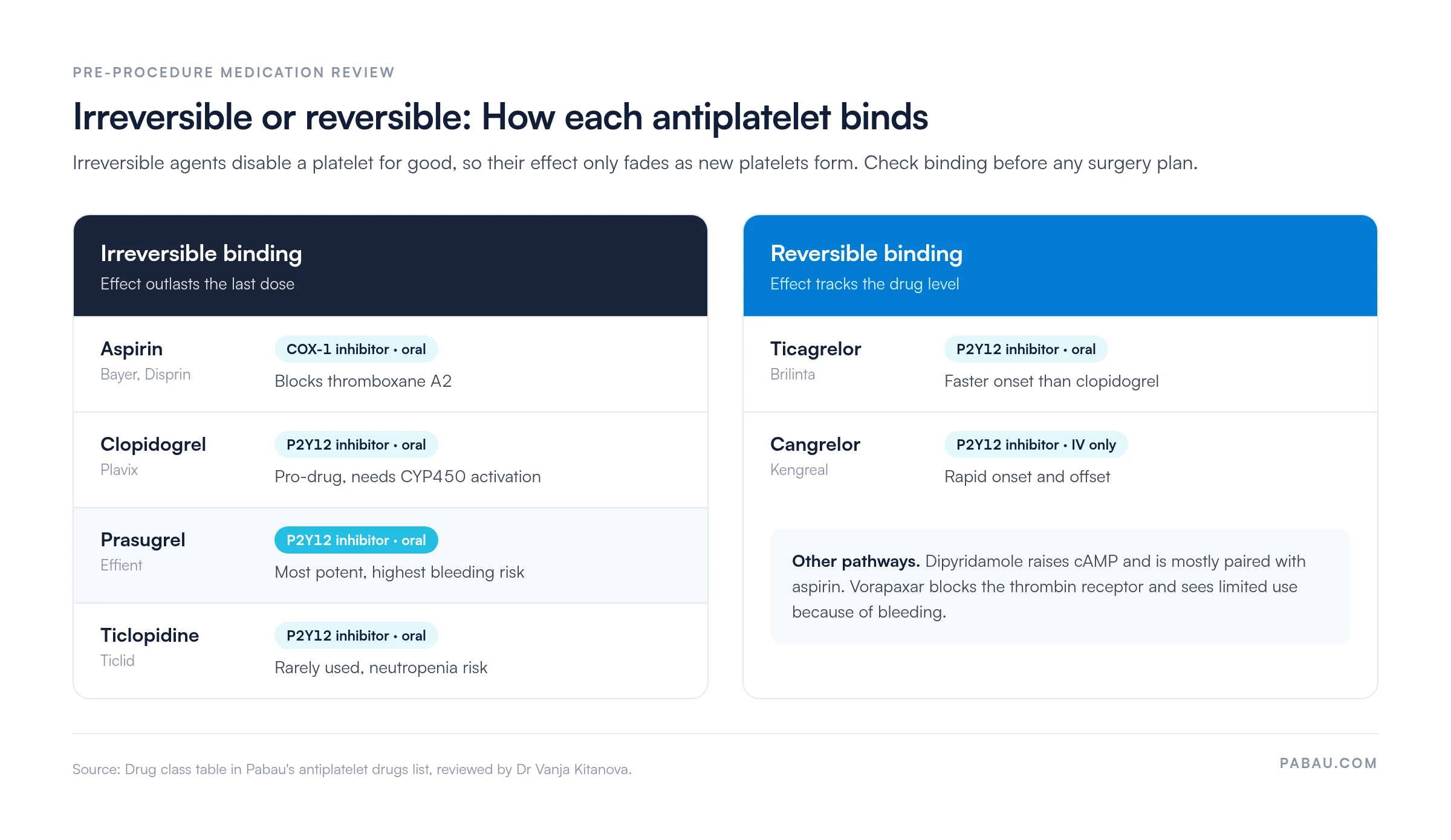
Aspirin, clopidogrel and prasugrel bind irreversibly, so their effect outlasts the last dose, while ticagrelor and cangrelor bind reversibly.
Main indications include acute coronary syndrome, percutaneous coronary intervention (PCI), stroke or transient ischemic attack (TIA) and peripheral arterial disease (PAD).
Antiplatelet drugs are medications that reduce platelet aggregation, the sticking together of blood platelets that forms clots. They block platelet activation pathways, making blood less likely to clot abnormally inside blood vessels.
Their target is arterial thrombosis, meaning clots in the arteries that supply the heart, brain and limbs. Each class works at a different point on the platelet.
Clinicians and patients often confuse antiplatelet drugs with anticoagulants, yet they work on different clotting pathways and are used in different clinical contexts.
Some patients need both. A patient with atrial fibrillation and a recent stent, for example, may take an anticoagulant alongside an antiplatelet. For the rest of that patient’s regimen, the cardiovascular medication list groups heart drugs the same way.
The table below groups the major antiplatelet drugs by class, with generic and brand names and a note on each drug’s mechanism and reversibility.
Reversibility is the column to read first before a procedure. Irreversible agents disable each platelet for its whole lifespan, so their effect fades only as new platelets form.
Dual antiplatelet therapy combines two antiplatelet drugs, typically aspirin plus a P2Y12 inhibitor, for stronger platelet inhibition in high-risk situations.
DAPT is standard after acute coronary syndrome (ACS) and percutaneous coronary intervention (PCI) with stent placement. The combination targets the COX-1 and P2Y12 pathways at once, reducing thrombotic events more effectively than either drug alone.
Antiplatelet drug selection depends on the clinical diagnosis and whether the patient is in an acute or chronic phase. The following table maps common conditions to first-line antiplatelet therapy.
Most of these patients also take a statin for secondary prevention. The cholesterol medication list covers statins and the other lipid-lowering drugs that usually sit alongside antiplatelet therapy.
Angina patients are usually on a nitrate as well. Check dosing by formulation in the nitrates medication list, which also flags the PDE5 inhibitor contraindication.
All antiplatelet drugs increase bleeding risk, which is the price of platelet inhibition. Severity and frequency vary by drug class and by patient factors such as age, renal function, concomitant anticoagulation and prior GI bleeding.
Patients with dyspepsia or a prior GI bleed are often on acid-suppressing therapy as well. The gastrointestinal medication list covers the PPI and H2 blocker classes used to protect the stomach.
The list supports five everyday workflows, from the first counseling conversation to the chart note.
1. Patient consultation and counseling. When starting an antiplatelet drug, review the name (generic and brand), mechanism, expected onset, bleeding warning signs and drug interactions with the patient. Confirm dosing and frequency against the prescribing information.
2. Pre-procedure medication review. Before any invasive procedure, use the list to identify which antiplatelet drugs the patient takes and whether each binds reversibly. Both points shape surgery planning and any bridging decision. In Pabau, the practice management platform we build, digital intake forms capture antiplatelet use at each visit.
Weight loss and metabolic practices run the same check, because patients with obesity or diabetes often take aspirin or clopidogrel. With purpose-built weight loss software, that history sits on the intake record before any surgical referral.
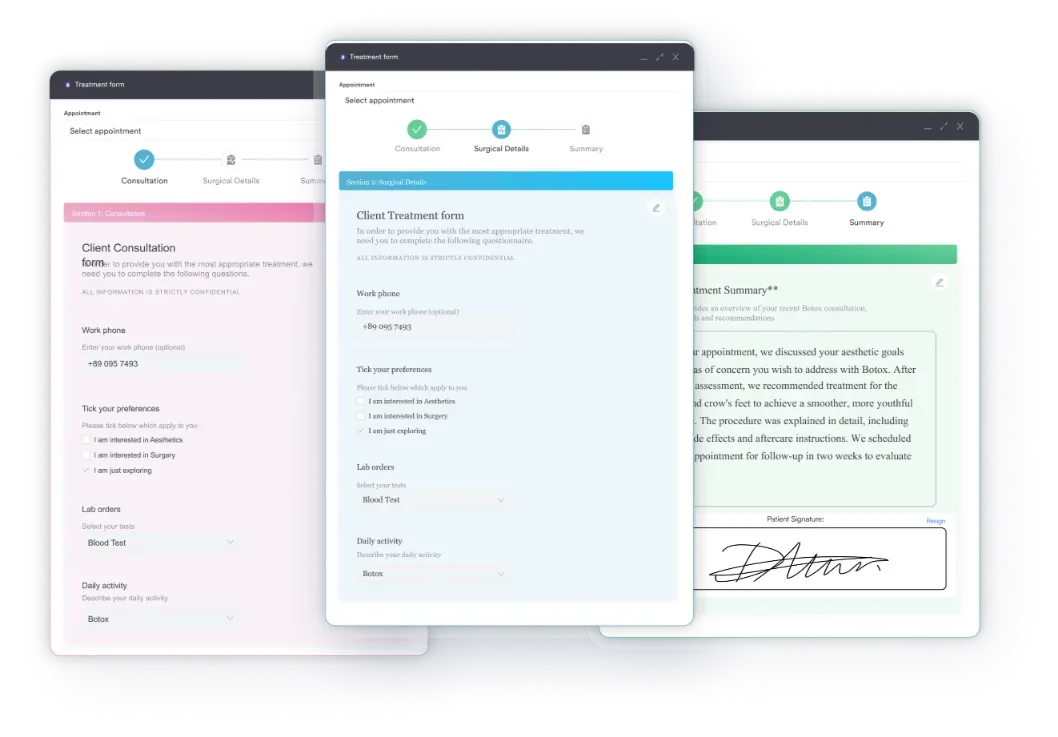
3. Medication reconciliation. At follow-up visits, confirm the patient is on the correct antiplatelet agent and dose per guidelines. Store the list in structured patient medication records so every clinician on the team can check what the patient takes.
Ask about over-the-counter aspirin and NSAIDs as well, since both add to bleeding risk and patients rarely mention them. The OTC medication list helps patients name what they buy at the pharmacy.
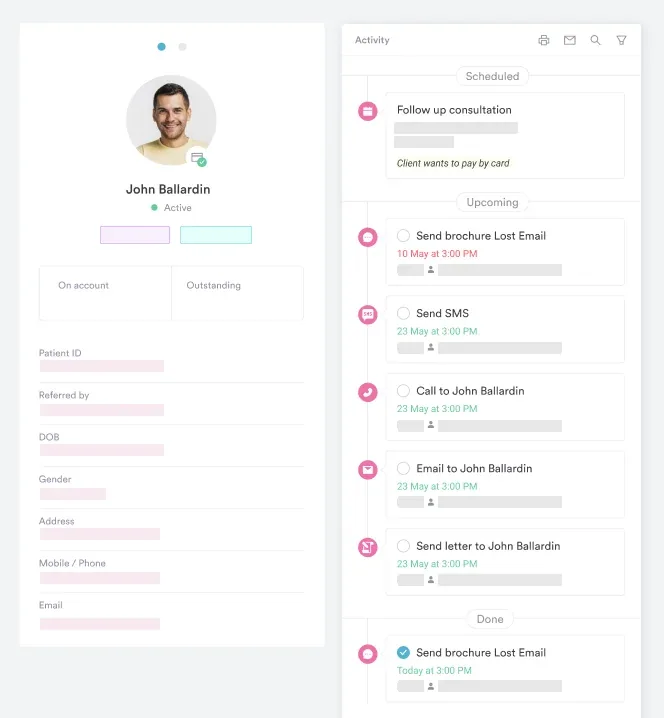
4. HIPAA-compliant documentation. Record antiplatelet therapy in line with HIPAA requirements for patient documentation. Document medication changes, bleeding assessments and clinical indications clearly.
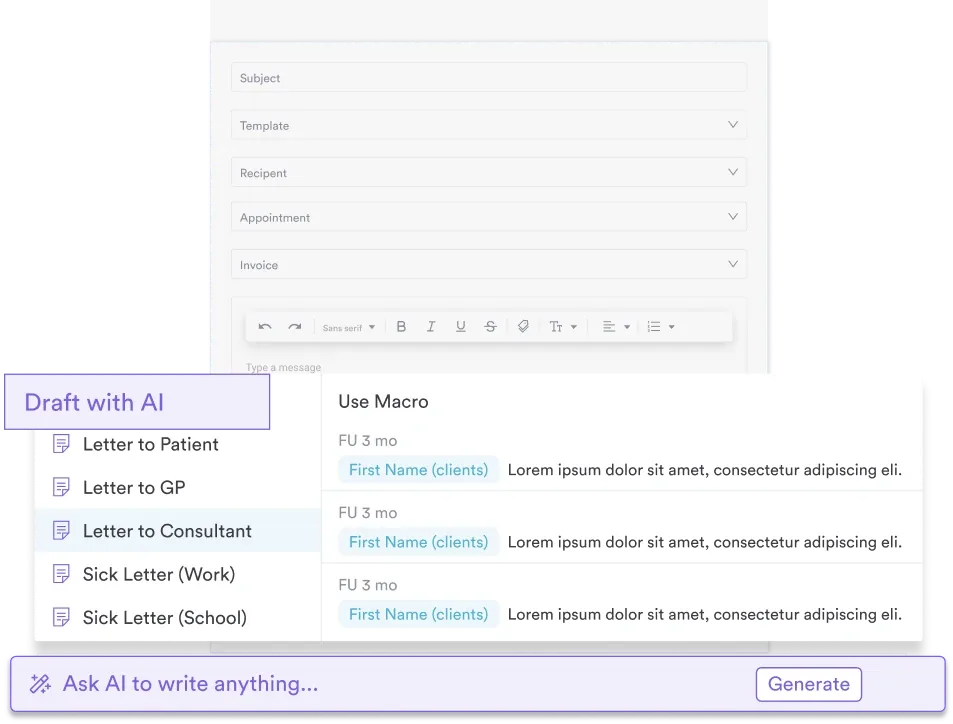
5. AI-assisted clinical notes. Use an AI medical scribe to speed up charting and ease the load of tracking several antiplatelet regimens across your patient population.
Reference the drug-class breakdown whenever a patient reports a new symptom or asks about switching drugs. Update your list quarterly as new agents are approved and guideline recommendations evolve.
Many practices track antiplatelet therapy across a paper medication list, a scanned intake form and free-text notes. When a cardiologist switches a patient from clopidogrel to ticagrelor, someone has to update all three.
Pabau keeps the medication history, intake answers and treatment notes in one patient record. Intake forms ask about blood thinners before each visit, and the answers flow into the record automatically. Pabau Scribe, our AI scribe, drafts the note while you talk the patient through bleeding warning signs.
Before a procedure, the practitioner opens one record and sees which antiplatelet the patient takes, when it changed and who changed it.

Pabau captures antiplatelet use at intake and keeps each medication change in one patient record. Your team walks into every procedure review with the current regimen in front of them.

Drug class tells you how an antiplatelet works. Binding tells you how long it keeps working, and that second fact is what changes a procedure plan.
Keep the list where your team reviews medications, and read the reversibility column before every invasive procedure. Give prasugrel and vorapaxar patients an extra bleeding check, and update the list when guidelines change.
Book a demo to see how Pabau keeps each patient’s antiplatelet regimen, bleeding checks and medication changes in one record.

Managing the rest of a cardiac regimen? Cardiovascular medication list groups heart and blood pressure drugs by class, with brands and clinical notes.
Adding a statin after a heart attack or stroke? Cholesterol medication list covers every lipid-lowering class, from statins to PCSK9 inhibitors.
Building safeguards for bleeding-risk drugs? High-alert medication list sets out the ISMP categories and the checks that stop errors reaching patients.
Reviewing a patient’s blood pressure treatment? Medication list of ACE inhibitors gives starting doses, maintenance ranges and indications on one page.
Supporting secondary prevention beyond drugs? Heart healthy diet plan helps patients log sodium, fat and sugar across three days.
Antiplatelet drugs are medications that inhibit platelet aggregation, reducing the ability of blood platelets to stick together and form clots inside arteries. They are used to prevent heart attacks, strokes and other arterial thrombotic events. Common examples include aspirin, clopidogrel (Plavix) and ticagrelor (Brilinta).
Yes, aspirin is an antiplatelet drug. It irreversibly inhibits COX-1 and blocks thromboxane A2 synthesis, reducing platelet aggregation. Aspirin is one of the oldest and most widely used antiplatelet agents for primary and secondary prevention of cardiovascular events.
Plavix (clopidogrel) is an antiplatelet drug, not an anticoagulant. It works by blocking the P2Y12 adenosine diphosphate receptor on platelets, reducing aggregation. Anticoagulants like warfarin and heparin work on the coagulation cascade, not on platelet function.
Antiplatelet drugs inhibit platelet aggregation and are used to prevent arterial clots in heart attacks, strokes and peripheral artery disease. Anticoagulants slow the coagulation cascade and prevent venous clots in deep vein thrombosis, pulmonary embolism and atrial fibrillation. Anticoagulants carry higher bleeding risk. Some patients need one drug from each class at the same time.
Aspirin monotherapy is the first-line antiplatelet agent for secondary prevention after ischemic stroke or TIA. Clopidogrel is an alternative in aspirin-intolerant patients. Some guidelines recommend dual antiplatelet therapy (aspirin + clopidogrel) for a brief period after TIA or minor stroke, followed by monotherapy. Treatment duration and intensity depend on stroke severity and underlying cause.
The most common side effect of antiplatelet drugs is bleeding, ranging from minor bruising to serious GI or intracranial hemorrhage. Aspirin can cause dyspepsia and gastric erosion. Ticagrelor may cause bradycardia and dyspnea. Prasugrel carries the highest bleeding risk and is avoided in elderly and low-weight patients. Every patient on an antiplatelet needs counseling on bleeding warning signs and drug interactions.