Nursing narrative note template
A nursing narrative note template is a structured PDF that guides you through re...

3
Last Updated: Oct 21, 2026

A heart healthy diet plan reduces saturated fat, sodium, and added sugars. It also emphasizes whole grains, vegetables, lean protein, and healthy fats to lower cardiovascular disease risk.
The DASH (Dietary Approaches to Stop Hypertension) diet and the Mediterranean diet are the two most evidence-backed heart-healthy eating frameworks. Both are supported by the American Heart Association and NHLBI.
Key targets include limiting sodium to under 2,300 mg daily and saturated fat to less than 6% of calories. Aim for at least 25 to 30 grams of dietary fiber daily from fruits, vegetables, and whole grains.
Practice management software like Pabau lets clinicians personalize this meal plan template for each patient and deliver it through the patient portal. Care Plus, our patient-care add-on, adds conditional logic and video postcare templates for follow-up.
A printable 3-day worksheet covers Monday through Wednesday, with blank fields for sodium, fat, and sugar targets. Use it to log each meal with the patient and reflect on the week together.
Download templateA patient with high blood pressure or high cholesterol does not need another lecture on eating healthy. They need a plan they can actually follow at home. A heart healthy diet plan gives clinicians exactly that. It is a structured eating pattern that lowers cardiovascular disease risk by limiting harmful nutrients and emphasizing protective ones.
It works well for patients with hypertension, elevated cholesterol, or a family history of heart disease. This guide walks through the DASH and Mediterranean frameworks and specific food recommendations. It also includes a full 7-day meal plan and a shopping list. Hand it to patients directly from this page.
The page also links to a free downloadable worksheet, a 3-day diet-tracking log for Monday through Wednesday. It leaves the sodium, fat, and sugar targets blank so you and the patient can set them together. Patients then log meals and reflect on how the week went.
A heart healthy diet plan is a nutritional framework designed to reduce cardiovascular disease risk by lowering blood pressure, cholesterol, and inflammation.
The two most studied frameworks are the DASH (Dietary Approaches to Stop Hypertension) diet and the Mediterranean diet. Both are endorsed by the American Heart Association (AHA) and the National Heart, Lung, and Blood Institute (NHLBI).
These plans share a core approach. They emphasize whole grains, vegetables, fruits, lean protein, and healthy fats while limiting saturated fat, sodium, and added sugars.
The clinical goal is twofold. It reduces cardiovascular risk factors while supporting long-term patient compliance through practical, realistic meal structures.
Clinicians in longevity practices should walk patients through these principles up front to set realistic expectations and build accountability.
A heart healthy diet emphasizes nutrient-dense whole foods across all major food groups.
Metabolic health practices keep records like this organized in an EMR built for metabolic health.
This sample week demonstrates how to structure meals using the DASH framework. Clinicians can adapt portions and swap specific foods based on patient preferences, allergies, and cultural practices. All meals aim for 1,500-2,000 calories, under 2,300 mg sodium, and under 6% saturated fat.
Breakfast sets the tone for the day; a heart-healthy option combines whole grains, lean protein, and fruit.
Both the DASH and Mediterranean diets have robust clinical evidence for reducing cardiovascular disease risk. Understanding their similarities and differences helps clinicians recommend the best fit for each patient’s lifestyle and cultural preferences.
Clinical recommendation: Many patients benefit from a hybrid approach, adopting the strict sodium control of DASH while incorporating the healthy fat emphasis of Mediterranean eating.
For patients with elevated LDL cholesterol, specific foods and nutrients have proven cholesterol-lowering effects.
A structured shopping list tied to the 7-day meal plan ensures patients have the right ingredients on hand and reduces impulse purchases of unhealthy items. Clinicians can print and customize this list per patient.
Restaurant meals often contain 1,500-3,000 mg sodium in a single dish. Coach patients on smart ordering to maintain their heart-healthy commitment.
Pro Tip: Many clinicians find success when they document counseling notes in the patient record. That makes it easier to follow up at the next appointment and acknowledge progress.
A heart healthy diet plan works best when it feels sustainable for the patient. Clinicians who take time to understand cultural preferences, cooking skills, and family meals can customize this template to fit real life.
Handing a patient a printed diet sheet at the end of a visit is easy. Following up on whether they actually used it is the hard part. Most practices track that with nothing more than a note in the chart.
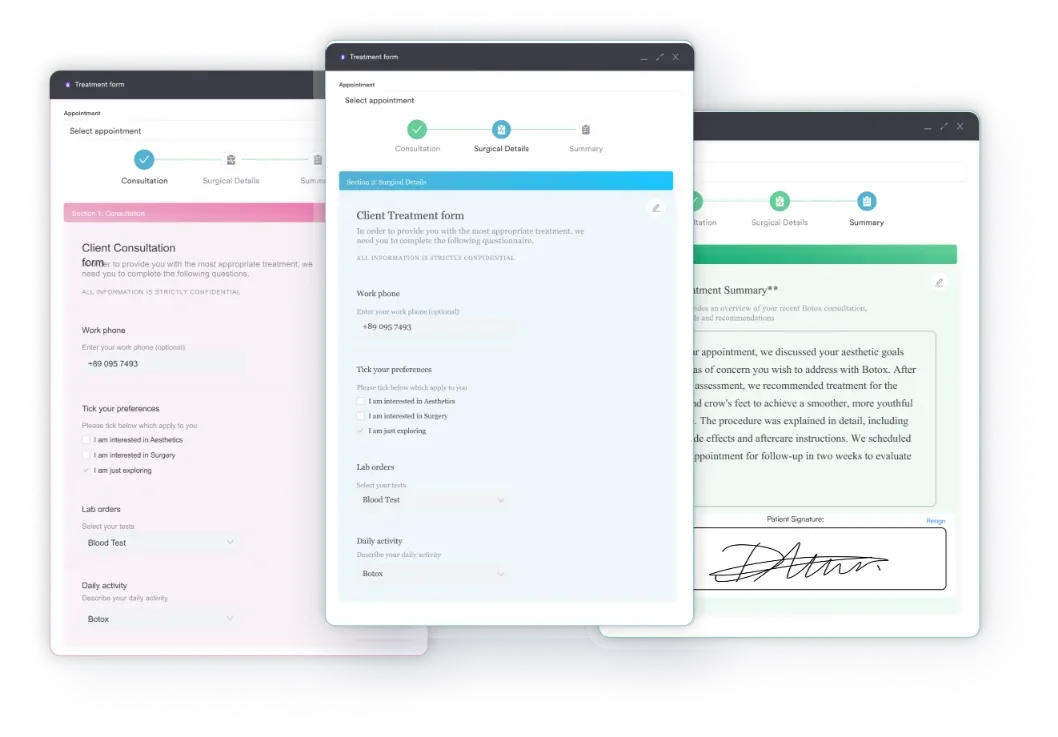
Pabau’s digital forms let you attach this meal plan template directly to the patient’s record. You can send it through the patient portal instead of a printout that gets lost on the way home.
It also includes video postcare templates you can send for a quick follow-up check-in between visits.

Pabau’s digital forms deliver this meal plan through the patient portal. Care Plus, our patient-care add-on, adds conditional logic so the template adapts to each patient’s answers.

The DASH and Mediterranean frameworks work because they are simple enough for a patient to keep doing after the excitement of a new diagnosis fades. Pick one framework, adapt the meal plan to what the patient will actually cook, and revisit it at the next visit. Handing it over once and moving on rarely works.
Patients who get that follow-up are far more likely to still be following the plan six months later. Patients who only receive a handout usually are not. That follow-up is the part clinicians most often drop when the schedule gets busy.
Book a demo to see how Pabau helps your practice keep nutrition counseling going long after the first visit.

Need a printable list that matches this meal plan? Healthy grocery list gives patients a ready-made shopping guide organized by food group.
Want a higher-protein spin on heart-healthy eating? High-protein meal plan balances lean protein with the same DASH-style principles.
Pairing diet changes with exercise? Weight loss workout plan gives patients a structured activity routine alongside their new eating pattern.
Evaluating a patient for weight-loss surgery? The bariatric psychological evaluation form screens surgical readiness, weight-loss history, eating-disorder and substance-use risk, and support systems.
Sending food guidance home with patients? Food safety handout covers safe roasting times and storage for the proteins in this meal plan.
Yes, though the amount varies by person. The diet’s fiber and lean protein increase fullness and naturally reduce calorie intake. Still, weight loss depends on total calories and activity level, not on the diet label alone. Pair the plan with a calorie target and regular movement for the best results.
Most patients notice blood pressure improvements within 2 to 4 weeks of consistent DASH-style eating. Cholesterol changes typically take 8 to 12 weeks to show up on lab work. Set a follow-up appointment at the 4-week mark to check progress and adjust the plan.
Yes, but the plan needs adjustment for either condition. Patients with diabetes should pair this template with carbohydrate counting to manage blood sugar. Patients with kidney disease often need extra limits on potassium and phosphorus, so loop in a renal dietitian before starting.
No, never without their prescriber’s approval. Diet changes can lower blood pressure enough that a medication dose needs adjusting. That decision still belongs to the clinician managing the patient’s care. Encourage patients to keep taking medication as prescribed and report home readings at each visit.
Review it at the first follow-up visit, then every 4 to 6 weeks until habits stick. Use that check-in to swap out meals the patient didn’t enjoy and confirm sodium and fat targets still fit their labs. Shorter, more frequent check-ins work better than one long annual review.