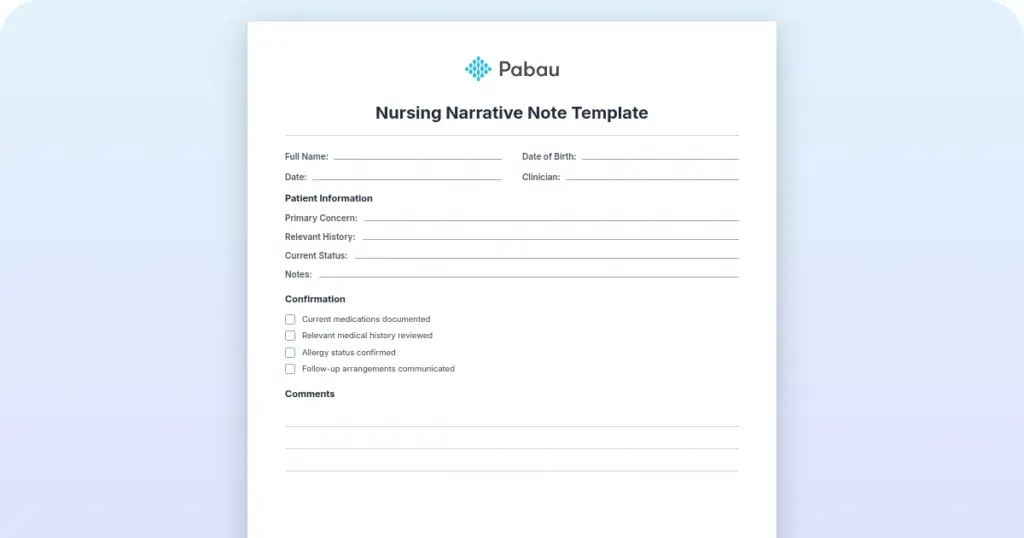
Nursing narrative note template
A nursing narrative note template is a structured PDF that guides you through re...

3
Last Updated: Oct 21, 2026

An OTC medication list groups over-the-counter drugs by therapeutic category, with the generic name, the brand names, and the typical dose.
The FDA classifies an OTC drug as safe and effective for self-use, so the patient decides rather than the prescriber.
Behind-the-counter products such as pseudoephedrine sell without a prescription but still need ID and purchase limits at the pharmacy.
Cross-referencing generic and brand names is what stops a patient doubling a dose across two products that share an ingredient.
Digital intake forms in practice management software like Pabau capture what a patient already takes before the appointment starts.
A ready-to-use template organizing over-the-counter medications by therapeutic category. Each entry carries the generic name, brand name equivalents, common uses, and typical dosage for staff reference and patient education.
Download templateAn OTC medication list groups over-the-counter drugs by therapeutic category. Each entry carries the generic name, the brand names patients recognize, and the typical dose.
Patients arrive having already treated themselves. They took something for the headache, the heartburn, or the rash before they booked the appointment. If the record does not say what, the next recommendation is made half-blind.
This guide starts with what separates an over-the-counter drug from a prescription one. It then covers the Drug Facts label and the categories a working list needs. The template above gives you the format.
Over-the-counter drugs are the ones the FDA classifies as safe and effective for consumer use without a prescription. That classification runs through the OTC monograph system, which sets safety, efficacy, and labeling standards for whole drug categories rather than individual products.
The pharmacy shelf splits three ways, though, and only one of the three belongs on your list.
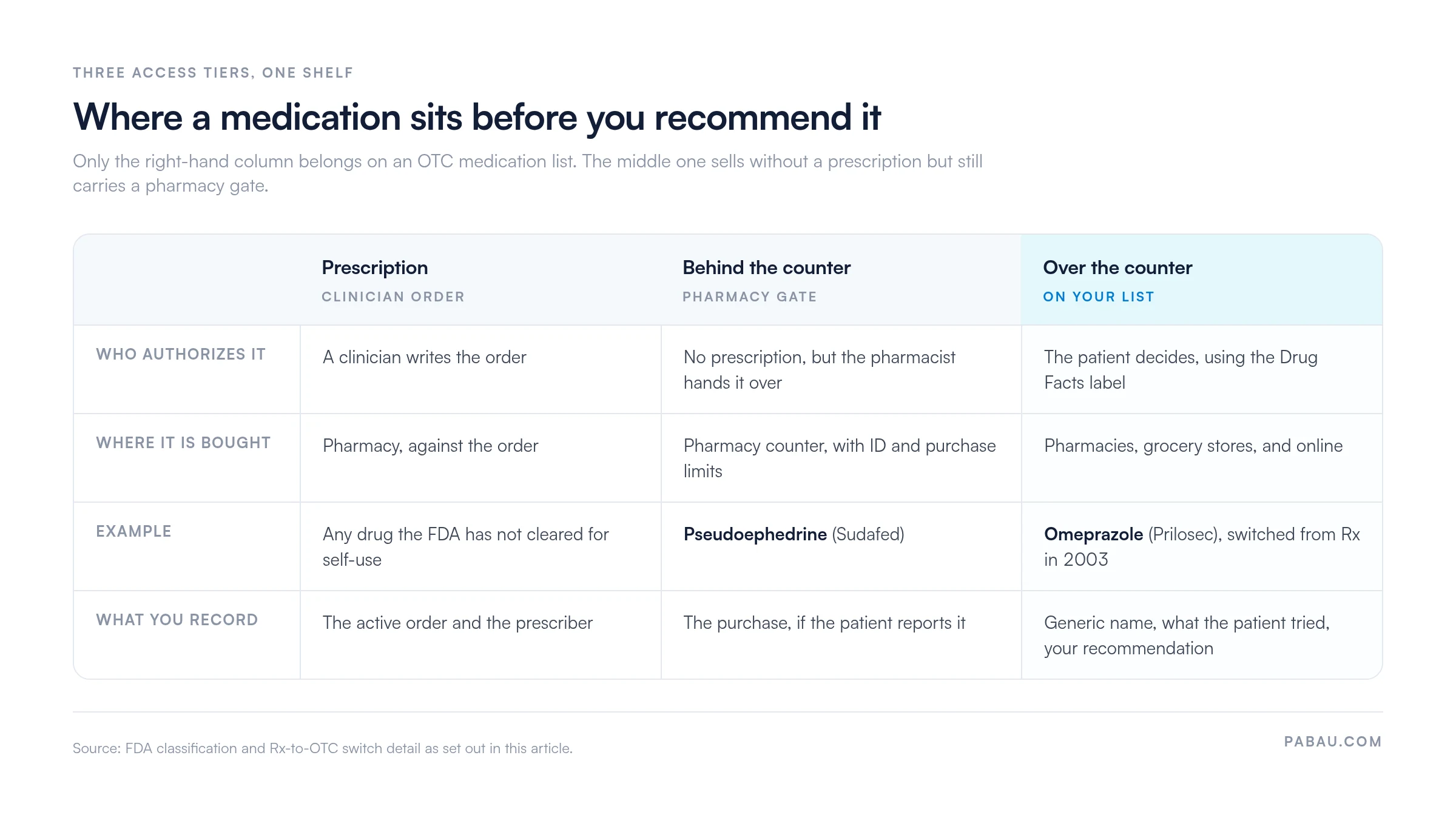
The distinction decides who owns the decision. A well-organized list lets staff point a patient toward a safe option quickly, then record what was recommended and why.
Every OTC product carries a Drug Facts label in a standardized FDA format. Reading it is how staff answer a dosing or interaction question without guessing.
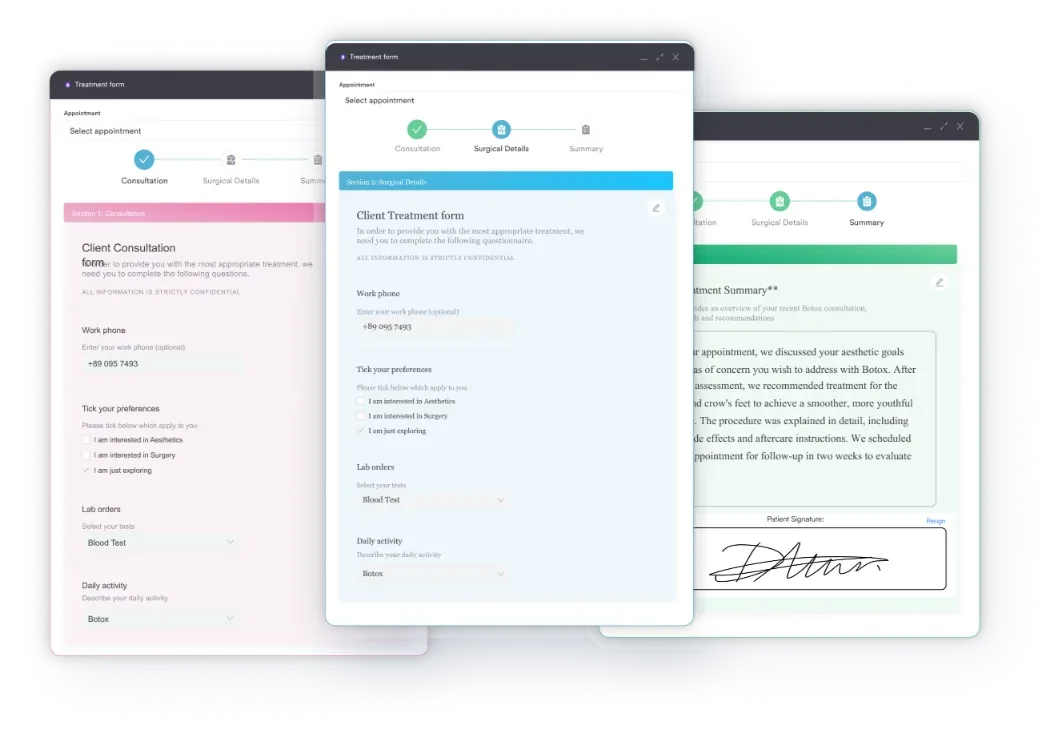
Building the list into the intake forms patients complete puts that information where the conversation happens. Staff see what someone already takes before the appointment starts, rather than asking at the door.
Here is the reference set most practices start from, grouped by therapeutic category. The downloadable template uses the same four columns.
Each row pairs the generic name your notes should carry with the brand name the patient will say at the counter. The common-use column is what staff quote back.
Pain relievers dominate the list. NSAIDs and acetaminophen are the first-line choices for headaches, arthritis, and minor injury pain. The FDA’s nonprescription drug overview sets out how both reached the shelf. Which one you suggest turns on the patient’s history and current medications.
Antihistamines sit on every version of this list. First-generation agents such as diphenhydramine sedate, while second-generation agents such as loratadine and cetirizine do not. That single split decides what you can safely suggest to a patient who is driving home.
Antacids, H2 blockers, and proton pump inhibitors all treat heartburn, and patients rarely know which one they bought. Recording the product a patient has already tried in medical records management stops the practice repeating a recommendation that did not work. Omeprazole moved from prescription to over-the-counter in 2003, so note the dosing limit printed on its label.
Cold remedies carry the sharpest age limit in the whole set. The FDA withdrew dosage recommendations for many cough and cold products in children under 2. Any list a practice hands to staff has to carry that restriction on the row itself.
Topical corticosteroids, antifungal creams, and antiseptics cover the skin complaints that come up mid-consultation. They also turn up in aftercare instructions, so keeping them on the same sheet saves staff cross-referencing two documents.
Eye and ear drops, sleep aids, laxatives, and supplements round the set out. Staff reach for them less often than analgesics, which is exactly why these entries need writing down rather than remembering.
The list earns its place once it does more than sit in a drawer. It becomes the staff training reference, the script for a common patient question, and the documentation trail an auditor asks for.
Practices that share one list give the same answer twice, which is the whole point. The notes also read consistently when a colleague picks up the record later.
The file at the top of this page is the starting format. Five steps take it from download to daily use.
The list is only as good as the counseling around it. Five points cover most of what goes wrong.
Answer from the list rather than from memory, and the advice stays consistent across the team. Never suggest a product outside the indication its label carries.
Most practices keep the list in one place and the patient’s answers in another. A paper form gets filled in at the front desk, someone types the highlights into the note, and the rest is lost.
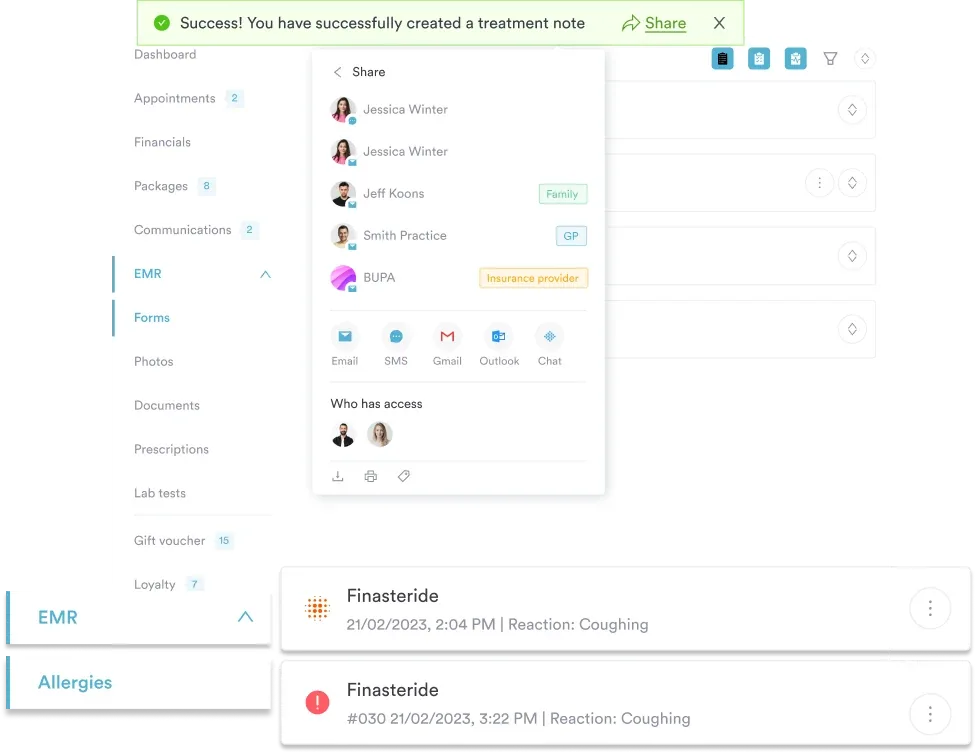
Practice management software like Pabau closes that loop. The medication question lives in the digital intake form the patient completes before arriving. The answer lands on the record rather than in a scanned PDF, and allergies sit on the same screen.
During the consultation, Pabau Scribe, our AI scribe, can capture the OTC conversation into the clinical note as you have it. The next clinician to open that record sees what the patient was taking and what you advised, without anyone re-keying it.

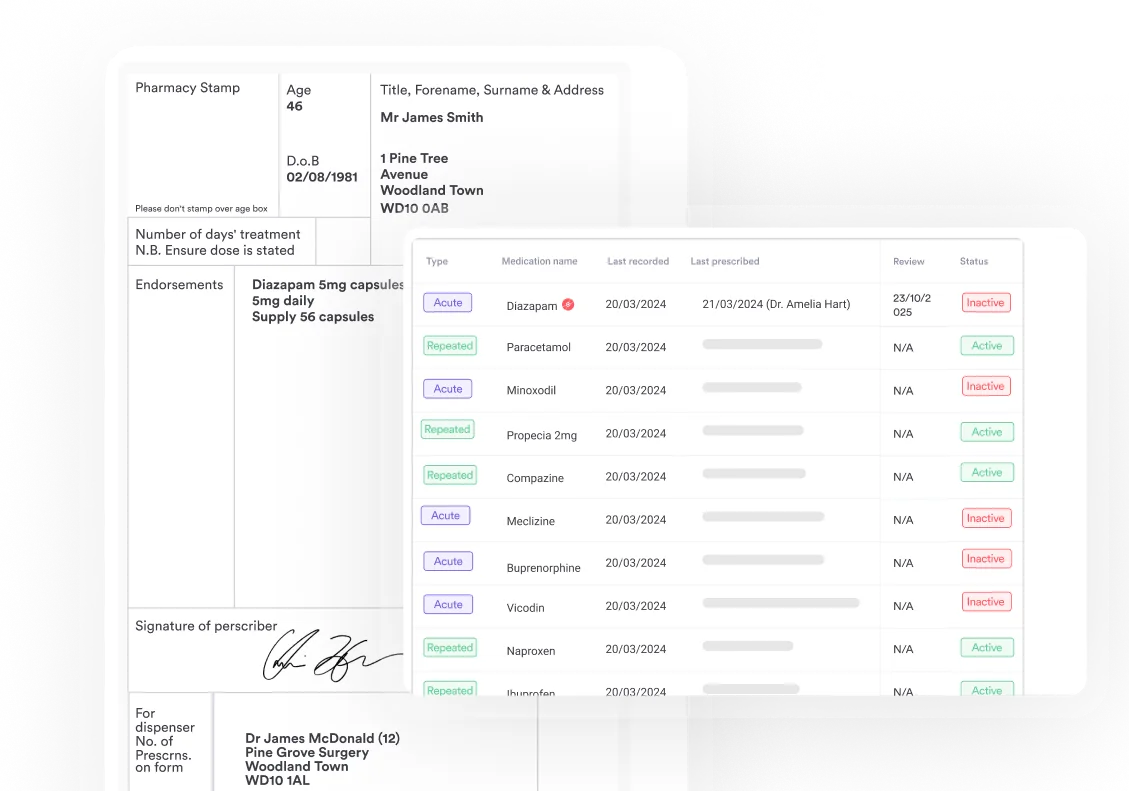
Pabau captures what a patient already takes in the intake form, then holds it on the record alongside allergies and clinical notes. Staff answer the next OTC question from the chart rather than from memory.

A shared list changes what happens in the ten seconds after a patient asks what they can take. The answer stops depending on who is standing there.
The trade-off is maintenance. A list nobody owns goes stale within a year, and a stale list is worse than none, because staff trust it. Name the owner before you print the first copy.
Start with the template, cut it to your specialty, and move the medication question onto the form patients fill in before they arrive. Book a demo to see how Pabau keeps that answer on the record instead of in someone’s memory.

Tracking what a patient actually takes? Medication log template gives you a running record of doses, dates, and reactions between visits.
Need the timing as well as the list? Medication schedule template lays out when each dose is due across a day or a week.
Building a drug reference for staff or students? Drug card template captures class, mechanism, dosing, and nursing considerations on a single page.
Recording a reaction to something a patient took? Adverse reaction form documents the product, the response, and the action your team took.
OTC medications are approved by the FDA as safe and effective for self-use, with no clinician authorization needed. Prescription medications require a clinician’s order because they carry greater risk or need clinical oversight. An OTC medication list covers only the drugs the FDA classifies as safe for self-dosing.
The Drug Facts label shows the active ingredient, approved uses, dosage by age group, warnings, interactions, and storage instructions. It is the authoritative source for how to use an OTC medication safely. Practices should teach patients to read the label before taking any OTC drug.
Yes. Healthcare providers can recommend OTC medications that align with FDA labeling and clinical appropriateness. Documenting the recommendation in the patient record is essential. A standardized OTC medication list keeps that advice consistent and supports audit-ready documentation.
Yes. Under the CARES Act (2020), OTC medications became eligible for HSA and FSA reimbursement without a prescription. Patients can now spend pre-tax healthcare savings on the products on your list, which is worth mentioning during a consultation.
The FDA withdrew dosage recommendations for most cough and cold OTC medications in children under 2 because of safety concerns. Always check the age restrictions on the Drug Facts label before recommending a product to a pediatric patient. An age-stratified list helps practices avoid a dangerous suggestion.
Review and update the list at least once a year. New OTC products launch frequently, and FDA guidance evolves. An outdated list may miss a newly available option or keep a recalled product, which creates liability risk.