Sulcus Test: Shoulder Instability Assessment
The sulcus test is an orthopedic special test that checks for inferior glenohume...

1
Last Updated: Oct 22, 2026
A high protein plan for weight loss sets a daily protein target of 1.2–2.0 g per kilogram of body weight. It pairs that target with a moderate calorie deficit. The extra protein protects muscle while patients lose fat, keeps hunger in check, and slightly raises the calories burned in digestion.
Most patients do well starting at 1.2 g/kg and moving toward 1.6–2.0 g/kg if they exercise regularly. This guide gives practitioners the targets by body weight, the leanest food sources, and a sample 7-day meal plan. It also includes a printable diet plan form to fill in with each patient.
A two-page, fill-in diet plan form with fields for patient details, goals, medical history, daily calorie intake, and each meal and snack. The second page adds space for extra notes and a clinician sign-off with name, license number, and signature.
Download template
A high protein plan for weight loss targets 1.2–2.0 g of protein per kg of body weight daily, alongside a calorie deficit.
Protein raises fullness hormones (GLP-1, PYY) and lowers the hunger hormone ghrelin, so a calorie deficit is easier to hold.
Lean sources like chicken breast, fish, eggs, legumes, and low-fat dairy deliver plenty of protein for relatively few calories.
The downloadable form gives practitioners a blank plan to fill in with each patient’s goals, calorie intake, and meals.
Practice management software like Pabau stores the completed plan in the patient record and automates follow-up reminders.
A high protein plan for weight loss is a structured eating plan that raises daily protein intake while keeping calories below maintenance. Where low-fat and low-carb diets focus on what to cut, this approach protects muscle and controls appetite while patients lose weight.
Digestion is part of how it works. The body burns 20–30% of protein’s calories processing it, compared with 5–10% for carbohydrates and 0–3% for fat. Across a day of higher-protein meals, that difference adds up, as the chart below shows.
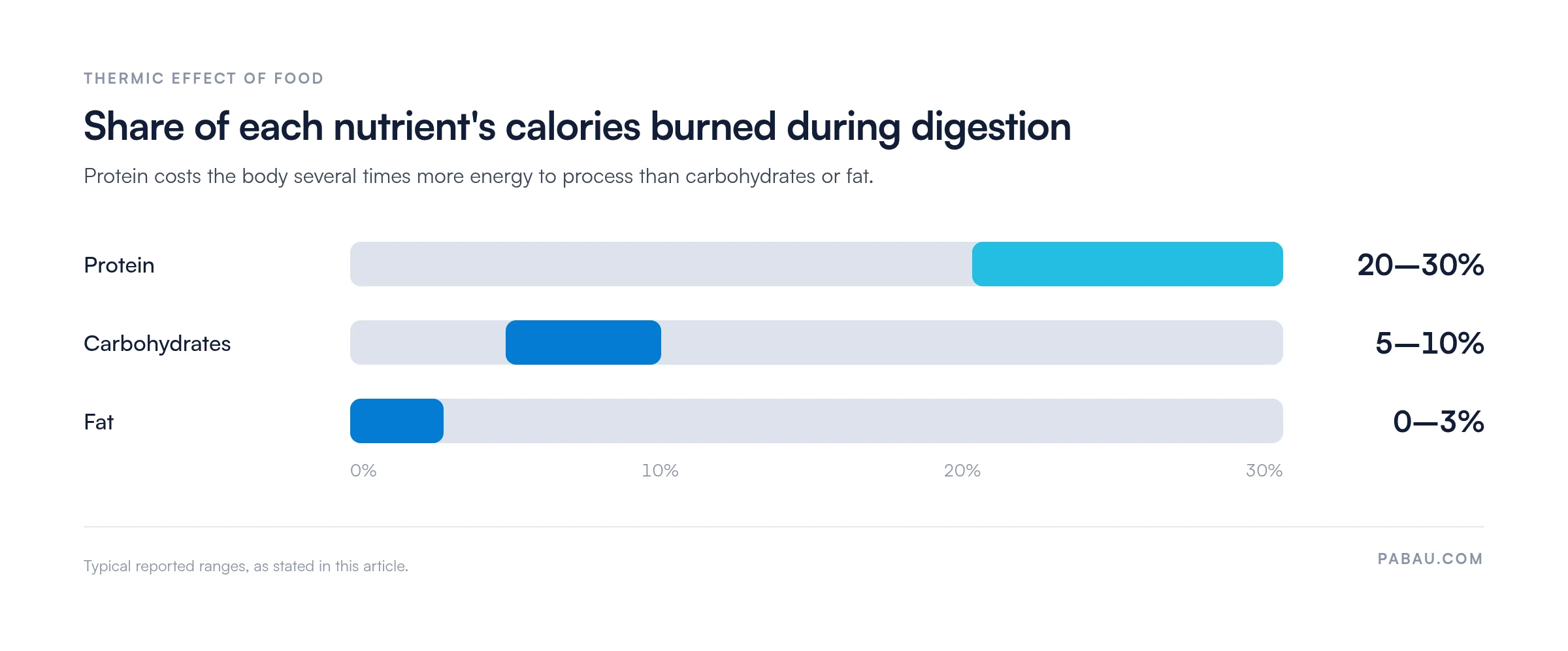
That small metabolic boost, combined with protein’s effect on appetite, helps patients hold a calorie deficit without constant hunger.
Patients who also cut carbohydrates often see a bigger drop on the scale at first. Much of that is early water weight loss, and long-term fat loss is similar when calories match.
Most patients on a weight-loss plan need 1.2–2.0 g of protein per kilogram of body weight per day. Where a patient sits in that range depends mainly on how active they are.
Start sedentary patients at 1.2 g/kg, and move those who exercise regularly toward 1.6–2.0 g/kg. According to the Academy of Nutrition and Dietetics, this range supports muscle retention while keeping patients satisfied through the day.
Lean animal and plant proteins deliver a lot of protein for few calories. That leaves room in a patient’s daily calorie budget for vegetables and whole grains. Patients who would rather take nearly all their protein from meat, eggs, and seafood can work from an animal-based food list.
A sample week takes the guesswork out of the first few days. It balances breakfast, lunch, dinner, and snacks around the daily protein target, within a typical 1,500–2,000 calorie range you adjust per patient.
Use the week as a starting point when you fill in the downloadable form with a patient, swapping in foods they already eat.
Combining protein with fiber keeps patients fuller for longer. Protein suppresses hunger hormones, while fiber slows digestion and steadies blood sugar. Patients who pair both report longer fullness between meals and fewer cravings.
Easy high-fiber, high-protein pairings include:
These pairings also help prevent the constipation some patients experience on higher-protein, lower-carb plans. For patients who need more fiber overall, the high-fiber meal plan builds a full week around it.
Weight loss depends on consistency, and meal prep removes daily decisions. Walk patients through these five steps to batch cook and portion their week.
High-protein diets are safe for most people with healthy kidneys. Patients with existing kidney disease should consult their clinician before increasing protein, because diseased kidneys struggle to clear protein waste. Drinking enough water, typically 2–3 liters a day, supports kidney function and helps with fullness cues.
Pregnant patients should also discuss any major dietary shift with their prenatal clinician. For the general population, 1.2–2.0 g/kg is well tolerated and supported by guidance from the NHS and international nutrition associations.
Many weight-loss practices still hand out diet plans on paper and chase progress by phone. Practice management software like Pabau moves that work into the patient record, with tools built for weight-loss practices.
Patients complete digital intake forms before their first visit, so their weight history, dietary preferences, and medical history are on file. You then fill in the protein plan and share it through the patient portal, where patients can reopen it between appointments.
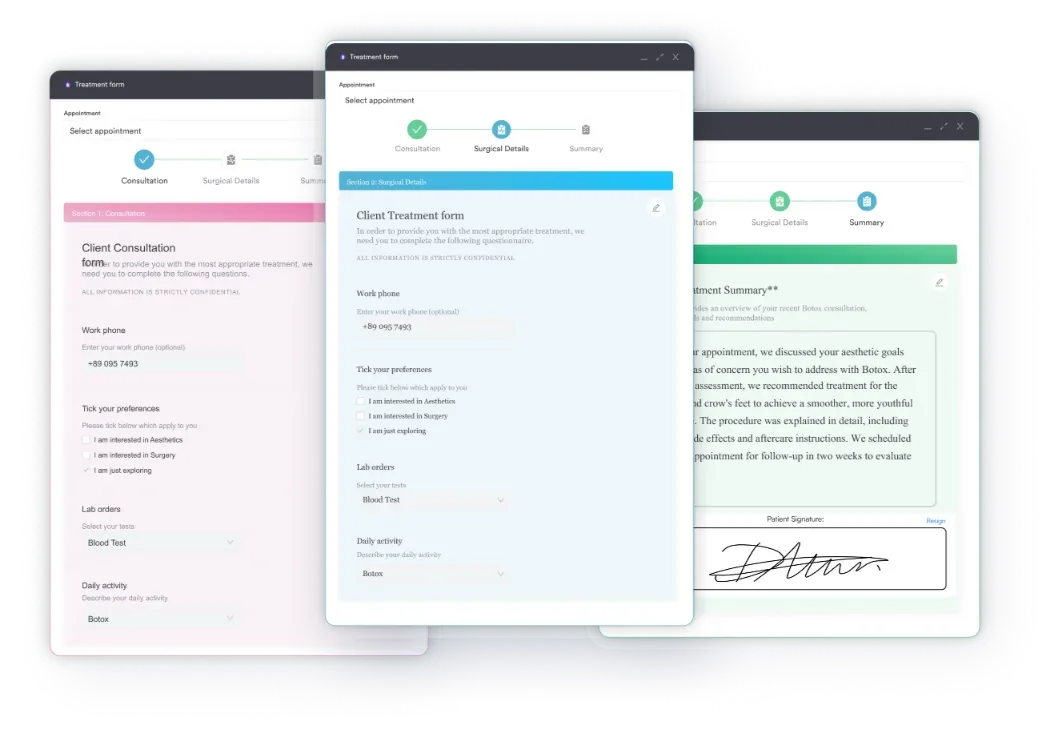
Automated SMS and email reminders prompt weekly check-ins and meal prep, so your team isn’t chasing adherence by hand. Book a demo to see how Pabau shares nutrition plans, tracks compliance, and sends follow-up reminders to weight-loss patients.

Pabau keeps each patient’s diet plan, intake forms, and progress notes in one record. Automated reminders keep patients on plan between visits.

Protein targets only work if patients can follow them at home. Set the number from body weight and activity level, then build the plan from foods the patient already eats.
The trade-off is monitoring. A higher protein intake calls for a quick kidney-health check and steady hydration, so screen before you start and review at each follow-up.
Download the form above, fill it in with your next weight-loss patient, and adjust the target as their weight and training change. Book a demo to see how Pabau keeps each patient’s protein plan, reminders, and progress in one record.

Running a weight-loss practice? Weight loss clinic software helps you manage patients on nutrition plans and track their progress over time.
Want a longer plan for patients who need more structure? 30-day meal plan for weight loss extends the same approach across a full month of meals.
Starting a patient on a tighter calorie budget? 1200 calorie diet plan sets out a low-calorie template with meal guidance you can adapt.
Need a baseline before setting a protein target? Body mass index assessment explains the formula, the ranges, and where BMI falls short.
Adding more fiber to the plan? High fiber diet meal plan gives you a 7-day template built around fiber-rich foods.
A high protein plan for weight loss is a structured eating plan that raises daily protein intake while maintaining a calorie deficit. The usual target is 1.2-2.0g per kg of body weight. This approach preserves muscle during weight loss and increases satiety, making the diet easier to follow long-term.
Weight loss depends on calorie deficit, starting weight, and adherence. Most people lose 0.5-1 kg per week on a moderate deficit (500-750 kcal below maintenance). High-protein diets do not accelerate weight loss beyond what a calorie deficit alone produces, but they do improve body composition by preserving muscle.
High-protein diets are safe for people with healthy kidneys. If you have existing kidney disease or renal dysfunction, consult your clinician before increasing protein. Staying well-hydrated (2-3 liters daily) supports kidney health regardless of protein intake.
A high-protein plan focuses on hitting a protein target while balancing carbs and fat flexibly. A high-protein low-carb plan pairs that protein emphasis with reduced carbohydrates. It often produces faster initial water weight loss, but long-term fat loss is similar if calories are equal.
Yes, plant-based proteins (legumes, tofu, tempeh, nuts) are equally effective for weight loss if they hit the protein target. Plant sources often deliver additional fiber, which boosts satiety further. Combining different plant sources (legumes plus grains) ensures complete amino acid profiles.