Anticoagulant medication list
An anticoagulant medication list is a clinical reference that groups blood thinn...

3
Last Updated: Oct 5, 2026
A cholesterol medication list organizes all FDA-approved lipid-lowering drugs by class, mechanism, generic and brand names, and typical dosing for quick clinical reference.
This guide covers 10 drug classes, from statins through to newer agents like bempedoic acid and inclisiran. Each table gives dosing ranges, indications, and side effect profiles that clinicians and care coordinators can download and adapt.
According to the American Heart Association, statins remain the first-line medication for lowering LDL cholesterol in most patients. Treatment decisions increasingly involve newer agents for statin-intolerant patients, very high-risk individuals, and those who need triglyceride management.
Every FDA-approved lipid-lowering drug class in one reference, with generic and brand names, typical dose ranges, and mechanisms of action. Each row also names the primary indication, so you can match the agent to the patient in front of you.
Download template
A cholesterol medication list covers 10 FDA-approved drug classes, from statins and PCSK9 inhibitors through to inclisiran and fixed-dose combination products. Each entry carries generic and brand names, the mechanism, and a typical dose range.
Statins block HMG-CoA reductase in the liver and remain the most widely prescribed class. Potency tiers of low, moderate, and high intensity guide treatment escalation.
Newer non-statin agents serve statin-intolerant and very high-risk patients. PCSK9 inhibitors lower LDL-C by up to 60%, and inclisiran is dosed twice yearly.
Pabau’s digital forms and clinical documentation features help practices standardize cholesterol medication review workflows and keep audit-ready records for each patient’s lipid plan.
The template below organizes cholesterol medications by drug class, so you can locate an agent, verify dosing, and check interactions in one place. Each row shows the generic name, the brand name, a typical dose range, the mechanism of action, and the primary indication.
Download the file to your practice’s shared drive, then adapt the column headers and footnotes to your own documentation standards. Use it during cardiovascular reviews, prior-authorization responses, and care coordination meetings where medication reconciliation is required.
A cholesterol medication list is a structured clinical reference to the FDA-approved drugs used to manage dyslipidemia. That covers high LDL cholesterol, low HDL cholesterol, and elevated triglycerides. The list groups medications by pharmacological class, so you can compare mechanisms, dose ranges, brand names, and indications side by side.
In practice, the list does three jobs.
The table below summarizes the 10 drug classes currently approved by the FDA for lipid lowering. Each row lists the class, its primary mechanism, generic examples, brand names, the typical indication, and the feature that distinguishes it.
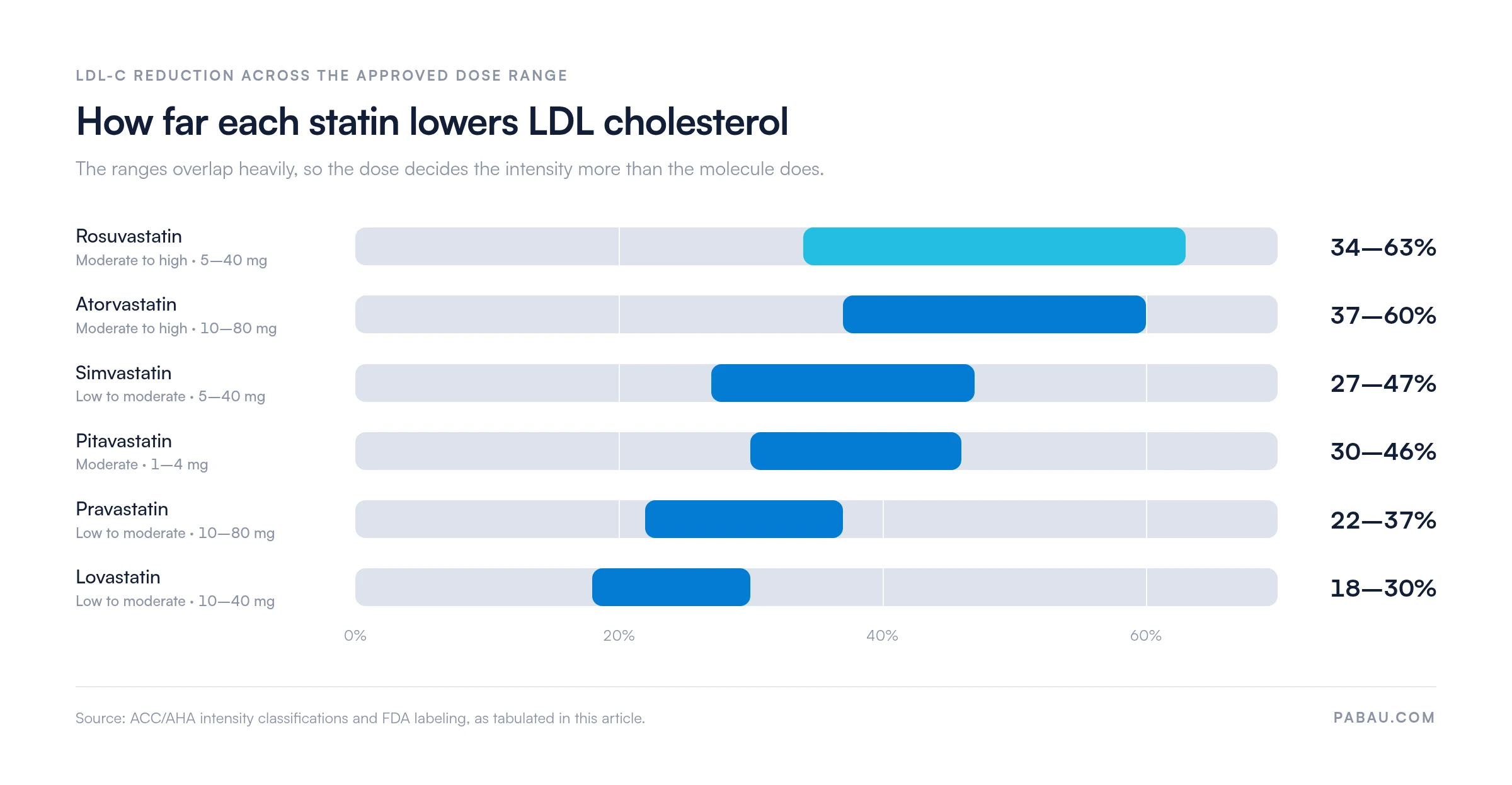
Statins are the most widely prescribed cholesterol medications, and they carry the longest track record of cardiovascular risk reduction. The table shows the major statins available in the US, with intensity classification, typical dose range, and expected LDL reduction. The ranges overlap more than the intensity labels suggest.
When a patient cannot tolerate statins because of muscle pain or raised liver enzymes, several newer agents are available. Each works by a different mechanism, so the choice turns on the patient’s risk level, tolerance history, and dosing preference.
Recording the intolerance itself matters as much as the switch, since payers ask for it at prior authorization. A shared medical records system keeps the trial, the reaction, the date, and the alternative you chose in one patient file.
Patients often ask about over-the-counter supplements such as red yeast rice, plant sterols, niacin, and fish oil. These may lower cholesterol modestly, but they differ from prescription medications in regulatory status, evidence base, and potency. The table below gives you the short answer for each one.
Key clinical point: Red yeast rice contains monacolin K, which is chemically identical to lovastatin. Supplement batches vary widely in content and potency. The FDA has taken enforcement action against manufacturers marketing high-potency red yeast rice as a drug without approval.
Screen for interactions before you prescribe, particularly with statins. Keep this reference to hand during medication reconciliation. Those reviews often surface prescriptions from other specialties, so pair it with an overactive bladder medication list for patients on urology therapy.
Digital intake forms let you capture a patient’s full medication list before the appointment, so interactions surface before you prescribe. The same record supports chart audits and prior-authorization submissions.
A structured medication reference works best once it matches the way your team documents. Download the template above, then adapt it:
Most practices keep a medication reference in one place and the patient’s record in another. The list lives on a shared drive, the review happens in the room, and the documentation gets typed up afterwards from memory. By the time a payer asks what was tried, the trail is thin.
Pabau, practice management software built for metabolic health practices, puts the two together. Digital forms capture the medication list before the appointment, and the answers land straight in the patient record. Treatment notes, lab results, and prescribing decisions sit on the same file.
That changes what a cholesterol review costs you in admin. The reference, the patient’s current agents, and the note about the change all sit in one system. An audit or a prior-authorization request is answered from the record rather than reconstructed.

Pabau’s digital forms and treatment notes capture a patient’s full medication list before the appointment. Prescribing decisions and lipid results stay on the same record, ready for audit.

The classification a drug carries matters less than the dose you write. Rosuvastatin at 5 mg and atorvastatin at 10 mg sit in the moderate band, not the high one. Pitavastatin never reaches high intensity at any dose.
So use the reference to check the dose alongside the drug, and record which agents a patient has already tried. That record is what supports the next escalation, and what a payer asks for when you move to a non-statin agent.
Book a demo to see how Pabau keeps medication reviews and lipid documentation on one patient record.

Managing a patient with both diabetes and high cholesterol? Diabetes medication list gives you the same class-by-class drug reference for glucose-lowering therapy to coordinate with lipid management.
Pairing medication with diet counseling? Low cholesterol diet food list covers the foods to recommend and avoid alongside statin or PCSK9 therapy.
Need to confirm a patient’s lipid numbers before adjusting therapy? At-home cholesterol test explains accuracy and how to interpret results.
Statins are the most frequently prescribed cholesterol medications in the United States, led by atorvastatin (Lipitor) and rosuvastatin (Crestor). They lower LDL cholesterol and have decades of evidence behind cardiovascular risk reduction. For patients who cannot tolerate statins, PCSK9 inhibitors (Repatha, Praluent) and ezetimibe (Zetia) are second-line options.
Safety varies by individual patient factors. Statins are generally well tolerated at standard doses, with muscle pain the most commonly reported side effect. For statin-intolerant patients, bempedoic acid (Nexletol) and inclisiran (Leqvio) have favorable safety profiles with lower myopathy risk. Always defer to current prescriber guidance and FDA labeling when you assess safety for a specific patient.
Statins block cholesterol synthesis in the liver by inhibiting HMG-CoA reductase, reducing LDL cholesterol by 18-63% depending on the drug and dose. Non-statin medications work by different mechanisms. PCSK9 inhibitors enhance hepatic cholesterol uptake and cut LDL by 50-60%, while ezetimibe blocks intestinal absorption for a 15-20% reduction. Fibrates primarily lower triglycerides and raise HDL, and niacin raises HDL while modestly lowering LDL and triglycerides.
No FDA-approved prescription cholesterol medications are available over the counter in the US. OTC products marketed for cholesterol management (red yeast rice, plant sterols, fish oil) are classified as dietary supplements. They have not gone through the regulatory approval that prescription drugs face. Prescription omega-3 medications (Vascepa, Lovaza) are available by prescription only and have documented cardiovascular benefits.
Fibrates (fenofibrate, gemfibrozil) are the first-line agents for triglyceride reduction, lowering levels by 20-50%. Prescription omega-3 medications (Vascepa, Lovaza) also reduce triglycerides. Niacin in extended-release form lowers triglycerides and raises HDL cholesterol. Statins modestly reduce triglycerides, by 10-30% depending on the drug and dose.
By prescribing frequency, the top five are atorvastatin (Lipitor), rosuvastatin (Crestor), simvastatin (Zocor), pravastatin (Pravachol), and ezetimibe (Zetia). Atorvastatin and rosuvastatin dominate that group. Newer agents such as PCSK9 inhibitors and inclisiran are reserved for high-risk or statin-intolerant patients.