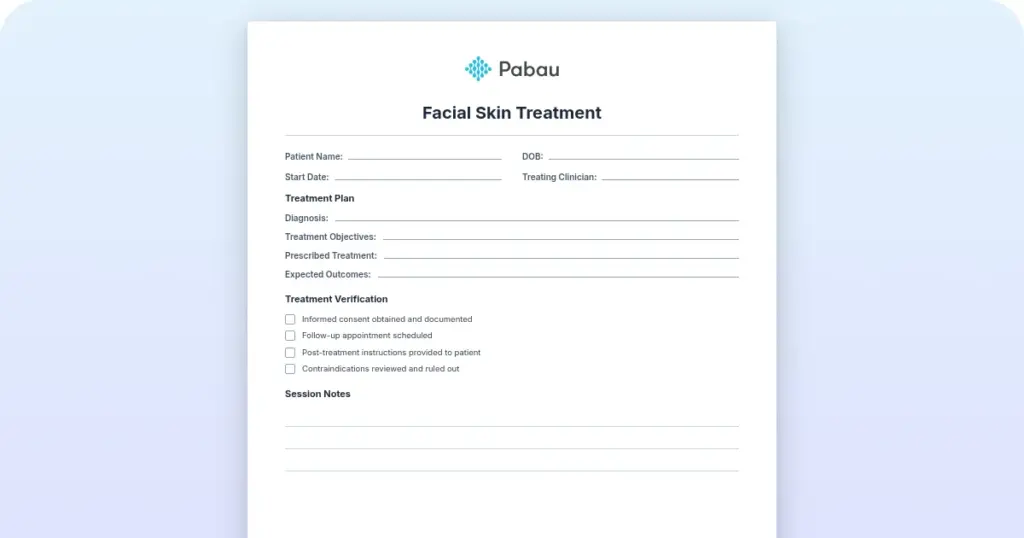
Facial skin treatment consent form template: Microneedling and phi-ion
A facial skin treatment consent form is the signed proof that a patient was scre...

2
Last Updated: Oct 21, 2026

Give patients written aftercare instructions at the end of every derma eyes session, not just a verbal run-through they will forget by the time they get home.
The first 24 hours matter most: a cold compress, no rubbing or pressure, no makeup, and sleeping on the back limit the bruising and swelling this under-eye treatment can cause.
Tell patients which symptoms are normal (mild swelling, tenderness, pinpoint bruising) and which warrant a call, so they neither panic nor miss a complication.
Practice management software like Pabau sends the aftercare form, reminders, and the follow-ups for the 2-3 session course straight to the patient’s phone.
A comprehensive, practice-ready aftercare template covering post-treatment care instructions, symptom monitoring, activity restrictions, and follow-up guidance for patients following periorbital derma eye procedures.
Download templateDerma eyes treatments (you may see them marketed as Derma 2.0 Eye) are under-eye skin boosters. A blend of hyaluronic acid, peptides, and vitamins is delivered into the delicate skin around the eye by microneedling or mesotherapy, targeting dark circles, fine lines, and crepey skin over a course of two to three sessions.
Because the periorbital skin is thin and bruises easily, patients need clear written guidance for the days that follow. Aftercare instructions for derma eyes treatment tell the patient what is normal, what to avoid, and when to call. This guide covers what to include, how to hand it over, and how practice management software like Pabau delivers and automates the whole follow-up.
A derma eyes aftercare instructions template is a standardized, practice-branded document you give patients right after an under-eye skin booster session. Because the treatment delivers hyaluronic acid, peptides, and vitamins through fine needles, the aftercare centers on protecting punctured, sensitive skin and keeping bruising and swelling to a minimum. The template outlines:
In the United States, aftercare documentation is part of informed consent and professional accountability. The American Academy of Dermatology (AAD) and state medical boards expect practitioners to provide written aftercare showing the patient understood the healing process, realistic timelines, and when to seek medical help. Without documented aftercare instructions, you lack evidence that the patient was properly informed, which leaves your practice exposed to complaints and board scrutiny.
Effective aftercare follows a five-step workflow that folds the template into your standard post-procedure protocol:
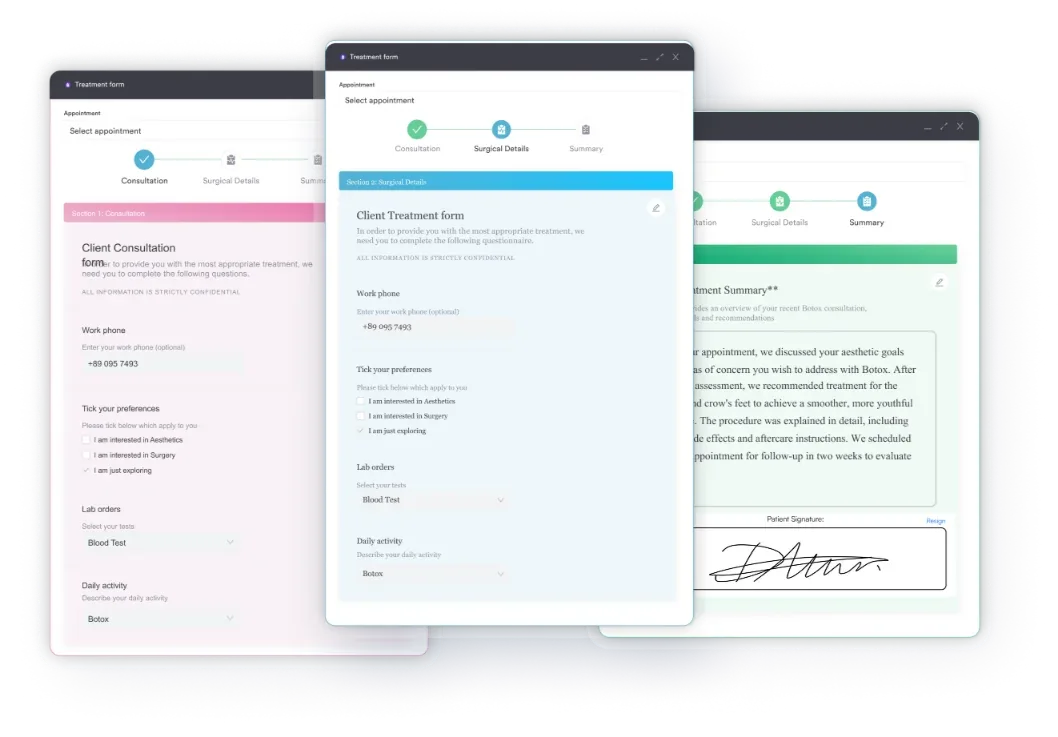
Practices using digital forms and patient portals can automate this: the aftercare template auto-populates from the appointment, sends digitally before the patient leaves. So no patient is left guessing, and your team spends less time on admin.
Aftercare instructions for derma eyes treatment are essential for any practice offering under-eye skin boosters or mesotherapy. This includes:
The periorbital area (the skin surrounding the eye) is thinner, more sensitive, and more vascular than the rest of the face. Patients bruise and swell more here, and they worry more because the eyes are so visible. A clear, reassuring template sets expectations and cuts down the panic calls during healing.
Digital forms sit at the center of practice management software, feeding records, billing, and follow-ups from one entry.
A structured aftercare template delivers clinical and operational benefits from day one:
The days after treatment are when anxiety peaks. A patient sees swelling or a bruise near the eye and wonders if something went wrong. A clear, personalized aftercare document reassures them that you anticipated the healing process and planned for it, with exactly what to do at each stage. That confidence turns into positive reviews, repeat bookings, and referrals.
The first 24-48 hours are when the skin barrier is compromised and swelling peaks. Your template must spell out the non-negotiables for this window:
Practices using patient portals can send a reminder by email or SMS the morning after the procedure, reinforcing these restrictions and asking the patient to report anything concerning. This proactive outreach reduces complications and shows the patient you are looking out for them.
A side-by-side checklist helps patients absorb the guidance fast. Include a do’s list and a don’ts list in your template.
Do:
Don’t:
This format is easy to scan, so patients refer back to it throughout healing. Personalize the timings for the individual patient, since someone who bruised heavily may need an extra day or two before makeup.
The symptom-tracking guide is the section patients reread most. They need to know what is normal, what is minor but notable, and what is urgent. Structure it as a timeline:
Equally important is the “contact us immediately if” section. Give the patient a clear escalation path and list the red flags:
Your aftercare instructions should include a short list of safe products for the healing period. Recommend by category rather than a single brand, so patients have some flexibility:
The contraindications matter just as much. Aftercare instructions must warn against retinol, vitamin C serums, alpha hydroxy acids, benzoyl peroxide, fragrance, and essential oils until the skin is fully healed (typically two to four weeks). Many patients try to speed up results by layering actives, so name the exact ingredients and timelines to avoid.
In the United States, aftercare instructions are grounded in informed-consent law and the standard of care set by state medical boards. Most states require practitioners to provide clear pre- and post-treatment guidance, and boards review documentation when a complaint is filed. Devices and topical products used around the eyes are regulated by the U.S. Food and Drug Administration (FDA), and many medical spas operate under physician oversight defined by state law. A practice without a standard aftercare template struggles to show that patients were properly informed, which raises exposure to board action and malpractice claims.
Your template should include a disclaimer that aftercare instructions are not a substitute for medical advice, and that patients should contact their practitioner or primary care physician if symptoms persist or worsen. This documents your guidance while making your responsibility to the patient’s recovery clear.
If your practice operates across multiple states, note that scope-of-practice and supervision rules vary. Always align your aftercare instructions with your state medical board’s requirements, your state’s nursing or cosmetology regulations where they apply, and FDA guidance for any medical devices used.
Practice management software lets you automate aftercare delivery and follow-up. Instead of printing and handing over a form every time, you can:
This reduces human error, keeps aftercare consistent across your team, improves patient compliance, and builds audit-ready documentation, which is what regulators and malpractice insurers expect.
Practitioners working across multi-location practices gain even more: a standardized template means every location delivers the same aftercare, whoever performs the procedure. That consistency and control is what lets an aesthetic business scale without the quality slipping.
Your template should answer the questions patients ask most about derma eyes aftercare:
Including these answers in the template reinforces the key messages and takes routine questions off your team’s plate.
The template is only part of the system. Train your team to deliver aftercare both out loud and in writing. Key points:
Practices using dermatology or aesthetic software can flag post-treatment follow-ups as mandatory tasks in the patient’s timeline, so no one slips past your team. Template, training, automation, and follow-up together turn aftercare into a source of patient loyalty rather than a box to tick.
Aftercare instructions for derma eyes treatment are a clinical necessity and a professional standard. A practice-branded template shows you followed best practice, protects your license and insurance, and gives patients a calmer, better-informed recovery.
Paired with automated delivery and reminders, aftercare also keeps patients on track through the full course, so they see the result and rebook. Download the template above, customize it to your treatments, and build it into your standard post-procedure protocol. Want to see how Pabau sends the aftercare form and books the next session automatically? Book a demo.
They should cover immediate steps (cold compress, no rubbing or pressure), first 24-48 hour restrictions (makeup, sun, exercise, sleeping position), the expected healing timeline, symptom monitoring with red-flag criteria, product recommendations and ingredients to avoid, follow-up scheduling across the course, and clear contact details for urgent concerns. Written documentation protects both patient safety and practice liability.
Around 24 hours, so the needle entry points can close before makeup and its bacteria reach them. Patients who bruised or swelled more may need an extra day. Always personalize this in your template based on the individual’s healing.
Light walking can resume after 24-48 hours. Vigorous exercise, running, weightlifting, hot yoga, and saunas should wait 48-72 hours, because increased blood flow, heat, and sweating worsen swelling and bruising. Include this timeline in your aftercare template.
Practice management software can auto-populate aftercare templates from the appointment record, deliver them by patient portal or SMS, and trigger reminder campaigns at set intervals (day 3, day 7, and before the next session). This keeps delivery consistent, tracks compliance, and builds audit-ready documentation of informed consent.
Normal symptoms include mild-to-moderate swelling, tenderness, and pinpoint bruising that settle over several days. Concerning symptoms that warrant urgent contact include fever above 100.4°F (38°C), severe swelling affecting vision, signs of infection (spreading redness, heat, pus, odor), an allergic reaction (hives, difficulty breathing), or pain that over-the-counter medication does not relieve. Include this distinction clearly in your template.