Journal prompts for mental health
Journal prompts for mental health are guided questions that help people process ...

2
Last Updated: Oct 13, 2026

The ACT bullseye worksheet is a values-clarification tool from Acceptance and Commitment Therapy that helps clients identify what matters most across work, leisure, relationships, and personal growth.
Clients mark an X on a bullseye target diagram to rate how closely their current actions align with their stated values — a visual, concrete method for comparing intentions against behavior.
The worksheet is most effective as an assessment tool, a mid-therapy check-in, or a session opener for clarifying barriers and planning committed action toward values-based living.
Practice management software like Pabau, with digital intake forms and a client portal, helps therapists streamline worksheet administration, store completed assessments securely, and track progress across treatment episodes.
A ready-to-use values-clarification template covering four life domains (work, leisure, relationships, personal growth), visual bullseye rating scales, and space for barrier identification and committed action planning.
Download templateThe ACT bullseye worksheet is a visual, evidence-based tool from Acceptance and Commitment Therapy that helps therapists guide clients toward values-based living. Originally developed by Tobias Lundgren and popularized by Russ Harris, it has become a cornerstone assessment in mental health practice — useful for initial intake, mid-therapy reflections, and motivation conversations.
This guide explains what the worksheet is, how to use it clinically.
The ACT bullseye worksheet is a paper-based or digital form that helps clients clarify their core values and assess how closely their current behavior aligns with those values.
It sits at the heart of Acceptance and Commitment Therapy — a third-wave cognitive-behavioral approach, developed within the Association for Contextual Behavioral Science (ACBS) community, with a research evidence base supporting its use for anxiety, depression, chronic pain, and substance-use disorders.
The worksheet uses a simple but powerful visual: a bullseye (concentric rings) divided into four life domains. Clients name their values in each domain, then mark an X to show how “on track” they currently are.
The distance between their stated values and their X placement often becomes the therapy’s focal point — it highlights the discrepancy between what matters and what they’re actually doing.
This is not a diagnostic tool. It’s a clinical handout — a talking point that opens conversations about psychological flexibility, committed action, and the role of avoidance or fusion in derailing values-based behavior.
Every ACT bullseye worksheet covers the same four life domains. Understanding what each represents helps you guide clients through the exercise and contextualize their values.
This four-domain structure ensures clients reflect across their whole life, not just one area. Someone might be thriving professionally but neglecting relationships — or exercising regularly but avoiding meaningful work. The breadth of the worksheet mirrors ACT’s commitment to psychological flexibility across contexts.
Using the worksheet effectively requires a structured, collaborative approach. Here are the four clinical steps.
Start by asking the client to name 1-3 core values per domain. Use open-ended prompts: “When you imagine yourself at your best in your career, what qualities or goals are present?” Avoid imposing values. The worksheet works only when clients own the values — not when they inherit them from family, culture, or therapy.
Listen for values language: connection, growth, courage, authenticity, contribution. Someone who stalls here can sort a values card deck first, then bring the top choices back to the bullseye.
Once values are named, the client marks an X on the bullseye for each domain. The target has concentric rings: the bullseye center means “my actions align perfectly with my values”; outer rings mean “my actions are off track.” This visual instantly surfaces the mismatch between values and behavior.
A client who values “presence in relationships” but marks near the outer ring is seeing their avoidance pattern. No lecture needed — the worksheet does the work. A client portal lets clients complete the worksheet digitally before or after sessions, making it accessible for remote therapy or asynchronous reflection.
Now ask: “What’s getting in the way?” Listen for both external barriers (time constraints, caregiving duties) and internal ones (anxiety, self-doubt, old stories.
This is where ACT shines — it names psychological barriers (cognitive fusion, experiential avoidance) without pathologizing them. The worksheet has space for this naming. Many clinicians find this step reveals the core inflexibility the client needs to work on.
Close by selecting one domain and asking: “What’s one small, values-aligned action you could take this week?” This turns awareness into behavior change. Concrete actions — a phone call, a boundary, an hour at the gym — make values tangible.
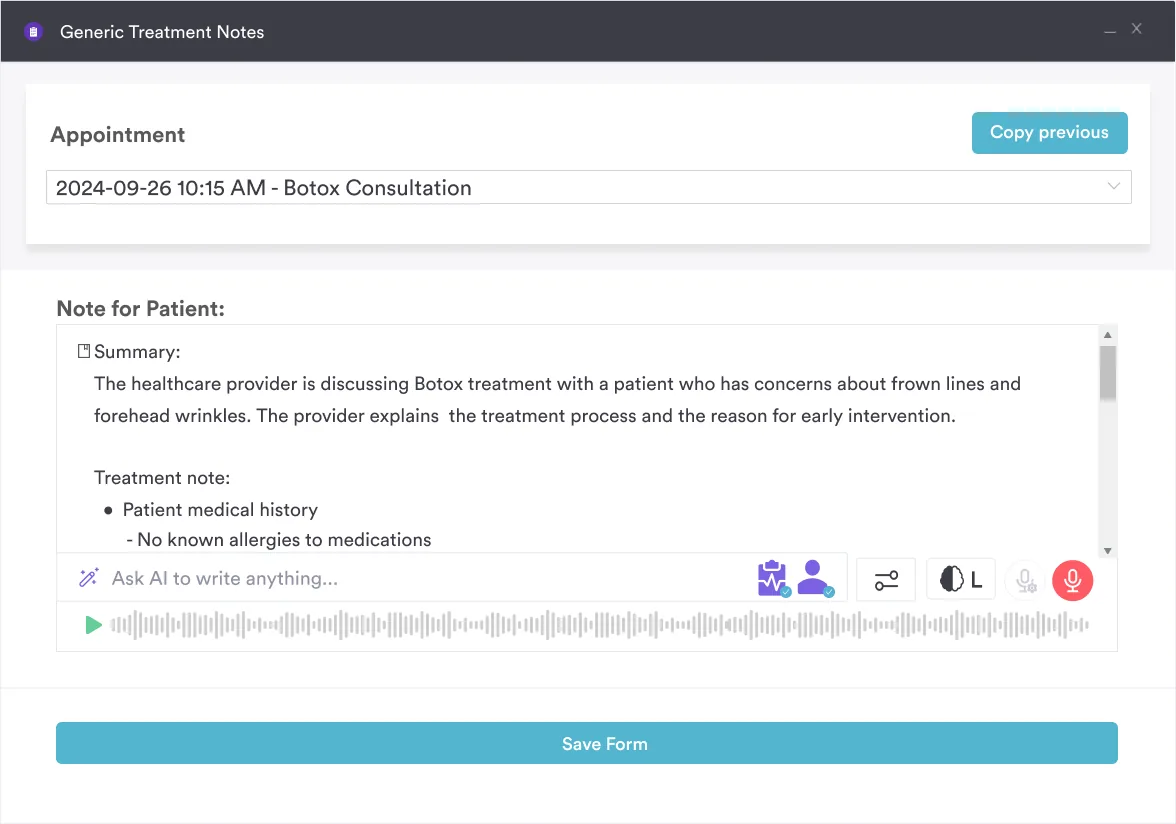
Digital forms sit at the center of practice management software, feeding records, billing, and follow-ups from one entry.
Timing matters. The worksheet is not a one-time exercise; it’s a compass you return to throughout therapy.
The worksheet is not appropriate for acute crisis presentations or clients in severe dissociation. It assumes enough psychological stability to reflect and engage. For high-risk or acutely unwell clients, safety planning takes priority.
Many therapists layer the bullseye alongside other structured tools depending on what a domain calls for: an AA step 1 worksheet when substance use is part of the clinical picture.
Modern practice management software makes worksheet administration seamless.
The client portal lets clients download and complete the worksheet before arrival, freeing session time for deeper exploration. And secure document storage ensures completed worksheets are retained and auditable for supervision or CQC inspections.
Treatment planning becomes richer too: therapists log values and committed actions directly in the client record, then send automated follow-up messages between sessions to reinforce accountability. The worksheet moves from a static PDF to a living part of the therapy journey.
Ready to integrate ACT tools into your practice? Book a demo with Pabau to see how digital intake forms, client portals, and automated treatment notes can streamline your ACT workflows.
The ACT bullseye worksheet is a values-clarification tool from Acceptance and Commitment Therapy. Clients name their core values across four life domains (work, leisure, relationships, personal growth) and then mark an X on a bullseye target to show how closely their current actions align with those values. It is a visual, non-pathologizing way to compare intentions against behavior.
The Bull’s Eye worksheet was originally developed by Tobias Lundgren, a Swedish ACT therapist and trainer. Russ Harris, an Australian ACT developer and author of The Happiness Trap, adapted and popularized it through his books and training, making it one of the most widely used ACT clinical tools.
The four domains are Work (career, professional identity, contribution), Leisure (hobbies, recreation, social activities), Relationships (family, friendships, partnerships), and Personal Growth and Health (physical wellness, learning, spiritual development). Clients identify values in each domain and rate their values alignment separately.
The bullseye worksheet shows where values and current behavior diverge. Committed action is the follow-up: concrete, values-aligned steps that bring the two back into alignment. The worksheet surfaces motivation; committed action builds the habit. Many therapists use the worksheet to launch action planning at the end of a session.
Yes. The worksheet is evidence-based for anxiety, depression, chronic pain, and substance-use disorders. It works by shifting focus from symptom elimination to values-aligned living — a cornerstone of ACT. It is not a diagnostic or treatment tool on its own, but a conversation starter that helps clients clarify what matters when distressing thoughts and feelings arise.