Miracle question worksheet
A miracle question worksheet is a solution-focused tool that asks patients to im...

1
Last Updated: Oct 15, 2026

An abandonment issues quiz is a structured self-assessment tool that helps clients recognize emotional and relational patterns linked to fear of abandonment.
The quiz evaluates anxiety, avoidance, reassurance-seeking, and people-pleasing behaviors that often accompany attachment-related concerns.
Scoring and interpretation guidance let therapists tailor interventions such as CBT, DBT, or schema therapy to the specific abandonment patterns each client presents.
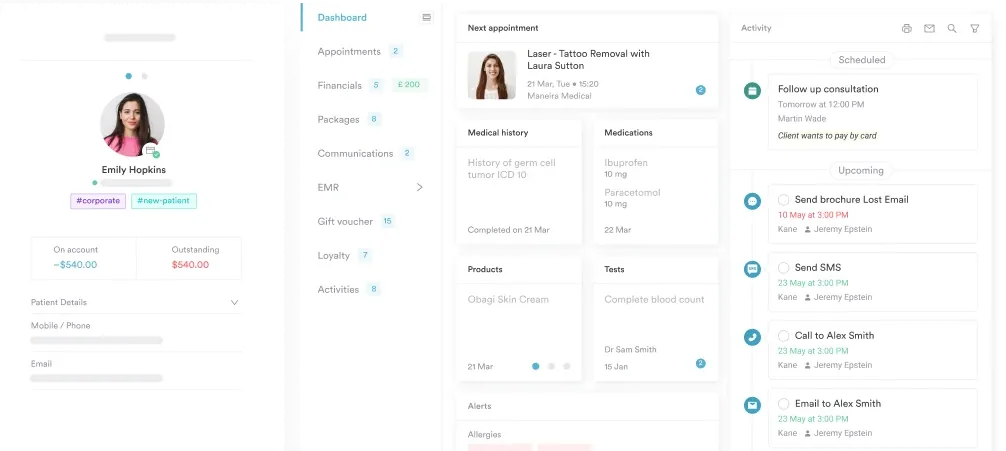
Pabau’s digital forms and client records keep quiz responses securely stored, so you can reference assessment results across sessions and track therapeutic progress.
A clinical assessment tool for identifying abandonment-related emotional and behavioral patterns. Includes scoring guidance, an interpretation framework, and practitioner instructions for therapeutic use.
Download templateAbandonment issues show up in therapy in several ways: persistent reassurance-seeking, an intense fear of rejection, people-pleasing at the cost of personal boundaries, and a reluctance to trust closeness.
Practice management software like Pabau gives therapists a systematic way to assess these patterns rather than infer them session by session. Also called a fear of abandonment quiz or an abandonment issues test, the tool works as both a clinical intake asset and a therapeutic resource that deepens a client’s self-awareness. This guide walks through how to use it, score it, and turn the results into a treatment focus.
An abandonment issues quiz is a structured self-assessment that helps clients recognize emotional and relational patterns associated with fear of abandonment. It is not a diagnostic tool, which only trained professionals can administer and interpret. Instead.
In plain terms, what abandonment issues means is a persistent, often disproportionate fear that people who matter will leave, usually rooted in inconsistent early caregiving or a major adult loss. The quiz turns that fear into a measurable pattern instead of a vague worry.
The tool typically spans 20 to 40 statements covering three core dimensions:
Attachment theory, originally developed by John Bowlby and Mary Ainsworth, underpins abandonment assessment. Anxious-preoccupied and fearful-avoidant attachment styles correlate most strongly with abandonment concerns, since both organize around a fear that closeness will end in loss.
The DSM-5 recognizes “frantic efforts to avoid real or imagined abandonment” as a diagnostic criterion for borderline personality disorder. Abandonment fear also exists across many other presentations, including anxiety disorders, relationship difficulties, and trauma responses.
Self-administered quizzes create psychological distance, so clients answer privately and often more honestly than they would under direct questioning. That reveals patterns they may not consciously recognize.
A scored quiz also normalizes these concerns. It frames them as understandable responses to past experiences rather than character flaws, which reduces shame and strengthens the therapeutic alliance.
These names get used almost interchangeably online, but they point at different scopes of assessment. Knowing which one you actually want saves you from handing a client the wrong instrument.
For most intake purposes, the abandonment issues quiz on this page is the right starting point: it captures anxiety, avoidance, and behavior in one pass, and the results map directly onto the CBT, DBT, and schema-therapy interventions covered later in this guide.
Clients often arrive asking a version of the same question: “do I have abandonment issues?” A scored quiz answers it by measuring the behaviors that abandonment fear produces, so you can name a pattern instead of a vague worry. Most of these patterns first surface as abandonment issues in relationships, which is usually what brings a client into your office. These are the signs the assessment screens for.
No single sign confirms a pattern. The quiz earns its place because it counts how many of these show up together and how intensely, which is what separates an ordinary worry about a relationship from an abandonment pattern worth working on in therapy.
Abandonment issues in women often present as heightened reassurance-seeking and hypervigilance to a partner’s moods. A man with abandonment issues more often shows withdrawal, or anger that masks the same underlying fear. Neither pattern belongs to one gender only: plenty of women present with avoidant withdrawal, and plenty of men present with anxious reassurance-seeking. Ask about the behavior first, then use the quiz to confirm the pattern, rather than assuming it from a client’s gender.
Many practices log scores like these in measurements tracking software, so progress charts update the moment a reassessment is saved.
A clinically useful abandonment issues quiz includes five structural elements:
Within those statements, the assessment tracks a few distinct threads:
Scoring usually uses a 0-4 or 1-5 Likert scale, with totals that depend on the number of items. Interpretation brackets then flag mild, moderate, and severe ranges of concern.
As a worked example, a 40-item quiz scored 0-4 produces a 0-160 range. You might read roughly 0-53 as mild concern, 54-106 as moderate, and 107-160 as severe, then set the cut-offs that fit your caseload. Those brackets are what let you quickly gauge clinical severity and tailor your treatment focus.
Once clients complete the quiz, score and discuss the results collaboratively. A moderately elevated score signals anxiety-driven patterns, while a high avoidance score suggests defensive distancing.
Use the results to build a shared formulation. For example: “Your reassurance-seeking score suggests you often worry about relationships ending. Let’s explore where that fear comes from and what you need from partners to feel safe.” This validates the client’s experience and frames the quiz as a stepping stone to deeper work, not a label.
Link the results to your clinical notes by recording the score, the dimensions, and your observations. Over later sessions, you can reference that data to track progress. Declining anxiety scores suggest your interventions are working, while persistent avoidance scores may mean it is time to shift from insight-focused to behavior-change work.
Store completed quizzes in secure client records to keep continuity across practitioners and locations as your practice grows. Secure digital storage also simplifies GDPR and HIPAA compliance when you handle sensitive data at intake. Documenting the link between quiz results and your care plan keeps patient care planning coherent across sessions.
Because an abandonment issues quiz doubles as an attachment issues quiz, high anxiety scores respond well to CBT (cognitive restructuring of rejection fears) and DBT (distress tolerance and emotion regulation skills). Elevated avoidance scores benefit from schema therapy (identifying protective modes) and attachment-focused approaches (building earned security).
Mixed patterns, where both anxiety and avoidance are high, suggest disorganized attachment and may call for trauma-informed care or longer-term psychodynamic work.
When a quiz reveals severe abandonment patterns, such as extreme reassurance-seeking, self-harm rumination tied to rejection fears, or cycles of splitting (idealization then devaluation), clinical escalation is necessary. If a client endorses suicidal ideation linked to abandonment (“if they leave me, I can’t live”), move immediately to risk assessment and the appropriate crisis protocol rather than relying on the quiz alone.
Before administering the quiz, obtain informed consent that makes four things clear:
Frame the quiz as collaborative exploration, not an assessment imposed on the client. Follow informed consent principles when you use it in group or supervision contexts, and get explicit additional consent if data will feed into training or research. Make sure your data-handling policies align with GDPR (UK and EU) or HIPAA (US).

Many clients feel vulnerable answering abandonment-related questions, so normalize it: “These questions are personal, and some may stir up feelings. That’s normal. Answering honestly helps me understand what you need.” Give them a quiet space, allow time to reflect, and offer a follow-up conversation if the quiz triggers distress. That reassurance builds trust and is central to improving patient engagement in therapy.
After clients review their results, invite questions and check for catastrophic thinking (“my score means I’m unlovable”). Reframe high scores as signs of sensitivity and relational awareness, strengths that can deepen authentic connection once channeled differently.
An abandonment issues quiz connects clinical assessment with therapeutic alliance. By giving clients structured, self-administered insight into their attachment patterns, it normalizes abandonment concerns and creates a shared language for your work together.
The free template above includes scoring guidance, interpretation frameworks, and practitioner notes, ready to fold into your intake process today. Store responses securely and reference them across sessions, and clients can gradually build earned security as they learn that being left is a relational risk they can navigate, not a reason to abandon themselves.
Want to see how it works in practice? Book a demo to see how Pabau’s digital forms and client records keep your quiz data secure and accessible across every session.

Assessing a client’s full mental health history? psychiatric evaluation template This guide covers every component of a thorough mental health assessment, from intake onward.
Tracking behavior patterns over time? behavioral observation checklist This printable form rates 36 behavior statements and leaves room for context and comments.
An abandonment issues quiz is a self-assessment tool that helps clients and clinicians identify emotional and behavioral patterns linked to fear of abandonment. It is not a diagnostic instrument but a structured reflection tool that evaluates anxiety, avoidance, reassurance-seeking, and relational patterns grounded in attachment theory.
No. The quiz is a clinical-intake and therapeutic-exploration tool, not a diagnostic assessment. Only a qualified mental health professional conducting a full evaluation can diagnose borderline personality disorder, complex PTSD, or other conditions in which abandonment fear is a symptom. Use the quiz to identify patterns, build therapeutic alliance, and inform treatment planning.
Readminister it every 8 to 12 weeks to track progress and adjust treatment as needed. Declining scores validate the work and sustain motivation, while stable scores may signal a need to shift your clinical approach or explore internal resistance.
Yes, when it is administered and stored securely. Obtain informed consent, explain the limits of confidentiality, and make sure your practice complies with GDPR (UK and EU) or HIPAA (US). Store responses in secure client records that only authorized practitioners can access.
CBT addresses anxious patterns and rejection fears, DBT builds distress tolerance and emotion regulation, schema therapy identifies protective modes, and attachment-focused work builds earned security. High anxiety responds to cognitive restructuring, while high avoidance benefits from gradual vulnerability and trust-building. Disorganized patterns, with both high anxiety and avoidance, often require trauma-informed or psychodynamic approaches.
Abandonment issues usually begin in early attachment relationships. When caregivers are inconsistent, absent, or frightening, a child’s natural fear of being left is never soothed, and that insecure attachment carries into adult relationships. Adult events such as a sudden loss, betrayal, or divorce can trigger the same response, which is why the assessment asks about both childhood and adult experiences.
If you frequently seek reassurance, expect rejection, people-please to keep others close, or push them away before they can leave, you may be showing signs of abandonment fear. A scored abandonment issues test counts how many of these patterns appear and how strongly, which is more reliable than any single sign. It flags patterns worth exploring, though only a qualified professional can diagnose an underlying condition.