List of vitamins: All 13 with RDAs and deficiency signs
A list of vitamins names the 13 essential vitamins the body needs from food or s...

8
Last Updated: Oct 8, 2026

GERD symptoms flare when certain foods relax the lower esophageal sphincter or raise stomach acid, so a structured week of low-acid meals gives patients a clear starting point for relief.
This 7-day GERD diet plan maps out breakfast, lunch, dinner, and a snack for each day, plus a foods-to-avoid list and a trigger-tracking worksheet to pin down what sets off symptoms.
Clinicians can personalize the plan for vegetarian, allergy, and cultural needs, which the ACG’s 2022 guidance backs as more effective than blanket food elimination.
With practice management software like Pabau, you can share the plan through the patient portal, collect daily symptom logs, and adjust recommendations without paperwork.
A ready-to-use PDF covering low-acid breakfast, lunch, dinner, and snack options for all seven days, plus a comprehensive foods-to-avoid list, a trigger-identification worksheet, and patient information fields for personalized care.
Download templateA 7-day GERD diet plan gives patients a week of low-acid, reflux-friendly meals and a simple way to track which foods set off their symptoms. This template turns standard dietary advice for gastroesophageal reflux disease (GERD) into a printable plan you can hand a patient in minutes, then personalize for their triggers, allergies, and food preferences.
Below you’ll find a full sample week, the foods to eat and avoid, and how to run the seven days as a structured trigger-identification trial.
A 7-day GERD diet plan is a structured meal guide that helps patients systematically cut acid reflux triggers over a one-week trial. It sets out which foods relax the lower esophageal sphincter (LES), the muscular valve between the stomach and the esophagus, and which ones support normal acid control. For clinicians, it works as both a patient education handout and a compliance-tracking document.
The plan covers:
Both the American College of Gastroenterology (ACG) and the UK’s National Institute for Health and Care Excellence (NICE) recommend diet and lifestyle changes as part of GERD management. NICE’s first-line anti-acid treatment is proton pump inhibitor (PPI) therapy, with lifestyle changes recommended alongside it. The ACG’s 2022 guideline favors identifying each patient’s own trigger foods over blanket elimination, which is exactly what the seven-day trial is built to do.
It also pairs well with a longer 30-day plant-based diet plan for patients who want broader dietary support.
Here’s a full week of low-acid meals to get patients started. Every day includes breakfast, lunch, dinner, and a snack built around GERD-friendly foods and free of common triggers like citrus, tomato, chocolate, caffeine, and fried food. Patients can swap any meal for an equivalent low-acid option that suits their tastes.
| Day | Breakfast | Lunch | Dinner | Snack |
|---|---|---|---|---|
| Day 1 | Oatmeal with sliced banana and a little honey | Grilled chicken with brown rice and steamed green beans | Baked cod with roasted sweet potato and sautéed spinach | Melon slices |
| Day 2 | Low-fat Greek yogurt with sliced pear | Turkey and avocado wrap on a whole-grain tortilla | Baked salmon with quinoa and roasted zucchini | A small handful of almonds |
| Day 3 | Scrambled egg whites with whole-grain toast | Chicken and mixed-green salad with olive oil | Whole-grain pasta with grilled chicken and sautéed kale | Rice cakes with almond butter |
| Day 4 | Banana and oat smoothie with almond milk | Brown rice bowl with tofu and steamed broccoli | Ginger-baked salmon with couscous and carrots | Low-fat cottage cheese |
| Day 5 | Chia pudding made with almond milk | Roasted root vegetables with lentils | Baked turkey meatballs with mashed potato and green beans | Oatcakes |
| Day 6 | Avocado toast on whole-grain bread | Chicken and vegetable soup (no tomato) with a whole-grain roll | Stuffed bell peppers with lean ground turkey and rice | Papaya slices |
| Day 7 | Low-fat yogurt parfait with oats and banana | Baked chicken with wild rice and steamed carrots | Shrimp with zucchini noodles and olive oil | Whole-grain crackers with cucumber |
Portion sizes and specific foods should flex to each patient. If someone reacts to a food on the plan, log it and swap it out. That’s what the trigger-tracking worksheet is for.
GERD is chronic acid reflux, so the same week works as a 7-day meal plan for acid reflux more broadly. It suits a patient whose reflux hasn’t been formally diagnosed as GERD, or one managing frequent heartburn, without a separate handout. Keep the day-by-day structure, swap individual meals for equivalent low-acid options, and use the worksheet to pin down each person’s triggers.
GERD occurs when stomach acid repeatedly flows back into the esophagus, inflaming and irritating the lining. The lower esophageal sphincter (LES) normally works as a one-way valve, but certain foods relax it, among them fatty and fried foods, chocolate, caffeine, alcohol, peppermint, and spicy dishes. Once the valve relaxes, acid moves backward and triggers heartburn, regurgitation, and indigestion. Clinicians coding GERD encounters can reference the ICD-11 DA22 GERD clinical guide for accurate diagnostic documentation.
Many of these overlap with a broader anti-inflammatory diet plan, which can support patients managing reflux alongside other conditions.
Software built for weight loss practices tracks each client’s plan, measurements, and follow-ups.
Using the template effectively involves five steps:
Print the plan and hand it to the patient with a verbal walkthrough. Displaying the foods-to-avoid list prominently gives them a quick daily reference.
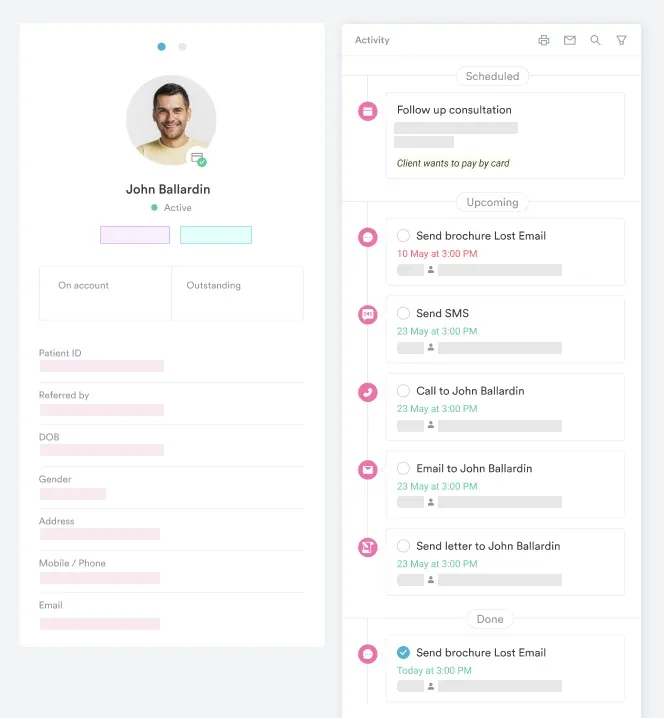
Practice management software like Pabau lets you share the plan through the patient portal and collect each day’s food-and-symptom log automatically, so the day-7 review starts with the data already in front of you.
This template is used across multiple healthcare settings:
The template also suits weight-loss practices, where GERD symptoms often improve alongside reduced BMI and healthier eating patterns. It can be combined with a structured weight-loss plan for comprehensive patient support.
Consistency and standardization: every patient receives the same evidence-based guidance, which keeps clinical messaging consistent across your practice.
Patient engagement and compliance: a written plan is easier to follow than verbal advice alone, so patients are more likely to stick with it.
Documentation: the template includes patient signature fields and practitioner notes, so dietary counseling is recorded in the patient’s file.
Rapid symptom assessment: seven days is long enough to see a change in symptoms and short enough to keep patients motivated. Many patients notice improvement within the first week.
Personalization without duplication: you tailor one template per patient instead of writing a plan from scratch each time, and capture cleaner data for follow-up.
Flag high-risk food combinations on your template: acidic beverages with citrus fruit, high-fat proteins paired with spicy seasonings, and carbonated drinks with late-evening meals. Teaching patients to avoid these pairings prevents symptom flares more effectively than single-food restriction.
Although common GERD triggers are well documented, individual tolerance varies widely. A food that triggers one patient may be tolerated by another, which is why the ACG recommends identifying each person’s own triggers rather than restricting foods across the board.
The template includes a trigger-tracking worksheet where patients log meals, times, symptom onset, and severity on a scale of 1 to 10. After day 4, patterns emerge: a patient might notice that morning citrus juice causes midday heartburn, while evening alcohol causes nighttime reflux.
By day 7, the practitioner and patient can build a personalized avoid-list and tolerate-list specific to that individual. This data informs the long-term dietary strategy and justifies continued adherence beyond the initial week.
A 7-day GERD diet plan turns general dietary advice into something a patient can act on the same day. It gives them structure, a way to track what helps, and a clear point to review progress, which supports better adherence and cleaner documentation.
Download the free template, personalize it for your patient, and use the seven days as a structured trial to build the foundation of longer-term reflux management. To track adherence digitally, share the plan through your practice management system so patients can submit daily logs and you can respond with guidance between visits.

Need a broader eating plan template? healthy eating plan template offers customizable meal planning sections with calorie and macronutrient targets for dietitians.
Need a simple height and weight log? height weight chart template records a patient’s height and weight with quick instructions for accurate readings.
Managing a patient with high glucose readings? hyperglycemia nursing care plan sets out the NANDA diagnoses, interventions, and measurable outcomes for a high glucose reading.
A 7-day GERD diet plan is a structured meal guide that helps patients identify and avoid foods that trigger acid reflux while maintaining balanced nutrition over seven days. It includes low-acid meals for breakfast, lunch, dinner, and snacks, a foods-to-avoid list, portion-control guidance, and a worksheet for tracking symptoms.
It can help. The American College of Gastroenterology and NICE both recommend dietary and lifestyle changes as part of GERD management, though NICE’s first-line anti-acid treatment is proton pump inhibitor (PPI) therapy, with lifestyle changes alongside it. Many patients notice meaningful improvement within the first week once common triggers are removed and meals are smaller and earlier.
Common GERD triggers include fried foods, full-fat dairy, red meat, chocolate, caffeine, alcohol, spicy foods, citrus fruits, tomato products, peppermint, and carbonated drinks. Individual tolerance varies, so the template’s tracking worksheet helps each patient identify their personal triggers.
The template includes alternatives: plant-based proteins such as tofu, tempeh, and lentils replace meat; dairy-free options like almond milk and coconut yogurt replace conventional dairy; and low-acid vegetables such as broccoli, spinach, and kale substitute for restricted items. The same swaps adapt it to cultural cuisines. An Indian GERD diet, for example, can lean on low-acid dals, plain rice, and non-citrus vegetables while dropping chili, raw onion, and deep-fried dishes. Document allergies and preferences at the top of the plan so the patient and future practitioners have a clear reference.
Dietary changes and medication often work together. NICE guidelines recommend starting with lifestyle modification, including diet, with proton pump inhibitors (PPIs) or H2 blockers added for breakthrough symptoms. Always review the patient’s current medication list before suggesting dietary adjustments.
The most reliable GERD-friendly meals pair a lean protein such as baked chicken or fish with a whole grain and a low-acid vegetable, kept to a moderate portion and eaten two to three hours before lying down. Any dinner on the sample plan, like baked cod with sweet potato and green beans, fits that pattern. There is no single best meal, so the goal is a repeatable low-acid template the patient can build around their own tolerated foods.
No single fruit resolves reflux, but low-acid fruits are the least likely to provoke it. Bananas, melon, pears, and papaya sit well for most patients and appear throughout the plan, while citrus fruits and juices are common triggers to avoid. Because tolerance varies, the tracking worksheet is what confirms which fruits a particular patient handles comfortably.