HCPCS Code E0272: Foam rubber mattress billing guide
HCPCS Code E0272: official descriptor and code overview HCPCS Code E0272 is the ...

Last Updated: Nov 6, 2026
S0810 is the HCPCS Level II code for photorefractive keratectomy (PRK). It reports excimer laser surgery that reshapes the surface of a healthy cornea to correct myopia, hyperopia or astigmatism. Medicare excludes it by statute, and most commercial plans treat it as elective.
Most billing errors on S0810 stem from mistaking it for an intraocular lens code or skipping prior authorization on a covered case. Others come from a missing RT or LT modifier for the treated eye.
Let Pabau's smart automation suggest the right codes, reduce claim denials, and keep your practice compliant—effortlessly.
Automate repetitive tasks and focus on what matters most—your patients.
Reduce coding errors and ensure compliance with the latest regulations.
Clean claims, fewer denials, and faster reimbursements.
Powerful insights and reporting to help your practice thrive.
HIPAA compliant SOC 2 certified GDPR-compliant Trusted by 4,000+ clinics worldwide

HCPCS code S0810 reports photorefractive keratectomy (PRK), an excimer laser surgery that reshapes a healthy cornea to correct refractive error.
S0810 is not a lens code. Intraocular lens supplies go on V2630 to V2632, and therapeutic laser work on a diseased cornea goes on S0812.
Medicare excludes refractive surgery by statute, and most commercial and Medicaid plans treat PRK as elective, so most cases are self-pay.
A few policies, such as Amerigroup CG-SURG-77, cover PRK for symptomatic anisometropia or aniseikonia after earlier eye surgery.
When a plan does cover PRK, get prior authorization first and link the H52 diagnosis that matches the treated eye.
HCPCS code S0810 reports photorefractive keratectomy (PRK). The surgeon removes the corneal epithelium, then uses an excimer laser to reshape the stroma beneath it. The goal is a new refractive power, so the patient needs weaker glasses or none at all.
PRK treats myopia, hyperopia and astigmatism in a cornea that is otherwise healthy. Unlike LASIK, it cuts no corneal flap. The epithelium grows back over the treated surface, usually under a bandage contact lens.
S0810 belongs to the HCPCS Level II S-series. These temporary national codes serve private payers, and CMS lists S0810 as not payable by Medicare.
One correction matters here. Some sources describe S0810 as an intraocular lens (IOL) supply code. It is not, and IOL supplies belong on codes such as V2630 for an anterior chamber lens.
PRK, PTK and LASIK can all use an excimer laser. The reason for surgery and the technique decide which code applies.
The trap runs both ways. A corneal scar case coded as PRK invites an elective denial, and a vision correction case coded as PTK misstates the service. Code from the indication written in the surgical plan.
Medicare does not cover PRK. National coverage determination NCD 80.7 treats refractive keratoplasty as a substitute for glasses or contact lenses. Section 1862(a)(7) of the Social Security Act excludes those, and section 1862(a)(10) excludes cosmetic surgery.
Commercial and Medicaid plans mostly follow the same logic. Centene’s refractive surgery policy, CP.VP.52, states that refractive surgery is not medically necessary. Its reasoning is that glasses and contact lenses correct the same error at lower cost and risk.
Plans change these policies every year. Pull the current version and run an eligibility check before you quote the patient. The decision path below shows where a PRK case usually lands.
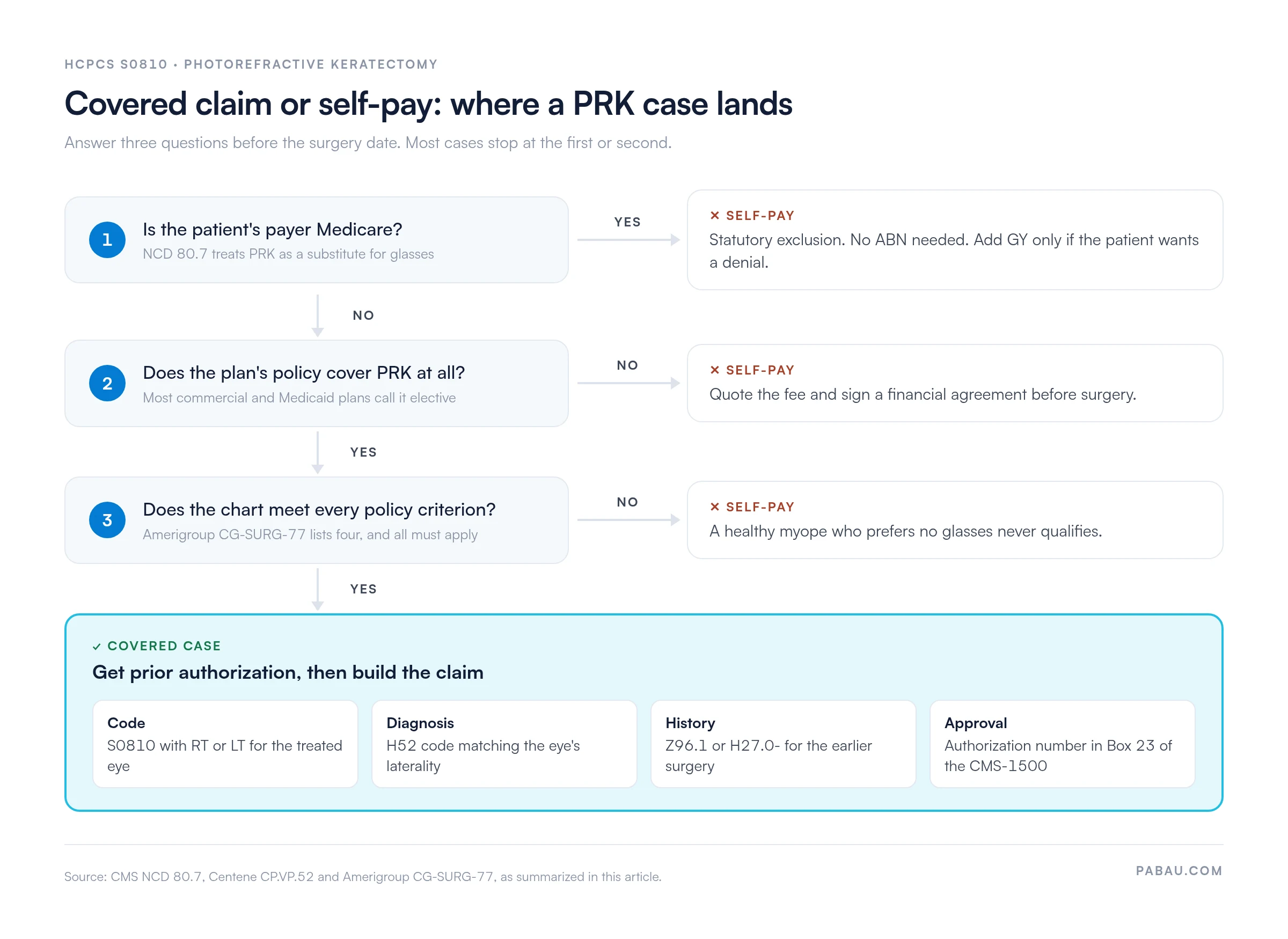
A few plans carve out a small covered group. The Amerigroup guideline CG-SURG-77 covers PRK only when all four of these apply:
In practice, that describes a patient whose eyes no longer match after earlier surgery, and glasses cannot fix it. A healthy myope who prefers not to wear glasses never qualifies.
The same guideline lists the diagnosis codes that can support a covered case:
Laterality matters on the H52 codes. The final character should match the RT or LT modifier on the claim line.
Treat every covered PRK request as a prior authorization case. A plan that covers PRK at all covers it only under a narrow exception, and the reviewer has to see the evidence first.
Without an approval on file, expect a CO-197 denial. Most payers will not authorize an elective procedure after the fact.
Here is how a covered case moves through billing. The patient details are illustrative.
Change one fact and the claim changes too. If the same patient simply wanted to stop wearing glasses, the plan would exclude PRK. The practice would then quote the surgery as self-pay.
Most PRK patients pay out of pocket. Agree on the fee in writing before surgery, and state what it includes, such as follow-up visits and any enhancement.
A Medicare patient owes the full fee, because refractive surgery is excluded by statute. An Advance Beneficiary Notice is not required for a statutory exclusion, but a signed financial agreement still protects the practice.
Sometimes a patient wants a Medicare denial to send to a secondary plan. In that case, add modifier GY, which tells Medicare the service is statutorily excluded. S0810 itself is not valid for Medicare, so confirm with the contractor which code it wants.
A commercial patient whose plan excludes PRK is in the same position. Check the plan’s rules on billing the patient for non-covered services before the surgery date.
Several codes sit close to S0810 in number or in purpose. Two of them were deleted years ago but still turn up in old fee schedules.
Topography and pachymetry often belong to the PRK workup. Payers that exclude PRK may also exclude the screening tests done only to plan it, so check before you bill them.
A covered PRK request rises or falls on the record. Build the file before you ask for authorization, with these six items.
Compliant billing means the file exists before the claim does. Rebuilding it after a denial costs weeks.
Write the reason for surgery in the surgeon’s own words in the plan. A line such as “PRK, left eye, for symptomatic anisometropia after cataract surgery” tells the reviewer this is not routine vision correction.
Most S0810 denials trace back to the payer, the policy or the paperwork. The claim adjustment reason code (CARC) on the remittance points to which one.
Log each denial by its CARC, and patterns show up within a few claims. A run of CO-197 denials, for example, means authorization checks belong at the booking step.
Refractive surgery practices juggle two billing paths. Most PRK patients pay up front, while the rare covered case needs authorization and a clean claim.
Pabau, the practice management platform we build, keeps both paths in one patient record. Its claims management software pre-fills the claim from the record. It also checks required fields, such as authorization numbers, before the claim can be sent.
US practices submit through Claim.MD, with eligibility checks and remittance posting built in. For self-pay PRK, the same record holds the signed consent form and the invoice.
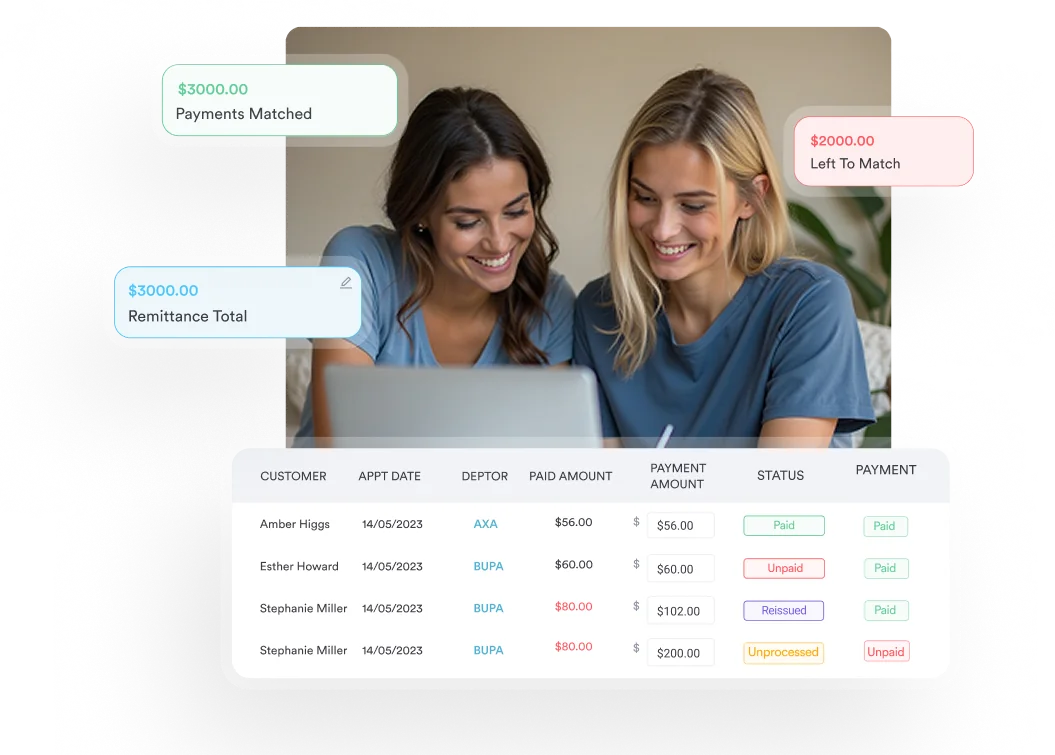

Pabau pre-fills claims from the chart, checks authorization numbers before you submit and keeps self-pay invoices on the same record. See it in a live demo.

S0810 reports PRK, a corneal refractive surgery, so lens supplies never belong on it. Once the code reads as PRK, the coverage question mostly answers itself. Medicare excludes it, and most plans call it elective.
The billing work splits accordingly. For most patients, the job is a clear self-pay agreement signed before surgery. For the rare covered case, it is a policy match, a complete file and an approval number on the claim.
Book a demo to see how Pabau carries PRK cases from the patient record to a paid invoice or a complete claim.

Fighting repeat refractive surgery denials? Denial management in healthcare explains how to track, appeal and prevent the most common claim rejections.
S0810 is the HCPCS Level II code for photorefractive keratectomy (PRK). It reports excimer laser surgery that reshapes the surface of a healthy cornea to correct myopia, hyperopia or astigmatism.
No. S0810 describes PRK, a corneal laser procedure with no implant. Intraocular lens supplies go on codes such as V2630, V2631 and V2632.
No. Medicare treats refractive surgery as a substitute for glasses or contact lenses, which the law excludes. S0810 is also not valid for Medicare claims, so Medicare patients pay for PRK themselves.
Rarely. Some plans, such as those using Amerigroup guideline CG-SURG-77, cover it for symptomatic anisometropia or aniseikonia after earlier eye surgery. Prior authorization is almost always required.
PRK on S0810 corrects refractive error on a healthy cornea. PTK on S0812 uses the same laser to treat corneal disease such as scars, dystrophies or recurrent erosions.
Use RT or LT to show the treated eye, matched to the diagnosis laterality. For a bilateral case, check whether the payer wants two lines or modifier 50.