CPT Code 62284: Injection procedure for myelography
CPT Code 62284: official descriptor and procedure overview The American Medical ...

Last Updated: Oct 19, 2026
S0613 is the HCPCS Level II code for annual gynecological examination; clinical breast examination without pelvic evaluation.
The official long descriptor for HCPCS code S0613 is: Annual gynecological examination; clinical breast examination without pelvic evaluation. The short descriptor is Ann breast exam. It sits in the temporary HCPCS Level II S-code range published by the Centers for Medicare and Medicaid Services (CMS). The code took effect on July 1, 2005.
S-codes are temporary HCPCS Level II codes. The Blue Cross Blue Shield Association and the Health Insurance Association of America created them for private payer use. They describe services and supplies that CPT does not list. State Medicaid agencies later adopted many of them, which is why S0613 turns up on Medicaid fee schedules but never pays under Medicare.
HCPCS Level II mixes permanent code ranges with temporary ones, and payment rules follow the range. Permanent codes, such as the J-codes used for drugs like J1410, apply nationally across payers. The temporary ranges are much narrower in scope. C-codes such as C1764 exist for hospital outpatient billing, and the S-codes exist for private payers.
S0613 inherits the payment rules of the S-code range, whatever the visit itself involved. Billers at OB/GYN practices with a mixed payer population should confirm each patient’s primary coverage before choosing this code.
Let Pabau's smart automation suggest the right codes, reduce claim denials, and keep your practice compliant—effortlessly.
Automate repetitive tasks and focus on what matters most—your patients.
Reduce coding errors and ensure compliance with the latest regulations.
Clean claims, fewer denials, and faster reimbursements.
Powerful insights and reporting to help your practice thrive.
HIPAA compliant SOC 2 certified GDPR-compliant Trusted by 4,000+ clinics worldwide

HCPCS code S0613 covers an annual gynecological examination with a clinical breast examination but no pelvic evaluation. Its short descriptor is Ann breast exam.
S0610 and S0612 differ only by patient status. S0610 covers a new patient and S0612 covers an established patient, and neither describes a more comprehensive exam.
S0613 is the only code in this family defined by what was examined. It has no new-patient or established-patient version.
There is no HCPCS code S0614. The official S-code sequence runs from S0613 straight to S0618, an unrelated audiometry code.
Medicare never pays S0613, because CMS flags S-codes as not payable. Verify state Medicaid and commercial coverage before you submit a claim.
Practice management software like Pabau supports S-code billing, so you can attach the right diagnosis pairings and submit clean preventive care claims.
Two different variables separate the three annual gynecological examination S-codes. S0610 and S0612 are split by patient status. S0613 is split by what the provider examined. Treating all three as one sliding scale is the leading cause of denials in this family.
None of the three descriptors ranks the exam by comprehensiveness. That misreading leads billers to choose a code by how thorough the visit felt. The descriptors turn on two facts instead. Those facts are the patient’s status and the content of the exam.
S0610 and S0612 carry identical descriptors apart from the last two words. The only question they ask is whether the patient is new or established.
Payers generally borrow the CPT definition of a new patient. A patient with no face-to-face service from the practice in three years counts as new. Billing HCPCS code S0610 for an established patient is a common denial trigger. Comprehensiveness never enters the choice.
S0613 turns on the second variable. Its descriptor names the service content, so it applies when the provider performed a clinical breast examination and did not perform a pelvic evaluation. S0613 has no new-patient or established-patient version, so patient status cannot be signaled through the code itself. Check the payer’s preventive care policy when it needs that distinction recorded.
The S0612 and S0613 mix-up causes most billing errors here. The numbers sit next to each other, so billers assume S0613 is a scaled-down S0612. The two codes answer different questions. S0612 records that an established patient had a full annual gynecological exam. S0613 records that the visit covered the breast exam and stopped short of the pelvic evaluation.
Documentation decides the code, never the reverse. If the note records a pelvic evaluation and the claim goes out as S0613, the service is under-coded. If no pelvic evaluation took place and the claim goes out as S0610 or S0612, the practice has billed for work that did not happen.
Coding cheat sheets and forum posts occasionally list an S0614 for a preventive gynecological examination. No such code exists. The official screenings and examinations range runs S0610, S0612, S0613, and then jumps to S0618 for audiometry in a hearing aid evaluation. The same range continues to S0620, the routine ophthalmological examination including refraction for a new patient.
If a superbill or claim template in your practice still carries S0614, retire it before it produces a rejection.
S0613 is not payable by Medicare, and no annual update will change that. CMS assigns S-codes coverage code I, which places them outside Medicare payment altogether. A claim sent to Medicare fee-for-service comes back denied.
The CPT preventive medicine codes are no substitute. Traditional Medicare does not cover 99381 to 99397. Use G0101 for a cervical or vaginal cancer screening with pelvic and clinical breast examination. Q0091 covers obtaining and conveying a screening Pap smear.
The annual wellness visit codes G0438 and G0439 cover the broader preventive encounter. Laboratory work on a screening Pap smear bills separately, under screening cytopathology codes such as G0123 and G0123 and G0141.
Medicare Advantage is the exception worth checking. Some Advantage plans follow commercial payer rules rather than traditional Medicare rules, and a few will accept S-codes. Confirm with the specific plan before you submit.
State Medicaid coverage for S0613 varies considerably. Some states list S-codes directly on their fee schedules. Others require CPT preventive codes instead and accept S-codes only as supplemental reporting.
Check your state Medicaid agency’s current fee schedule and billing manual before you assume S0613 is billable. For practices that also bill reproductive health codes, this payer-by-payer verification should already sit in your standard pre-claim workflow.
Accurate S0613 billing runs on documentation first and code selection second. The provider’s note has to confirm that a clinical breast examination took place and that a pelvic evaluation did not. Without both elements on the record, the claim is vulnerable to audit.
Billing staff can work through this five-step check on each S0613 claim. Structured pre-submission review is how a preventive claim goes out as a clean claim the first time.
Run a payer check before every S0613 claim goes out. Build a lookup table in your practice management system listing each major payer, whether it accepts S-codes, and any modifier requirements. A five-minute setup saves hours of rework on plans that prefer CPT 99381 to 99397 for the same service.
Every S0613 claim needs a supporting ICD-10-CM diagnosis code. Two mistakes drive avoidable denials here. One is submitting the procedure code alone. The other is pairing it with a diagnosis that does not match the service. The codes below are the pairings most often used for an annual gynecological examination without pelvic evaluation.
Pick the ICD-10-CM code that best reflects the clinical reason for the encounter. Z01.419 is the default for a routine annual exam with no findings. Z01.411 replaces it when the provider noted abnormalities during the breast exam.
For visits framed around breast cancer screening, Z12.39 or Z12.31 may better support medical necessity. Check every code against the CDC/NCHS ICD-10-CM web tool for your billing period, since diagnosis codes update each October.
No single national fee schedule sets the rate for HCPCS code S0613. Because Medicare does not pay the code, there is no CMS Physician Fee Schedule amount to reference. Each state Medicaid program sets its own rate, and commercial payers negotiate theirs through provider contracts.
Use these sources to find your current 2026 rates. The CMS Physician Fee Schedule lookup will confirm whether a related G-code or CPT code carries a Medicare rate. That helps when a Medicare Advantage plan crosswalks S-codes to CPT.
Never price a claim from a third-party estimate. Rates change mid-year, and a payer-specific coverage policy can override a published S-code fee schedule entirely.
Modifier requirements for S0613 vary by payer, and no modifier applies universally. The table below covers the ones most often relevant to S0613 claims. Verify each plan’s modifier rules before you submit.
Modifier 25 is the one that comes up most often. Say a visit includes the annual preventive examination plus a separately documented problem-oriented service. An example is evaluation of a new breast symptom.
Modifier 25 on the E/M code then tells the payer that two distinct services took place. Without it, many payers bundle the E/M into the preventive code and pay once. Tracking modifier denial patterns in your practice management platform shows you which payers require it.
A payer reviewing an S0613 claim looks for two things in the note. The record has to show a clinical breast examination, and it has to show that no pelvic evaluation happened at that encounter.
The absence of the pelvic evaluation needs to be affirmative in the record. A note that simply omits it reads as an incomplete exam. State that the pelvic evaluation was not performed, and give the reason.
Hold the same standard on visits where a problem-oriented service ran alongside the preventive exam. The two services need separate documentation before modifier 25 will survive review. Practices working to HIPAA-compliant documentation standards should keep the breast exam in the provider’s physical exam section, where a reviewer expects to find it.
Static code lookup databases tell you what S0613 means, and they stop there. Practice management software like Pabau earns its place after that. It submits the code, tracks denials by reason code, and shows you the patterns across your payer mix.
Pabau’s claims management software lets OB/GYN and pelvic health practices configure HCPCS Level II S-codes directly in their billing workflow. Billers build templates that attach Z01.419 or Z12.39 to S0613 by default, instead of looking up the pairing for every encounter.
They adjust when findings call for a different diagnosis. Fewer preventive care claims go out missing a diagnosis, so fewer come back denied.
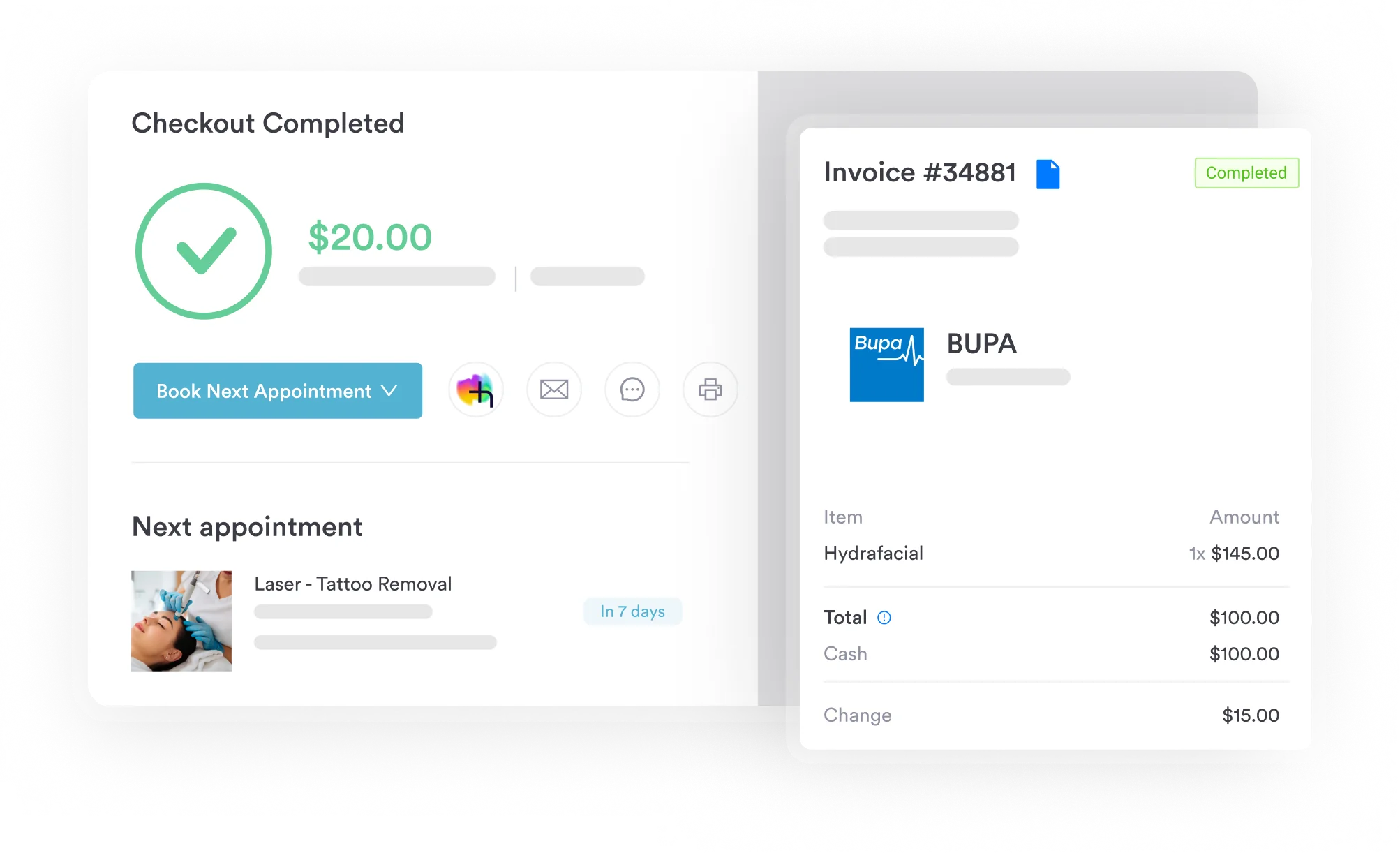
Pabau also connects to a medical claims clearinghouse, so claims leave the same system that holds the clinical note. Our Claim.MD integration submits preventive care claims and returns payer responses without a separate billing portal. That shortens the loop between a denial and its fix.
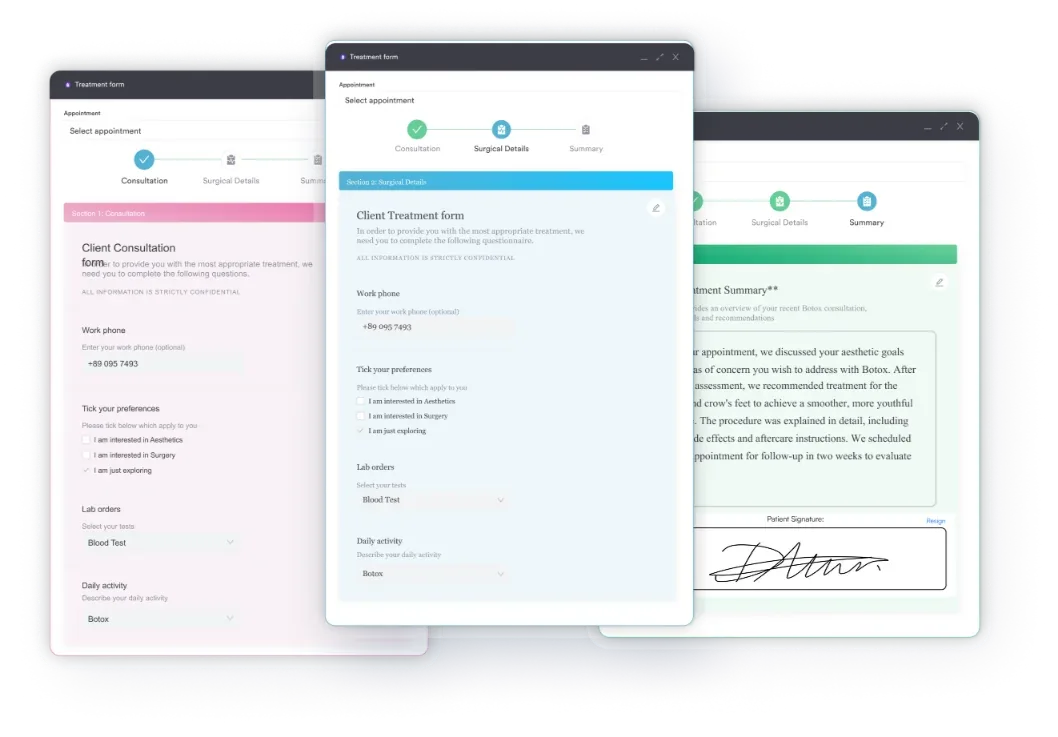
The documentation layer sits in the same place. Digital intake forms capture the visit reason and consent before the appointment. The provider’s note then confirms that the breast exam was performed and the pelvic evaluation deferred.
That record links to the encounter and is available at submission. Audit responses get easier when every piece of encounter data lives in one system.
Build a payer-specific S-code configuration table in your practice management system before each plan year starts. List every payer, whether it accepts S0613, the companion ICD-10 code it expects, and any modifier requirement. Updating it once a year takes less time than working a quarter of preventable denials.

Pabau supports HCPCS Level II S-code billing end to end. Configure preventive care codes, attach the right ICD-10 pairings, and submit clean claims without switching systems.

S0613 billing goes wrong in two predictable places. The first is the payer mix, because Medicare denials are automatic while Medicaid and commercial coverage varies by state and plan. The second is code choice inside the family, where S0610 and S0612 turn on patient status and S0613 turns on what was examined.
Reading the family as a comprehensiveness ladder turns a clean preventive claim into a denial. So does reaching for a code that does not exist, like S0614. Set the payer rules and the documentation standard once, and both problems stop recurring.
Pabau’s claims management tools help preventive care practices configure S-code billing correctly, attach diagnosis codes by default, and track denial patterns by payer. To see how Pabau handles HCPCS Level II billing workflows, book a demo.

Billing a Medicare patient’s preventive visit instead? G0438 covers the initial annual wellness visit and the documentation each element needs.
Sending the screening Pap smear to the laboratory? P3000 covers the screening Papanicolaou smear and how payers expect it reported.
On a plan that wants CPT preventive codes instead? The initial preventive medicine visit for a new patient aged 18 to 39 is 99385.
Breast exam turned up something that needs aspirating? Puncture aspiration of a breast cyst has its own code and documentation rules, and that code is 19000.
Coding multiple procedures on a forefoot operating list? CCSD code W0300 explains how UK private podiatric surgeons apply the multiple procedures discount rule to avoid misapplied claims.
HCPCS code S0613 is a temporary HCPCS Level II S-code. Its long descriptor is: Annual gynecological examination; clinical breast examination without pelvic evaluation. The short descriptor is Ann breast exam. State Medicaid programs and some commercial payers use it for preventive women’s health visits. It applies when the breast exam was performed and the pelvic evaluation was not.
No. CMS flags S-codes as not payable, so S0613 is never covered by Medicare fee-for-service. Traditional Medicare does not cover the CPT preventive medicine codes 99381 to 99397 either. Use G0101 for a cervical or vaginal cancer screening with pelvic and clinical breast examination. Q0091 covers a screening Pap smear collection. G0438 and G0439 cover the annual wellness visit. Some Medicare Advantage plans accept S-codes, so verify with the plan first.
The two codes are defined on different variables. S0612 is an annual gynecological examination for an established patient, and its descriptor says nothing about which parts of the exam were performed. S0613 is an annual gynecological examination with a clinical breast examination and no pelvic evaluation, and its descriptor says nothing about patient status. S0613 is not a lesser version of S0612. Let the documentation decide which one fits the encounter.
Patient status is the only difference. S0610 covers an annual gynecological examination for a new patient and S0612 covers the same examination for an established patient. Neither descriptor refers to how comprehensive the exam was. Payers generally apply the standard CPT definition, so a patient with no face-to-face service from the practice in three years counts as new.
No. S0614 does not exist in HCPCS Level II, and no CMS, AAPC, or Find-A-Code listing carries it. The official screenings and examinations range runs S0610, S0612, S0613, and then jumps to S0618 for audiometry in a hearing aid evaluation. If a coding cheat sheet or superbill in your practice lists S0614 as a preventive gynecological examination, remove it.
Z01.419 is the most common pairing, for a routine annual gynecological examination with no abnormal findings. Use Z01.411 when abnormal findings were identified. Z12.39 fits a visit where the clinical breast exam is the screening method being reported, and Z12.31 applies when a screening mammogram is also ordered. Verify current code validity with the CDC/NCHS ICD-10-CM tool, since diagnosis codes update each October.
There is no national fee schedule rate for S0613, because Medicare does not pay the code. State Medicaid programs set their own rates and those vary widely by state. Commercial payers negotiate rates through provider contracts. To find your rates, download your state Medicaid fee schedule from the state agency, or check your commercial contracts and provider portals directly.
Yes, for the breast-exam-only version of the visit. S0613 reports an annual gynecological examination where the clinical breast examination was performed and the pelvic evaluation was not. For a full annual gynecological exam, use S0610 for a new patient or S0612 for an established patient. Those two codes differ only by patient status, not by how comprehensive the exam was.