HCPCS Code G0147: Screening cytopathology smear billing guide
HCPCS code G0147: Definition and key details HCPCS code G0147 is the laboratory ...

Last Updated: Oct 16, 2026
G0123 is the HCPCS Level II code for screening cytopathology, cervical or vaginal (any reporting system), collected in preservative fluid, automated thin layer preparation, screening by cytotechnologist under physician supervision.
Most denials come down to three things. The claim lands inside the frequency window, the collection code is missing, or the diagnosis doesn't read as screening. All three are catchable before the claim leaves your practice, and none of them need an appeal.
Let Pabau's smart automation suggest the right codes, reduce claim denials, and keep your practice compliant—effortlessly.
Automate repetitive tasks and focus on what matters most—your patients.
Reduce coding errors and ensure compliance with the latest regulations.
Clean claims, fewer denials, and faster reimbursements.
Powerful insights and reporting to help your practice thrive.
HIPAA compliant SOC 2 certified GDPR-compliant Trusted by 4,000+ clinics worldwide

HCPCS code G0123 covers a liquid-based cervical or vaginal screening specimen, prepared as an automated thin layer and screened by a cytotechnologist.
Medicare Part B pays for one screening every 24 months, or every 12 months when the patient meets a CMS high-risk criterion.
Bill Q0091 separately for specimen collection, and never fold the collection fee into the G0123 laboratory claim.
Pair G0123 with a screening diagnosis such as Z12.4 or Z01.419, never a symptomatic or treatment code.
Practice management software like Pabau pre-fills the claim from the patient record and checks required fields before you submit.
G0123 covers one specific version of the Pap test, and the official long descriptor is short enough to quote in full.
Screening cytopathology, cervical or vaginal (any reporting system), collected in preservative fluid, automated thin-layer preparation, screening by cytotechnologist under physician supervision.
The code is active for 2026 and carries no termination date. Verify it against the CMS HCPCS Level II code files at the start of each billing year. Three details in that descriptor do all the work.
Change any one of those three and you land on a different code. That single rule explains the whole G-code family for cervical screening.
Medicare Part B covers G0123 as a preventive screening benefit. The patient owes nothing when the claim is built correctly, because Medicare waives the deductible and coinsurance on screening Pap tests. What changes from patient to patient is how often that benefit resets.
Two schedules apply. Average-risk beneficiaries get one covered screening every 24 months. High-risk beneficiaries get one every 12 months, and so do women of childbearing age with an abnormal Pap in the past 36 months.
CMS lists five high-risk criteria, and one is enough to unlock the 12-month schedule.
Document the criterion that applies at every eligible encounter. Without it, a 12-month claim reads as a frequency error on audit.
A sexual health practice already captures most of this at intake. The note still has to say so, though. Solid patient compliance records give billing the evidence to back the shorter window.
G0123 needs a diagnosis code that reads as screening. Z12.4 and Z01.419 both carry that intent. A symptomatic or treatment code contradicts the preventive benefit, and the edit fires before a human ever sees the claim.
The same edit fires on screening claims in other specialties. S0601 for a screening proctoscopy expects Z12.12, and a rectal bleeding code sends the exam to diagnostic CPT 45300.
Check every code against the current fiscal year tables before you rely on it. Z01.419 is the workhorse for average-risk Medicare screening, while Z12.4 fits a visit booked specifically for cervical cancer screening. Reviewing the medical forms at your practice so they capture risk status upfront stops most pairing errors at the source. A coding error surfaces as a cash flow problem weeks later, which is why the healthcare revenue cycle is measured end to end.
When a code looks borderline, confirm it with your Medicare Administrative Contractor or an HCPCS code reference rather than guessing from last year’s claim.
Four details separate G0123 from its neighbors. They are the specimen type, the reviewer, whether an automated system screens the slide, and whether a physician interprets it. Get one wrong and the claim pays at the wrong rate, or not at all.
Both codes describe the same liquid-based, thin-layer method. Only the reader changes. G0123 covers a cytotechnologist screening the slide under physician supervision, while G0124 covers a physician interpreting it.
Laboratories that route slides to cytotechnologists for primary review bill G0123. Auditors look at this pairing often, so confirm the reader with the laboratory before anyone picks a code.
G0123 is a Medicare code, so commercial plans often want the CPT equivalent instead. Those live in the 88141 to 88175 range. CPT 88142 is the closest match, because it describes a liquid-based thin-layer specimen with manual screening under physician supervision.
Practices still running conventional smears bill P3000 or P3001 or P3001, and the pelvic and breast screening exam at the same visit falls under G0101.
G0123 pays under the Clinical Laboratory Fee Schedule, not the Physician Fee Schedule. That distinction has teeth.
CLFS amounts come from reported private payer data, so the RVU math behind professional services never enters the calculation, and geographic adjustment works differently too.
National payment has historically sat somewhere between $19 and $28, and it moves year to year. Pull the current figure from the CMS lab fee schedule rather than a prior-year number on a spreadsheet.
Commercial payers may pay a different rate, or may not recognize G0123 at all, so check each plan before you bill a non-Medicare patient.
One Pap test usually produces two claims. The collecting practice bills Q0091 for obtaining and sending the specimen. Then the laboratory bills G0123 for the screening itself. That split is the single most misunderstood part of this code.
An OB-GYN practice that collects in-house and refers cytopathology out never bills G0123 at all. Practices running paperless billing workflows tend to catch that distinction early. The two services sit on separate charge lines from the moment someone enters them.
Documentation has one job here. It has to prove the patient was eligible for the frequency you billed. Digital patient forms that capture risk factors at intake do most of that work before the visit even starts.

Good records are also audit protection. Cytopathology sits high on contractor review lists, because the volume across the Medicare population is enormous.
HIPAA-compliant record keeping and clean coding tend to get audited together. When a payer asks for written justification, a medical necessity letter keeps the response consistent across your team.
Thirty seconds at claim entry saves an hour on appeal. Work down this list before anything goes out.
Denials on this code cluster tightly. Five patterns account for nearly all of them, and every one is a process problem rather than a coding puzzle.
Read your remittance advice for patterns too. Denial code CO-4 points at a modifier problem, while CO-5 points at the place of service, and both show up regularly on G-code claims. Frequency clocks are not unique to this code either, since G0108 and other preventive G-codes deny for exactly the same reason.
Audit your G0123 claims monthly against the last documented Pap date for each patient. Sort by claim date minus last Pap date. Anything under 23 months needs a high-risk criterion in the note before it goes back out. This one habit catches timing errors while they are still fixable, instead of after they age into write-offs.
A code lookup tells you what G0123 means. It cannot tell you when this patient’s last Pap was, or whether the high-risk criterion made it into the note. That answer lives in the chart, and the chart usually sits in a different system from the claim.
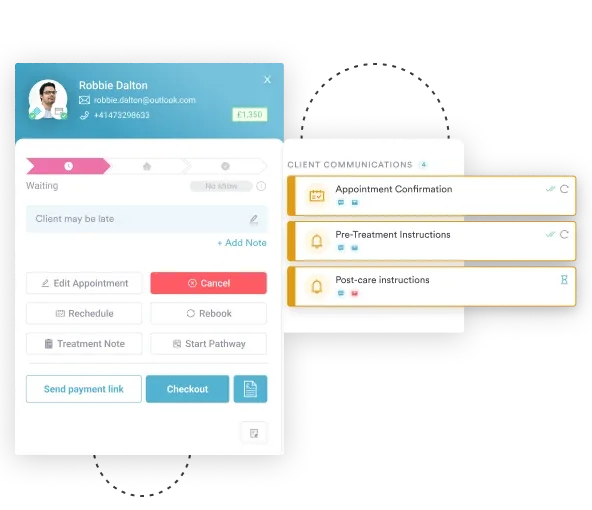
Practice management software like Pabau keeps both in one place. Our claims management software pre-fills the claim from the patient record, so the codes attached to the service land on the charge line. ICD-10 and HCPCS lookup libraries sit beside those fields, and required-field checks run before the claim can be sent.
On the US pipeline you also get eligibility checks, electronic remittance posting and claim status tracking in the same place the claim was built.
So a practice that collects the specimen and refers cytopathology out keeps the Q0091 and G0123 lines separate from the start. Your team stops retyping what the record already holds, and the trail from collection to remittance stays intact.

Pabau’s claims management software pre-fills the claim from the chart, keeps ICD-10 and HCPCS lookups on screen, and checks required fields before submission. Your team stops retyping what the record already holds.

G0123 rewards routine far more than expertise. Four details decide whether the claim pays. They are the frequency date, who read the slide, the diagnosis code, and the separate collection line. A practice that checks those four at claim entry writes off very little.
The upfront work is worth it, because a $25 denial still costs 40 minutes to chase. Keep the last Pap date somewhere billing can see it, and keep the risk criterion in the note.
Book a demo to see how Pabau builds preventive service claims straight from the patient record.

Billing the pelvic and breast exam at the same visit? G0101 covers the screening exam Medicare pays alongside specimen collection.
Still running conventional smears in-house? P3000 covers a Pap smear prepared without liquid-based thin-layer processing.
Managing other Medicare preventive service claims? G0009 covers vaccine administration and carries its own coverage and documentation rules.
Coding the diagnostic side of women’s health? 19081 covers breast biopsy with stereotactic guidance, including imaging and device placement.
Billing a spinal nerve procedure? CPT code 64772 covers transection or avulsion of other spinal nerves in the extradural space.
No. Medicare waives both the deductible and the coinsurance for screening Pap tests, so an eligible patient owes nothing for G0123. Cost only enters the picture when the claim falls outside the covered frequency and you collected a signed ABN first.
Yes. They cover different work and are usually billed by different entities. Q0091 covers obtaining and sending the specimen, while G0123 covers the laboratory screening. Put them on separate lines, and never combine them into one charge.
Not routinely. G0123 is not a modifier-driven code, so most clean claims carry none at all. The exception is a service you expect Medicare to deny on frequency. Append modifier GA when the patient has signed an advance beneficiary notice.
Run an eligibility check before the visit. Most Medicare Administrative Contractor portals return the next eligible date for preventive services, cervical screening included. A clearinghouse eligibility response can surface the same date inside your billing workflow.
The laboratory that performs the screening bills G0123. The practice that collected the specimen bills Q0091 instead. If you run cytopathology in-house, you bill both, and you need a CLIA certificate that covers cytology.