CPT Code 62284: Injection procedure for myelography
CPT Code 62284: official descriptor and procedure overview The American Medical ...

Last Updated: Oct 19, 2026
J2720 is the HCPCS Level II code for injection, protamine sulfate, per 10 mg.
The code sits in HCPCS Level II, the set the Centers for Medicare and Medicaid Services (CMS) maintains for injectable drugs. CPT has no code for the drug itself, so the J-code carries that charge.
J-codes are buy-and-bill codes. The practice or facility buys the drug, administers it, and then bills the payer with the matching code and unit count. Protamine sulfate follows that model, so acquisition cost and billing accuracy both sit with whoever stocked the vial.
Let Pabau's smart automation suggest the right codes, reduce claim denials, and keep your practice compliant—effortlessly.
Automate repetitive tasks and focus on what matters most—your patients.
Reduce coding errors and ensure compliance with the latest regulations.
Clean claims, fewer denials, and faster reimbursements.
Powerful insights and reporting to help your practice thrive.
HIPAA compliant SOC 2 certified GDPR-compliant Trusted by 4,000+ clinics worldwide

HCPCS Code J2720 covers an injection of protamine sulfate, and one billable unit equals 10 mg administered.
Divide the total milligrams given by 10 to get the unit count, so a 50 mg dose is 5 units.
Medicaid programs and many commercial payers reject J2720 claims that arrive without the NDC from the vial you actually used.
Medicare wants the JZ modifier when nothing is discarded from a single-dose vial, and JW when part of it is.
Practice management software like Pabau submits and tracks drug claims, and checks core claim fields before they reach the payer.
Protamine sulfate is a heparin reversal agent. Clinicians give it intravenously when heparin anticoagulation has to be neutralized quickly.
That covers the end of cardiopulmonary bypass, interventional cardiology procedures, and cases where too much heparin has been given. The drug binds heparin molecules and inactivates them, restoring normal coagulation within minutes.
Most protamine is given in cardiac surgery suites, catheterization labs, and emergency departments. Use outside those settings is rarer, but any outpatient site running heparin protocols needs a reversal plan.
IV therapy practices and infusion centers that use heparin flushes should know the billing pathway before a reversal happens.
The FDA approves protamine sulfate for heparin neutralization only. Dosing is weight-based and depends on how much heparin was given and how long ago. Physicians set the dose. Billing staff document that dose and translate it into units under HCPCS Code J2720.
The per-10-mg unit is where most J2720 errors start. Divide the total milligrams administered by 10. Round up to the next whole unit when the dose does not divide evenly. Never send the raw milligram total as the unit count.
Pull the administered dose from the physician’s order or the anesthesia record, never from the vial size. Protamine sulfate comes in 10 mg/mL and 50 mg/5 mL presentations. Only the dose documented as given counts toward the units you bill.
When protamine is given in several incremental doses during one procedure, add the doses together before dividing by 10. Bill the total as a single J2720 line, not one line per injection. A single line with the correct total also keeps the encounter clear if an auditor comes back to it later.
Medicare also wants a wastage modifier on drugs supplied in single-dose vials. Report the discarded milligrams on a second J2720 line with the JW modifier, and Medicare pays for that waste.
When nothing is discarded, add JZ to the administered line instead. That attestation has been required since July 1, 2023, and claims that omit it can be denied. The current rules sit on the CMS discarded drugs page.
Document the exact milligrams administered in the clinical record before the billing team receives the claim. A note that says ‘protamine given as needed’ without a milligram amount will trigger a documentation request from the payer and delay payment. Build a standard order template that captures the dose in mg at time of administration.
Medicare pays J2720 under the Medicare Physician Fee Schedule (MPFS) or the Hospital Outpatient Prospective Payment System (OPPS), depending on where the drug is given.
The dollar amounts move with CMS rulemaking every January. Check the current figure in the CMS fee schedule lookup tool rather than working from a rate you saw last year.
Medicaid rates for J2720 vary by state. Most programs pay on a drug acquisition formula tied to average sales price (ASP) or average wholesale price (AWP). Check your state fee schedule directly, because coverage policies differ too. Commercial payers usually pay a contracted rate, often ASP plus a percentage or a fixed amount per unit.
The Ambulatory Surgical Center (ASC) payment status indicator decides how Medicare pays for J2720 in that setting. It either pays for the drug separately or packages it into the procedure payment.
The indicator is published in CMS OPPS Addendum B each year. Status indicators change with rulemaking, so check the current one before you assume separate payment applies.
Place of service (POS) codes decide which rate applies. POS 11 pulls the non-facility rate for a physician office. POS 22 and POS 24 pull the facility rate for hospital outpatient and ASC settings. The wrong POS code creates a rate mismatch that payers catch during adjudication, which means partial payment or a denial.
Medicaid programs in the CMS Drug Rebate Program require a National Drug Code (NDC) on claims for physician-administered drugs, including J2720. Several commercial payers now ask for the same. Without a valid NDC, the claim either rejects at the front end or pays zero during adjudication.
The NDC goes on the claim in 5-4-2 format, usually shown as an 11-digit string. On an 837 claim file, it belongs in Loop 2410 with qualifier N4. On a CMS-1500, it goes in box 24A or in a separate line notation, depending on your state’s instructions. Your state Medicaid companion guide gives the exact placement.
Protamine sulfate has several manufacturers, so the NDC you report has to match the product administered. A generic placeholder will not survive a front-end edit.
Keep a crosswalk between your formulary NDCs and J2720 so staff always reference the vial on hand. The NLM Clinical Table Search API offers free HCPCS data if you want to build that crosswalk programmatically.
Payers audit injectable drug claims more often than office visits, because the value per unit is meaningful and unit errors are common. A J2720 claim with nothing behind it is a denial waiting to happen. HIPAA-compliant records protect the patient and the practice when a payer asks to see the chart.
Keep the administration record and the physician order in the same encounter file as the claim. Auditors ask for the full record, not the claim form. A claim that looks right on the 837 but has no chart behind it ends in recoupment. Standardized clinical forms and digital intake make the dose and the NDC easy to capture at the point of care.
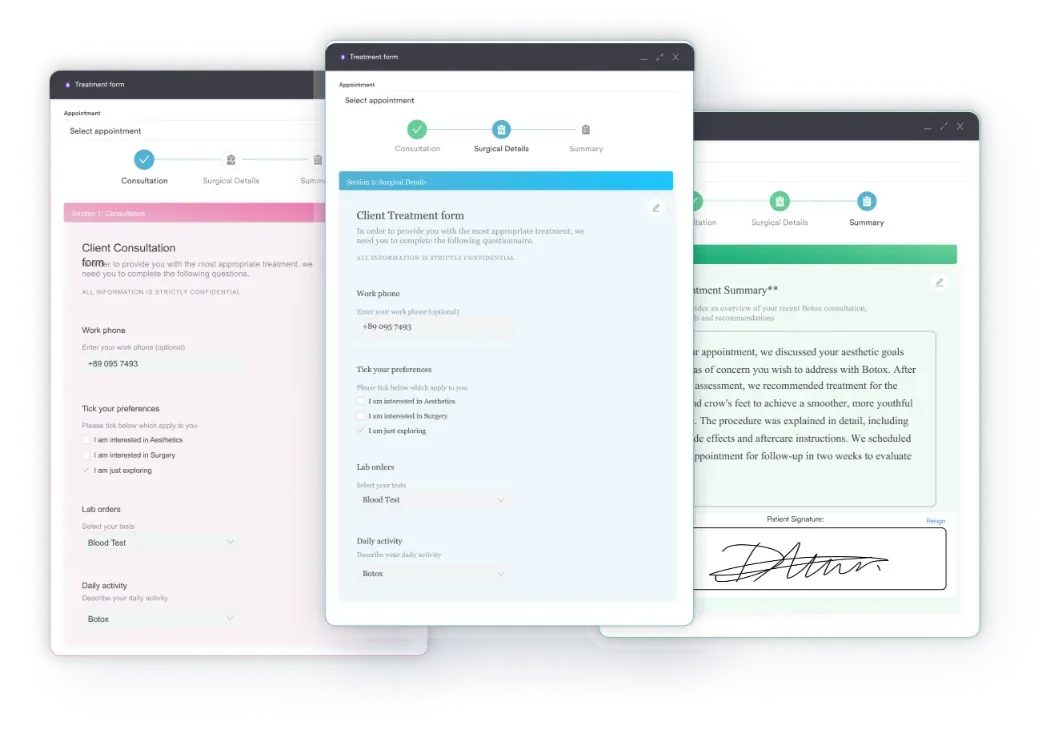
J2720 denials cluster around six recurring errors. Each one is preventable with a check that runs before the claim goes out.
Repeat J-code denials usually trace back to a split workflow. The clinical team records the dose in one system and the billing team keys the charge into another, and errors creep in during that hand-off. Denial codes tell you which of the six is happening, and EHR integration removes the re-keying that causes most of them.
A reversal claim rarely travels alone. Coders usually need the code for the heparin itself and the code for the administration service. Knowing which codes belong on the same claim prevents unbundling problems and keeps the encounter fully captured.
The two heparin codes are easy to mix up. J1642 is the flush that keeps a line open, so it rarely explains a reversal on the same encounter. J1644 is the therapeutic dose that usually does.
Check whether the administration code, CPT 96374 or 96365, is bundled into the surgical package under your payer’s edits. For J-codes outside this drug family, the AAPC HCPCS lookup searches current CMS data for free.
CMS publishes HCPCS Level II updates each January, and new, revised, and retired codes take effect on January 1. J2720 remains active on the current file, with no maintenance action recorded since 1997. It is still worth confirming the code in the January update file before your first claim of the year.
If CMS ever retires the code, protamine sulfate would move to J3490 or to a newly assigned J-code. Billing a retired code produces a front-end rejection and a round of rework nobody planned for. An annual code review belongs in your December checklist, alongside the rest of your billing compliance routine.
In most practices the dose lands in the chart and the charge lands somewhere else. A coder reads the note, works out the units, looks up the NDC in a spreadsheet, and types the line into a separate billing system. Every re-key is another chance for 50 mg to arrive at the payer as 50 units.
Practice management software like Pabau keeps the clinical record and the billing queue in one system, so the coder works from the note itself. Pabau’s claims management software submits claims electronically, checks core claim fields, and tracks each claim through to payment. Eligibility checks and remittance advice arrive in the same place. A retroactive authorization is rarely granted, so the check belongs before the appointment.
The coder still owns the unit math. What changes is where the evidence lives. The documented dose, the NDC, and the claim line sit together, so an audit request takes one search instead of three. Practices that bill administered drugs often, from infusion suites to regenerative medicine practices, feel that most at month end.
Any practice management platform you shortlist for drug billing should do three things well. It should submit claims electronically, show the status of each one, and surface rejections while there is still time to correct them.
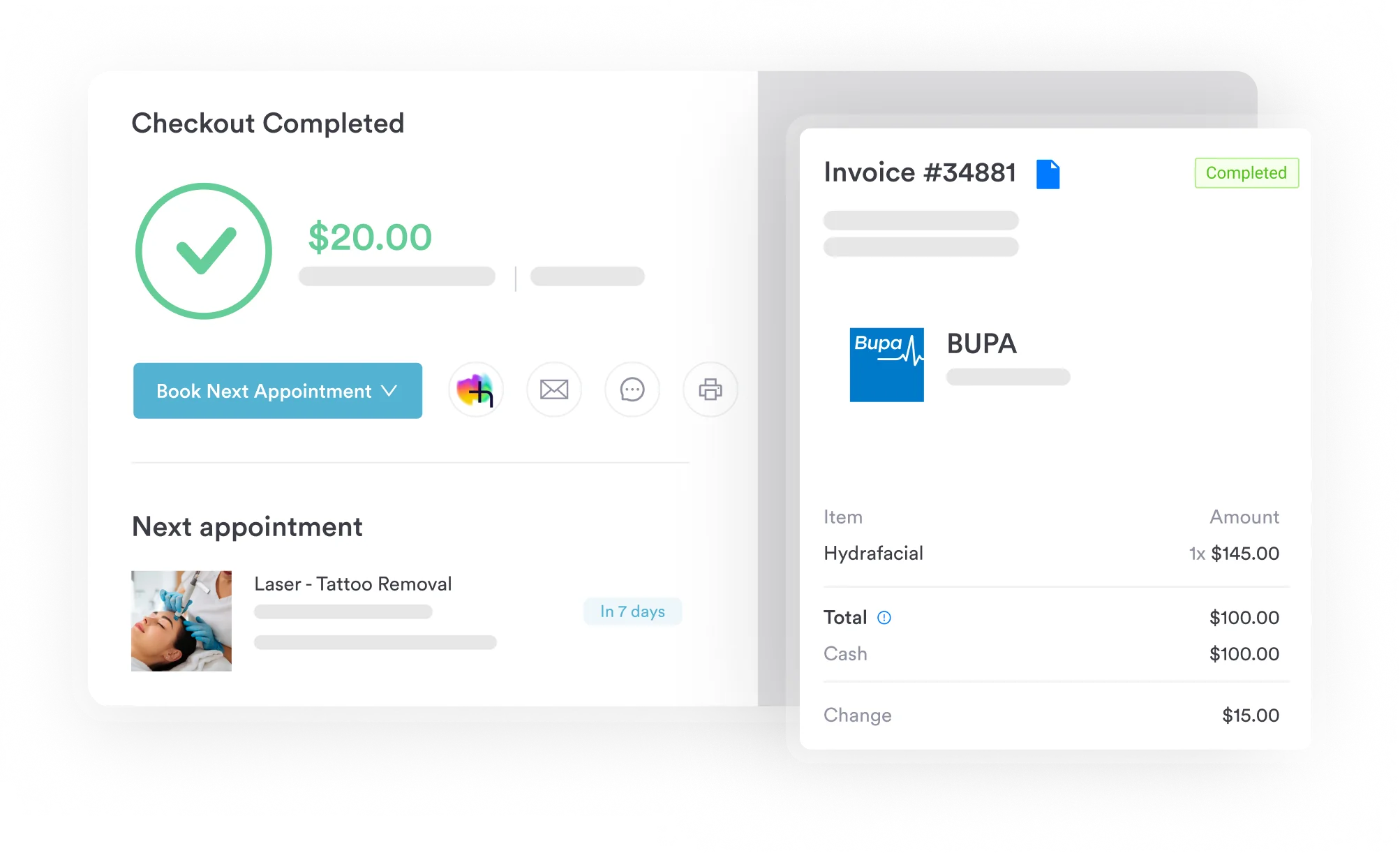

Pabau’s claims management software submits your claims electronically, checks core claim fields, and tracks every one through to payment. Rejections surface early, so your team can fix a J-code line while it still pays.

J2720 is a simple code with an unforgiving unit. Divide by 10, attach the NDC from the vial you actually used, add JZ or JW, and the claim usually pays without an argument.
The habits behind that are worth more than any single fix. Capture the milligrams at the moment of administration. Keep the order and the administration note in the same file as the claim. Review the January update before your first claim of the year. Do that and protamine sulfate stops being a code your team argues with.
Re-keying drug charges between systems costs you money in preventable denials. Book a demo to see how Pabau handles claim submission and tracking for administered drugs.

Coding newborn convulsions next? ICD-10 code P90 guide covers this billable, reportable code for convulsions of newborn under the 2026 edition of ICD-10-CM.
Coding a rare neural tube defect? ICD-10 code Q00.2 guide covers iniencephaly and the head retroflexion and vertebral fusion that separate it from sibling codes.
Coding a congenital eye finding? ICD-10 code Q11.3 guide covers macrophthalmos coding and the congenital qualifier that keeps a billable encounter from becoming rework.
Coding a congenital mouth condition? ICD-10 code Q18.5 guide covers congenital microstomia coding, the Q18 exclusion trap, and the documentation payers expect.
Coding a congenital artery anomaly? ICD-10 code Q25.8 guide covers congenital anomalies of arteries other than the aorta and pulmonary artery, including vascular ring cases.
HCPCS Code J2720 is the billing code for protamine sulfate injection, billed per 10 mg administered. Practices use it to bill Medicare, Medicaid, and commercial payers for protamine sulfate given to reverse heparin anticoagulation. That usually happens after cardiac surgery, during cardiac catheterization, or when too much heparin has been given.
Divide the total milligrams of protamine sulfate administered by 10 to get the billable unit count. If 50 mg was given, bill 5 units. If 75 mg was given, round up to 8 units. Never bill the raw milligram amount as the unit count.
Medicare Part B covers HCPCS Code J2720 when the drug is given in a covered setting and the record documents medical necessity. Medicaid coverage varies by state, though most programs cover physician-administered drugs including protamine sulfate. Verify coverage with your state Medicaid program and confirm the code on the January CMS update file.
Medicare requires a wastage modifier on drugs supplied in single-dose vials. Add JZ to the administered line when no amount is discarded. Report the discarded milligrams on a separate line with the JW modifier when part of the vial is thrown away. The JZ attestation has been required since July 1, 2023.
There is no single NDC for J2720, because several manufacturers make protamine sulfate. The NDC you report has to match the product administered, taken from the vial label itself. Keep an internal crosswalk that maps your formulary’s protamine sulfate NDCs to J2720, and update it whenever your supplier changes.
The most common errors are billing raw milligrams instead of per-10-mg units and submitting a claim without a valid NDC. Omitting the JZ or JW wastage modifier is a third. Using the wrong place of service code and failing to document medical necessity round out the list. A pre-submission check catches all five.