ICD-10 Code S42.444P: Medial epicondyle fracture, right humerus
ICD-10 Code S42.444P: full descriptor and code validity ICD-10 Code S42.444P car...

Last Updated: Oct 13, 2026
Billable Code Specific Code
Q00.2 is the billable ICD-10-CM code for iniencephaly.
In short, this reference covers billable status, HIPAA validity, clinical features, code hierarchy, sibling code distinctions, DRG assignment, and the documentation that supports a Q00.2 claim.
Let Pabau's smart automation suggest the right codes, reduce claim denials, and keep your practice compliant—effortlessly.
Automate repetitive tasks and focus on what matters most—your patients.
Reduce coding errors and ensure compliance with the latest regulations.
Clean claims, fewer denials, and faster reimbursements.
Powerful insights and reporting to help your practice thrive.
HIPAA compliant SOC 2 certified GDPR-compliant Trusted by 4,000+ clinics worldwide

ICD-10 code Q00.2 is the billable ICD-10-CM code for iniencephaly, a severe neural tube defect marked by extreme head retroflexion and spinal distortion.
Q00.2 is valid for HIPAA-covered transactions from October 1, 2025 through September 30, 2026, under the FY2026 ICD-10-CM edition.
As a newborn principal diagnosis, Q00.2 falls under MDC 15, where birth weight and severity drive the DRG rather than one fixed group.
Q00.2 sits in the Q00 parent category, inside the Q00-Q07 block for congenital malformations of the nervous system.
Practice management software like Pabau keeps the notes behind a congenital code in one record, so claims carry the documentation to back them.
Q00.2 designates iniencephaly, a congenital malformation classified in Chapter Q of ICD-10-CM. Specifically, that chapter covers congenital malformations, deformations, and chromosomal abnormalities. The code is billable and specific, so it can go on a claim without a more granular child code.
In fact, according to the CDC ICD-10-CM web tool, Q00.2 has been stable since ICD-10-CM was introduced. Additionally, it carries no excludes notes and no sequencing restrictions at the code level.
Iniencephaly is a rare, severe neural tube defect with two hallmark features. First, the head is sharply retroflexed, bending the skull backward toward the spine. Second, the vertebrae are distorted and fused, often with an open or shortened cervical spine.
Unlike anencephaly, where the forebrain and skull vault are absent, iniencephaly may involve an intact but severely deformed cranium. Consequently, the condition is almost always lethal. Clinical records therefore document it in perinatal or prenatal settings, including obstetric scans, delivery records, and autopsy reports.
Specifically, notes that describe these specific features support the Q00.2 assignment. Generic wording such as neural tube defect, unspecified may not hold up on audit. The WHO ICD-10 browser classifies iniencephaly as a distinct subtype within Q00, so it is not interchangeable with anencephaly or craniorachischisis.
Specifically, Q00.2 sits at the fourth-character level of ICD-10-CM. Knowing where it sits keeps coders from assigning the less specific parent when Q00.2 is documented.
For reference, the CMS ICD-10 codes page carries the official FY2026 tabular list. Specifically, it confirms that Q00 is not billable on its own, and that only the fourth-character extensions Q00.0, Q00.1, and Q00.2 are. The same convention runs across Chapter Q.
Perinatal and congenital diagnoses need coordinated long-term care, which patient management software keeps organized across providers.
Overall, three billable codes sit under the Q00 parent, and each describes a distinct malformation. Clinical documentation has to differentiate between them, because their presentations are related but not interchangeable.
Read the physician’s wording first. For instance, a report describing failure of skull formation or absent brain points to Q00.0. Alternatively, a report describing an open spine from cervical to sacral plus an absent skull points to Q00.1. Finally, retroflexion of the head with fused or distorted cervical vertebrae is Q00.2.
In practice, physicians and radiologists use varied terminology in notes. As a result, the ICD-10-CM Alphabetic Index maps the following terms to Q00.2.
In fact, no alternative billable code exists for these terms in ICD-10-CM. If the documentation uses any of them, Q00.2 is the right selection. Additionally, the AAPC Codify lookup confirms the index cross-reference for each synonym. Verify the exact term in the clinical notes against the index before falling back to an unspecified code in the Q00-Q07 block. Revenue cycle management treats coding, submission and collection as one process rather than three handoffs. Practices treating medical billing as a back-office task find errors at the front desk instead.
Overall, Q00.2 is valid for all HIPAA-covered transactions. Consequently, payers following HIPAA electronic transaction standards accept it on professional and institutional claims without a remit-back for specificity.
Several practical guidelines apply when submitting Q00.2. For more detail.
In practice, confirm that your practice management system transmits the full Q00.2 string rather than a truncated Q00 parent. Otherwise, submitting Q00 alone puts a non-billable code on the claim.
Four Cooperating Parties jointly approve the ICD-10 Official Guidelines for Coding and Reporting. Specifically, they are CMS, the CDC’s National Center for Health Statistics, the American Hospital Association, and AHIMA. Overall, those guidelines and your facility coding manual remain the primary references for rare congenital diagnoses.
By itself, Q00.2 does not map to a single fixed DRG. Instead, as a newborn principal diagnosis, it groups under MDC 15, which covers newborns and neonates with conditions originating in the perinatal period.
Within MDC 15, specifically, the grouper weighs birth weight, major operating room procedures, and discharge status. In other words, the diagnosis code alone does not decide the group. Therefore, any reference page that pins Q00.2 to one named DRG is worth double-checking.
Reimbursement varies by facility, payer contract, and geographic wage index, so no fixed dollar figure applies. Instead, run the claim through your MS-DRG grouper for the applicable fiscal year and confirm the assignment against the current CMS MS-DRG definitions file.
Rare congenital codes like Q00.2 come up only a few times a year, if that. As a result, the clinical detail that supports them often sits in a scan report, a delivery note, and an autopsy summary held in three different places.
Instead, practice management software like Pabau pulls that detail into one client record. Its claims management tools build the claim from data already on the record, so the coder is not retyping findings from memory.

In particular. The findings have to be captured while the scan is still fresh.
Pabau’s client records, for instance, hold the scan report, the delivery note, and the images in one file. As a result. Ultimately, that specificity is what a coder needs to defend Q00.2 later.
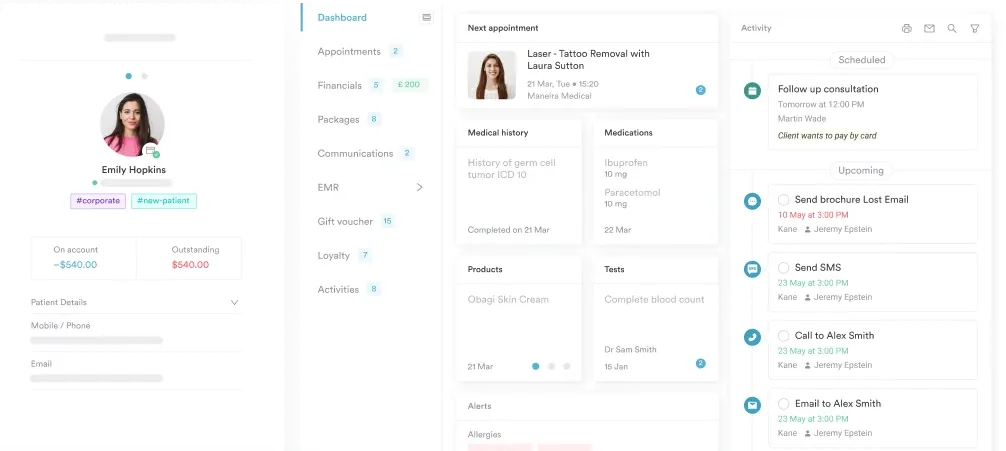

Pabau keeps clinical notes, client records, and claims in one place, so the documentation behind a diagnosis code travels with the claim. See how it fits your practice.

Ultimately, the coding decision here comes down to one line in the record. If the note describes retroflexion of the head with fused or distorted cervical vertebrae, Q00.2 is the code. Otherwise, an absent skull vault points somewhere else.
Still, the trade-off worth remembering is DRG expectations. A newborn claim carrying Q00.2 lands in MDC 15, so do not budget against a named group before the grouper runs.
As a result, practices that capture the scan findings at the point of care rarely have to reconstruct them at billing time. Book a demo to see how Pabau keeps scan findings, delivery notes, and claims for congenital diagnoses in one record.

Coding an obstetric complication alongside a fetal anomaly? O20.0 shows how Chapter O codes are sequenced on the maternal record.
Billing a trace mineral blood test? CCSD code 0081H for selenium testing covers the billing code for the selenium level blood test in the Biochemistry category of the schedule.
Encountered a deleted PLA code? CPT code 0124U deleted status explains why this fetal trisomy screening code was deleted and how billing teams still encounter it.
ICD-10 code Q00.2 is the billable ICD-10-CM diagnosis code for iniencephaly, a rare and severe neural tube defect. Specifically, it involves extreme retroflexion of the head with distortion of the cervical and thoracic spine. Additionally, in the FY2026 ICD-10-CM edition, it sits under parent code Q00, within the Q00-Q07 block.
Yes. Specifically, Q00.2 is a billable, specific ICD-10-CM code that can be submitted directly for reimbursement, and it requires no additional child code. Additionally, it is valid for HIPAA-covered transactions from October 1, 2025 through September 30, 2026.
In contrast, anencephaly (Q00.0) involves absence of the forebrain and the skull vault, with exposed neural tissue. Iniencephaly (Q00.2) involves extreme backward flexion of the head with vertebral distortion, but the skull vault is usually present even when deformed. In short, retroflexion is the defining feature of Q00.2, not skull absence.
Q00.2 does not map to one fixed DRG. Instead, on a newborn inpatient claim, it falls under MDC 15, which covers newborns and neonates. Specifically, within that MDC, birth weight, major procedures, and discharge status drive the DRG assignment. Either way, confirm the result in your grouper against the current CMS MS-DRG definitions file.
Q00.2 falls under Chapter Q, which runs from Q00 to Q99 and covers congenital malformations, deformations, and chromosomal abnormalities. More specifically, within that chapter, it sits in block Q00-Q07, congenital malformations of the nervous system, under category Q00.
Yes. Specifically, the FY2026 ICD-10-CM edition of Q00.2 took effect October 1, 2025 and is valid for all HIPAA-covered transactions through September 30, 2026. In fact, the code has stayed active and unchanged through successive ICD-10-CM editions.