

CCSD code G5100: Bypass of duodenum billing guide
CCSD code G5100 bills a bypass that leaves the duodenum in place CCSD code G5100...

Last Updated: Oct 16, 2026
H2032 is the HCPCS Level II code for activity therapy, per 15 minutes.
Most billing denials for HCPCS Code H2032 trace back to the same three mistakes: missing start and end times, wrong modifier, overbilled units. Catching those errors before submission requires understanding exactly how this code works and what documentation Medicaid expects.
Let Pabau's smart automation suggest the right codes, reduce claim denials, and keep your practice compliant—effortlessly.
Automate repetitive tasks and focus on what matters most—your patients.
Reduce coding errors and ensure compliance with the latest regulations.
Clean claims, fewer denials, and faster reimbursements.
Powerful insights and reporting to help your practice thrive.
HIPAA compliant SOC 2 certified GDPR-compliant Trusted by 4,000+ clinics worldwide

HCPCS Code H2032 describes activity therapy services billed per 15-minute unit, used in behavioral health and substance use disorder treatment programs.
Medicaid is the primary payer; traditional Medicare Parts A/B do not cover H-codes under fee-for-service, though some Medicare Advantage plans may.
Billing errors most often involve incorrect modifier use, missing start/end times in session notes, and overbilling units beyond documented service time.
Practice management software like Pabau can structure session-note templates and unit-tracking workflows for time-based HCPCS codes like H2032.
HCPCS Code H2032 is a Level II Healthcare Common Procedure Coding System code with the official descriptor: Activity therapy, per 15 minutes. It falls under the Other Mental Health and Community Support Services category (the H2000-H2041 range) of HCPCS Level II, maintained by the Centers for Medicare and Medicaid Services (CMS).
State Medicaid programs and certain managed care organizations (MCOs) use this code to reimburse activity therapy services delivered in behavioral health and substance use disorder (SUD) treatment settings.
The “per 15 minutes” designation makes H2032 a time-based code. Each billing unit equals one 15-minute increment of direct service, so providers report units based on documented session duration, not a flat per-session fee.
Activity therapy encompasses structured therapeutic interventions that use purposeful activities to address medical, mental, developmental, or behavioral conditions. In psychiatry and behavioral health settings, these services help clients develop coping skills, improve social functioning, and support recovery from substance use disorders.
Covered services under H2032 typically include art therapy, music therapy, recreational therapy, and occupational skill-building activities when delivered as part of a structured treatment plan. The common thread is that each activity serves a documented therapeutic purpose tied to the client’s diagnosis and treatment goals.
Many SUD programs pair these activities with structured tools such as a substance abuse workbook to reinforce coping strategies between sessions.
Applicable treatment settings and patient populations include:
Medical necessity must be documented for every session. The activity must link directly to the client’s diagnosis codes and individualized treatment plan goals. For example, documenting a general “group activity” without tying it to specific therapeutic objectives is a common reason Medicaid reviewers question claims.
The best medical practice management tools let you standardize how unlisted and miscellaneous codes get documented.
Provider eligibility for H2032 is determined by each state’s Medicaid program and varies by payer. Always verify with your specific Medicaid contractor before billing. The provider types most commonly authorized include:
Individual practitioners billing independently should confirm whether their state Medicaid program allows H2032 claims from solo providers or limits it to agency-level billing. In some states, H-codes are restricted to certified programs rather than individual clinicians.
H2032 billing follows a straightforward time-unit model. However, small calculation errors lead to denials. Here is how to bill it correctly.
Calculating units from session duration: Each unit equals 15 minutes of direct service. For example, a 45-minute activity therapy session = 3 units, and a 60-minute session = 4 units. In addition, fractions of a 15-minute unit are generally not billable unless your specific payer policy specifies rounding rules.
Place of service codes: Use the place of service code that matches where the service was delivered. Common options include POS 49 (independent clinic), POS 53 (community mental health center), or POS 57 (non-residential substance abuse treatment facility). Mismatching the place of service to the actual delivery site is a common denial trigger.
Claim form fields: On the CMS-1500 (professional) claim, report H2032 in Box 24D. Then enter units in Box 24G. The rendering provider’s NPI goes in Box 24J, and the billing provider’s information in Boxes 33 and 33a. For facility-based claims on the UB-04, instead enter H2032 in FL44 with units in FL46.
Modifier requirements for HCPCS Code H2032 vary by payer and state. Always verify your state Medicaid or MCO policy before applying modifiers. The following are commonly used with H2032 billing, though payer-specific rules take precedence in all cases.
Before submitting any H2032 claim, check your state Medicaid provider manual for modifier requirements. Some states mandate HQ for group activity therapy sessions while others require it only for specific program types. Using the wrong modifier, or omitting a required one, is a top denial reason that delays reimbursement by weeks.

Pabau’s documentation tools help structure session notes and treatment plans for time-based HCPCS billing, helping behavioral health practices reduce denials and streamline activity therapy documentation.

Reimbursement rates for HCPCS Code H2032 are set by each state’s Medicaid program and vary considerably, and there is no single national rate. Providers must check their state’s published Medicaid fee schedule for current reimbursement amounts, as rates change with annual Medicaid rate updates.
Traditional Medicare Parts A and B do not cover HCPCS H-codes under fee-for-service. H2032 falls within the behavioral health H-series, which CMS has classified as non-covered under standard Medicare, so submitting it to Medicare fee-for-service will result in denial.
Medicare Advantage plans, however, operate under different rules. Some plans covering behavioral health services may include H-code coverage at their discretion, but this requires plan-by-plan verification. Never assume a Medicare Advantage plan covers H2032 without checking that plan’s specific benefit design and provider manual.
Medicaid is the primary payer for H2032. Coverage and rates are state-determined, meaning a provider in California faces different reimbursement than one in Ohio or Texas for the same service.
Rate variation also occurs within states when Medicaid beneficiaries are enrolled in managed care plans rather than fee-for-service Medicaid, because MCO contracts can differ from the base Medicaid fee schedule.
To find your state’s current H2032 rate, search your state Medicaid agency’s published fee schedule or provider manual. The CMS HCPCS overview page also links to state-level resources for navigating Medicaid program contacts.
Medicaid auditors reviewing H2032 claims focus on the same documentation failures repeatedly, so strong records protect against post-payment recovery demands. Use digital forms for session documentation to ensure every required field is captured consistently.
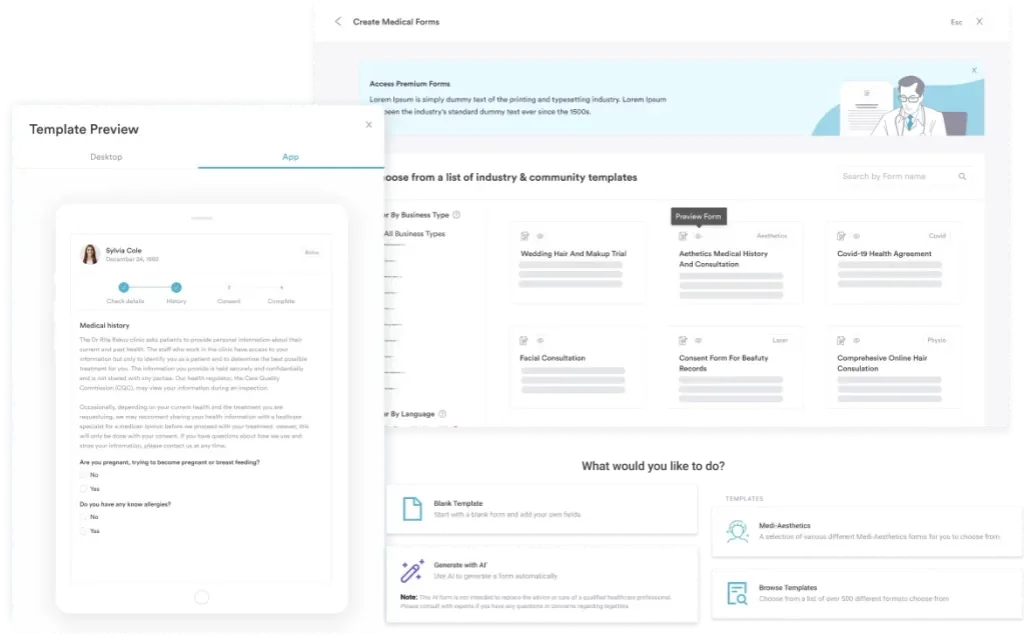
Required documentation for each H2032 session typically includes:
Maintaining HIPAA compliance for medical offices is also relevant here. Session notes for behavioral health clients carry heightened privacy protections under 42 CFR Part 2 for SUD treatment records, so documentation systems need to handle these records appropriately.
The same denial patterns appear across behavioral health programs billing H2032. Knowing them in advance saves considerable rework.
Run a pre-billing audit on H2032 claims before submission. Check that every claim has matching start/end times, a current active treatment plan, the correct modifier for the payer, and a place of service code matching the actual service location. Catching these before submission costs minutes. Fixing denials post-submission costs hours.
H2032 belongs to a family of behavioral health and SUD service codes. Selecting the right code depends on the specific service delivered. Below are the most commonly referenced codes alongside H2032, drawn from the AAPC HCPCS code reference.
Code reference sites tell you what H2032 requires. Practice management software handles it in practice. For behavioral health programs billing dozens of time-based HCPCS codes daily, manual unit calculation and modifier selection create predictable errors, and automating those steps removes the friction.
For example. Key workflow advantages include:
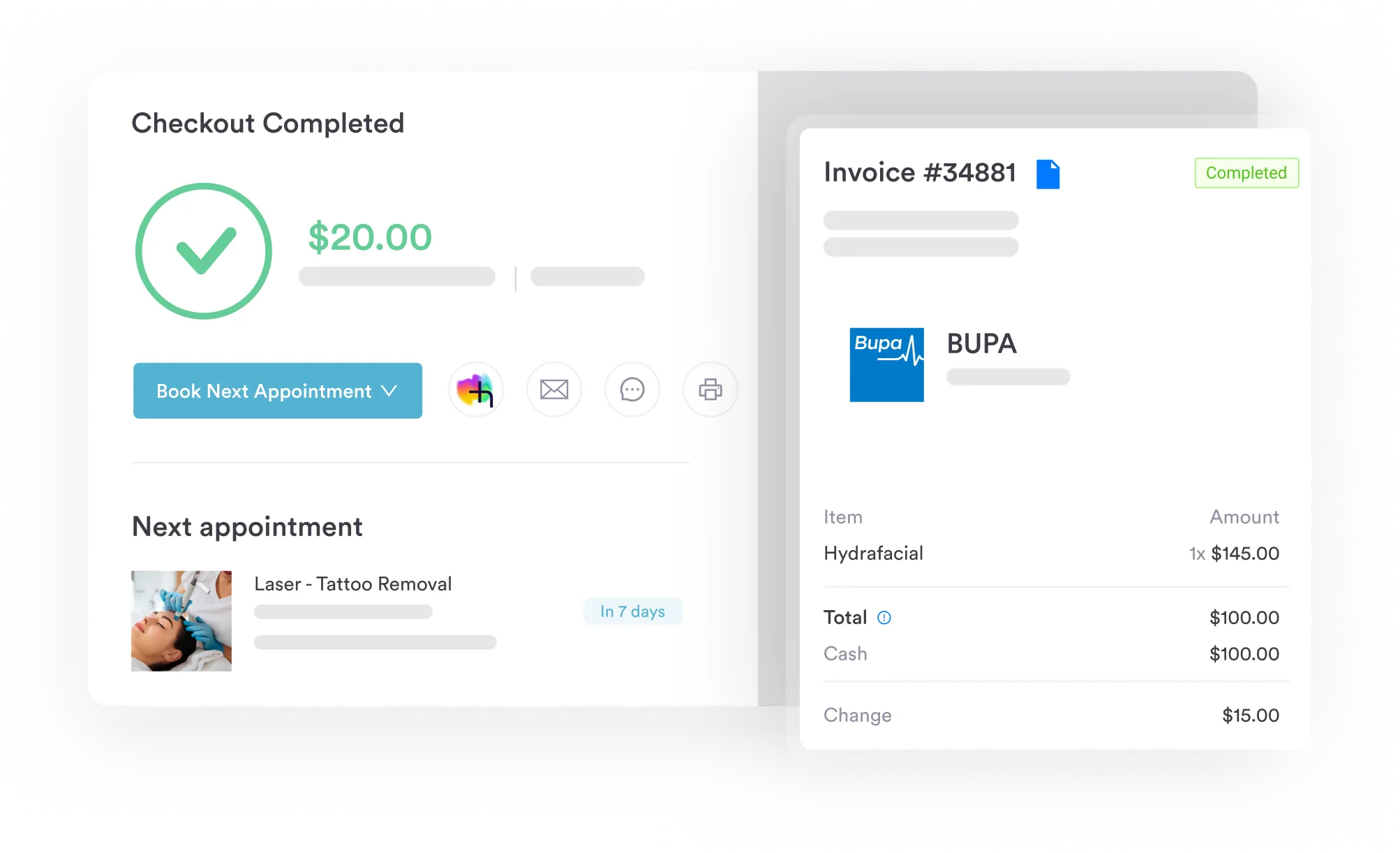
Most H2032 denials happen when documentation requirements are understood but not consistently followed at the point of care. Practices using structured compliance management tools also catch common errors, such as missing signatures or unsigned treatment plans, before claims leave the building.
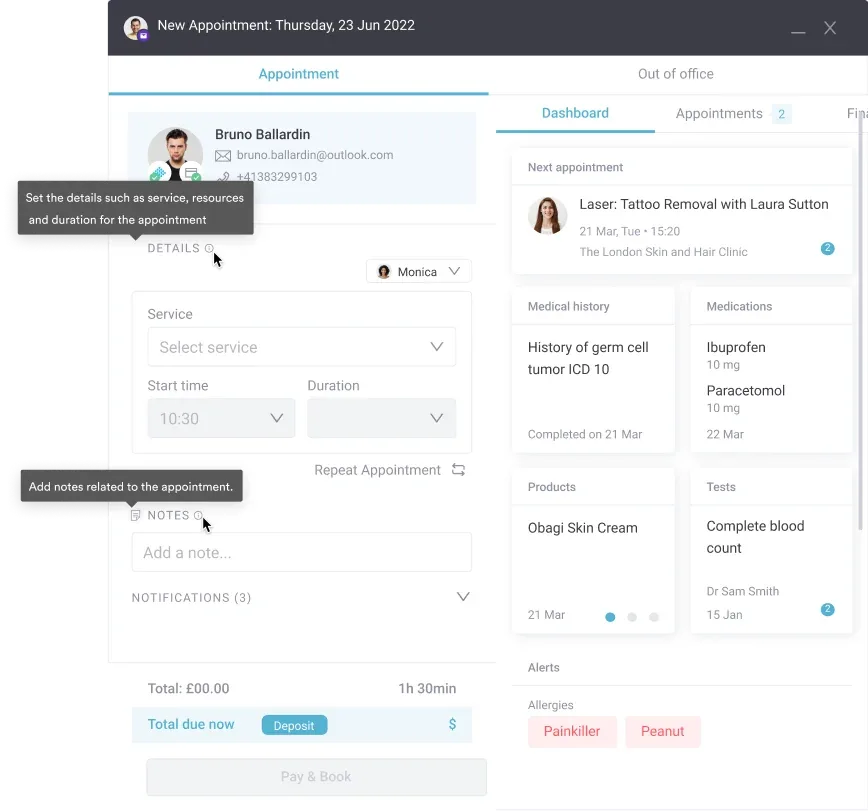
For practices navigating EHR integration across billing and clinical documentation systems, the overhead of reconciling session records with claims data manually adds hours of administrative work per week. By contrast, connected systems that pull clinical notes directly into claims workflows reduce that overhead while improving accuracy on time-based codes like H2032. A paid claim can still be underpaid, and the electronic remittance file is where that shows up.
Billing HCPCS Code H2032 accurately comes down to three disciplines: precise time documentation, correct modifier selection, and a current active treatment plan tied to the service. Medicaid programs scrutinize time-based behavioral health codes closely, and the most common denial reasons are preventable with the right documentation habits.
Pabau’s healthcare compliance tools and structured documentation features help behavioral health practices build those habits into their workflows rather than relying on manual checklists. To see how Pabau supports behavioral health billing documentation, book a demo with our team.

Coding an unclassified headache syndrome? Other headache syndrome code explains when the residual G44.89 code is appropriate for an unclassified headache.
Getting an insomnia claim denied? Insomnia coding guide explains why the non-billable parent code G47.0 needs a specific subcode instead.
Coding obstructive sleep apnea for CPAP coverage? Obstructive sleep apnea code explains when G47.33 applies and why AHI thresholds must be documented for CPAP coverage.
HCPCS Code H2032 is a Level II Healthcare Common Procedure Coding System code describing activity therapy services billed per 15-minute unit. It falls under the Other Mental Health and Community Support Services category (H2000-H2041) and is used primarily in behavioral health and substance use disorder treatment programs billing through Medicaid.
No. Traditional Medicare Parts A and B do not cover HCPCS H-codes under fee-for-service. H2032 claims submitted to standard Medicare will be denied. Some Medicare Advantage plans may cover H2032, but coverage must be verified plan by plan before billing.
Commonly used modifiers include HQ (group setting), HN (bachelor’s degree provider), HO (master’s degree provider), HP (doctoral provider), and state-assigned U1-U9 modifiers. Required modifiers vary by state Medicaid program and managed care organization; always verify with your payer before submitting.
Required documentation includes a current individual treatment plan, medical necessity justification, session notes with documented start and end times, description of the specific activity and client response, rendering therapist credentials and signature, supervising clinician signature where required, and ICD-10-CM diagnosis codes supporting medical necessity.
Eligible providers typically include certified behavioral health agencies, licensed substance use disorder treatment programs, licensed therapists credentialed by the payer, and community mental health centers operating under Medicaid agreements. Eligibility varies by state Medicaid program; individual practitioners should confirm whether solo billing is permitted in their state.
H2032 covers activity therapy in behavioral health and substance use disorder settings, while H2019 covers therapeutic behavioral services, which are typically targeted behavioral interventions for children with behavioral disorders. H2019 is more commonly used in school or community settings for pediatric populations; H2032 is broader and used across SUD and behavioral health programs serving mixed-age populations.



