ICD-10 Code S42.444P: Medial epicondyle fracture, right humerus
ICD-10 Code S42.444P: full descriptor and code validity ICD-10 Code S42.444P car...

Last Updated: Oct 13, 2026
Billable Code Specific Code
F99 is the billable ICD-10-CM code for mental disorder, not otherwise specified.
Let Pabau's smart automation suggest the right codes, reduce claim denials, and keep your practice compliant—effortlessly.
Automate repetitive tasks and focus on what matters most—your patients.
Reduce coding errors and ensure compliance with the latest regulations.
Clean claims, fewer denials, and faster reimbursements.
Powerful insights and reporting to help your practice thrive.
HIPAA compliant SOC 2 certified GDPR-compliant Trusted by 4,000+ clinics worldwide

ICD-10 Code F99 (Mental disorder, not otherwise specified) is a billable ICD-10-CM code valid for claims submission in 2026, effective October 1, 2025.
F99 is a residual category code: coders should only assign it when no more specific mental disorder code can be justified by clinical documentation.
Payers including Medicare and Medicaid accept F99, but unspecified codes carry higher audit risk. Documentation must explain why a specific diagnosis was not established.
Pabau’s mental health EMR supports ICD-10 code search within the clinical workflow, reducing lookup errors and supporting compliant clinical documentation.
ICD-10 Code F99 represents “Mental disorder, not otherwise specified.” It is a billable/specific ICD-10-CM code valid for reimbursement submission. The 2026 edition became effective on October 1, 2025, per the annual ICD-10-CM update issued by CMS and the CDC’s National Center for Health Statistics (NCHS).
F99 sits at the very end of ICD-10-CM Chapter V (Mental, Behavioral and Neurodevelopmental Disorders, codes F01-F99). It functions as a true residual category: a catch-all for situations where a mental disorder is clinically present but cannot be classified under any more specific code. That specificity requirement matters enormously for payer acceptance and audit compliance.
The table below consolidates the core reference data for ICD-10 Code F99 that coders and billing teams need at the point of claim submission.
The phrase “not otherwise specified” (NOS) has a precise meaning in coding. It signals that the clinical presentation meets the threshold for a mental disorder but the available documentation does not support assignment of a more specific code from elsewhere in the F01-F99 chapter.
Three clinical scenarios commonly produce an F99 assignment:
What F99 is not is a shortcut. ICD-10-CM Official Guidelines for Coding and Reporting state clearly that coders must select the most specific code supported by documentation. Reaching for F99 when F32.9 (major depressive disorder, unspecified) or F41.9 (anxiety disorder, unspecified) would fit the documented presentation is a coding error, not a conservative choice.
Reviewing the WHO’s ICD-10 hierarchical structure helps clarify where F99 sits relative to all other mental disorder codes.
Offering virtual appointments removes a real barrier to attendance for many patients carrying these diagnoses.
Several clinical descriptions map to F99 in the ICD-10-CM index. Knowing the accepted synonyms helps coders confirm the right code when chart notes use alternate terminology.
All of these terms route to the same F99 code in the ICD-10-CM alphabetic index. Coders using a tool like the CDC/NCHS ICD-10-CM web tool can confirm these mappings against the official tabular list.
Understanding where F99 sits within Chapter V helps coders understand why it should be a last resort. The chapter is organized into diagnostic blocks, each containing specific and semi-specific codes. F99 is the only code in its own single-code block at the very end, signaling its residual nature.
For context on how other ICD-10 codes are structured within Chapter V.
Before assigning F99, coders must rule out more specific unspecified codes. The table below shows the most frequently confused peer codes, what distinguishes them, and when each is appropriate.
The key principle: if any chapter-specific unspecified code (F29, F32.9, F41.9, etc.) describes the documented clinical picture, use that code. F99 applies only when even those category-level codes do not fit. Review the full code range using the AAPC ICD-10-CM code lookup.
Mental health clinicians in the US work primarily with DSM-5 diagnostic criteria, then translate to ICD-10-CM codes for billing. Understanding the correspondence between DSM-5 “Unspecified” categories and F99 prevents miscoding.
DSM-5 uses the label “Unspecified Mental Disorder” (with its own diagnostic criteria for clinical use) and maps it to ICD-10-CM F99. However, DSM-5 also contains dozens of chapter-specific “Unspecified” designations, each of which maps to a chapter-specific ICD-10 code, not F99.
The practical takeaway: in DSM-5 practice, a clinician who documents “Unspecified Mental Disorder” intends F99. A clinician who documents “Unspecified Depressive Disorder” intends F32.A, not F99. That mapping changed effective October 1, 2021, when the DSM-5-TR crosswalk moved “Unspecified Depressive Disorder” to F32.A and reserved F32.9 for major depressive disorder, single episode, unspecified.
Coders who default to F99 for all DSM-5 “unspecified” notations will introduce systematic errors across the claim set. Verify crosswalk accuracy against the current APA DSM-5-TR coding tables.
When a clinician writes ‘Unspecified Mental Disorder’ in a DSM-5 context, F99 is correct. When they write any other ‘Unspecified [Category] Disorder’, check the category-specific ICD-10 unspecified code first. F99 is the code of last resort, not a universal unspecified placeholder.
Unspecified codes attract heightened payer scrutiny. Submitting F99 without adequate supporting documentation exposes practices to claim denial and audit risk. Structured psychiatric evaluation templates help clinicians capture the elements that justify an unspecified code assignment.
For a mixed or atypical presentation.
The documentation must accomplish three things:
Maintaining thorough clinical note documentation is especially important when using residual codes like F99. A client record management system that timestamps clinical entries and links diagnostic codes to specific encounter notes creates a clear audit trail if a payer requests supporting evidence.
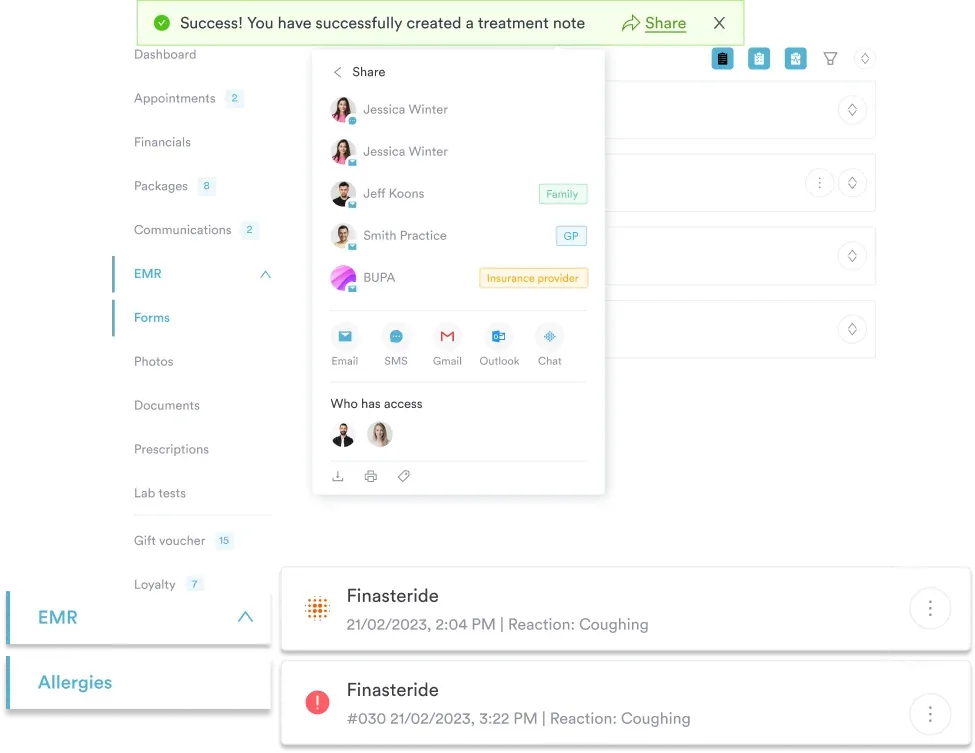
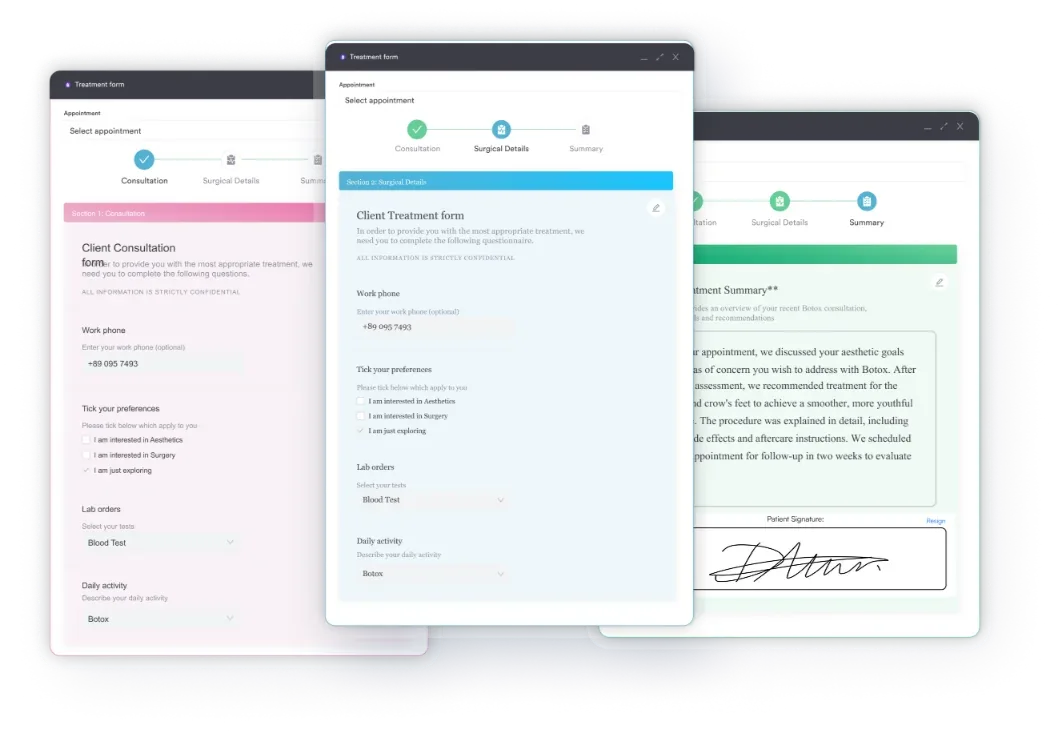
Practices using digital clinical forms can structure intake and follow-up documentation to prompt clinicians for the exact fields that justify unspecified code use, reducing the chance that a required field is missing at claim review.
ICD-10 Code F99 was not modified in the FY 2026 update cycle. Its description, code structure, and billable status remain unchanged. The 2026 edition became effective October 1, 2025, in line with the standard annual update schedule set by CMS and the CDC’s National Center for Health Statistics (NCHS). No new subcodes were added and no existing synonyms were removed.
F99 does carry an Excludes1 note: unspecified mental disorder due to a known physiological condition is excluded from F99 and reported instead with F09. Coders should never report F09 and F99 together for the same encounter — F09 applies whenever a physiological cause for the mental disorder is documented.
Coders verifying the current-year validity of any ICD-10-CM code can confirm status directly through the CDC/NCHS ICD-10-CM web tool, which publishes the official tabular list for each fiscal year. F99 has remained stable across multiple ICD-10-CM editions and carries no indication of planned deprecation in the current coding landscape.
F99 is accepted by Medicare, Medicaid, and most commercial payers as a valid ICD-10 diagnosis code for claim submission. However, payer-specific policies vary. Some managed care organizations impose additional documentation requirements or prior-authorization triggers for unspecified mental disorder codes. Verifying individual payer guidelines before submission reduces denial risk.
F99 pairs with standard mental health evaluation and psychotherapy CPT codes. Common pairings include 90791 (psychiatric diagnostic evaluation), 90837 (individual psychotherapy, 60 minutes), 90834 (individual psychotherapy, 45 minutes), and 90847 (family psychotherapy with patient). The diagnosis code alone does not determine reimbursement; medical necessity documentation for the service type also applies. A pre-authorization number has to reach the claim, and a missing reference is a common avoidable denial.
CMS guidelines do not explicitly exclude F99 from coverage. Claims submitted under Medicare Part B with F99 as the primary diagnosis are processed under the standard mental health benefit.
Medicaid policies differ by state. Practices billing Medicaid for F99-coded services should check state-specific Medicaid fee schedules and any Medicaid managed care organization addenda for unspecified diagnosis code restrictions. CMS’s ICD-10 codes page provides annual updates to covered code lists and documentation guidance.
Recovery Audit Contractors (RACs) and commercial payer audit programs flag patterns of repeated unspecified code use. A practice that consistently submits F99 across multiple encounters without progression to a more specific diagnosis will attract closer review.
Best practice is to treat F99 as a single-encounter transitional code, then move to the most specific code supported by the documented assessment at the next visit.
Practices managing mental health billing workflows can reduce this exposure through compliance documentation software that helps teams flag repeated unspecified-code use for review before resubmission. Dedicated psychiatry EMR software can embed coding guidance directly into the clinical workflow, keeping documentation and billing aligned.
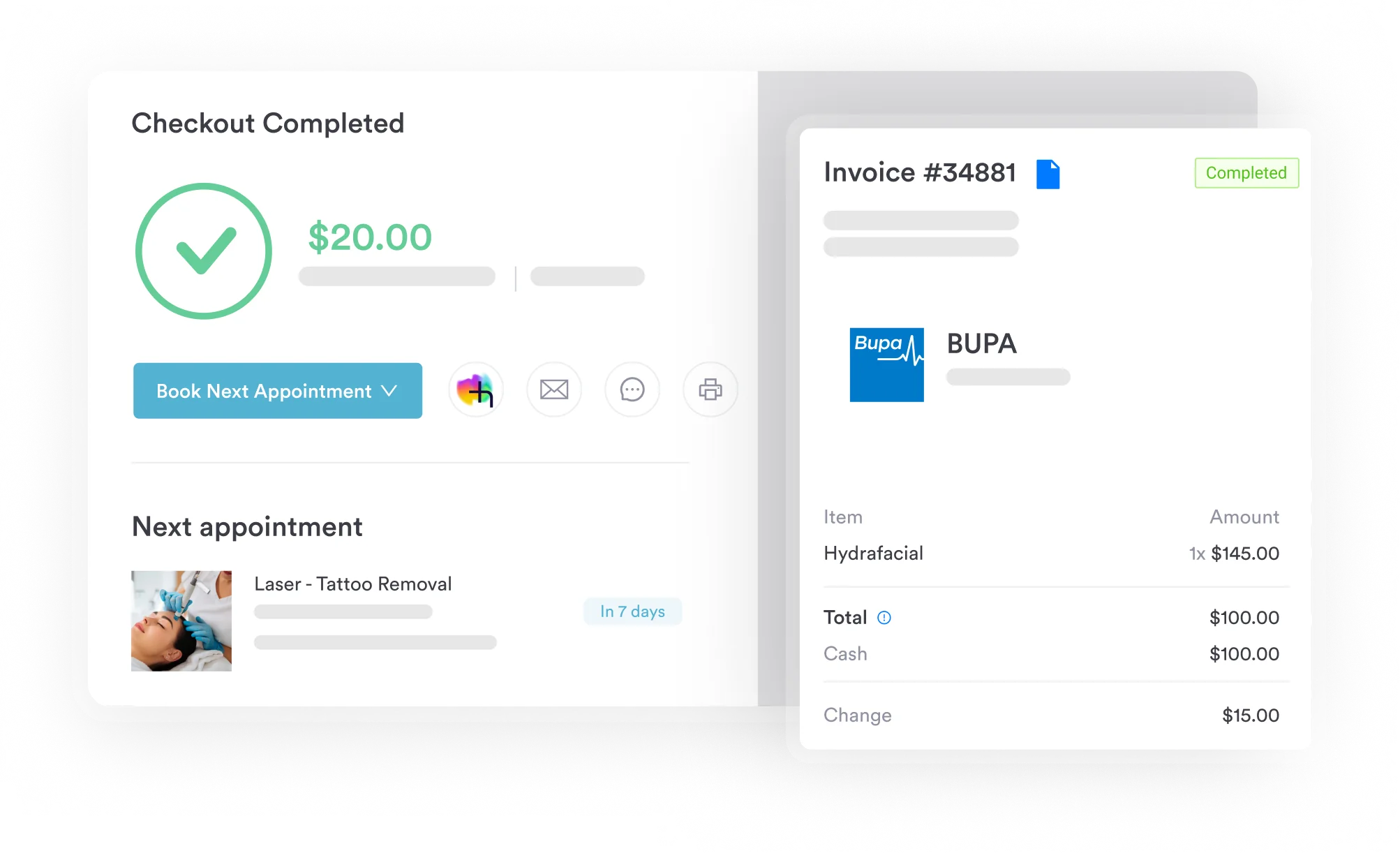

Pabau integrates ICD-10 code selection directly into your clinical note and documentation workflow, helping mental health practitioners and coders keep diagnosis codes and encounter notes aligned without switching platforms.

ICD-10 Code F99 is a legitimate, billable code but a narrow one. Its proper use is limited to encounters where a mental disorder is clinically evident and no more specific ICD-10-CM code from F01 through F98 reflects the documented presentation.
Treating F99 as a default unspecified code across patient encounters creates audit exposure and obscures clinical reality in the billing record.
Pabau’s psychology practice software supports compliant mental health coding workflows, with integrated diagnosis code search, structured clinical note templates, and audit-ready documentation tools built for behavioral health practitioners. To see how Pabau supports the full workflow from ICD-10 code assignment to documented, audit-ready encounters, book a demo.

Billing an initial hospital admission? CPT code 99222 covers initial hospital inpatient care with moderate medical decision making.
Coding an unspecified stomach infection? ICD-10 code A09 covers infectious gastroenteritis and colitis when no specific organism is identified.
Coding tetanus in an obstetric case? ICD-10 code A34 captures tetanus diagnosed in the obstetric context, distinct from other tetanus codes.
ICD-10 Code F99 is a billable ICD-10-CM diagnosis code representing “Mental disorder, not otherwise specified.” It applies when a mental disorder is clinically present but no more specific code in Chapter V (F01–F99) fits the documented presentation.
Yes. F99 is a valid, billable ICD-10-CM code accepted by Medicare, Medicaid, and most commercial payers. Verify individual payer policies before submission, as some add documentation requirements for unspecified codes.
The DSM-5 category “Unspecified Mental Disorder” maps directly to F99. Other DSM-5 unspecified categories (e.g. Unspecified Depressive Disorder, Unspecified Anxiety Disorder) map to their own ICD-10 codes—F32.A and F41.9 respectively—not F99.
Use F99 only when documentation confirms a mental disorder is present and no chapter-specific code—including category-level unspecified codes such as F41.9 or F32.9—fits the presentation. Typical scenarios are pending diagnostic workup or genuinely atypical symptoms.
The clinical note must confirm a mental disorder is present, explain why a more specific code could not be assigned, and include a plan for diagnostic clarification. Repeated F99 use without progression to a specific diagnosis raises audit flags.
Yes, F99 can be the primary diagnosis on a claim, but the note must support medical necessity for the billed service. Some payers apply prior-authorization requirements or extra scrutiny when unspecified codes appear across multiple encounters.