CPT code 21011: Excision of soft tissue tumor of the face
CPT code 21011: Official descriptor and procedure overview CPT code 21011, as pu...

Last Updated: Oct 8, 2026
H0031 is the HCPCS Level II code for mental health assessment, by non-physician.
Let Pabau's smart automation suggest the right codes, reduce claim denials, and keep your practice compliant—effortlessly.
Automate repetitive tasks and focus on what matters most—your patients.
Reduce coding errors and ensure compliance with the latest regulations.
Clean claims, fewer denials, and faster reimbursements.
Powerful insights and reporting to help your practice thrive.
HIPAA compliant SOC 2 certified GDPR-compliant Trusted by 4,000+ clinics worldwide

HCPCS Code H0031 is a Level II code for mental health assessments performed by qualified non-physician behavioral health professionals.
Medicaid is the primary payer for H0031 claims; traditional Medicare generally does not cover HCPCS H-codes.
Missing documentation elements, such as a formal mental status exam or provider credentials, are among the most common reasons H0031 claims are denied.
practice management software like Pabau, whose claims management tools and digital intake forms help behavioral health practices document, code, and submit H0031 claims without switching tools.
HCPCS Code H0031 is a HCPCS Level II code maintained by CMS for reporting mental health assessment services provided by non-physician behavioral health professionals. It sits within the H-code series (H0001 through H2037), which is reserved for behavioral health and substance use disorder services billed primarily to Medicaid.
H-codes exist because Medicaid programs needed a billing mechanism for services delivered outside the traditional physician-based CPT framework. Non-physician behavioral health providers, such as licensed clinical social workers (LCSWs) and licensed professional counselors (LPCs), are not assigned their own CPT billing pathways in many state Medicaid programs.
The H-code series gives these providers a recognized billing vehicle for assessment and treatment services. For mental health practices billing Medicaid, H0031 is one of the most frequently used codes in the assessment workflow.
H0031 is explicitly limited to non-physician providers. Which specific credential types are recognized, however, depends on the state Medicaid program. The following provider types are commonly authorized to bill H0031 across state programs, though eligibility should always be confirmed with the specific state Medicaid agency or managed care organization before billing.
Supervision requirements add another layer. Some state Medicaid programs require an associate-level counselor or peer specialist to be supervised by a licensed clinician, with that supervising provider’s NPI included on the claim. Others allow independent billing by all licensed providers in the list above.
Staff qualifier modifiers, covered in the modifiers section below, are how payers differentiate credential levels on the claim. Practices staffing psychiatry and behavioral health teams with a mix of credential levels should build modifier rules into their billing workflow to avoid denials caused by mismatched staff qualifiers.
Coverage for H0031 is not universal. The table below summarizes the typical coverage posture by payer type. State and plan-level variation is significant; treat this as a starting framework, not a definitive coverage guide.
If your practice sees a mix of Medicaid and Medicare patients, you’ll likely need parallel workflows. For behavioral health practices, that means billing H0031 for Medicaid beneficiaries while routing Medicare patients through CPT 90791 or 90792 depending on physician versus non-physician provider.
Submitting H0031 to traditional Medicare results in a denial that requires resubmission with the correct CPT code. See the CMS Physician Fee Schedule lookup for current Medicare reimbursement under those CPT codes.
The best medical practice management tools let you standardize how unlisted and miscellaneous codes get documented.
Medicaid reimbursement for H0031 is set by individual state fee schedules and managed care contracts, not by a national rate. Rates vary significantly by state and by managed-care contract, depending on the provider credential type billed and whether a managed care multiplier applies.
Check your state Medicaid agency’s current fee schedule for the specific H0031 rate that applies to your practice. Use the AAPC HCPCS code lookup as a general reference point rather than a source of payment amounts, since third-party listings can lag behind current fee schedules.
A denied H0031 claim almost always traces back to missing or insufficient documentation. Medicaid auditors look for specific clinical elements in the medical record, not just the presence of a note. The following checklist reflects standard documentation requirements across most state programs; individual states or MCOs may require additional elements.
The mental status examination is the element most commonly missing or inadequately documented. A note that records mood and affect but omits cognitive assessment, thought process, or judgment is incomplete for H0031 purposes. Some payers define minimum MSE elements in their billing manual; check your state Medicaid behavioral health billing manual for specifics.
Using structured clinical documentation templates, such as a psychiatric evaluation template or a biopsychosocial assessment template, makes it easier to capture all required elements consistently and reduces the risk of missing required elements.
For practices managing HIPAA-compliant documentation workflows.
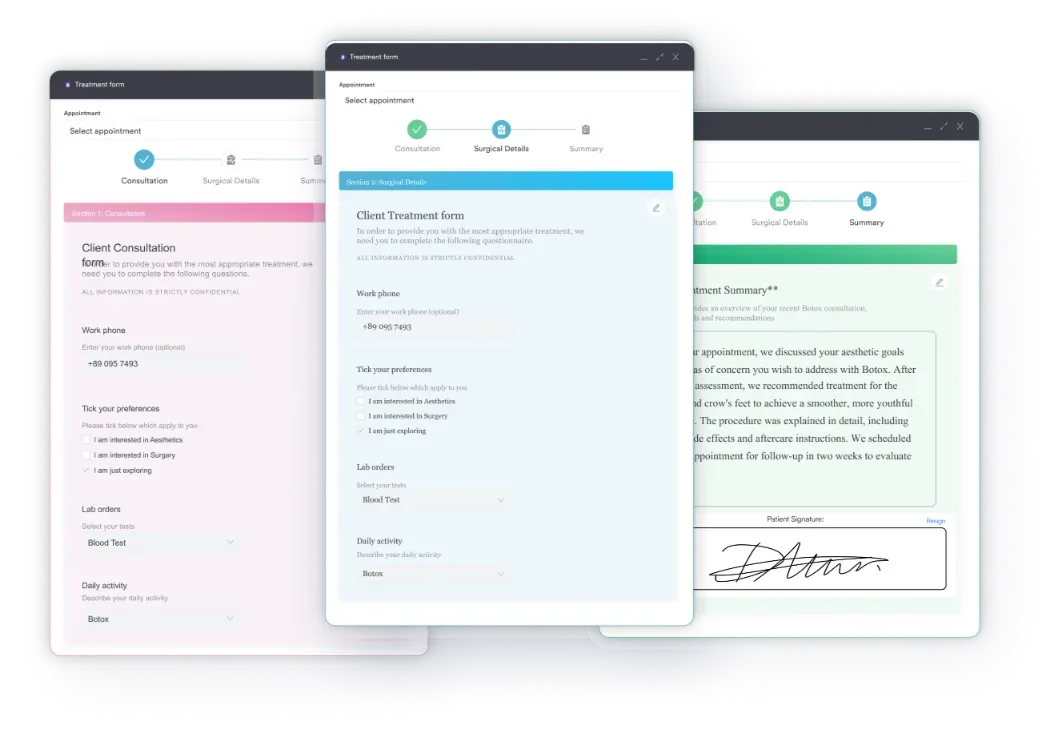
Before submitting any H0031 claim, run a documentation audit: confirm the note includes a formal MSE, a DSM-5 diagnosis with ICD-10-CM code, a treatment plan or referral recommendation, and the rendering provider’s credential and license number. Missing any of these elements is the fastest route to a denial or post-payment audit recovery demand.
H0031 is commonly billed with staff qualifier modifiers that identify the credential level of the rendering provider. These modifiers are required by many state Medicaid programs and managed care organizations, and billing without them, or with the wrong one, is a frequent source of denials. The applicable modifier set for your state should be confirmed with your Medicaid billing manual. Denial codes in medical billing group the reasons a payer refuses, and the group decides the fix.
The GT modifier is increasingly relevant as telehealth coverage has expanded for behavioral health services. Whether H0031 via telehealth is reimbursable at the same rate as in-person services varies by state Medicaid program and MCO contract. Confirm telehealth parity rules with your state Medicaid agency before assuming equivalence.
H0031 sits within a cluster of behavioral health assessment and treatment codes. Understanding which adjacent codes apply helps practices select the correct code for the service provided and avoid upcoding or incorrect substitution.
The H0031 vs. H0032 distinction is a common source of confusion. H0031 covers the assessment itself, while H0032 covers the subsequent treatment plan development.
Some state Medicaid programs allow both to be billed on the same date of service when the assessment and plan development occur in one session. Others require a separate date for H0032. Confirm same-day billing rules with your state’s behavioral health billing manual.
For practices that also bill F32.9 or F43.20, keeping those diagnosis codes aligned with the service documented under H0031 is part of the claim’s documentation integrity check.
H0031 claims are denied for predictable reasons. Recognizing these patterns before submission is faster than resolving denials after the fact. Electronic remittance files post payments automatically, and the adjustment codes explain what was reduced and why.
Behavioral health practices billing H-codes often rely on disconnected workflows: clinical notes in one system, claim submission in another, and modifier rules managed through manual checklists. That fragmentation is where errors accumulate.
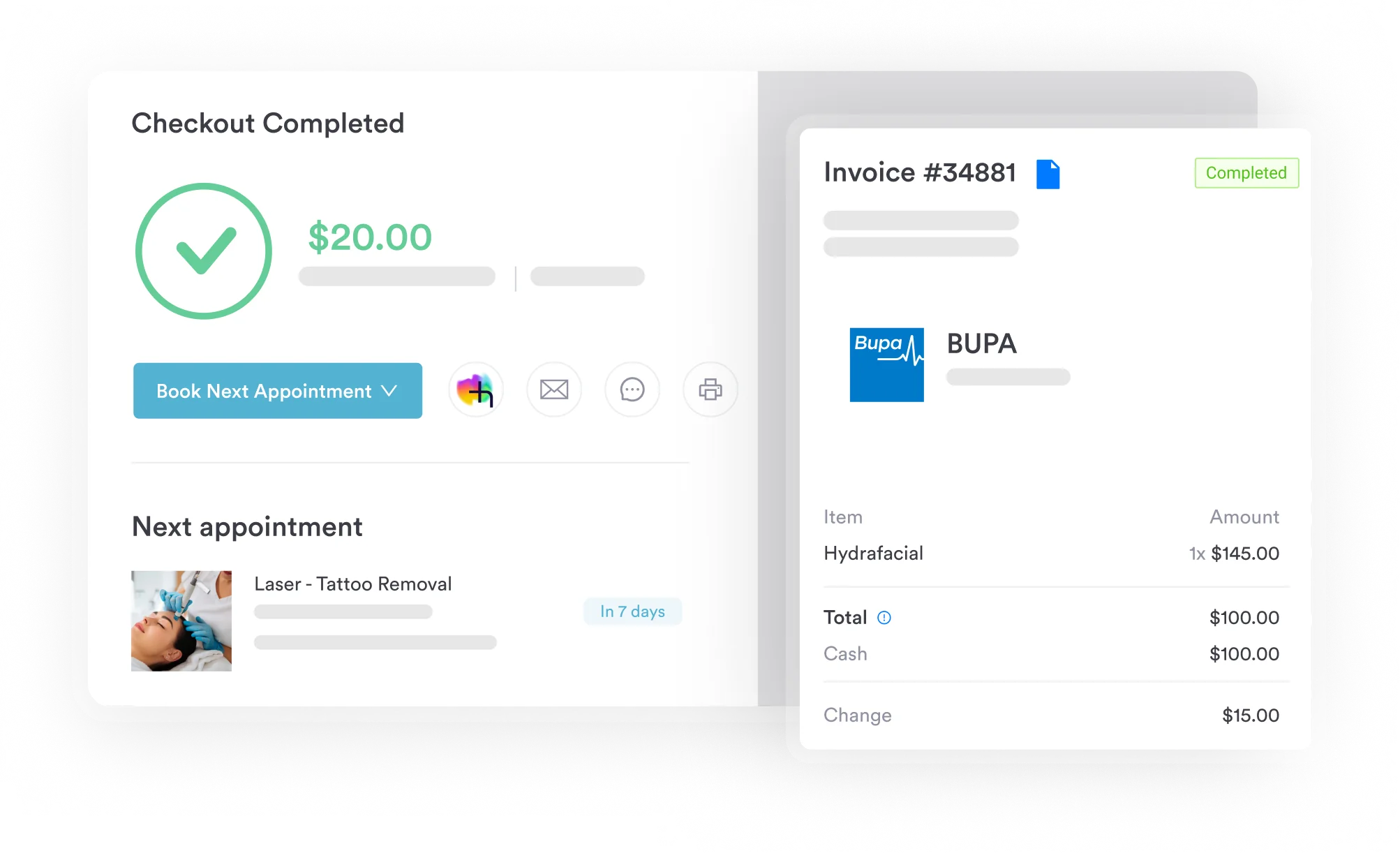
Pabau’s claims management software connects documentation and billing in a single platform. Clinicians complete structured assessment notes that map to H0031 documentation requirements; billing staff can attach the correct modifier before submission without re-reviewing the note separately. For practices looking for a broader clinical and operational platform.
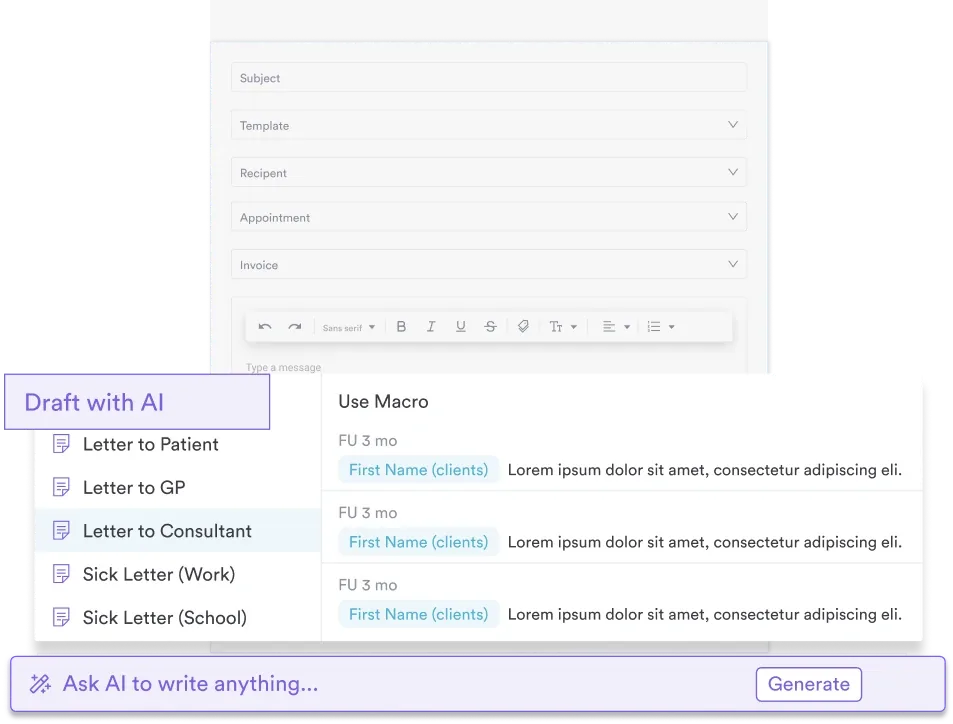
The AI-powered clinical documentation tool in Pabau can assist non-physician providers in capturing the MSE components and diagnostic impressions required for H0031 in real time during the assessment session. Pairing that with structured behavioral health workflows reduces the documentation review cycle before claim submission.

Pabau connects clinical documentation, modifier management, and claim submission in one platform so your team spends less time on billing admin and more time on patient care.

HCPCS Code H0031 is one of the most used behavioral health assessment codes in Medicaid billing, and most of the problems practices encounter with it are preventable. Payer type mismatches, missing MSE documentation, and incorrect staff qualifier modifiers account for the majority of denials. Building those checks into the clinical workflow, rather than catching them at the claim review stage, is the practical fix.
Pabau’s claims management tools and structured clinical documentation features give behavioral health practices the workflow infrastructure to get H0031 claims right the first time. See how it works for your team and book a demo.

Coding a low blood sugar diagnosis? Other hypoglycemia coding guide This guide covers the billable code for non-diabetic, non-drug-induced hypoglycemia, including alimentary and reactive presentations.
Coding an alcohol-related endocrine finding? Pseudo-Cushing’s syndrome coding guide This guide covers the billable code for alcohol-induced pseudo-Cushing’s syndrome, and how to differentiate it clinically from Cushing’s syndrome.
Coding a male-specific endocrine disorder? Testicular dysfunction coding guide This guide covers the billable code for testicular endocrine disorders that fall outside hyperfunction or hypofunction categories.
H0031 is a Level II HCPCS code for mental health assessments performed by non-physician behavioral health professionals, used primarily in Medicaid billing.
Eligible providers typically include LCSWs, LPCs, LMFTs, and psychologists. Eligibility varies by state Medicaid program, so confirm with your state agency before billing.
Traditional Medicare does not cover H0031; use CPT 90791 or 90792 instead. Some Medicare Advantage plans may cover H-codes — check the individual plan before submitting.
Required elements include a presenting problem, psychiatric and social history, a formal MSE, a DSM-5-aligned ICD-10-CM diagnosis, treatment recommendations, and the rendering provider’s credentials and signature.
H0031 covers the assessment; H0032 covers subsequent treatment plan development. Some states allow same-day billing for both — confirm with your state’s behavioral health billing manual.
Common modifiers include HN (bachelor’s), HO (master’s), HP (doctoral), HM (paraprofessional), and GT for telehealth. Match the modifier to the rendering provider’s actual credential level.