CPT Code 62284: Injection procedure for myelography
CPT Code 62284: official descriptor and procedure overview The American Medical ...

Last Updated: Oct 19, 2026
G0238 is the HCPCS Level II code for therapeutic procedures to improve respiratory function, other than described by g0237, one on one, face to face, per 15 minutes (includes monitoring).
Each unit of G0238 represents one 15-minute block of individual, direct-contact therapeutic care. Monitoring is considered part of the service and cannot be billed separately. The code sits in the pulmonary rehabilitation code family alongside G0237 and G0239.
Because G0238 is a timed code, accurate start and stop time documentation is not optional. CMS uses the AMA's 8-minute rule framework for timed codes. A provider must document at least 8 minutes of a 15-minute unit to bill one unit. Billing two units requires at least 23 minutes documented. Pulmonary rehabilitation programs that rely on structured clinical record-keeping are better positioned to document these session times correctly.
Let Pabau's smart automation suggest the right codes, reduce claim denials, and keep your practice compliant—effortlessly.
Automate repetitive tasks and focus on what matters most—your patients.
Reduce coding errors and ensure compliance with the latest regulations.
Clean claims, fewer denials, and faster reimbursements.
Powerful insights and reporting to help your practice thrive.
HIPAA compliant SOC 2 certified GDPR-compliant Trusted by 4,000+ clinics worldwide

HCPCS code G0238 describes individual therapeutic procedures to improve respiratory function, face-to-face, billed in 15-minute units with monitoring included.
Medicare covers 36 pulmonary rehabilitation sessions initially under Section 1861(fff), extendable by up to 36 more, for a lifetime maximum of 72 sessions.
Claims require a matching qualifying ICD-10 diagnosis (such as J44.x for COPD), a physician referral, and session-level documentation including start and stop times.
Pabau’s claims management software captures session time, supervision records, and diagnosis codes in one place, reducing G0238 denial risk.
The three pulmonary rehabilitation HCPCS codes cover different service configurations. Choosing the wrong one is the most avoidable coding error in this specialty.
G0237 covers breathing exercises. G0238 covers individual therapeutic procedures that go beyond breathing exercises. G0239 is the group equivalent. A patient in a one-on-one exercise training and education session receives G0238, while the same patient doing structured respiratory muscle training receives G0237. The two codes can be billed on the same date of service when both services are genuinely provided.
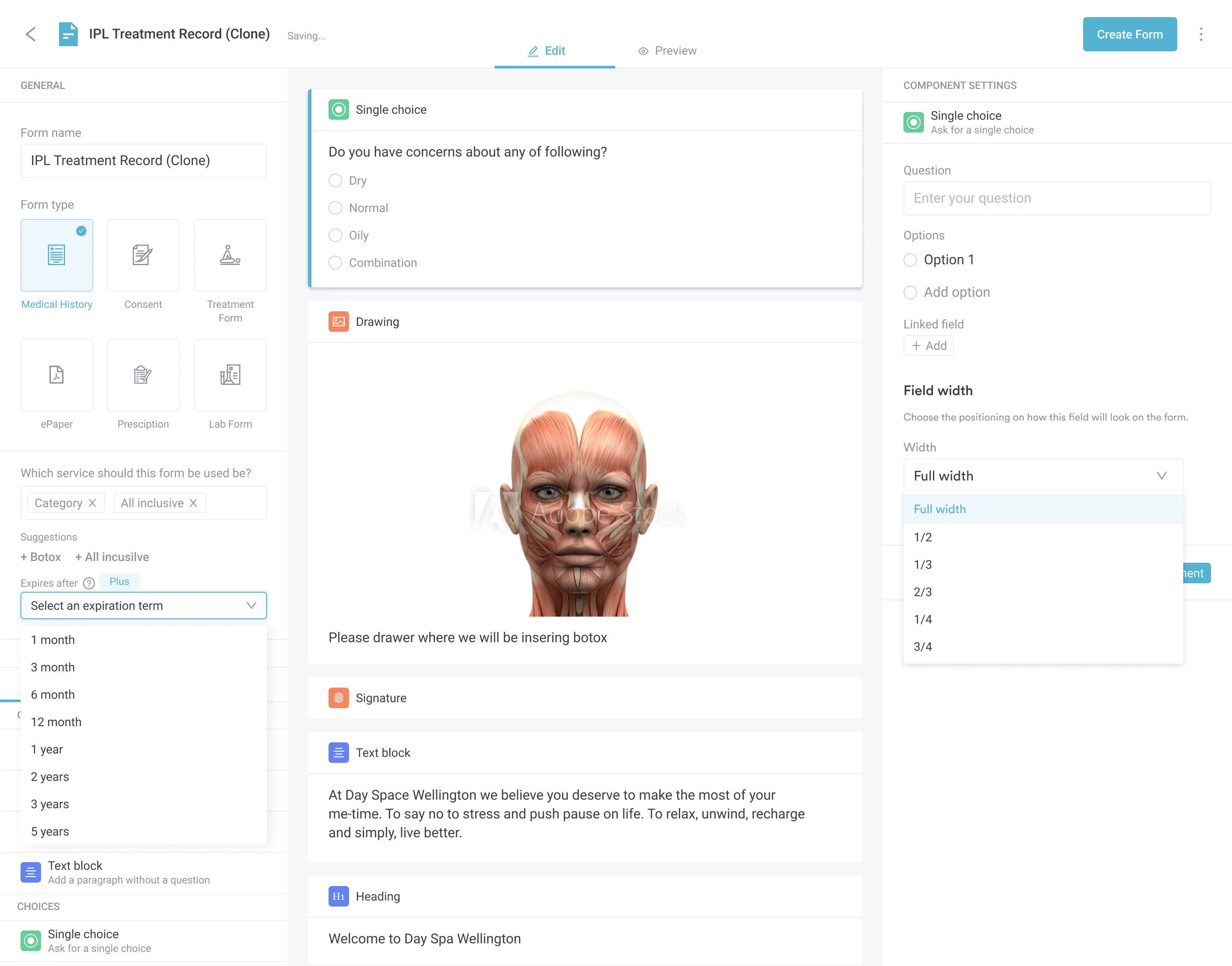
Programs that mix individual and group sessions often bill G0238 for the individual component and G0239 for group activities on the same visit. Documenting each service distinctly in the record is essential to support this combination billing. Using digital session documentation forms with separate fields for each service type reduces the risk of ambiguous or incomplete records.
Medicare covers pulmonary rehabilitation under Section 1861(fff) of the Social Security Act, added by the Medicare Improvements for Patients and Providers Act of 2008. Coverage is not automatic: patients must meet specific eligibility criteria before HCPCS code G0238 will be reimbursed.
Medicare limits pulmonary rehabilitation coverage to beneficiaries with moderate to very severe COPD. CMS’s National Coverage Determination defines this range as GOLD stage II through IV, meaning an FEV1 below 80% of predicted normal value. The primary qualifying diagnosis is chronic obstructive pulmonary disease (J44.x). Some MAC (Medicare Administrative Contractor) policies also cover additional respiratory diagnoses under Local Coverage Determinations; verify your MAC’s current LCD before billing for non-COPD diagnoses. Self-pay does not mean uninsured, and many patients recover part of the fee with a superbill.
Medicare covers up to 36 sessions initially over a continuous period. A physician may authorize an additional 36 sessions, reaching a lifetime maximum of 72, if medical necessity is documented. Each session is defined as one day of services, not one 15-minute unit. A patient receiving 60 minutes of G0238 in a single visit uses one session against the limit, billed as four units.
Supervision requirements are one of the most frequently misapplied aspects of G0238 billing. Direct supervision does not mean the supervising clinician must be in the therapy room, but they must be present in the suite. MAC interpretations differ slightly, so checking your regional LCD is required, not optional. Practices that manage staff scheduling and supervision tracking within a single system are less likely to have missing supervision documentation surface during an audit.
Every G0238 claim requires at least one ICD-10-CM diagnosis code that establishes medical necessity. The CMS National Coverage Determination for pulmonary rehabilitation lists the following as the primary qualifying diagnoses for pulmonary rehabilitation billing. This list reflects the national coverage determination; your MAC’s LCD may include additional codes.
An ICD-10 code that isn’t on the MAC’s approved list will typically deny as “not medically necessary,” not as a coding error. That distinction matters because the appeal path is different. Always cross-reference the referring physician’s diagnosis against the current LCD before submitting. Incorporating structured intake documentation into the patient’s first visit helps flag mismatched diagnoses before the claim is submitted.
Run a pre-authorization check on each new pulmonary rehabilitation patient before their first session. Confirm the referring diagnosis maps to a code on your MAC’s current LCD, verify that the Medicare benefit period is active, and document spirometry results supporting moderate-to-severe COPD. Catching eligibility issues at intake prevents session-limit surprises mid-program.
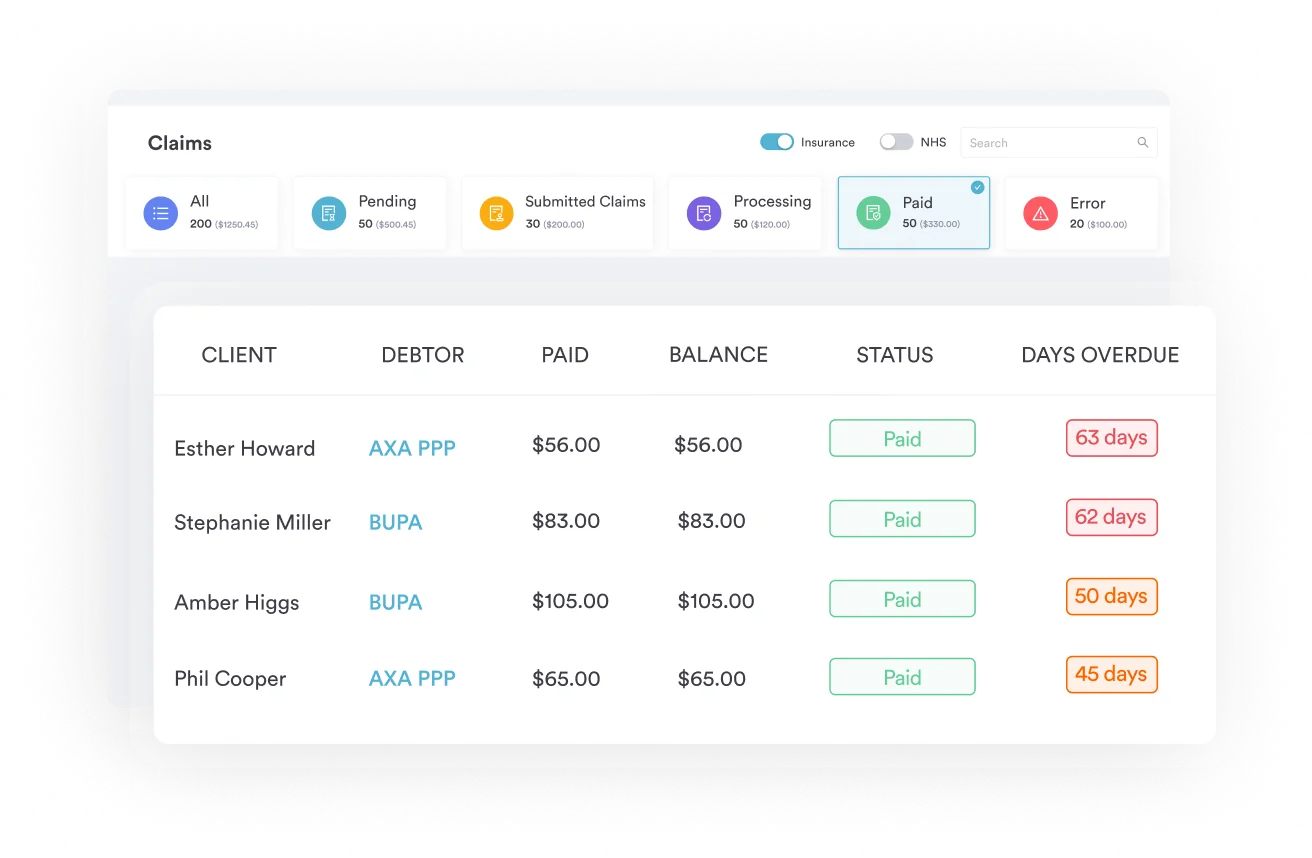
Routing these claims through a claims management tool keeps Medicare denials visible and appealable instead of buried.
Medicare reimbursement for HCPCS code G0238 varies by place of service and geographic location. CMS updates rates annually through the Medicare Physician Fee Schedule. The figures below reflect approximate national averages for 2026. Always retrieve current rates for your specific MAC region from the CMS fee schedule look-up tool, since geographic adjustment factors apply.
These are approximate ranges based on the Medicare Physician Fee Schedule structure. Actual amounts depend on your geographic payment locality. Always use the CMS fee schedule look-up tool for current figures before building a program revenue model. Rate accuracy matters particularly for programs tracking session-level profitability against the 36-session Medicare limit.
Inadequate documentation is the leading cause of G0238 audit failures and post-payment recovery demands. Medicare’s coverage rules require specific elements at both the program level and the individual session level.
Documentation captured at the point of care, rather than reconstructed from memory later, produces a stronger audit defense. Software that links session notes directly to the billing record reduces this risk. A claim often goes out days or weeks after the service date, when a missing element is easy to overlook.
HCPCS code G0238 billing follows the standard Medicare outpatient institutional claim pathway for hospital-based programs or the professional claim pathway for provider-based clinics. Here is the sequence for each step of a correctly filed G0238 claim.
Programs with high session volumes benefit from automated billing workflows. These carry session data from the clinical note through to the claim, reducing manual re-entry errors. Each re-entry step introduces a new opportunity for a code or unit count to be transcribed incorrectly.
For practitioners managing both documentation and billing. It also provides a clear audit trail from referral to final claim payment.
Pulmonary rehabilitation billing has a higher-than-average denial rate in Medicare because the coverage criteria are specific and the documentation requirements are extensive. These are the denial triggers that appear most frequently in G0238 claims.
Session-limit denials are particularly damaging because they are often discovered late. A program that reaches session 37 without an extension order on file cannot retroactively obtain one for services already delivered. Proactive session tracking.
Running a pulmonary rehabilitation program efficiently means aligning clinical scheduling, documentation, and billing into one coherent process. Many programs use scheduling and documentation platforms built for physical therapy or physiotherapy practices, since both fields bill timed, session-based codes similar to G0238. These operational tips address the most common causes of billing errors and missed revenue.
Build a G0238 pre-bill checklist into your billing workflow: confirm the qualifying ICD-10 code, count documented service minutes and calculate units, verify cumulative session count, check supervision notation, and confirm the individualized treatment plan is current. Running this checklist before each batch submission catches the majority of preventable denials before the claim leaves your system.
Many pulmonary rehabilitation programs track session notes in one system, count Medicare sessions in a spreadsheet, and submit claims through a separate billing platform. Each handoff between those systems is a place where a diagnosis code, a session count, or a start/stop time can get lost or mistyped.
Practice management software like Pabau keeps session documentation, supervision attestations, and the running Medicare session count inside the same record used to build the claim. Staff enter the qualifying diagnosis and session time once, and that data carries through to the claim automatically.
The result is a claim built from the same documentation a MAC would ask to see in an audit. The session count is already checked against the 36-session and 72-session thresholds before the claim is submitted.

Pabau’s claims management tools help pulmonary rehabilitation programs document session times, monitor Medicare session limits, and prepare accurate HCPCS claims without switching between systems.

Most G0238 denials trace back to the same few preventable errors:
These are documentation and workflow issues, not clinical ones.
Pabau’s claims management tools tie session documentation to billing records and track session counts against Medicare limits. Programs get clean G0238 claims without switching between disconnected systems. Book a demo to see how it works in a pulmonary rehab context.

Also billing a leuprolide injection? Leuprolide acetate injection billing guide covers billing leuprolide depot per 3.75 mg and where prostate cancer doses belong.
Also billing an antibiotic injection? Lincomycin HCl injection billing guide covers billing lincomycin hydrochloride injections up to 300 mg and the National Drug Code rule.
Billing DME alongside a rehab program? HCPCS code E0190 covers positioning cushions and carries the same catch-all-code pitfall that trips up G0238 coders.
Coding a rehab patient with a different diagnosis? ICD-10 code S14.103D covers subsequent-encounter billing for spinal cord injury patients in ongoing recovery care.
Managing nutrition support for a COPD patient? HCPCS code B4197 covers Medicare billing for parenteral nutrition, with its own strict volume and protein thresholds.
HCPCS code G0238 bills individual, face-to-face therapeutic procedures that improve respiratory function in a pulmonary rehabilitation setting. Sessions are billed in 15-minute units with monitoring included. The code applies to exercise training, education, and psychosocial support that go beyond breathing exercises, which are covered under G0237.
Medicare covers up to 36 pulmonary rehabilitation sessions initially per benefit period under Section 1861(fff) of the Social Security Act. A treating physician may authorize an additional 36 sessions when continued medical necessity is documented, for a lifetime maximum of 72. Sessions beyond 36 that lack a physician extension order will be denied.
G0237 covers individual breathing exercises targeting respiratory muscle strength or endurance. G0238 covers individual therapeutic procedures to improve respiratory function other than breathing exercises, including monitoring. G0239 covers group pulmonary rehabilitation sessions (two or more patients) billed per session rather than per 15-minute unit. The three codes can be billed on the same date of service when distinctly documented services are provided.
The primary qualifying diagnosis is COPD under the J44.x category (J44.0, J44.1, J44.9). Some MACs also approve J43.x (emphysema), J45.x (asthma), J84.1 (pulmonary fibrosis), and U09.9 (post-COVID condition). The specific approved codes vary by MAC; always verify against the current Local Coverage Determination before billing.
Units are calculated based on actual documented service time using the 8-minute rule. At least 8 minutes must be documented to bill one unit of G0238. A 60-minute session bills as four units. A 50-minute session bills as three units, since the remaining 5 minutes don’t reach the 8-minute threshold needed for a fourth unit. Start and stop times must be documented in the session note to support the unit count.
HCPCS code G0238 is billed almost entirely in facility settings: on-campus outpatient hospital care under POS 22, or an off-campus, provider-based clinic under POS 19. Medicare’s pulmonary rehabilitation coverage under Section 1861(fff) requires services in a Medicare-approved outpatient program, which rules out most independent-office billing. POS 11, the code for a true independent office, is uncommon for this service; confirm with your MAC before using it for G0238.
Medicare reimbursement for G0238 varies by geographic location and place of service. Facility rates run approximately $10 to $14 per unit. Non-facility rates run approximately $18 to $24 per unit, based on 2026 Medicare Physician Fee Schedule data. Always retrieve current figures from the CMS Physician Fee Schedule look-up tool for your specific payment locality. These figures are updated annually and vary by region.