

HCPCS code E0198: Water pressure pad billing guide
HCPCS code E0198 is a water pad for a standard mattress HCPCS code E0198 is the ...

Last Updated: Oct 13, 2026
G0268 is the HCPCS Level II code for removal of impacted cerumen (one or both ears) by physician on same date of service as audiologic function testing.
The "one or both ears" language is intentional. Billing G0268 twice for bilateral cerumen removal is a coding error. The single code covers the entire procedure regardless of laterality.
Let Pabau's smart automation suggest the right codes, reduce claim denials, and keep your practice compliant—effortlessly.
Automate repetitive tasks and focus on what matters most—your patients.
Reduce coding errors and ensure compliance with the latest regulations.
Clean claims, fewer denials, and faster reimbursements.
Powerful insights and reporting to help your practice thrive.
HIPAA compliant SOC 2 certified GDPR-compliant Trusted by 4,000+ clinics worldwide

HCPCS code G0268 covers removal of impacted cerumen from one or both ears on the same date as audiologic function testing.
G0268 is a Medicare-specific G-code, so use CPT 69210 when no same-day audiologic test is performed.
Medicare never reimburses audiologists for G0268 under their own NPI, because cerumen removal is bundled into audiologic testing.
Missing the same-date-of-service requirement is the top denial trigger for G0268 claims.
Practice management software like Pabau links clinical documentation to billing codes, which cuts G0268 claim errors.
G0268 applies only when impacted cerumen removal happens on the same calendar date as audiologic function testing. CMS writes that date match into the coverage criteria itself. Without a qualifying audiologic test on the same date of service, the claim is not payable under G0268.
The pairing has clinical logic behind it. Cerumen impaction can skew audiologic test results, so removal before testing is clinically necessary. CMS pays for the two services together under one code. These tests qualify:
Document both the cerumen removal and the audiologic test in the same encounter note. The date of service on the claim must match for both. Digital medical forms that capture the procedure and the test date in one record make that pairing easy to verify at billing time.
The payer decides which code applies, together with whether audiologic testing happened on the same day. Use G0268 for a Medicare patient who also had a same-day audiologic test. The American Academy of Otolaryngology-Head and Neck Surgery points to CPT 69210 for most non-Medicare payers, and for Medicare visits with no same-day test.
A Medicare patient who comes in for standalone cerumen removal with no hearing test gets CPT 69210. Most primary care practices bill it that way, since they rarely run audiologic testing on site. Choosing G0268 without same-day testing in the chart is a billing error and a common denial trigger.
Medicare pays G0268 to the physician who performed the cerumen removal, billed under that physician’s own NPI. ENT physicians and primary care physicians with the scope to perform cerumen removal are the typical billing providers.
Audiologists are the clear exception. Under CMS Article A56454, Medicare cannot reimburse an audiologist for G0268 or CPT 69210 under their own NPI in any circumstances. Cerumen removal performed by an audiologist is bundled into the audiologic testing, so it carries no separate payment. The American Speech-Language-Hearing Association (ASHA) gives its members the same guidance.
Multi-provider setups have to show which provider performed each service. Hearing and speech therapy practices with a physician on site lean on that record when a claim is audited.
An EHR suited to primary care templates wellness visits and screenings, which is where most G-codes are earned.
Every G0268 claim requires an ICD-10-CM diagnosis code that establishes medical necessity. The primary diagnosis codes for impacted cerumen are H61.20 through H61.23. A non-specific or incorrect diagnosis code is one of the most common reasons G0268 claims are denied.
Always document laterality in the clinical note. H61.23 pairs with a single G0268 claim, so never submit two lines for a bilateral procedure. A shared medical coding cheat sheet keeps the laterality codes in front of whoever closes the encounter.
Medicare reimburses G0268 under the Medicare Physician Fee Schedule (MPFS). Rates vary by geographic location and by whether the service was performed in a facility or non-facility setting. Dollar amounts change every year, so check current rates in the CMS MPFS Look-Up Tool before quoting reimbursement to your billing team.
Non-facility rates are higher because the physician practice absorbs the overhead. When G0268 is performed in a hospital outpatient department or an ambulatory surgical center, the facility bills separately for that overhead. The physician is then paid at the lower facility rate.
Use Place of Service (POS) code 11 for office and POS code 22 for outpatient hospital. The POS code on the claim is what triggers the correct rate calculation.
Run the CMS MPFS Look-Up Tool at the start of each calendar year to confirm current G0268 rates for your ZIP code. Facility and non-facility rates for the same code can differ by 30-40%. The wrong POS code quietly lowers what you are paid.
Missing or incomplete documentation is the second most common reason G0268 claims are denied, after the same-day failure. According to CMS Medicare Coverage Database Article A56454, the clinical record must support every element below before submission.
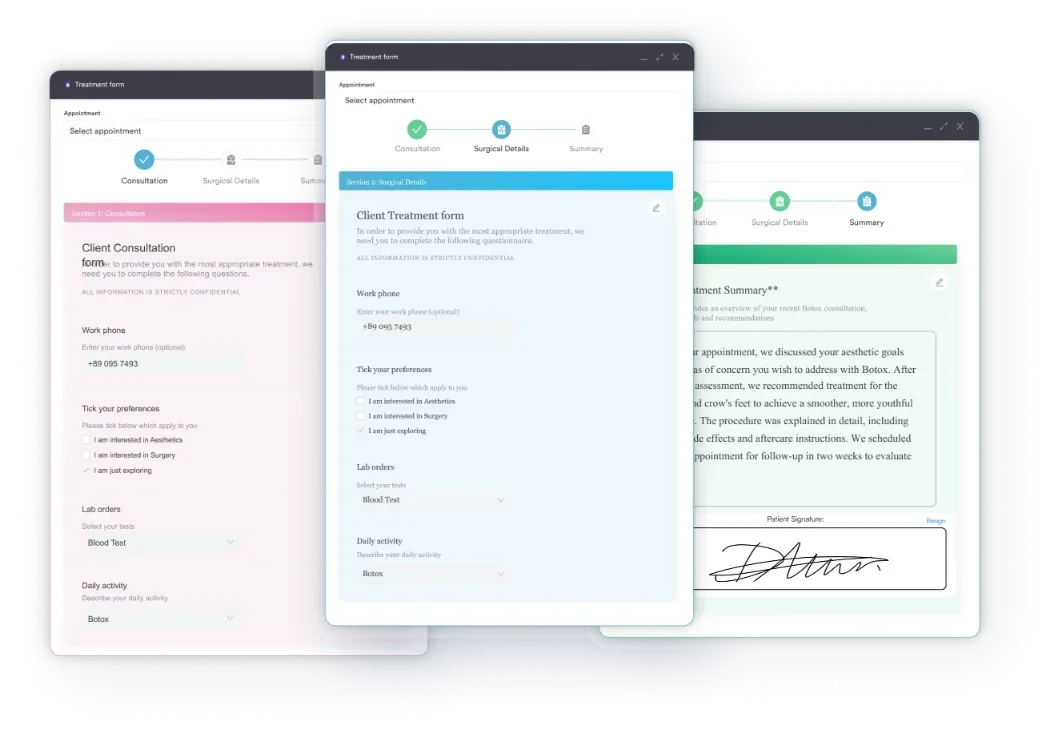
Some of that record can be collected before the patient arrives. A structured new patient questionnaire captures hearing history and any previous cerumen impaction, which gives the clinician a head start on medical necessity.
The rest belongs in the encounter note. Practices using EHR integration that links notes to billing can flag any encounter where G0268 is selected without a same-day audiologic test code. That pre-submission check stops the most common denial before the claim leaves the practice.
Billing G0268 correctly means coordinating the procedure code, diagnosis code, place of service, and provider credentials before the claim goes out. Work through these seven steps in order.
Practices that run those steps inside practice scheduling software can build G0268 claim rules that flag a missing element before the claim reaches the clearinghouse.
G0268 denials follow a predictable pattern. Almost all of them trace back to the six avoidable errors collected in the table below.
Tracking denial patterns by code is faster with automated billing workflows that sort rejections by denial reason code. Review G0268 denials quarterly and systematic errors surface early. One staff member who keeps choosing H61.20 instead of specifying laterality shows up in that review straight away.
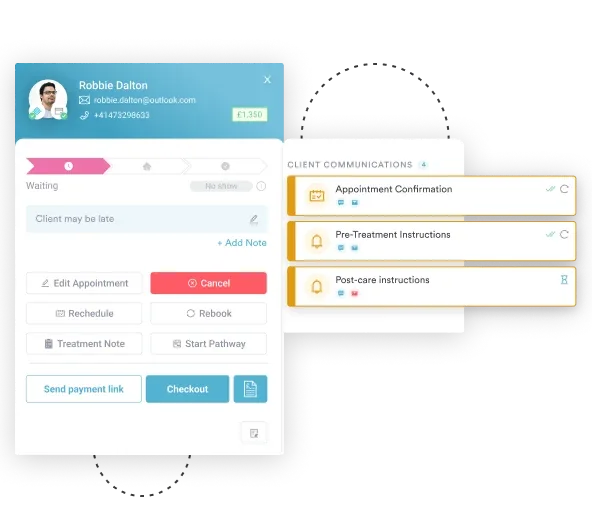
Most practices find a G0268 problem after the remittance advice comes back. The biller opens the chart and sees the audiologic test dated a day later than the removal. Fixing it then means a corrected claim and another wait for payment.
The hearing test and the cerumen removal are booked in the same calendar, so a mismatched date is visible before the encounter is closed. The ICD-10 code chosen in the clinical note carries straight into the claim, so nobody retypes it.
Claim rules handle the last check. A G0268 line with a unit count above 1 gets flagged for the biller. So does a G0268 claim with no audiologic test code beside it. Your team corrects both in seconds instead of chasing a resubmission weeks later.

Pabau links clinical notes to billing codes and flags a missing same-day test pairing before submission. Your team fixes the claim while the encounter is still open.

G0268 is a narrow code with an unusually strict condition attached. The same date of service decides whether the claim is payable at all. Treat that check as part of closing the encounter rather than part of billing.
Treat the code as the exception rather than the default. Reach for CPT 69210 whenever the payer is not Medicare, or the hearing test falls on another date, or an audiologist performed the removal.
Once scheduling, clinical notes, and billing read from the same record, the pairing looks after itself. Book a demo to see how Pabau verifies the G0268 pairing before your claim goes out.

Billing another Medicare injection code? J0745 sets out the units, documentation, and denial triggers for codeine phosphate injections.
Coding an implanted cardiac device? C1896 explains how a non-endocardial defibrillator lead is billed and evidenced.
New to HCPCS Level II supply codes? K0041 walks through a durable medical equipment claim from descriptor to documentation.
Billing a paricalcitol injection claim? Paricalcitol injection billing guide covers the per-unit dosing and how ESRD bundling changes what a dialysis claim pays.
HCPCS code G0268 covers removal of impacted cerumen from one or both ears. Medicare pays it only when the removal happens on the same date of service as audiologic function testing. It is not a CPT code and applies to Medicare payers only.
G0268 applies to Medicare claims only and requires same-day audiologic function testing. CPT 69210 is used for all non-Medicare payers, and for Medicare encounters where no same-day audiologic test was performed. The codes are not interchangeable.
The primary ICD-10-CM codes paired with G0268 are H61.20 (unspecified ear), H61.21 (right ear), H61.22 (left ear), and H61.23 (bilateral). Always document laterality when it is known. Use H61.20 only when the chart genuinely does not specify which ear was affected.
No. Medicare cannot reimburse audiologists for G0268 or CPT 69210 under their own NPI under any circumstances, per CMS Article A56454. Cerumen removal by an audiologist is bundled into the audiologic testing. Only the physician who performed the removal bills the code.
G0268 covers one or both ears under a single code billed with one unit. Do not submit two G0268 lines for a bilateral cerumen removal. The descriptor explicitly includes “one or both ears”, so bilateral treatment is captured in one claim line.
Not for Medicare. G0268 covers both ears in one unit, and Medicare also wants CPT 69210 billed as one unit with no modifier. CMS denies claims that carry modifier 50, LT, or RT on 69210. Commercial payer rules can differ, so check the policy.
Six test families qualify. The first three are pure-tone audiometry (CPT 92552, 92553), speech audiometry (CPT 92555, 92556), and tympanometry (CPT 92567). Acoustic reflex testing (CPT 92568), auditory brainstem response (CPT 92585, 92586), and otoacoustic emissions testing (CPT 92587, 92588) also count.



