



CCSD code G5100: Bypass of duodenum billing guide
CCSD code G5100 bills a bypass that leaves the duodenum in place CCSD code G5100...

Last Updated: Oct 16, 2026

CPT code 99341 is the lowest-level new patient home or residence E/M visit, requiring straightforward MDM or at least 15 minutes of total time.
Medicare reimbursed CPT 99341 at approximately $49.10 in 2026, with a work RVU of 1.0 and total RVU of 1.47 based on CMS RBRVS values. Verify current rates via the CMS Physician Fee Schedule lookup, as amounts vary by geographic locality.
Effective January 1, 2023, old domiciliary codes 99324-99328, 99334-99337, 99339, and 99340 were eliminated; assisted living, group homes, and custodial care facilities now bill under 99341-99350.
Pabau’s claims management software streamlines home visit superbill creation, ICD-10 linkage, and submission workflows for practices billing 99341.
CPT code 99341 is the entry-level code for new patient home and residence evaluation and management visits. This guide covers the official AMA descriptor, MDM and time thresholds, eligible place-of-service settings, 2026 Medicare reimbursement, documentation requirements, modifier rules, and the most common billing errors practices encounter.
CPT code 99341 is the entry-level code in the home and residence E/M series, designated for a new patient visit requiring straightforward medical decision making (MDM) or a minimum of 15 minutes of total time.
The 99341 CPT code description in the AMA codebook covers what some practices still call a house call CPT code, though CMS and the AMA use “home or residence visit” in official documentation.
Maintained by the American Medical Association (AMA), the code sits at the bottom of a five-code ladder for new patients (99341–99345) and is paired with a separate four-code ladder for established patients (99347–99350).
Any CPT code for home visit services traces back to this same family of ten codes, split across new and established patient categories. Understanding how 99341 fits into the series prevents under-coding and over-coding alike.
Note that CPT 99343 was deleted in prior updates; the active new patient series runs 99341, 99342, 99344, and 99345. Practices that have billed 99343 recently should audit those claims. For more on how CPT series work across E/M categories.
Physicians billing CPT code 99341 may select the code using either MDM complexity or total time. The 2023 AMA E/M guidelines, confirmed by the American Academy of Family Physicians, set these thresholds for home and residence visits. Practices managing chronic conditions across home settings may also reference the CPT code 99490 chronic care management billing guide for complementary documentation standards.
Straightforward MDM applies when the presenting problem is low to moderate risk, data review is minimal or none, and the management plan carries minimal risk of complications.
A common example: a patient new to the practice presenting at home for evaluation of a single, self-limited problem such as a minor skin irritation or uncomplicated upper respiratory illness, requiring no prescription drug management and minimal data review.
The MDM level is defined by the three-element framework under the 2023 AMA guidelines: number and complexity of problems addressed, amount and complexity of data reviewed, and risk of complications. All three elements contribute. A single acute illness without comorbidities typically qualifies for straightforward MDM at 99341.
When billing by time, the threshold for CPT 99341 is 15 minutes of total time on the date of service.
Total time includes face-to-face time with the patient and any additional time spent on care activities on the same day: reviewing records before the visit, ordering tests, and documenting the encounter. It does not include travel time to the patient’s residence.
When total time crosses into the next tier, the higher code applies. Selecting 99341 when documented time clearly supports 99342 leaves revenue on the table and can raise questions on audit if the pattern is consistent.
Medicare requires Place of Service (POS) code 12 — the place of service code for home visit claims performed in the patient’s private home — when billing CPT code 99341. The physician must be physically present in the beneficiary’s residence, confirmed by both Noridian Medicare JE Part B and Palmetto GBA Jurisdiction M guidelines.
Since January 1, 2023, the eligible settings expanded significantly. The CY 2023 CMS Physician Fee Schedule Final Rule (CMS-1770-F) eliminated the old domiciliary codes (99324-99328, 99334-99337, 99339, and 99340) and brought all of the following under the 99341-99350 family:
Skilled nursing facilities and ICF/IID-licensed group homes are NOT covered by this code family. Practices billing home visit codes for SNF patients will face denials.
Those patients belong in the 99307-99310 subsequent nursing facility range instead. The moderate complexity level of that range is 99309, billed per day for a follow-up visit.
Assisted living cpt codes fall under 99341-99350 alongside private home visits, but the facility-type label on the claim needs to match how the state licenses the building, not just how staff describe it day to day.
A single facility can be licensed as assisted living in one state and as a custodial care or residential care home in another, and that licensing category is what your MAC checks against POS 12 eligibility. Confirm the facility’s actual license type before the first visit, and flag any building that also holds a skilled nursing or ICF/IID license, since those settings fall outside this code family entirely regardless of what the front desk calls them. Co-claiming restrictions in the Australian schedule decide which items can appear on the same day. Practices still filing on paper carry this code on the CMS-1500 form, in the service lines.
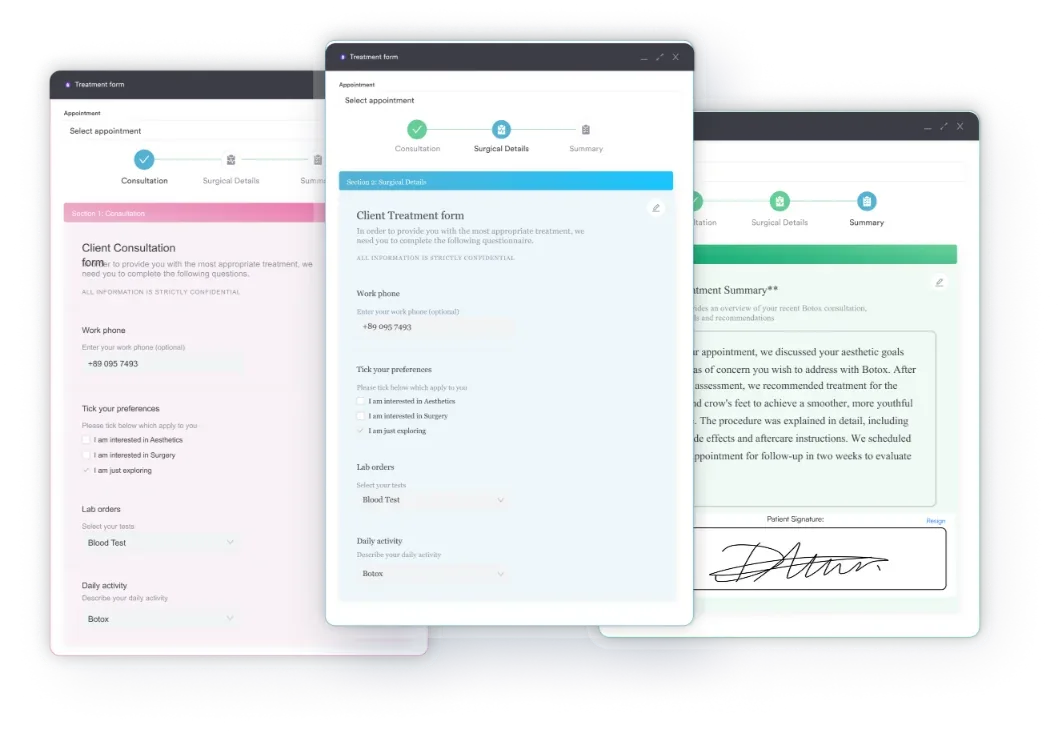
If your caseload includes patients across multiple residential settings, clean documentation of the facility type at each visit prevents misclassification. Pabau’s digital forms allow practices to capture place-of-service data at intake, reducing the risk of POS errors on claim submission.
Before billing any home visit code, document the exact setting type in the encounter note. For Medicare claims, use POS 12 for private homes and temporary lodging. For assisted living and custodial care, confirm your MAC’s specific instructions, as Noridian and Palmetto GBA may have slight variations in POS guidance for non-home residential settings.
Medicare reimbursement for home visits billed under CPT code 99341 is modest. According to 2026 RVU data, the work RVU for 99341 is 1.0 and the total RVU is 1.47, yielding an estimated Medicare payment of approximately $49.10 for 2026. Verify current amounts against the CMS Physician Fee Schedule lookup, as rates adjust annually and vary by geographic location under the Medicare Locality Adjustment.
Effective January 1, 2026, CMS expanded eligibility for the G2211 add-on code to include the home and residence E/M code family (99341–99350) under CMS-1832-F. Eligible practices can report G2211 alongside 99341 for qualifying visits to increase total reimbursement.
The global period of XXX means no surgical global period applies, so modifier 57 is not required for E/M services associated with home visits. Private payers generally follow CMS RVU-based rates, though commercial rates often run higher. Practices serving a mixed Medicare and commercial population should verify each payer’s contracted rates separately using their credentialing agreements.
For practices using a home visit or mobile care model, accurate superbill configuration matters as much as correct code selection. Pabau’s claims management software supports CPT code mapping, fee schedule configuration, and electronic claim generation, reducing manual entry errors on home visit claims.
Practices looking to grow their home visit patient panel can also explore strategies in the how to get more patients guide.
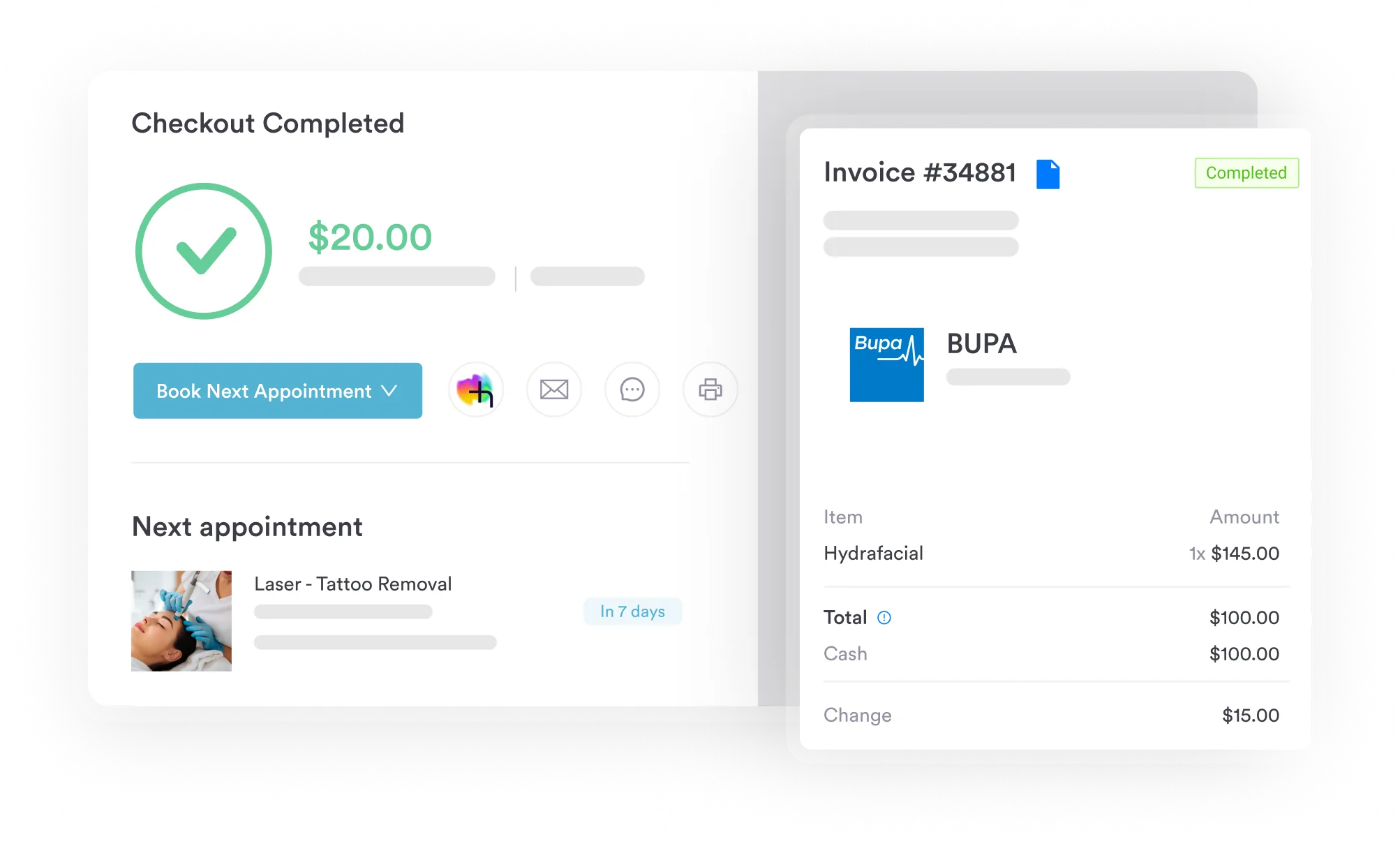

Pabau’s claims management tools help practices configure CPT code fee schedules, link ICD-10 diagnoses, and submit clean claims for home and residence E/M visits. See how it works for your practice.

A home visit encounter documented under CPT code 99341 must support either straightforward MDM or a minimum of 15 minutes total time. Under current 2023 AMA guidelines, the history and physical exam components no longer determine code selection; MDM complexity or time does. That said, a complete and legible note is still essential for audit defense.
For an example of how a narrow, single-code diagnostic category is documented.
The AMA’s CPT guidelines are the primary reference for code descriptor accuracy. See the AMA CPT code set overview for the official maintaining body context and annual update process.
Practices billing home visits under a direct primary care model may find it useful to compare documentation workflows with those used for office-based E/M; see Pabau’s guide on direct primary care EHR requirements for additional context.
The most common code selection error in home visit billing is choosing between CPT code 99341 and CPT 99342. Both cover new patient home visits, but the complexity threshold differs: 99341 requires straightforward MDM (or 15 minutes), while 99342 requires low-level MDM (or 30 minutes).
Practices running mobile urgent care or concierge medicine models often see patients with multiple chronic conditions that push encounters into 99342 or 99344 territory even on what appears to be a brief visit.
Documenting each problem addressed, not just the chief complaint, is the best protection against under-coding.
For E/M coding comparisons across primary care visits.
Modifiers signal payers that a service was altered from its standard descriptor. Several modifiers apply regularly to CPT code 99341 and the broader home visit series.
Modifier 25 indicates a significant, separately identifiable E/M service was performed on the same day as a procedure or another service. It is valid on CPT codes 99202-99215 and 99341-99350, making it applicable to CPT code 99341.
Use cases include a physician conducting a home visit who also performs a minor procedure such as wound care or injection: the 99341 gets modifier 25, and the procedure is billed separately.
The documentation must clearly distinguish the E/M service from the procedure. A note that only describes the wound care without a separate assessment and plan for the visit-level clinical decision making will not support modifier 25. Expect payers to scrutinize same-day claims with this modifier.
CPT code 99341 requires the physician to be physically present in the patient’s home. Telehealth visits from a patient’s residence are billed under different codes (typically 99202-99215 with POS 02 or 10 depending on the patient’s location at the time of the telehealth service). Do not apply modifier 95 to 99341 as a workaround for remote visits.
These Medicare telehealth modifiers are not applicable to 99341. They apply only to designated telehealth service codes under Medicare Part B. Misapplying telehealth modifiers to in-person home visit codes is a common audit trigger.
For practices that offer both in-person home visits and telehealth, Pabau’s telehealth software and billing workflow keep the two service types clearly segmented.
For practices also billing psychotherapy crisis services in home settings.
Physicians who bill unlisted procedure codes alongside home visits can review the CPT code 66999 unlisted anterior segment procedure guide for the narrative documentation standard that also applies to other unlisted-code claims.
Run a monthly audit of all CPT 99341 claims where modifier 25 was applied. For each, confirm the encounter note contains a distinct E/M service documented separately from the procedure note. Payers can claw back payments on modifier 25 claims when documentation merges the E/M and procedure into a single narrative.
Home visit codes carry a higher denial rate than office-based E/M codes. Most denials trace back to a handful of recurring errors.
Billing 99341 with POS 11 (office) instead of POS 12 (home) triggers automatic denial for Medicare. If the visit occurs in an assisted living or custodial care facility, confirm with your MAC whether POS 12 or another POS code is appropriate, as guidance can vary.
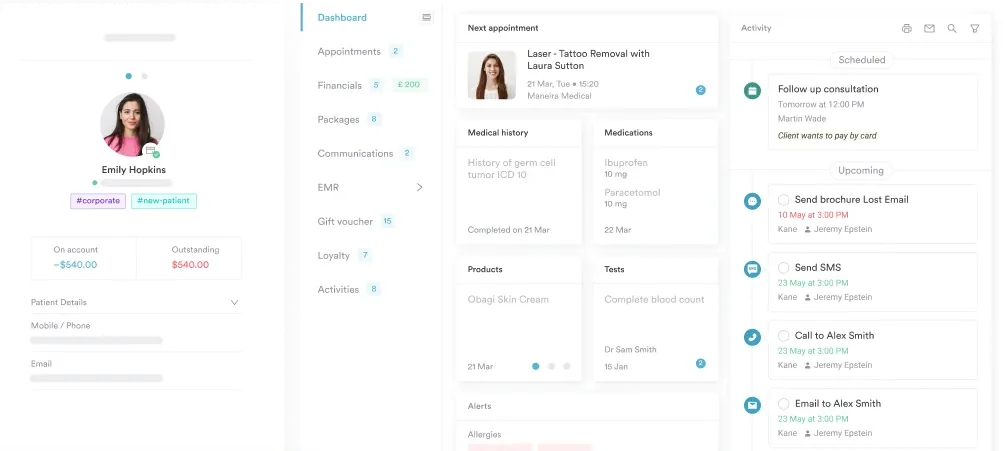
Practices that see patients across multiple settings should build POS selection into their intake workflow rather than relying on billers to infer location from the note. Pabau’s client record management allows care setting data to be captured and stored against each appointment, reducing POS entry errors at claim time.
Practices seeking streamlined billing for medical team conferences held in residential settings can also reference the CPT code 99366 medical team conference billing guide.
Home visit patients who also require durable medical equipment should reference the HCPCS code L1906 ankle foot orthosis billing guide for supplier verification and coverage requirements.
Codes 99324–99328, 99334–99337, 99339, and 99340 no longer exist. Any claim submitted with these codes after their deletion date will be rejected. Practices that served residents of assisted living or custodial care facilities pre-2023 under the old domiciliary series must have migrated to 99341–99350.
If your billing software still has the old codes in its charge master, remove them. Confirm your EHR’s CPT library reflects the current active code set.
CPT code 99341 is for new patients only. A patient is new if they have not received any professional service from the physician, or another physician of the same specialty and subspecialty in the same group practice, within the preceding three years.
Billing 99341 for a returning patient should be 99347 (straightforward MDM established patient home visit) instead. This error is easy to catch with a pre-bill patient history check in your practice management system.
For direct primary care practices that conduct regular home visits, tracking new versus established patient status across a growing patient panel requires consistent EHR workflows. Practices billing for emergency department visits alongside home visits should also review the CPT code 99283 emergency department visit with low MDM guide for comparative level-selection guidance.
If the note reads “patient seen at home, stable” with no problem-specific documentation, the claim for CPT 99341 has no support and will not survive audit. Every element of the MDM framework, or a precise total time statement, must be present in the note.
Template-driven notes that auto-populate generic language without clinical specificity are a known audit red flag. For practices following HIPAA-compliant medical office documentation practices, structured note templates can improve completeness without adding documentation burden.
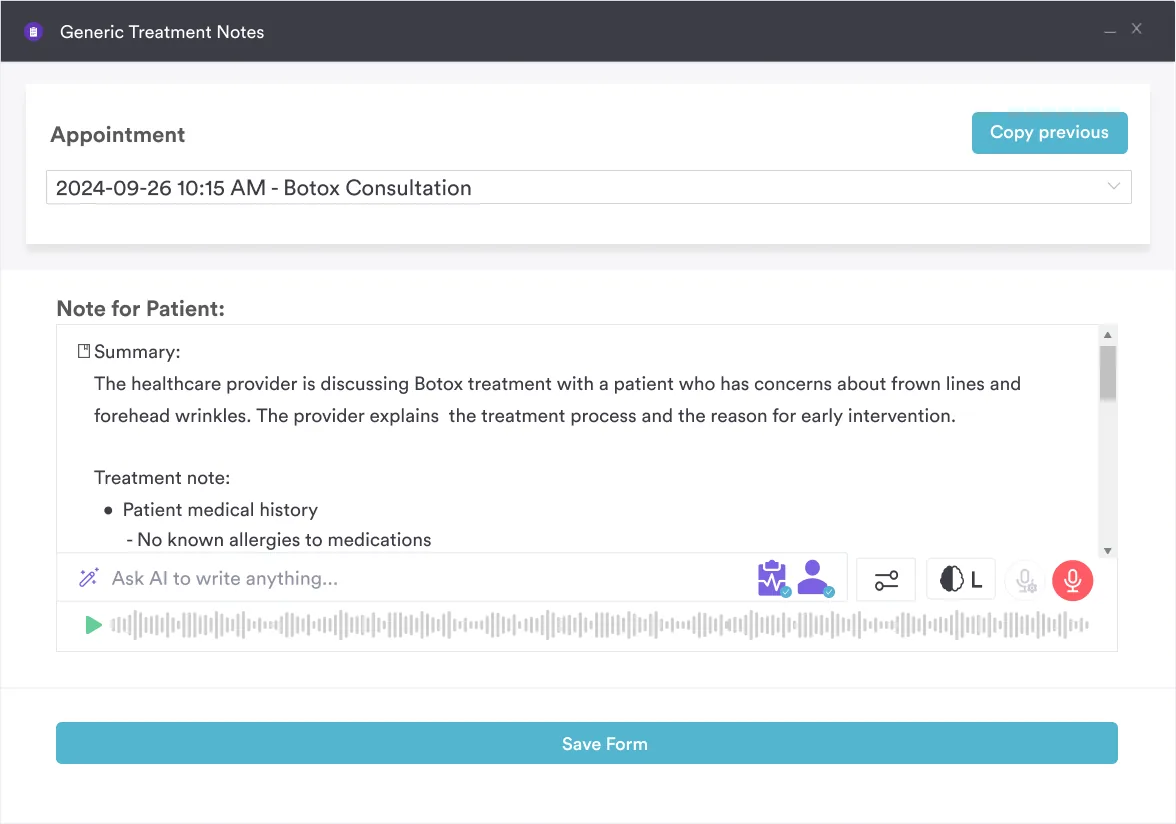
Practices providing aftercare instructions during home visits can also use resources such as the Achilles tendon rupture treatment guidelines handout to supplement clinical documentation. Pabau’s AI-powered clinical documentation helps practitioners generate specific, structured encounter notes in home visit contexts.
Before January 1, 2023, billing for patients in assisted living, rest homes, and custodial care used a separate code series (99324-99328, 99334-99337, 99339, and 99340). The CY 2023 CMS Physician Fee Schedule Final Rule (CMS-1770-F) eliminated those codes entirely, consolidating all non-SNF, non-ICF/IID residential care settings under the home and residence visit family (99341-99350).
For practices billing CPT code 99341, the patient volume under this code series increased substantially after consolidation. Any physician who previously billed domiciliary codes is now billing home visit codes. Documentation must reflect the expanded eligible-setting definition, not just private home visits, since auditors now review claims across all residential settings under 99341–99350.
The home visit series for new patients culminates in a high-complexity visit; see the CPT code 99345 home visit billing guide for new patients for a parallel example of multi-code E/M family structure.
For practices managing complex billing across specialties. Practices billing E/M visits alongside procedures such as IV therapy should also review the CPT code 96360 IV hydration billing guide for modifier and same-day billing considerations.
CPT code 99341 is easy to mis-bill. Wrong POS codes, billing deleted domiciliary codes, and inadequate MDM documentation are all preventable with the right workflows and a clear understanding of the 2023 guideline changes.
Pabau’s claims management tools let home visit and mobile care practices configure accurate CPT fee schedules, link diagnoses at the encounter level, and submit clean claims. To see how Pabau handles home visit billing workflows, book a demo.

Coding a pacemaker lead next? Pacemaker lead billing guide covers the OPPS rules for this device code, which describes the lead, not the procedure.
Billing a new-technology IOL next? New-technology intraocular lens billing covers Medicare and ASC reimbursement rules plus the CPT and ICD-10 pairings it needs.
Coding implantable mesh next? Implantable mesh billing guide explains why facilities, not physicians, report this synthetic polypropylene mesh on the claim.
CPT code 99341 is used to bill a new patient evaluation and management visit performed in the patient’s home or qualifying residence setting, requiring straightforward medical decision making or at least 15 minutes of total time on the date of service. It covers private homes, assisted living facilities, custodial care facilities, group homes, and residential substance abuse treatment facilities as of January 1, 2023.
Medicare reimbursed CPT 99341 at approximately $49.10 in 2026, based on a work RVU of 1.0 and total RVU of 1.47 per CMS RBRVS data. Rates vary by geographic location under the Medicare Locality Adjustment and are updated annually. Verify current amounts using the CMS Physician Fee Schedule lookup tool before submitting claims.
A minimum of 15 minutes of total time on the date of service is required to bill CPT 99341 using the time-based selection method. Total time includes both face-to-face time with the patient and additional care activities performed on the same date, such as reviewing records and documentation. Travel time to the patient’s location is excluded.
For established patients, use the 99347-99350 series instead of 99341, starting with CPT 99347 for straightforward MDM. CPT code 99341 is reserved for new patients: those who have not received a professional service from the physician, or another physician of the same specialty and subspecialty in the same group practice, within the preceding three years.
Medicare requires Place of Service (POS) code 12 when billing CPT 99341 for services provided in a patient’s private residence. For visits in assisted living facilities and other qualifying residential settings, confirm the correct POS with your Medicare Administrative Contractor, as Noridian and Palmetto GBA provide specific guidance that may differ slightly by MAC jurisdiction.
Yes. Modifier 25 is valid on CPT codes 99341-99350. It signals a significant, separately identifiable E/M service was performed on the same day as a procedure. The encounter note must clearly document the E/M service as distinct from the procedure, including a separate assessment and plan. Without that documentation, modifier 25 will not survive a payer audit.
Not 99341. The 99341-99350 family covers home and residence E/M visits only, and does not extend to patients enrolled with a certified home health agency or receiving skilled nursing facility care, which bill under separate code sets entirely. If a patient is already under a home health agency’s care, confirm with that agency before billing a separate home visit E/M code, since overlapping claims for the same date of service commonly trigger denials.



