HCPCS code J3471: Hyaluronidase ovine injection billing guide
HCPCS code J3471: Descriptor, code type, and quick-reference data HCPCS code J34...

Last Updated: Oct 14, 2026

CPT Code 97760 covers initial orthotic management and training for the upper extremity, lower extremity, and/or trunk, billed in 15-minute units.
97760 is for the initial encounter only; use CPT 97763 for all subsequent orthotic or prosthetic management visits.
When an L code is also billed for the device, 97760 is only billable if training time alone exceeds 8 minutes.
Pabau’s claims management software helps PT and OT practices track time-based units, attach documentation, and submit 97760 claims accurately.
CPT Code 97760 is a time-based code that bills the initial orthotic management and training encounter — assessment, fitting, and patient training for an orthotic device on the upper extremity, lower extremity, and/or trunk, in 15-minute units. It covers the initial encounter only; use CPT 97763 for subsequent visits.
This guide covers what physical therapists, occupational therapists, and medical billers need to know about 97760, from its clinical scope to time-tracking rules, modifier requirements, and how it interacts with L codes and E&M visits. Practices using physical therapy EMR software can automate much of this workflow, but the underlying coding logic must be understood first.
The official American Medical Association (AMA) descriptor for CPT Code 97760 reads: Orthotic(s) management and training (including assessment and fitting when not otherwise reported), upper extremity(ies), lower extremity(ies) and/or trunk, initial orthotic(s) encounter, each 15 minutes. Three terms in that descriptor drive correct billing: “initial” means the code applies to the first encounter only, “including” means assessment and fitting are bundled into the service, and “when not otherwise reported” means fitting is separately billable only when it is not already captured by an L code.
CPT Code 97760 covers four distinct clinical activities performed during the first orthotic encounter with a patient:
The body regions covered are broad: upper extremity, lower extremity, and trunk. A wrist splint, an AFO, and a lumbar orthosis all fall under this single code for the initial visit.
Splint application by a physician falls outside 97760. A provider who applies a static finger splint in the office reports 29130 instead.
Scope-of-practice rules vary by state and payer, so confirm local requirements before billing. That said, the providers most commonly billing CPT Code 97760 in outpatient and practice settings include:
For Medicare Part B claims, physical therapy and occupational therapy practices must append discipline-specific modifiers (GP for physical therapy, GO for occupational therapy) to each claim line. Without these, Medicare will reject the claim outright. Diagnosis pointers on the claim form link each service line to the diagnosis that justifies it.
Critical rule: 97760 is for the initial orthotic encounter only. Once a patient has received their first orthotic assessment and training session under this code, every subsequent visit for fitting adjustments, modifications, or additional training uses CPT 97763 instead.
Many practices inadvertently re-bill 97760 on follow-up visits because their EHR defaults the code from the previous session. This generates both claim denials and compliance exposure.
Orthotic claims under 97760 attract auditor attention. Documentation must substantiate three things: medical necessity, time, and the specific activities performed. Missing any one of them turns an approved claim into a take-back demand.
Using digital intake and clinical documentation forms in your practice management system reduces the risk of incomplete notes shipping with claims . Every note for 97760 should capture:
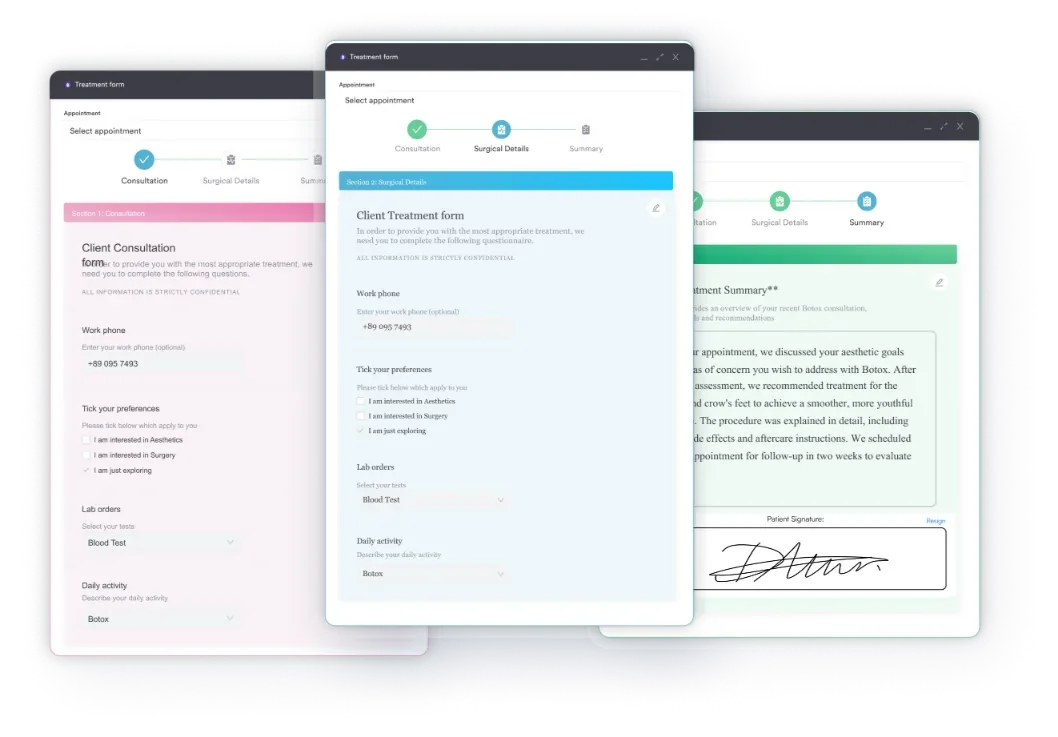
For Medicare Part B, a certified plan of care is required when billing any therapy code other than an evaluation. If a therapist performs an evaluation (CPT 97161, 97162, or 97163, or a physical therapy re-evaluation under 97164) and fits an orthosis on the same day as initiating the plan of care, both the evaluation code and 97760 may be reported together. Document each service separately, with distinct time logs.
Good client record management is the difference between a supported claim and an audit finding. Structured templates that prompt therapists to record start and stop times, orthotic details, and training specifics reduce missing documentation across the entire practice. An itemized superbill keeps the required fields in one place: dates, codes, charges and provider identifiers.
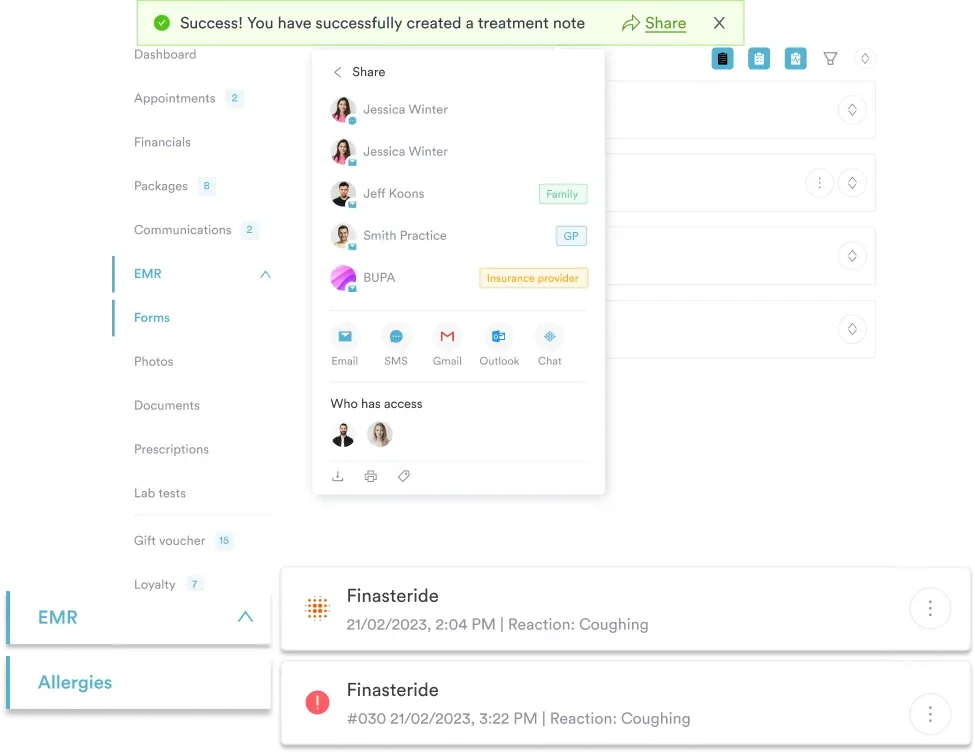
Track time in real minutes, not approximations. For 97760, one unit covers 8-22 minutes of direct contact (the 8-minute rule). Two units require 23-37 minutes. Round to the nearest whole unit based on total timed minutes at the end of the encounter, not by rounding up after each activity.
Several services in this section translate well to video, and telehealth software keeps them documented and billable.
These three codes are often confused, and the confusion costs practices money. Here is the functional difference between them:
CPT 97762 no longer exists. It was deleted from the AMA CPT code set in 2018 and replaced by 97763. Any practice still seeing 97762 in its EHR charge master has a legacy data problem that needs fixing before those claims reach a payer.
97763 covers subsequent encounters for both orthotics and prosthetics, regardless of whether the device is custom-made or prefabricated. Use it for fitting adjustments, minor modifications, additional training, and reassessments of an existing device. Billing 97760 on a second or third visit is one of the most common orthotic audit triggers in outpatient therapy.
The American Occupational Therapy Association (AOTA) confirms this sequencing rule explicitly: 97763 should be used for all subsequent encounters involving modifications, fitting adjustments, and additional training.
HCPCS L codes identify the orthotic device itself (the supply) — for example. CPT Code 97760 identifies the service of assessing, fitting, and training. They are not mutually exclusive, but the rules for billing both together are strict.
According to the AOTA’s official orthotics coding guidance, when an L code is billed for the device, CPT Code 97760 can still be reported, but only if the training component alone exceeds 8 minutes.
The rationale: L codes are understood to include customary fitting time. If fitting consumed most of the encounter and training was minimal (under 8 minutes), the L code covers it and 97760 should not be separately billed.
In practice, this means:
Many commercial insurers go further. Some payers consider all fitting and training to be bundled within the DME benefit and will deny 97760 entirely when billed alongside an L code, regardless of training time.
Verify each payer’s local coverage determination (LCD) before assuming L code + 97760 will pay. Practices managing compliance requirements for physical therapy practices will already know that payer-specific policies vary significantly and require individual verification.
Build a payer policy matrix for your most common insurers. For each payer, document: (1) whether they accept 97760 with L codes, (2) their required modifier combinations, (3) any prior authorization requirements for orthotic training. Review this matrix every January when new fee schedules take effect.

Pabau’s claims management tools help physical therapy and occupational therapy practices track time-based units, flag incomplete documentation, and submit 97760 claims with the right modifiers attached from the start.

Modifier selection depends on the payer, the provider type, and whether 97760 is billed alongside other services on the same date. These are the modifiers most relevant to orthotic management billing:
Same-day E&M billing: If a physician or non-physician practitioner performs an evaluation and management (E&M) visit and also bills 97760 on the same date, Modifier 25 goes on the E&M code to indicate it was a significant, separately identifiable service. It does not go on 97760 itself. Confirm this approach with your specific payer’s LCD, as some commercial carriers consider orthotic fitting bundled into the E&M visit and will deny 97760 regardless of modifier use.
Practices can set up automated billing workflows that apply the correct modifiers based on each claim’s service context, removing this manual step and reducing modifier-related rejections. The same rules can flag encounters where 97760 is billed without a required discipline modifier before the claim goes out.
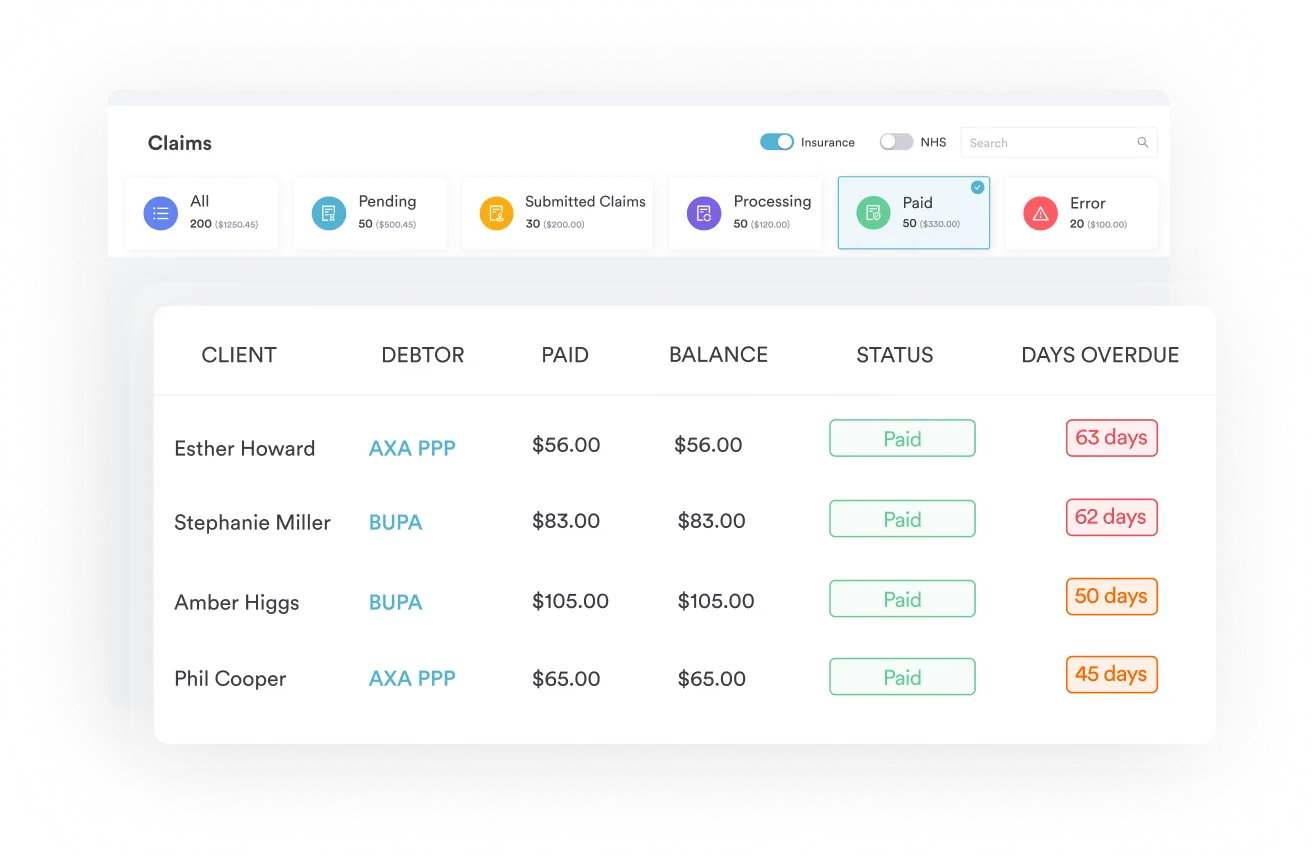
CPT Code 97760 is covered under Medicare Part B for medically necessary orthotic management. Coverage requires a certified plan of care, physician referral, and documentation supporting the functional need for orthotic intervention. Medicare does not automatically cover all orthotic training; medical necessity must be established and documented for each encounter.
Reimbursement amounts vary by geographic location (via the Geographic Practice Cost Index) and change annually with each Medicare Physician Fee Schedule update. Use the CMS Physician Fee Schedule lookup tool to find current payment rates for your region. As a general reference, the national average non-facility payment for one unit of 97760 has historically fallen in the range of $30-$50 per 15-minute unit, though this figure changes each January 1.
Units per session: There is no Medicare-mandated cap on the number of 97760 units per session. However, the total units must reflect actual timed minutes of direct service, and medically necessary limits apply.
Some commercial payers impose per-visit or per-episode unit limits. Billing 4+ units (60+ minutes of orthotic training) on a first visit is a statistical outlier that may trigger prepayment review. Document any extended sessions thoroughly.
Practices that manage opening a physical therapy practice or expanding an occupational therapy practice benefit from establishing clear billing protocols for 97760 from day one, including unit calculation methods, modifier defaults, and payer-specific documentation templates.
Payer audit findings consistently highlight the same error patterns for orthotic billing. Recognizing them before a claim goes out is faster and cheaper than appealing a denial.
Occupational therapy practices should also review the OT evaluation codes such as 97165, which follow OT-specific documentation conventions that differ from PT billing under 97760.
For practices looking at related time-based therapy codes and how they interact with orthotic billing, manual therapy under CPT 97140 and other Physical Medicine and Rehabilitation CPT codes help build a complete picture of how the AMA codes the therapy service spectrum, just as surgical entries elsewhere in the CPT system such as CPT code 50825 for continent diversion carry their own distinct billing rules that rehabilitation teams may encounter when coordinating post-surgical care. Physical therapy and OT practices can also review sports medicine practice management workflows, where orthotic billing frequently intersects with return-to-sport rehabilitation programs.
CPT Code 97760 is straightforward in concept and surprisingly easy to misapply in practice. The initial-encounter restriction, the 8-minute training threshold when billing with an L code, and the correct sequencing to 97763 on follow-up visits are where most claims problems originate.
Pabau’s claims management software helps physical therapy and occupational therapy practices set up code-specific billing rules, track time-based units per session, and attach structured documentation to every orthotic claim before submission. Getting the fundamentals of physical therapy billing right — automated modifier defaults, documentation checklists, and correct code sequencing — reduces the manual workload that leads to these errors. To see how Pabau can support your orthotic billing workflow, book a demo with the team.

Looking up a dressing supply code? surgical dressing holder billing guide covers the reusable dressing holder supply code and why its claims get denied.
Billing for a prefabricated support garment? belt and garment billing guide covers the medical necessity criteria payers apply to prefabricated belts, straps, and garments.
Need the code for a tracheostomy supply? tracheostoma filter billing guide covers the single supply code that applies to every tracheostoma filter type.
CPT Code 97760 is used to bill for the initial orthotic management and training encounter, covering assessment, fitting, and patient education for an orthotic device applied to the upper extremity, lower extremity, or trunk, billed in 15-minute increments.
97760 is for the initial orthotic encounter only; 97763 is used for all subsequent encounters involving fitting adjustments, modifications, or additional training for either orthotic or prosthetic devices. Using 97760 after the first visit is one of the most common orthotic coding errors.
Yes, Medicare Part B covers 97760 when medical necessity is documented, a certified plan of care is in place, and the appropriate discipline modifier (GP for PT, GO for OT) is appended. Reimbursement rates vary by locality and update each January with the Medicare Physician Fee Schedule.
Yes, but only if training time alone exceeds 8 minutes when the L code is also billed for the device. Many commercial payers bundle fitting into the DME benefit and will deny 97760 alongside an L code regardless; verify each payer’s local coverage determination before billing both.
There is no Medicare-mandated per-session unit limit, but units must reflect actual timed minutes of direct contact using the 8-minute rule. Four or more units (60+ minutes) on a first orthotic visit is a statistical outlier that may draw prepayment review; document extended sessions thoroughly.
For Medicare claims, yes: append modifier GP when billed by a physical therapist, or GO when billed by an occupational therapist. Modifier 59 may be needed when 97760 is billed on the same date as another therapy code to demonstrate a distinct service.