



CCSD code G5100: Bypass of duodenum billing guide
CCSD code G5100 bills a bypass that leaves the duodenum in place CCSD code G5100...

Last Updated: Oct 16, 2026

CPT Code 92499 is the unlisted ophthalmological service or procedure code, used when no specific CPT code in the 92002-92499 range describes the service performed
Medicare does not assign a fixed national reimbursement rate to CPT 92499 – payment is determined individually by each payer based on documentation submitted
Every claim for CPT 92499 requires a detailed narrative report and a cover letter; missing either is the leading cause of denial
Pabau’s claims management software flags unlisted codes at submission and supports the documentation workflow needed to get 92499 paid
CPT Code 92499 is the unlisted ophthalmological service or procedure code, billed when no other code in the 92002-92499 range accurately describes the eye care service performed. It carries no fixed Medicare fee schedule value, so each payer reviews the claim individually based on the documentation submitted.
This reference covers what CPT Code 92499 is, when it applies, the documentation requirements that determine whether a claim pays, how modifiers work, and what drives the most common denials. It also covers the related ophthalmology codes that should be checked before reaching for 92499.
The American Medical Association (AMA), which maintains the CPT code set, provides a single-line official descriptor for this code: Unlisted ophthalmological service or procedure. There is no further breakdown, no time component, and no technique specification.
That brevity is intentional. CPT Code 92499 is a catch-all placeholder for any ophthalmological service or procedure that cannot be accurately reported using any other code in the 92002-92499 range. Its role is to preserve billing integrity: rather than forcing a coder to report the “closest” specific code, 92499 allows accurate reporting of genuinely novel or unlisted services.
Because 92499 carries no relative value unit (RVU) assignment from CMS’s Physician Fee Schedule, it cannot be priced automatically. Every claim is reviewed individually. That review process is documentation-dependent.
Before billing 92499, coders should confirm that no specific code in the ophthalmology range accurately describes the service. The most common triggers are a new ophthalmic device, a technique combination not addressed by existing codes, or an experimental procedure covered under a payer’s investigational protocol.
See the related codes section below for the full list of specific ophthalmology codes to check first. Spectacle services sit in the same range, so a monofocal fitting belongs under CPT 92340 rather than 92499.
Appropriate use cases for CPT Code 92499 include situations where unlisted ophthalmological service applies for the following reasons:
Unlisted ophthalmology procedure billing requires coders to make an affirmative decision that no specific code fits. Documenting that decision matters. A one-sentence note in the billing record explaining why 92499 was selected provides a defensible audit trail.
For context on how another specialty handles unlisted-code billing.
Documentation is the single factor that determines whether a CPT 92499 claim pays or denies. Unlike specific CPT codes where a compliant note is sufficient, 92499 requires active advocacy on paper. Every submission needs two things: a complete service report and a cover letter.
Following medical documentation best practices is critical for unlisted codes. The service report must contain:
The cover letter is separate from the clinical note. Addressed to the payer’s review team, it explains:
For HIPAA-compliant claim submission, ensure all documentation is transmitted via a secure channel and that the claim form (CMS-1500 or electronic equivalent) references the documentation as an attachment.
Well-chosen primary care practice tools keep these everyday services documented consistently across the whole team.
Most commercial payers and many Medicare Advantage plans require prior authorization before approving payment for any unlisted procedure code. Because 92499 has no fixed fee schedule value, payers need to evaluate the service before committing to reimbursement. Submitting without prior auth when it is required is the fastest path to denial.
Prior authorization requirements for CPT 92499 vary by payer. Practices should verify requirements before scheduling the service. The process for requesting prior authorization typically involves:
Traditional Medicare (Parts A and B) does not have a fixed prior authorization requirement specifically for 92499, but Medicare Administrative Contractors (MACs) may apply Local Coverage Determination (LCD) policies that impose pre-service requirements. Check with the relevant MAC for the practice’s region.
For comparable prior authorization management in procedure-heavy billing.
Modifiers for CPT 92499 work the same way they do for any other CPT code: they communicate specific circumstances that affect how the claim should be processed. Not all modifiers are accepted by all payers; always verify against current National Correct Coding Initiative (NCCI) edits and individual payer policies before appending.
Modifier -22 carries additional documentation weight. Payers expect a detailed explanation of why the service exceeded normal complexity, often including comparison to a similar established procedure. Applying -22 without that explanation typically results in denial or reduction to the base rate.
Modifier applicability for 92499 should be confirmed against current NCCI edits using the AAPC CPT code reference.
CPT Code 92499 has no assigned work RVU in the CMS Physician Fee Schedule. That means the standard Medicare reimbursement formula (work RVU x practice expense RVU x malpractice RVU x geographic adjustment) cannot be applied. Instead, CMS and Medicare Administrative Contractors evaluate 92499 claims on a case-by-case basis.
Commercial payer reimbursement follows the same logic. Rates vary based on:
Practices can use the 2026 FastRVU RVU lookup tool to identify RVU values for comparable specific codes, which then informs the cost reference in the cover letter.
Identifying a comparable code with documented RVUs gives the payer reviewer a clear pricing anchor. This generally improves payment outcomes for unlisted ophthalmological service claims. The CMS fee schedule confirms that 92499 carries no assigned rate in the current year.
Before submitting a CPT 92499 claim, identify the most similar specific CPT code and document the cost comparison in your cover letter. Reviewers who see a referenced comparable code and a documented rationale for any difference process these claims faster and approve them more consistently than submissions with no cost anchor.
Billing CPT Code 92499 correctly requires a step-by-step approach. Skipping any stage increases denial risk substantially.
Pabau’s claims management software flags unlisted codes at the point of charge entry, prompting coders to attach documentation before submission. This prevents the most common CPT 92499 denial: missing or incomplete documentation identified only after the claim is rejected. The integrated workflow keeps the cover letter, clinical note, and claim linked in one record.
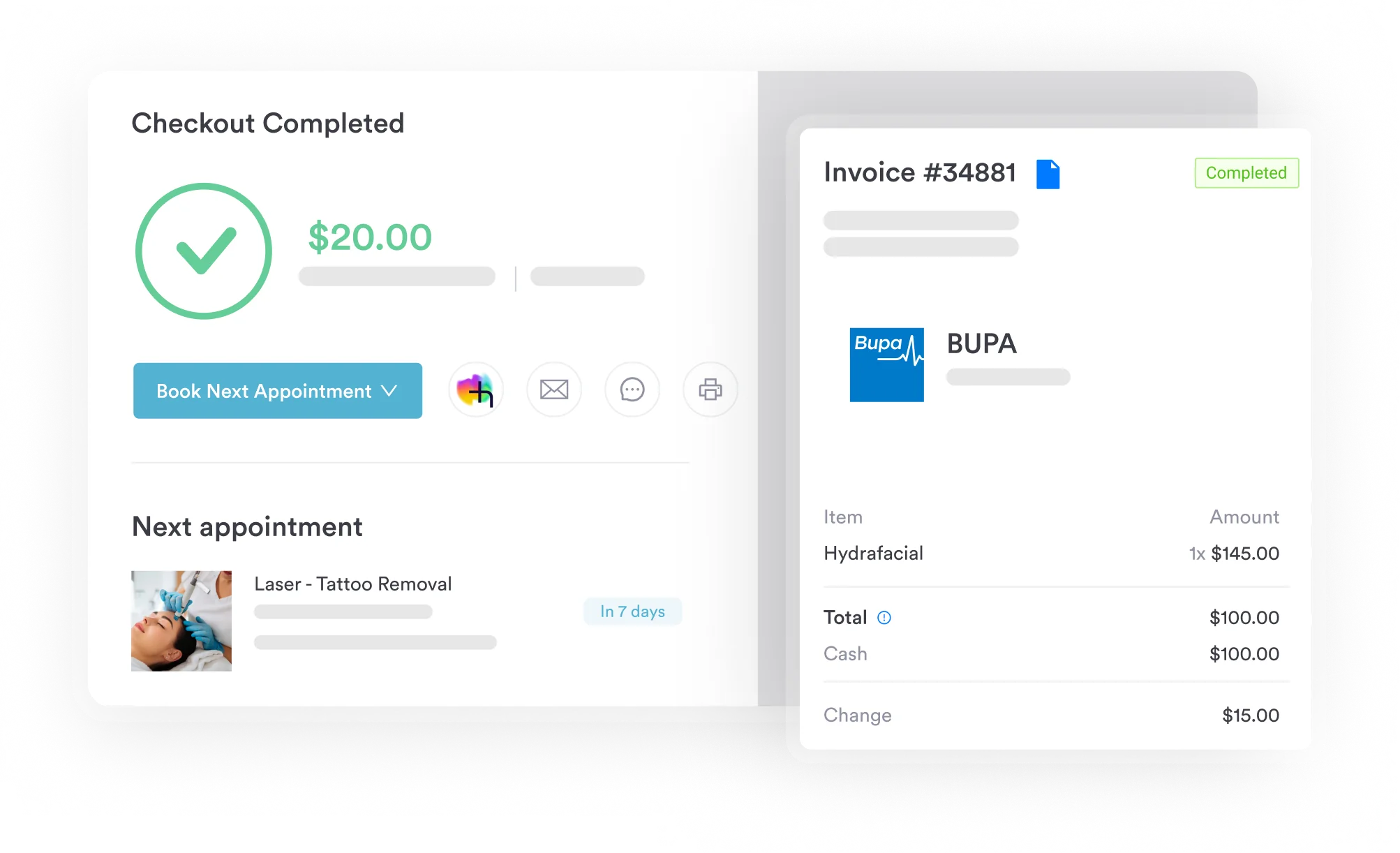

Pabau’s claims management tools flag unlisted CPT codes at charge entry, link documentation to claims, and track denial patterns by code so your team can resolve 92499 submissions faster and with fewer rejections.

CPT Code 92499 denial rates are higher than for specific ophthalmology codes. Most denials are preventable. The leading causes are documentation failures, not clinical ones.
Strong patient record management is the foundation of denial prevention for unlisted codes. When the clinical note, authorization, and billing record are maintained in a single system, missing documentation that would otherwise trigger a denial becomes visible before submission rather than after rejection.
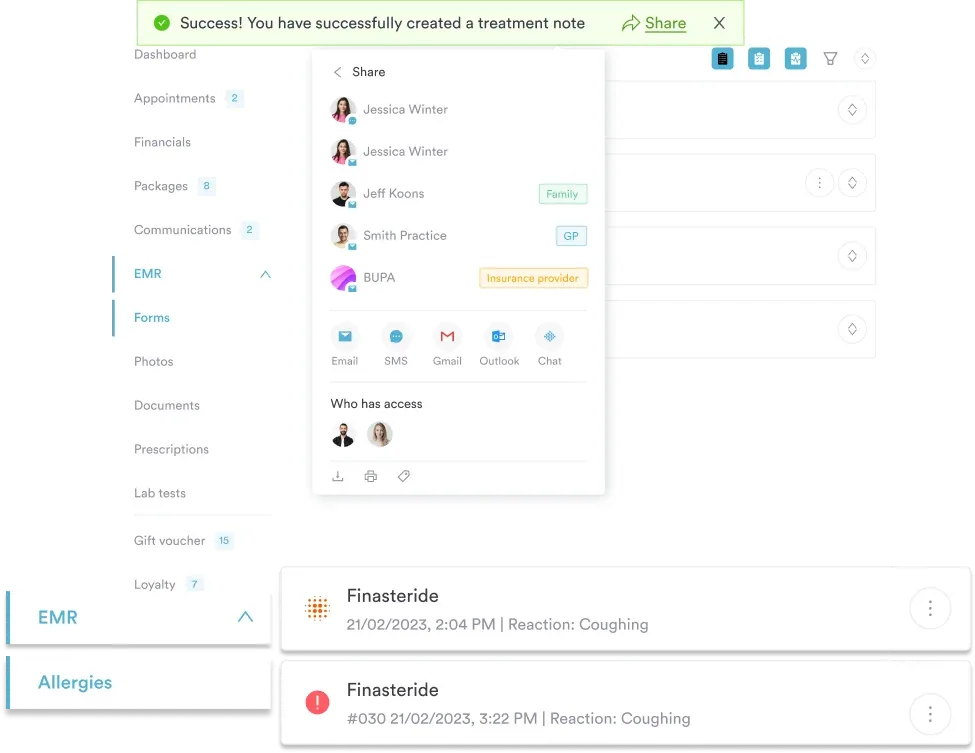
Every CPT 92499 claim must be paired with an ICD-10-CM diagnosis code that supports medical necessity. The diagnosis must match the service documented in the clinical note. The following ICD-10-CM codes appear frequently alongside unlisted ophthalmological service claims, though this list is not exhaustive and clinical documentation should always drive diagnosis code selection.
Payers cross-reference the ICD-10-CM code against the procedure description in the cover letter. When the diagnosis code is overly vague (H57.9 instead of a more specific code), reviewers may return the claim requesting clarification. Specific, supportable diagnosis codes improve first-pass approval rates. For the full ICD-10-CM reference, the CDC/NCHS ICD-10-CM web tool provides the official annual code tables. Claim scrubbing catches the mismatches that would otherwise come back as a denial two weeks later.
The ophthalmology CPT code range 92002-92499 contains over 100 specific codes covering examinations, diagnostics, treatments, and surgical procedures. Checking the appropriate codes first is a billing compliance requirement, not an optional step. These are the codes most frequently identified as alternatives when a coder initially considers 92499:
Computerized corneal topography also has a specific code in that range. Check 92025 before billing a corneal mapping study as unlisted.
The same unlisted-code challenge shows up in dermatology practices and plastic surgery practices, where procedure variety outpaces what a fixed code set can describe. When coders have a structured decision path built into their system, the frequency of unnecessary 92499 use drops and audit risk decreases.
The manual steps involved in billing an unlisted ophthalmological service create genuine operational burden. Prior authorization tracking, cover letter preparation, documentation attachment, and denial follow-up each require coordination across clinical and administrative teams. Practice management software addresses each of these friction points.
Pabau’s integrated billing and claims management tools support the CPT 92499 workflow in these ways:
Using digital intake forms within the same system ensures that patient history, treatment records, and consent documentation are linked from intake through billing. For ophthalmology practices billing unlisted codes regularly, keeping documentation and billing in one system reduces the coordination overhead that drives the most preventable denials.
Pabau also supports automated billing workflows that route unlisted code claims through a review step before submission, adding a quality gate without adding manual work.
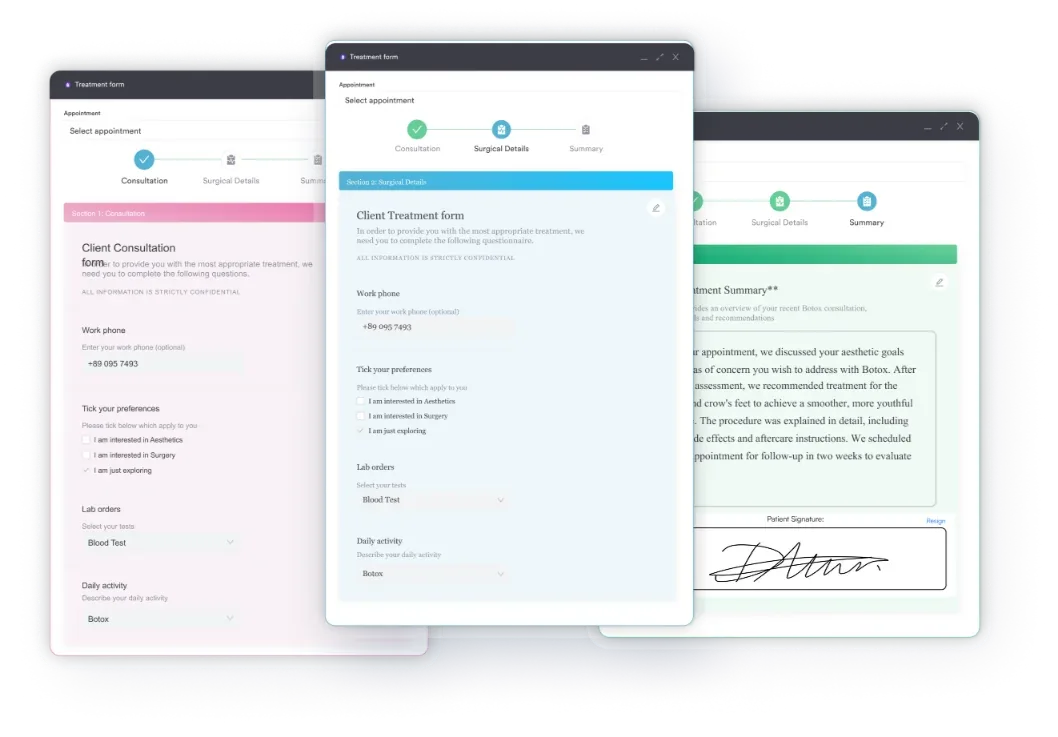
Track CPT 92499 denial reasons by payer in your practice management system. If a specific payer is denying for the same reason repeatedly (missing comparable code, insufficient medical necessity narrative), update your cover letter template for that payer specifically. Payer-specific templates reduce second-submission cycle time significantly.
CPT Code 92499 is one of the most documentation-intensive codes in ophthalmology billing. The absence of a fixed fee schedule value means every claim rises or falls on the quality of the service report and cover letter submitted with it.
Practices that bill unlisted ophthalmological procedures consistently benefit from a structured workflow:
Pabau’s claims management software builds each of those steps into the billing workflow, so 92499 claims leave the practice complete instead of getting rebuilt after rejection. See how it works for your practice and book a demo.

Billing anesthesia for a different procedure type? CPT code 01340 walks through documentation and modifier requirements for a comparable procedure-heavy specialty.
Billing a lab test alongside an unlisted service? CCSD code 0299B covers a comparable diagnostic billing workflow.
Pairing 92499 with a supporting diagnosis? ICD-10 code C54.1 shows how specific diagnosis coding supports medical necessity.
CPT Code 92499 is the unlisted ophthalmological service or procedure code, used when a physician performs an eye care service or procedure that no other specific CPT code in the 92002-92499 range accurately describes. It is not used as a convenience substitute for a more specific code.
Medicare does not assign a fixed national reimbursement rate to CPT 92499. Claims are reviewed individually by Medicare Administrative Contractors (MACs), and payment is determined based on the documentation submitted, including the service report and cover letter with a comparable code reference.
Every CPT 92499 claim requires a detailed service report describing the procedure, a cover letter addressed to the payer explaining why no specific code applies, a comparable CPT code with fee schedule reference, and a medical necessity narrative supported by the diagnosis. Missing any of these is the leading cause of denial.
The most common denial reasons are missing documentation, no prior authorization when required, insufficient medical necessity narrative, incorrect or unsupported modifier use, and the presence of a more specific code that should have been used instead of 92499.
Prior authorization is typically required by commercial payers and many Medicare Advantage plans for unlisted procedure codes including CPT 92499. Requirements vary by payer and plan; always verify before scheduling the service. Traditional Medicare does not have a universal prior auth requirement but MAC-specific LCD policies may apply.
Modifiers commonly used with CPT 92499 include -22 (increased procedural services), -52 (reduced services), -59 (distinct procedural service), -LT/-RT (laterality), and -50 (bilateral). Each modifier must be supported by documentation; verify applicability against current NCCI edits and payer-specific policies before appending.



