



CCSD code G5100: Bypass of duodenum billing guide
CCSD code G5100 bills a bypass that leaves the duodenum in place CCSD code G5100...

Last Updated: Oct 16, 2026

CPT code 19284 is the add-on code for placing a breast localization device in each additional lesion, under stereotactic guidance.
The code carries a plus sign, so it never stands alone. It rides on the same claim as a primary code, usually 19283.
Guidance type has to match the code. Stereotactic work uses 19283 and 19284, while ultrasound work uses 19285 and 19286.
Most denials trace back to a note that describes both lesions together instead of numbering each placement.
Practice management software like Pabau captures lesion number, device, and side as set fields, so coders are not guessing.
CPT code 19284 is the add-on code for placing a breast localization device in an additional lesion under stereotactic guidance. The first lesion belongs to 19283, and every lesion after that one is billed with 19284.
That add-on status is where revenue quietly slips away. A radiologist marks three lesions in one session. The note reads as a single procedure, so the coder bills one primary code. Three placements happen, and only one gets paid.
Getting the pairing right takes more than knowing the code exists. Coders need to match the guidance type, document each lesion on its own, and know what Medicare and payers expect on the claim. Here’s how the whole 19281 to 19288 family breaks down, and exactly where 19284 fits.
The code lives in the Introduction Procedures on the Breast family of the CPT set, which the American Medical Association maintains. Below is the whole code in one glance.
The plus sign in front of 19284 carries a hard billing rule. You cannot report the code by itself. It has to appear on the same claim as a primary localization code from the same session.
Stereotactic work pairs it with 19283. Picture a session where clips go into two lesions. The claim reads 19283 for the first lesion, then 19284 for the second. With three lesions, 19283 appears once and 19284 twice.
Bundling rules for add-on codes come from the National Correct Coding Initiative, known as NCCI. CMS refreshes those edits every quarter, so read the current tables rather than a saved copy.
A standing quarterly NCCI review belongs on the compliance calendar of any practice that bills add-ons. Other code families follow the same logic, including same logic, including 11008 on the surgical side.
Eight codes cover percutaneous placement of breast localization devices. Each one fixes two facts: the imaging modality that guided the placement, and whether the lesion was the first or an additional one. Pick from the wrong row and the claim contradicts the note.
Some sessions mix modalities, with one lesion under ultrasound and another under stereotactic guidance. Each modality then brings its own primary code. A mammographic lesion starts with CPT code 19281, and 19282 handles each one after that. Do not stretch one primary code across two guidance types.
Document the imaging approach lesion by lesion in the procedure note. Breast biopsy codes divide along the same lines, and 19086 covers the MRI add-on.
Modifiers carry context the base code cannot. Four of them come up often with 19284, though payer policy and the current NCCI edits always settle the final answer.
Laterality is the one to watch. Breast procedures can happen on either side, so a claim without -LT or -RT leaves the payer guessing. Put the side on every line, even when only one breast was treated.
Capturing it at the point of care keeps it off the coder’s list. Structured digital procedure forms that ask for the side before the note closes stop the omission at source.
Check modifier -59 against the current NCCI Procedure-to-Procedure edit tables before you append it. Adding -59 where no edit exists can flag the claim for audit review. Use it only where the edits show the services are separately reportable with a modifier.
Payment starts with the Medicare Physician Fee Schedule, which assigns relative value units to every code.
Three components build the total: physician work, practice expense, and malpractice risk. A geographic index, the Geographic Practice Cost Index, then adjusts the result for where you practice.
CMS resets the numbers each year, so pull them fresh from the CMS fee schedule lookup before you quote a figure.
19284 carries lower relative values than 19283, so its allowed amount lands below the primary. Setting matters too. Office and imaging-center work usually pays more than hospital work, because the practice absorbs the equipment and staffing cost.
Private payers negotiate their own rates, which can sit well above or below Medicare. The FastRVU lookup tool publishes CMS-sourced values with geographic adjustments. Treat any dollar figure in a reference article as a starting point, never as the payment rate.
Every CPT line needs a diagnosis code behind it. The codes below appear most often on breast localization claims. They are examples rather than an approved list, and coverage policies differ by payer.
Reach for the most specific code the record supports, including laterality where the code set offers it. C50.912 covers the left female breast, for example, while an unspecified code invites a medical necessity denial.
When a payer pushes back, the appeal usually turns on how the record reads. A medical necessity letter gives that response a structure.
Documentation decides most 19284 claims. Stereotactic guidance and add-on status together mean the note carries more detail than a single-code visit. Each element of the descriptor needs its own support in the record.
Practices with recurring 19284 denials usually find the same root cause. One paragraph describes both lesions together, so the second placement never becomes visible to a reviewer. Splitting the note into numbered lesion sections fixes it in most cases.
Clinical record templates that prompt for modality, device, and side while the note is being written cut the back-and-forth later.
Coding sits in the middle of this process, not at the start. Following one two-lesion claim end to end shows where it tends to break.
Two minutes on that list costs less than one rework cycle. It also gives the biller something to point at when a claim comes back.
Usually yes, as long as the two services stand apart in the record. Same-day localization and open excision happen often, with the excision billed as 19301 or 19302. Payer policy still has the final word.
Separate reporting generally holds when these conditions are met:
Private plans do not always follow Medicare’s NCCI edits. Some treat localization as part of the surgical global package, while others allow it with modifier -59. Ask before you submit both codes.
A payer policy matrix, kept inside the billing workflow and updated when policies change, saves that call later. Biopsy work that precedes an excision follows its own rules, and 19081 covers the stereotactic version.
The denial profile for this code is narrow. Six errors account for most of the preventable rejections.
Template notes are the usual culprit behind the fourth row. They were built for single-code visits, so the coder receives a global summary of the session and the additional placement disappears. A mandatory per-lesion section closes that off.
Our medical forms guide covers how structured forms change what lands in the record before a coder ever sees it.
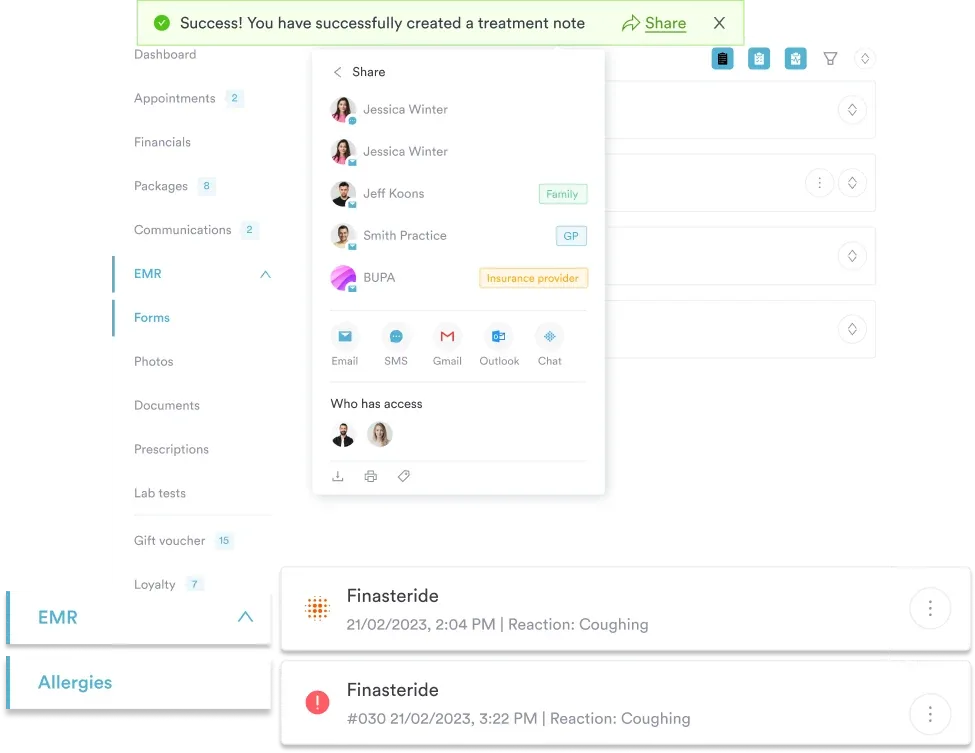
Add-on accuracy comes down to when the detail gets captured. Rebuild lesion counts from a general narrative weeks later and something always goes missing. Practice management software like Pabau moves that capture to the point of care.
Procedure templates in Pabau hold device type, lesion number, guidance modality, and side as set fields instead of free text. The coder then reads structured data rather than a paragraph. That is what makes the second placement visible to a payer reviewer.
The same record works whether breast care runs through a women’s health practice or the surgical side in Pabau’s plastic surgery EMR. Everything sits in one system, so nothing has to be copied between tools.
On the billing side, Pabau’s claims management checks each claim against the fields your insurer requires before it leaves the practice. Coding judgment stays with your team, and the claim goes out complete. Our HIPAA compliance guide covers the wider rules around clinical records and billing. First-pass rate measures how often a claim is paid without anyone touching it again. Practices still filing on paper carry this code on the CMS-1500 form, in the service lines.

Pabau’s procedure templates and client records hold lesion number, device, guidance, and side as set fields. Your coders work from structured detail instead of a narrative note.

19284 is money the practice has already earned. The work happened in the room, and the only question is whether the claim shows it.
Structure beats vigilance here. Number the lesions and name the guidance for each one. Then put the side on every line, and confirm the primary code is present before the claim goes out. Those four habits remove most of the denial risk on this code.
Multi-lesion breast localization should not keep losing its second line. Book a demo to see how Pabau captures lesion detail at the point of care.

Coding the biopsy that came before the wire? 19081 walks through stereotactic breast biopsy billing and what its descriptor already includes.
Working an MRI-guided case instead? 19086 covers the MRI biopsy add-on and how the lesion count drives the units.
Coding a long-unhealed anal fissure? chronic anal fissure code is the billable code for a fissure unhealed past about six weeks.
Curious how add-on rules work outside the breast codes? 11008 shows the same primary-code dependency on the surgical side.
Billing a breast cyst aspiration this week? 19001 is another breast code with its own primary-code requirement to watch.
No. Add-on codes sit outside the multiple procedure rules, so modifier 51 does not belong on 19284. Report it on its own line beside the primary code, with laterality attached. Adding -51 can cut the payment or trigger a manual review.
One unit for each additional lesion beyond the first, so two extra lesions means two units of 19284. CMS also publishes a Medically Unlikely Edit value for the code, so check the current edit file before you bill several units on one claim.
The physician who placed the device reports it. When a radiologist marks the lesions and a surgeon removes them later, the radiologist bills 19283 and 19284, and the surgeon bills the excision. Each one needs a report supporting the service.
Not for the same lesion. The percutaneous biopsy codes 19081 to 19086 already include placing a localization device at the biopsy site, so a separate localization code double-counts the work. Read the biopsy descriptor before adding a second line.
Report 19286, the ultrasound add-on, rather than 19284. The guidance type has to match the code you pick, so the note should state the modality used for each lesion. Mixed-modality sessions bring in a primary code for each modality.



