

CPT Code 30801: Superficial turbinate ablation billing guide
CPT Code 30801: Official descriptor and procedure overview The American Medical ...

Last Updated: Nov 27, 2026
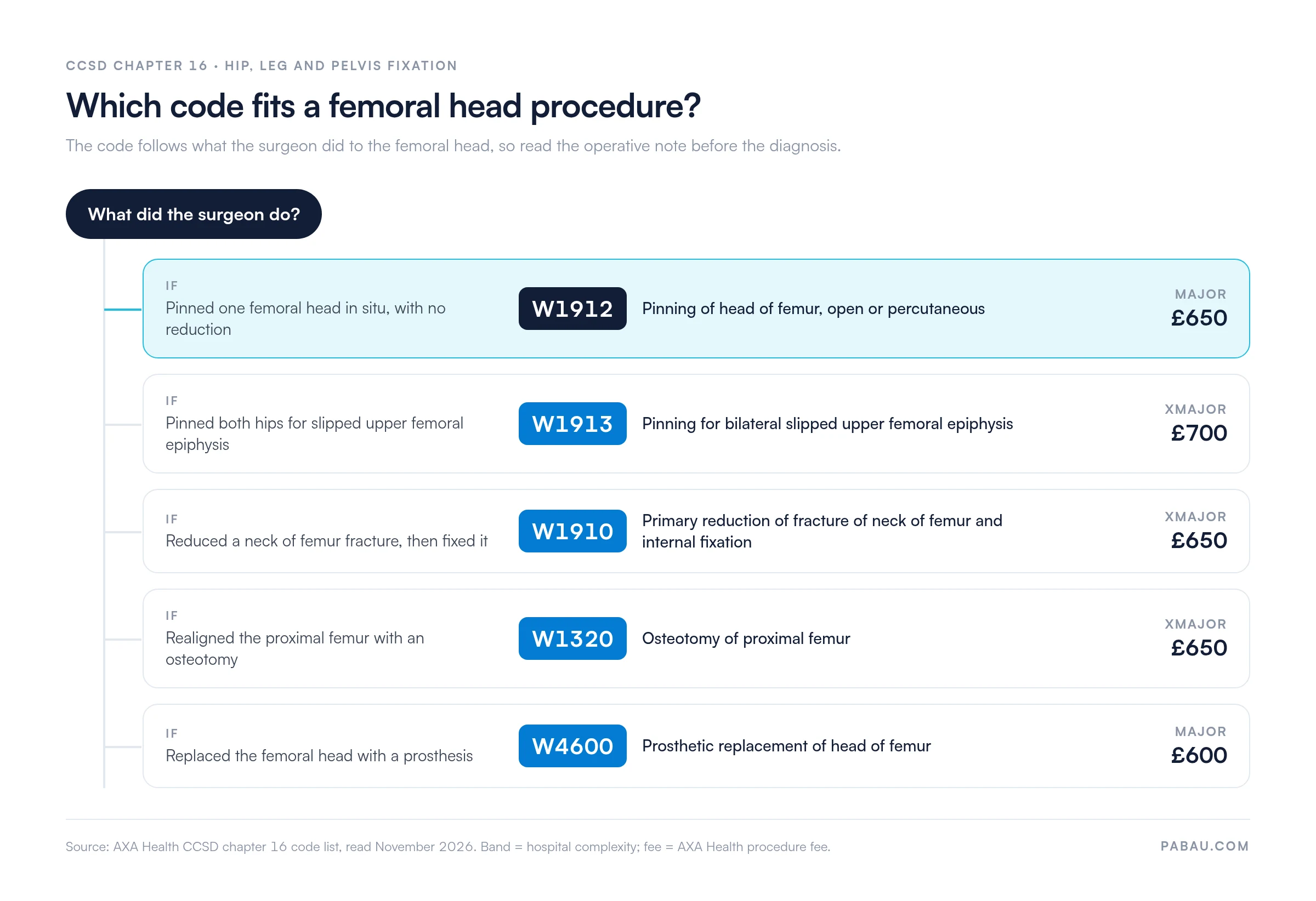
W1912 is the CCSD code for pinning of head of femur – open or percutaneous (eg slipped femoral epiphysis, undisplaced neck fracture). It covers in situ fixation of the femoral head with screws or pins, without reduction, through a stab incision or a formal exposure.
Pinning both hips for bilateral slipped upper femoral epiphysis takes its own code, W1913. A displaced neck of femur fracture that is reduced before fixation is coded W1910.
Let Pabau's smart automation suggest the right codes, reduce claim denials, and keep your practice compliant—effortlessly.
Automate repetitive tasks and focus on what matters most—your patients.
Reduce coding errors and ensure compliance with the latest regulations.
Clean claims, fewer denials, and faster reimbursements.
Powerful insights and reporting to help your practice thrive.
HIPAA compliant SOC 2 certified GDPR-compliant Trusted by 4,000+ clinics worldwide

CCSD Code W1912 covers open or percutaneous pinning of one femoral head, for slipped upper femoral epiphysis or an undisplaced neck of femur fracture.
Pinning both hips for bilateral slipped upper femoral epiphysis has its own code, W1913, so it is never billed as two W1912 lines.
A fracture reduced before fixation is coded W1910, and a realignment osteotomy is W1320.
AXA Health lists W4600, W9240 and A7350 as unacceptable combinations with W1912.
Practice software such as Pabau keeps the operative note, the pre-authorisation number and the claim in one patient record.
CCSD Code W1912 is the code UK private medical insurers use for pinning of the head of femur, by an open or percutaneous approach. AXA Health’s chapter 16 code list gives the official descriptor: Pinning of head of femur – open or percutaneous (eg slipped femoral epiphysis, undisplaced neck fracture).
Three points in the descriptor shape how W1912 is coded:
W1912 sits in chapter 16 of the schedule, under section 16.9.4, hip, leg and pelvis fixation and arthrodesis. Our CCSD codes library covers its neighbours in that section. For insurer-specific detail, the Bupa CCSD codes guide explains how Bupa applies the schedule.
W1912 is used for two presentations: slipped upper femoral epiphysis and undisplaced femoral neck fracture. The operative note has to make clear which one it was.
Slipped capital femoral epiphysis (SCFE), also called slipped upper femoral epiphysis (SUFE), is a Salter-Harris type I fracture through the proximal femoral physis. It occurs most often in adolescents aged 10 to 16. The femoral head stays in the acetabulum while the neck displaces anteriorly and superiorly.
Severity is graded by the Southwick angle: mild under 30 degrees, moderate at 30 to 60 degrees, and severe over 60 degrees.
For stable SCFE, in situ pinning without reduction is the standard of care. That is consistent with guidance from the British Orthopaedic Association (BOA) and the British Society for Children’s Orthopaedic Surgery (BSCOS). Attempted reduction of the epiphysis raises the risk of avascular necrosis (AVN) of the femoral head. W1912 is the code for this stabilisation, whether the approach is open or percutaneous.
The second indication in the descriptor is an undisplaced femoral neck fracture, covering Garden I and Garden II fractures. These occur across a wider age range than SCFE. They follow the same operative principle, though: fix the fracture in situ and preserve the native femoral head.
In children and young adults, cannulated screws are preferred over arthroplasty because the bone stock and blood supply make head preservation feasible. The CCSD schedule doesn’t limit W1912 to paediatric patients. Even so, check any age-related criteria with the insurer before submission.
W1912 covers both operative approaches under one code. The table below sets out the differences the operative note should capture.
Percutaneous in situ pinning follows a standard sequence:
If the procedure converts from percutaneous to open during surgery, the code stays W1912. The operative note must record why it converted and which technique was used.
W1912 sits among several hip and femur codes that describe similar operations. Picking the wrong neighbour is the commonest coding error in this group. Osteotomy or transfer of the greater trochanter in isolation, which cuts the bone rather than pinning it, has its own code W1648. The table below maps the codes most often confused with it, with AXA Health’s complexity band and procedure fee for each.
Each of these codes answers one question about the operation: what did the surgeon do to the femoral head? The chart below runs through the answers.
These procedures shouldn’t be coded under W1912:
Pinning both hips for slipped upper femoral epiphysis has a dedicated code. W1913, Pinning for bilateral slipped upper femoral epiphysis, covers it, including prophylactic pinning of the contralateral hip. Bill W1913 once rather than two W1912 lines or a bilateral modifier.
Before submitting W1912, check whether the clinical record specifies approach (open vs percutaneous), laterality (left or right), and implant type. All three are frequently requested by insurers during audit. Missing any one of them is a common trigger for a request for further information that delays payment.
A clean W1912 claim rests on the operative note. Bupa and AXA Health both review documentation to confirm the clinical record supports the code. Capture each element below at the time of surgery, so nothing has to be pieced together later.
To support W1912 rather than W1910, the note should describe fixation in situ, not reduction. A phrase such as “percutaneous cannulated screw inserted in situ under fluoroscopic control” anchors the note to W1912.
So does “open pinning of the femoral head without reduction”. The word “reduction” on its own may lead an insurer to ask whether W1910 applies instead.
All major UK private insurers require pre-authorisation for elective orthopaedic procedures, W1912 included. The pathway is broadly the same across insurers. The practice contacts the insurer with the CCSD code, diagnosis and proposed date, and gets an authorisation number before surgery.
The Bupa code search portal confirms that W1912 is recognised and shows any clinical criteria for the current benefit year.
For AXA Health procedure codes, the online portal lists the recognised fee and any associated rules. Aviva publishes its procedure fee schedule with benefit levels for each CCSD-coded procedure.
Emergency fixation changes the pathway. When an undisplaced neck fracture or acute SCFE needs urgent stabilisation, insurers generally accept notification within 48 to 72 hours of the procedure. Each insurer’s emergency route differs, so confirm it at the point of admission rather than applying one rule to every payer.
A pre-authorisation request for W1912 needs:
W1912 claims are denied for a predictable set of reasons. Most can be prevented with the right code and a complete operative note before submission.
Several ancillary items may apply alongside W1912, depending on what was performed and what each insurer allows. Check bundling rules against the current CCSD schedule before submitting any extra line.
AXA Health’s code list names three codes it won’t accept on the same claim as W1912. They are W4600, A7350 and W9240, so check any claim that pairs them before it goes out.
Removing the screws later is a separate admission with its own code. It is billed under W2830, not added to the original W1912 claim. Keep it apart from CCSD W3032, which covers external fixators, pins or wires removed with a change of plaster. Removing skeletal traction from bone has its own code too, W2930.
Most W1912 queries start with an operative note that leaves something out, such as the side, the approach or the pre-auth number. The billing team then chases the surgeon for details days after the operation.
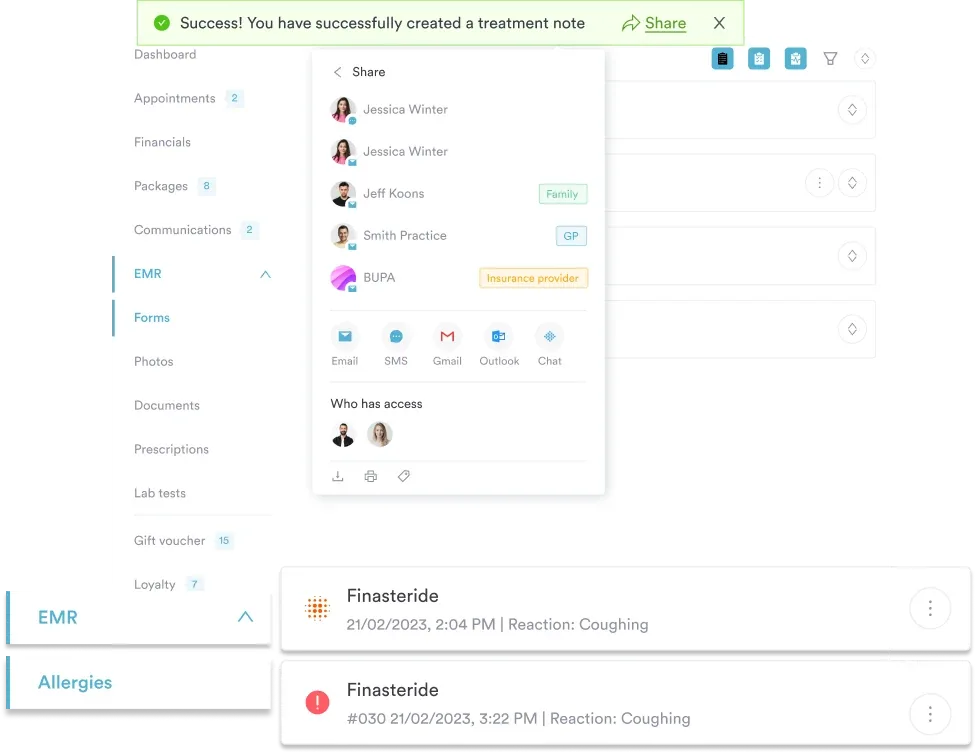
In Pabau, the practice can build its operative note as a digital form, with fields for laterality, approach, fluoroscopy and implant. The surgeon completes it after the procedure, and it is saved against the patient record.

From that record, Pabau’s claims management software raises the invoice with the CCSD code and authorisation number attached. Status tracking shows which claims are paid, queried or rejected, so a query is answered while the case is still fresh.
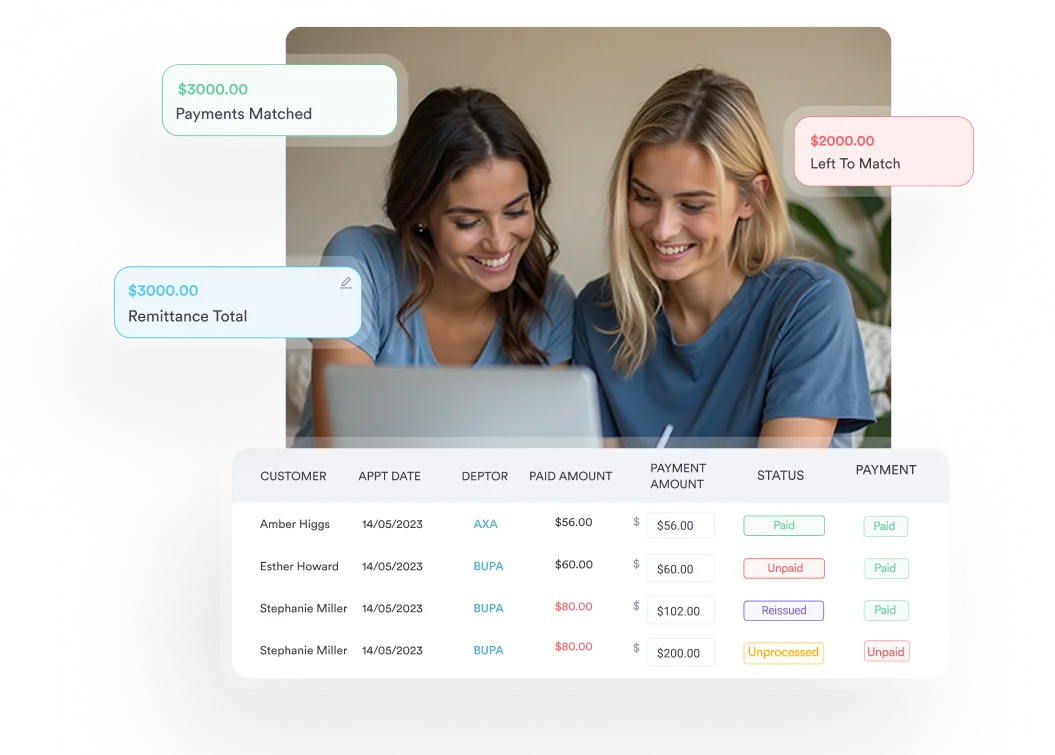

Pabau keeps operative notes, pre-authorisation references and CCSD-coded invoices in one patient record. See how it handles orthopaedic billing for UK private practice.

A W1912 claim turns on one question: was a single femoral head pinned in place, without reduction? If so, W1912 is the code. If both hips were pinned for SUFE it’s W1913, and if the fracture was reduced first it’s W1910.
Settle that in the operative note on the day, in plain words, with the side and approach stated. An insurer reads the note before it trusts the code. Book a demo to see how Pabau keeps the note, the pre-authorisation and the claim together for every orthopaedic case.

Treating a patient covered by a US insurer? CPT code 27235 covers percutaneous fixation of a femoral neck fracture, the closest CPT match to W1912.
Checking what Bupa pays for orthopaedic procedures? The Bupa procedure codes and fee schedule guide explains how Bupa uses CCSD codes and where its fee schedule limits apply.
Planning post-operative care after femoral head pinning? Our hip fracture nursing care plan sets out mobility, pain and pressure-area goals for recovery after hip fixation.
Billing hip surgery further along the pathway? CCSD Code W3740 covers a second revision total hip replacement, with its documentation and pre-authorisation needs.
CCSD Code W1912 covers pinning of the head of femur by an open or percutaneous approach. It is used for slipped upper femoral epiphysis and undisplaced femoral neck fractures. It doesn’t cover fracture reduction, osteotomy or joint replacement.
Percutaneous pinning uses a small stab incision, with continuous fluoroscopy guiding a cannulated screw into the femoral head. Open pinning involves a formal surgical exposure of the proximal femur. Both are billed as W1912, but the operative note must state which approach was used.
W1912 is pinning of one femoral head in situ, without reduction. W1910 is primary reduction of a neck of femur fracture followed by internal fixation. W1913 is pinning both hips for bilateral slipped upper femoral epiphysis.
Not for slipped upper femoral epiphysis. Pinning both hips for SUFE, including prophylactic pinning of the other hip, is billed once as W1913. Billing two W1912 lines risks one being denied as a duplicate.
It depends on the insurer. The bundling status of fluoroscopy with W1912 isn’t uniform, so check the current CCSD schedule notes and payer guidance first. Billing fluoroscopy separately when it is bundled is a known cause of ancillary line denials.
Insurers typically want the diagnosis confirmed by imaging and the pre-authorisation reference. The operative note should record the approach, laterality, fluoroscopy use and implant detail. For Bupa and AXA Health, it must also make clear the femoral head was pinned in situ, not reduced.




