

CPT Code 98981: RTM Treatment Management Billing Guide
CPT code 98981: Definition and official descriptor CPT code 98981 is an add-on c...

Last Updated: Nov 9, 2026
M2130 is the CCSD code for ileal or colonic replacement of ureter. A segment of small bowel or colon replaces a damaged or missing length of the patient's own ureter.
Surgeons choose the operation when a defect is too long for reimplantation, a psoas hitch or a Boari flap. Grade and inclusions sit in the login-gated CCSD schedule, so confirm them there before billing.
Let Pabau's smart automation suggest the right codes, reduce claim denials, and keep your practice compliant—effortlessly.
Automate repetitive tasks and focus on what matters most—your patients.
Reduce coding errors and ensure compliance with the latest regulations.
Clean claims, fewer denials, and faster reimbursements.
Powerful insights and reporting to help your practice thrive.
HIPAA compliant SOC 2 certified GDPR-compliant Trusted by 4,000+ clinics worldwide

CCSD code M2130 covers ileal or colonic replacement of ureter, where a bowel segment bridges a ureteric defect too long for simpler repair.
M2130 applies to the patient’s own ureter. Reconstruction of a transplant kidney’s ureter is billed with M2160.
Grade, fee guidance and bundled components sit in the login-gated CCSD schedule, so confirm them there before quoting or billing.
UK insurers such as Bupa expect pre-authorization, and a plan that escalates during surgery needs the authorization updated.
Pabau, our practice management and billing platform, keeps the authorization, the operative note and the Healthcode claim on the same patient record.
CCSD code M2130 is the UK private billing code for ileal or colonic replacement of ureter. The surgeon takes a segment of small bowel (ileum) or colon and uses it to replace a missing or unusable length of ureter. Urine then drains from the kidney through that segment into the bladder.
The code sits in chapter 12 of the schedule, Urinary system and male reproductive organs, under sub-chapter 12.2.0 Ureter. CCSD stands for Clinical Coding and Schedule Development. It is the shared procedure code set that Bupa and other UK private medical insurers use on claims.
The schedule itself sits behind a login at ccsd.org.uk, and that is where M2130’s grade and inclusion rules live. Our CCSD code library lists the other codes in the chapter.
Surgeons often call the operation an ileal ureter or ileal ureteric substitution. Most cases use ileum. Colon is an option when the small bowel is unsuitable, for example after pelvic radiation therapy or earlier bowel surgery.
The operation can be open, laparoscopic or robot-assisted. The descriptor names the bowel segment and says nothing about the approach. Check whether the schedule lists a separate code for robotic work.
Bowel lining absorbs some of what passes over it, so patients are followed for changes in blood chemistry and for mucus in the urine. Adequate kidney function and a healthy bladder are usually part of the case for surgery.
Bowel replacement usually sits at the top of the reconstruction ladder. Surgeons reach for it when the remaining healthy ureter cannot reach the bladder any other way. Typical reasons include:
Shorter, lower defects are usually managed with reimplantation into the bladder, a psoas hitch or a Boari flap. Reimplantation of one ureter is CCSD code M2080. For a hitch or flap, find the matching code in the schedule, because the operative note decides which one applies.
M2130 and M2160 both sit in the ureter sub-chapter, and both rebuild a damaged ureter. Whose ureter was rebuilt decides which one applies: the patient’s own ureter takes M2130, the ureter of a transplanted kidney takes M2160. CCSD code M2160 is reconstruction of transplant ureter.
One case falls between the two. A transplant patient may occasionally need bowel to replace the transplant ureter, and neither descriptor fits cleanly. Ask the insurer before surgery which code it will accept, and keep the answer in writing.
Don’t confuse M2130 with CCSD code M1910, construction of an ileal conduit. A conduit diverts urine to a stoma on the abdomen. An ileal ureter keeps urine flowing into the bladder.
Put together, three questions about the operation settle which code applies. Work through them in order, starting with the transplant history.
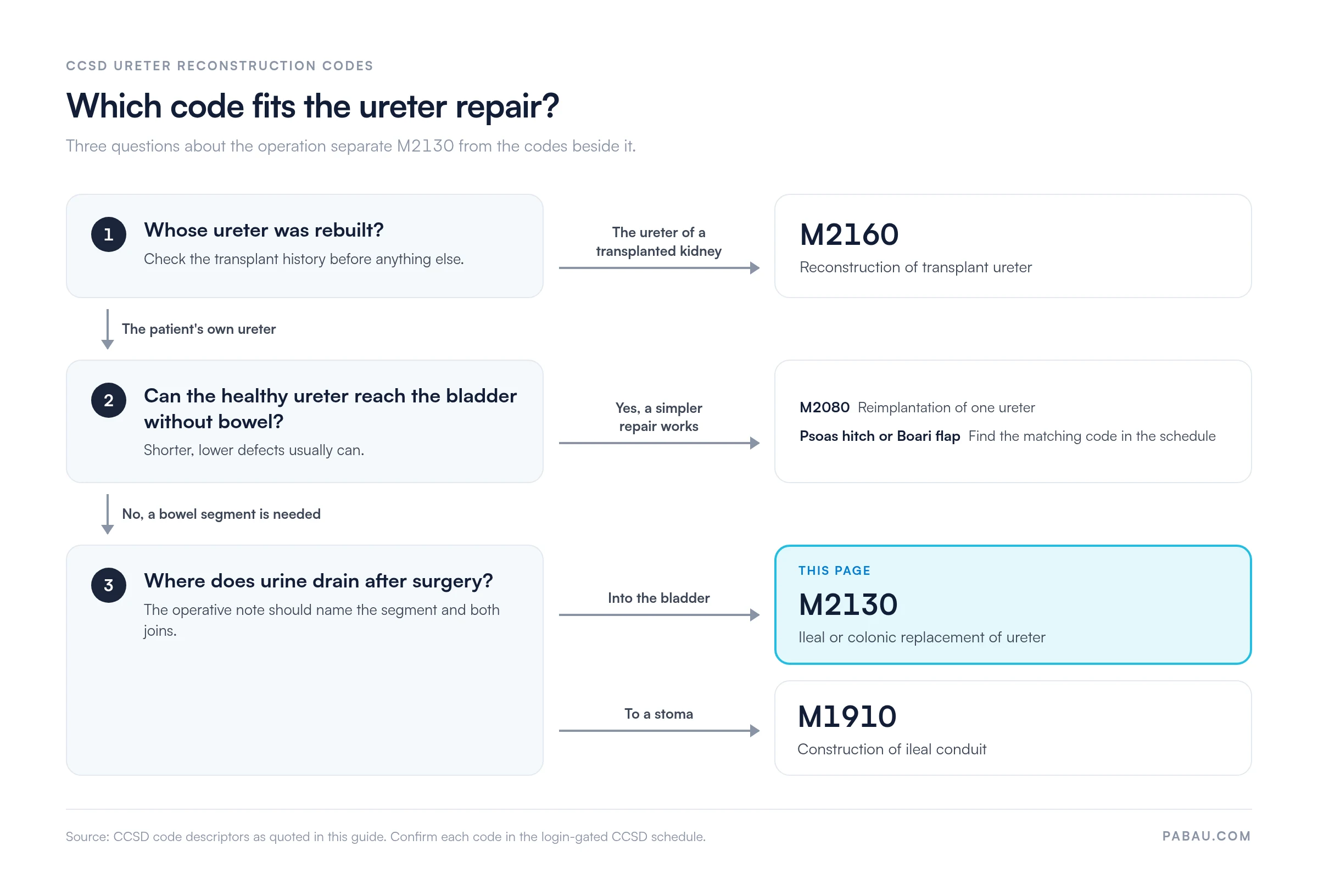
Third-party code lists often repeat M2130 details without a source. Treat the login-gated schedule as your reference, and answer these questions there before you quote a patient or raise an invoice.
Our Bupa CCSD codes guide explains how one major insurer applies the schedule.
UK private claims carry an ICD-10 diagnosis alongside the CCSD procedure code. The pairings below are examples of conditions that can lead to ureteric replacement. They are not an approved list, so verify each one in the WHO ICD-10 browser and against the clinical record.
Pick the code that matches the documented cause of the defect. An insurer comparing a stricture diagnosis with a note describing trauma will query the claim.
Take an illustrative case. A patient has a long stricture after earlier pelvic surgery, and the insurer authorizes a unilateral reimplantation, M2080.
During surgery, the surgeon finds that the healthy ureter won’t reach the bladder, even with a flap. The team switches to an ileal ureter. The operative note records the decision, the length of ileum used and both joins.
The authorization now names the wrong code. The practice contacts the insurer promptly, explains the change and asks for the authorization to be updated to M2130. The invoice then matches the note and the authorization.
If the surgeon expects that escalation might happen, raise it with the insurer at pre-authorization. Asking which code applies in that case takes minutes, and an appeal takes weeks.
M2130 claims usually stall after surgery, when the authorization, the operative note and the invoice disagree. Someone then has to reconcile them by hand while the payment waits.
Pabau tracks the authorization code, dates and sessions on the patient’s case. It warns the team when an authorization is missing. Its claims management software then sends UK claims through Healthcode and to Bupa, so the invoice carries the code the insurer approved.
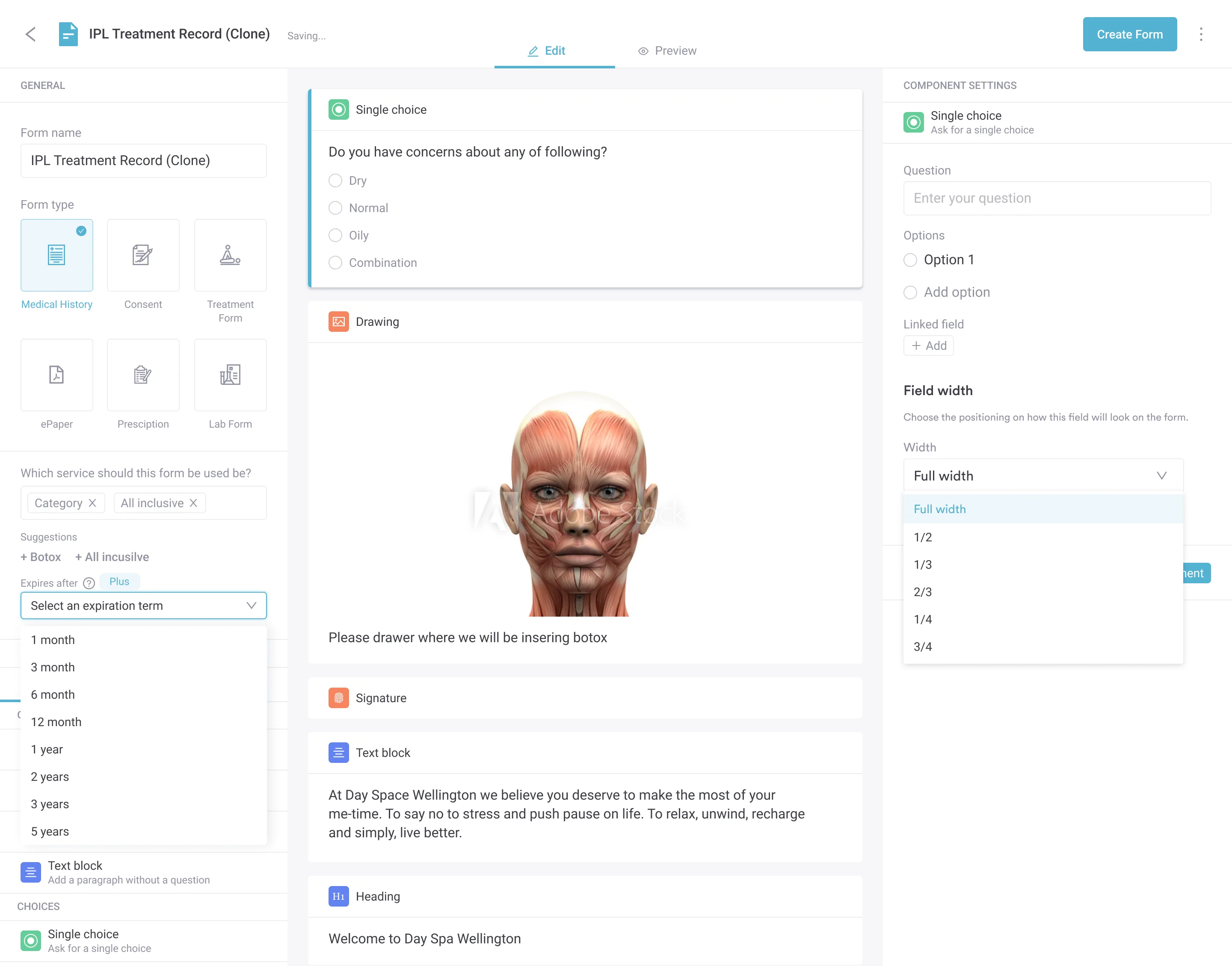
Structured note templates help at the documentation stage. A form with fields for the segment, its length and each join prompts the surgeon to record what the insurer will ask about.
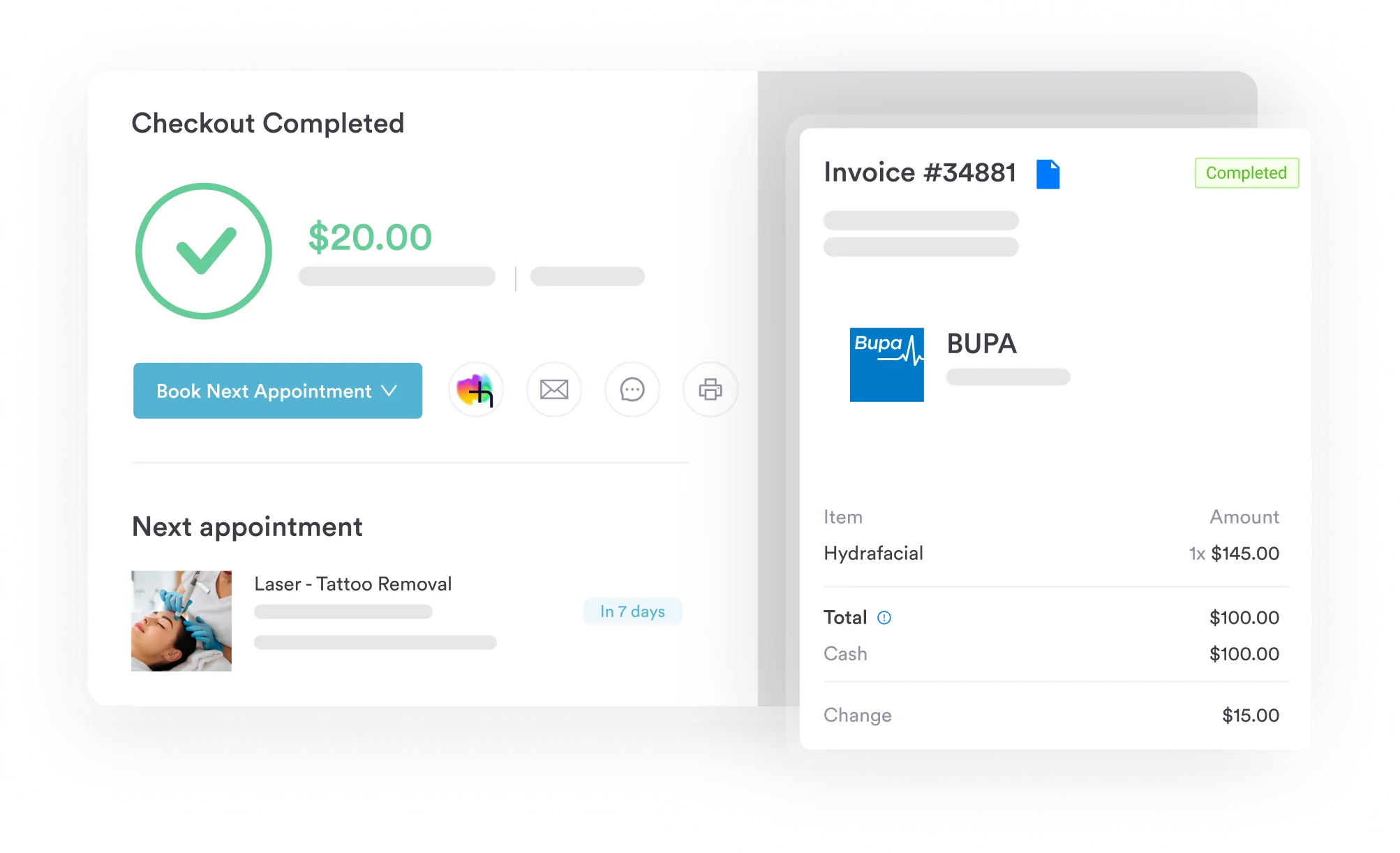

Pabau tracks pre-authorization codes on the patient’s case, keeps operative notes on the same record and sends claims through Healthcode. Your M2130 invoice goes out matching what the insurer approved.

Treat M2130 as a decision that starts before surgery. Confirm the ureter is the patient’s own, check the schedule’s grade and inclusions, and raise any likely escalation with the insurer at pre-authorization.
After surgery, the operative note carries the claim. A note that names the bowel segment and both joins rarely needs explaining. The trade-off is a few extra minutes of documentation against a query letter and a delayed settlement.
Book a demo to see how Pabau keeps authorizations, operative notes and Healthcode claims together for your urology practice.

Billing a transplant patient’s ureter repair? CCSD code M2160 covers reconstruction of transplant ureter and the documents insurers expect.
Coding a reimplantation of one ureter? CCSD code M2080 explains unilateral replantation of the ureter into the bladder.
Diverting urine to a stoma instead? CCSD code M1910 covers construction of an ileal conduit with ureteric implantation.
Need Bupa’s rules on CCSD claims? Bupa CCSD codes guide shows how Bupa applies the schedule to claims.
Looking up another urology code? CCSD code library lists the codes in each chapter of the schedule.
No. CCSD codes are for UK private medical insurance billing. NHS hospitals record the same operation in OPCS-4, the classification used for NHS procedure data.
The schedule is on ccsd.org.uk and needs a login. Registered users, such as consultants and their billing teams, can search it after signing in. Insurers publish their own fees separately.
The descriptor doesn’t say one or both sides. If both ureters are replaced, check the schedule and ask the insurer how to bill it before surgery.
No. It’s reserved for long or complex ureteric defects, so many urology practices bill M2130 rarely. That’s a good reason to check the schedule each time rather than rely on memory.




