CCSD Code C5910: Iridocyclectomy billing guide
What is CCSD Code C5910 and what does it describe? CCSD Code C5910 is the Clinic...

Last Updated: Oct 7, 2026

CCSD Code 0593B is the UK private healthcare billing code for Plasma Guanidinoacetate (GUAP) Blood testing, effective from 17 April 2023.
0593B and 0593U are distinct codes: 0593B is for a blood sample, 0593U is for a urine sample. Using the wrong code will result in claim rejection.
Reimbursement fees for 0593B are set by each insurer individually. CCSD defines the code; Bupa, AXA Health, Aviva, Vitality, and others set their own rates.
Pabau’s claims management software helps UK private practices submit CCSD diagnostic codes accurately and track insurer responses in one place.
CCSD Code 0593B covers the Plasma Guanidinoacetate (GUAP) Blood test, a specialist metabolic assay used to investigate suspected creatine deficiency syndromes and inborn errors of metabolism. The code was added to the CCSD Schedule of Diagnostic Tests with an effective date of 17 April 2023, meaning claims submitted before that date are invalid under this code.
Guanidinoacetate is a precursor molecule in the creatine biosynthesis pathway. When the enzyme guanidinoacetate methyltransferase (GAMT) is deficient, guanidinoacetate accumulates in the blood and urine.
Measuring plasma levels helps clinicians distinguish between GAMT deficiency and related metabolic disorders, including arginine:glycine amidinotransferase (AGAT) deficiency. GUAP testing is specialist territory, typically requested by metabolic medicine physicians or clinical geneticists rather than as a routine diagnostic screen.
For billing staff at UK private practices, the key point is that 0593B is a diagnostic service charge, not a procedure code. The CCSD FAQs page confirms this distinction: diagnostic codes do not sit in your procedure code table.
Procedure codes. Diagnostic codes like 0593B are billed separately as pathology or laboratory charges alongside the relevant consultation or referral episode.
Clinicians order the GUAP blood test when a patient presents with symptoms consistent with a creatine deficiency syndrome. These syndromes are rare inherited metabolic conditions, so testing is almost always initiated by a specialist rather than a GP or family physician in general practice.
Common clinical indications include:
Practices managing patients under metabolic medicine, pediatric neurology, or clinical genetics pathways are most likely to encounter this code.
If your practice provides private metabolic screening services, including for longevity and integrative medicine, confirm with your clinical lead whether GUAP testing falls within your service menu. For guidance on managing specialist referrals in private practice.
This is the most common coding error for guanidinoacetate testing. Two codes exist:
0593B took effect on 17 April 2023. 0593U followed later, effective 8 August 2024 under CCSD Bulletin 092, so the two codes do not share an effective date. In clinical practice, a metabolic specialist may still request both a blood and a urine sample as part of the same diagnostic episode.
When that happens, bill both 0593B and 0593U separately on the same claim. Do not combine them under a single code or attempt to use one code to cover both sample types. Insurers cross-reference sample type against the narrative, and a mismatch is a direct route to claim rejection.
Accurate documentation of the sample type in the patient record is therefore essential before submission. Pabau’s digital forms allow practices to capture structured diagnostic request information at the point of care, so the sample type is recorded and retrievable at billing time.
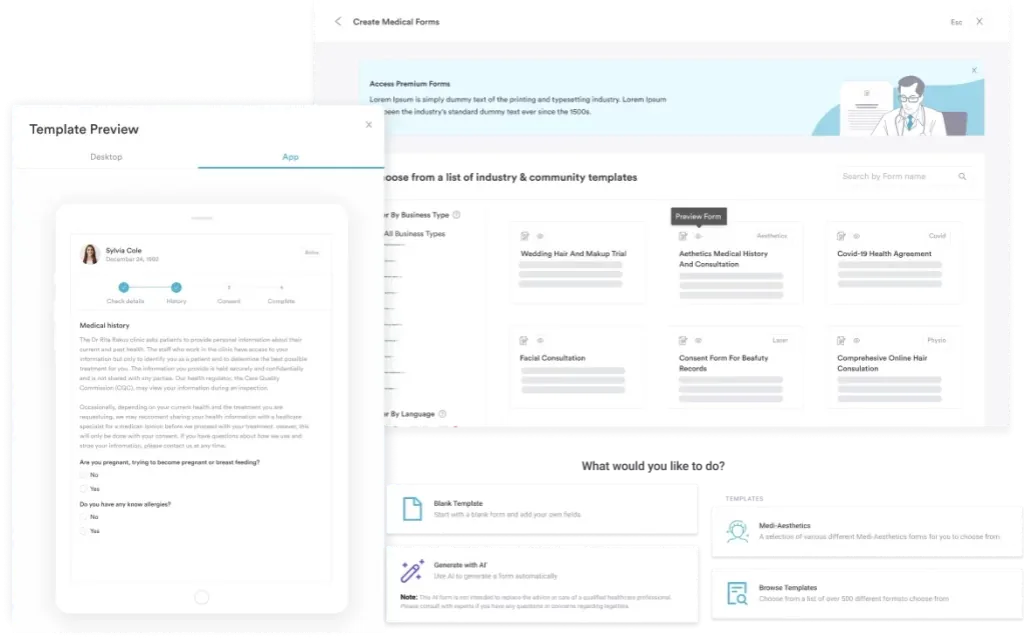
Always verify which sample type was collected before selecting between 0593B and 0593U. If the laboratory report specifies plasma, use 0593B. If it specifies urine, use 0593U. If both were collected, submit both codes on the same claim with separate line items. Do not assume based on the test name alone.
If you bill private insurers regularly, tightening up how you run your private practice pays off every time a schedule changes.
CCSD sets the code narrative and structure. Individual UK private health insurers set their own reimbursement rates for each code, and not every insurer adopts every CCSD code onto their schedule at the same time. Before submitting a claim under 0593B, confirm with the relevant insurer that this code is active on their current schedule. Practices reconciling payment posting against expected fees find short-paid claims that never appear as denials.
The major UK private health insurers that use CCSD diagnostic codes include:
Fees for specialist metabolic diagnostic tests vary considerably by insurer. Because 0593B is a niche code added relatively recently, in April 2023, some smaller insurers may not yet have an explicit rate for it. In that case, contact the insurer’s provider relations team directly before submitting.
Submitting a claim for a code that is not on the insurer’s active schedule is a common source of avoidable rejections. For a full overview of how Bupa processes CCSD diagnostic codes, see our Bupa CCSD codes guide.
Billing errors for diagnostic codes are usually procedural rather than clinical. The following steps reduce the risk of rejection when submitting 0593B claims.
Most UK private health insurers require prior authorization for specialist diagnostic tests. Check whether the patient’s insurer requires a pre-authorization reference number before the laboratory request is raised.
Submitting a claim without a valid authorization code, when one is required, results in automatic rejection regardless of clinical accuracy. The same requirement applies to other specialist assays.
The authorization request should specify the CCSD code being requested (0593B and/or 0593U), the requesting clinician’s name and recognition number, and the ICD or clinical indication if required by the insurer.
For private GP and specialist practices managing the prior authorization process in-house.
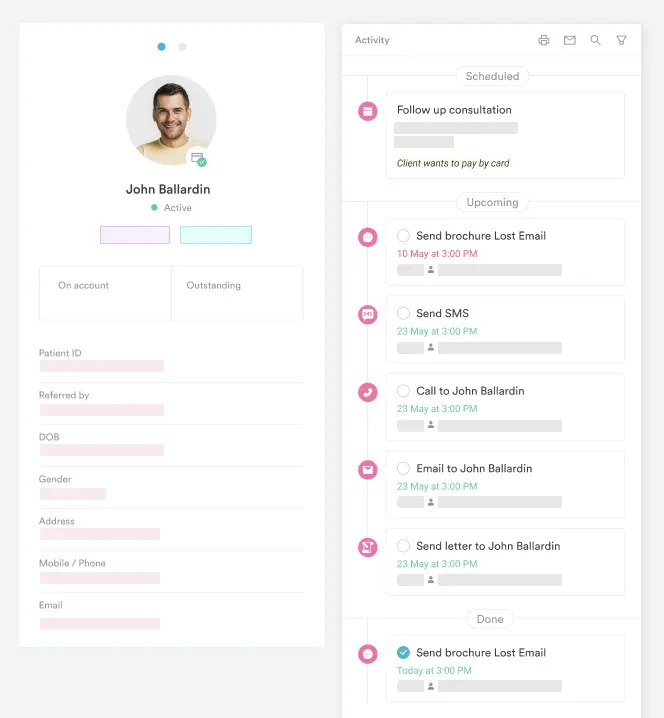
Use 0593B for a blood (plasma) sample. Use 0593U for a urine sample. If both were collected as part of the same episode, submit both codes on separate lines. Verify the laboratory report confirms the sample type before populating the claim form.
The CCSD Technical Guide (October 2025) sets out the coding conventions and business rules that apply to all diagnostic codes, including 0593B. Key rules for diagnostic codes include:
Bupa accepts electronic submissions via their provider portal. Other insurers may require paper or PDF invoicing. Check the current submission requirements for each insurer before sending. Using the wrong submission channel does not automatically invalidate the claim, but it creates delays and increases the risk of the claim being processed under an incorrect code.
UK private practices handling volume CCSD billing benefit from claims management software that centralizes insurer submissions, tracks authorization references, and flags incomplete claims before they go out. For practices managing compliance across multiple specialties.
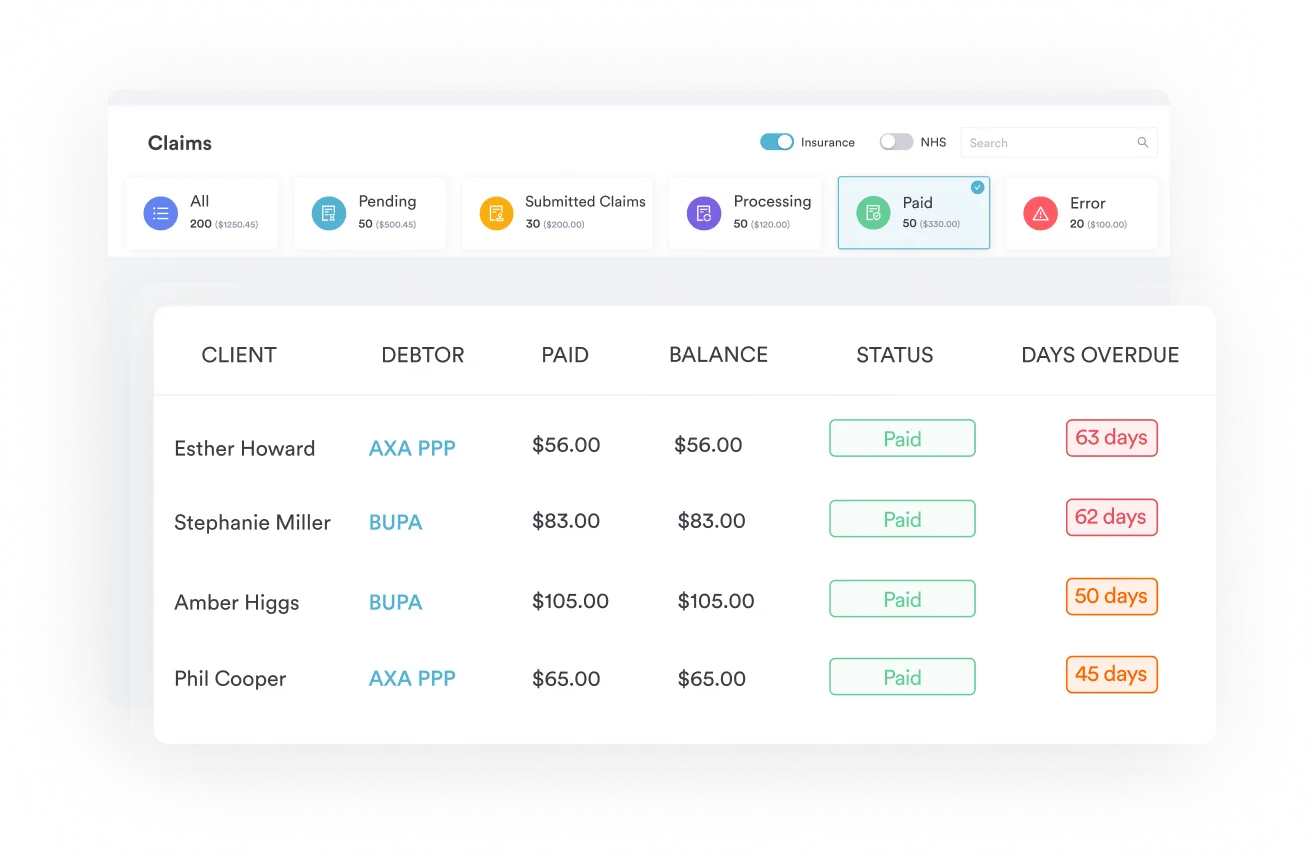

Pabau helps UK private practices manage CCSD diagnostic code submissions, track insurer authorizations, and maintain the patient records that support accurate billing. See how it works for your practice.

CCSD Code 0593B was introduced alongside a group of new diagnostic codes in the April 2023 schedule update. Several of these are clinically adjacent and may appear on the same claim or patient episode.
When a patient episode involves both metabolic and endocrine investigations, it is possible for 0593B and 0594B to appear on the same invoice. Each should be itemized separately. Do not bundle multiple diagnostic codes into a single line entry, as insurers require individual code-level visibility to process payment and verify clinical necessity.
If your practice handles metabolic health or integrative medicine services, tracking which diagnostic codes apply to which patient pathways matters for billing accuracy and audit readiness. Pabau’s measurements and tracking tools support structured recording of laboratory results alongside diagnostic code references in the patient record.
For a broader view of private healthcare fee structures.
When submitting multiple diagnostic codes on a single claim, list each code on a separate line with its own fee. Bundling two codes onto one line is one of the most common reasons UK private insurance claims are queried or rejected. Check the insurer’s invoicing guidance for the required format.
UK private health insurers can request supporting clinical documentation when auditing diagnostic claims. For a specialist test like GUAP testing, the following records should be in place before submission:
Insurers do not require you to justify clinical decisions on every claim. But when an audit occurs, missing documentation is the fastest route to retrospective disallowance of fees. Good record-keeping is as much a billing control as it is a clinical one.
For practices structuring documentation workflows for private practice compliance.
Practices handling high-volume private billing also benefit from features that save time, with structured workflows that link the diagnostic request, the laboratory result, and the insurance claim in one auditable trail.
CCSD Code 0593B is straightforward once the fundamentals are in place:
The most common error is conflating 0593B (blood) with 0593U (urine). Build a quick verification step into your submission workflow and that risk disappears.
For UK private practices managing CCSD diagnostic billing at volume, Pabau brings together code submission, authorization tracking, and patient record documentation in one place. To see how it handles CCSD diagnostic workflows, book a demo.

List Item #1
List Item #2
CCSD Code 0593B is the UK private healthcare billing code for Plasma Guanidinoacetate (GUAP) Blood testing, a specialist metabolic assay used to investigate creatine deficiency syndromes and inborn errors of metabolism. It became effective on 17 April 2023 as part of a CCSD schedule update administered by Grant Thornton UK LLP.
0593B covers a blood (plasma) sample; 0593U covers a urine sample. Both codes measure guanidinoacetate levels, but they are distinct codes that must be billed separately and took effect on different dates: 0593B on 17 April 2023 and 0593U on 8 August 2024. If both sample types are collected in the same episode, submit both codes on the same claim as separate line items. Using 0593B to cover a urine result, or vice versa, will result in claim rejection.
Bupa confirmed 0593B on its diagnostic schedule as of the 17 April 2023 effective date. AXA Health, Aviva, Vitality, Healix, and Allianz Care also use CCSD diagnostic codes, but adoption of individual codes varies. Always verify that 0593B is active on the relevant insurer’s current schedule before submitting a claim, as rates and adoption status differ by insurer.
Most UK private health insurers require prior authorization for specialist diagnostic tests. Check with the patient’s insurer before the laboratory request is raised. Submit the prior authorization request specifying 0593B (and 0593U if applicable), the requesting clinician’s recognition number, and the clinical indication. Claims submitted without a required authorization reference are rejected regardless of clinical accuracy.
Bupa accepts electronic submissions via its provider portal at codes.bupa.co.uk. Submit 0593B as a separate line item on the diagnostic invoice, alongside the prior authorization reference and the requesting clinician’s recognition number. Each diagnostic code must appear as its own line entry. Refer to the CCSD Technical Guide (October 2025) for coding conventions that apply to all diagnostic submissions.