HCPCS code V2599: Other type contact lens billing guide
What is HCPCS code V2599? HCPCS code V2599 is the Level II supply code for a con...

Last Updated: Oct 20, 2026
G0483 is the HCPCS Level II code for drug test(s), definitive, utilizing (1) drug identification methods able to identify individual drugs and distinguish between structural isomers (but not necessarily stereoisomers), including, but not limited to gc/ms (any type, single or tandem) and lc/ms (any type, single or tandem and excluding immunoassays (e.g., ia, eia, elisa, emit, fpia) and enzymatic methods (e.g., alcohol dehydrogenase)), (2) stable isotope or other universally recognized internal standards in all samples (e.g., to control for matrix effects, interferences and variations in signal strength), and (3) method or drug-specific calibration and matrix-matched quality control material (e.g., to control for instrument variations and mass spectral drift); qualitative or quantitative, all sources, includes specimen validity testing, per day; 22 or more drug class(es), including metabolite(s) if performed.
Let Pabau's smart automation suggest the right codes, reduce claim denials, and keep your practice compliant—effortlessly.
Automate repetitive tasks and focus on what matters most—your patients.
Reduce coding errors and ensure compliance with the latest regulations.
Clean claims, fewer denials, and faster reimbursements.
Powerful insights and reporting to help your practice thrive.
HIPAA compliant SOC 2 certified GDPR-compliant Trusted by 4,000+ clinics worldwide

HCPCS code G0483 covers definitive drug testing for 22 or more drug classes per date of service using GC/MS or LC/MS methodology only.
Immunoassays (IA, EIA, ELISA, EMIT, FPIA) and enzymatic methods like alcohol dehydrogenase do not qualify; all samples must include stable isotope or universally recognized internal standards.
G0483 is the highest-tier definitive drug testing code in the G0477-G0483 series; billing it without confirmed drug class count and methodology documentation is a common OIG compliance risk.
Pabau’s claims management software helps substance abuse and behavioral health practices track G0483 billing requirements, document medical necessity, and reduce claim denials.
Providers who bill G0483 without confirming the drug class count and methodology first are the ones most likely to see denials and audits.
HCPCS code G0483 describes definitive drug testing using high-complexity analytical methods to identify 22 or more drug classes per date of service. The Centers for Medicare and Medicaid Services (CMS) maintains this code within the G0477-G0483 series, which covers the full spectrum of presumptive and definitive drug testing claims.
The full official descriptor requires that testing use drug identification methods capable of identifying individual drugs and distinguishing between structural isomers (but not necessarily stereoisomers).
Approved methodologies include gas chromatography/mass spectrometry (GC/MS, any type, single or tandem) and liquid chromatography/mass spectrometry (LC/MS, any type, single or tandem). Stable isotope or other universally recognized internal standards must be present in all samples.
Understanding where G0483 sits within the broader code family prevents undercoding and overcoding. The G0477-G0483 series separates presumptive testing (G0477-G0479) from definitive testing (G0480-G0483) based on methodology and drug class count.
As CMS confirms in its billing and coding article for controlled substance monitoring and drugs of abuse testing, providers must use the G0477-G0483 series when submitting claims for drug abuse testing. Selecting the correct code requires confirming both the drug class count and the analytical method used for each patient encounter.
Document the exact number of drug classes tested on every requisition and in the clinical record before submitting a G0483 claim. If the laboratory report confirms only 19 drug classes, the correct code is G0482, not G0483. Upcoding to G0483 when the class count does not reach 22 is one of the most flagged billing errors in drug testing audits.
The difference between presumptive and definitive testing drives the entire code selection decision. Billing staff in substance use disorder (SUD) and medication-assisted treatment (MAT) practices must understand both categories to avoid systematic errors.
Presumptive tests screen for the presence or absence of a drug or drug class. They use immunoassay (IA), enzyme immunoassay (EIA), ELISA, EMIT, FPIA, or dipstick technologies. Results are qualitative, quick, and lower cost.
These tests cannot distinguish between structural isomers and may require confirmation. Point-of-care panels such as a 5-panel drug test are a common example of this presumptive tier.
Definitive tests identify and quantify individual drugs and their metabolites. They require GC/MS or LC/MS methodology with stable isotope internal standards in every sample. Results can distinguish between structural isomers, support clinical decision-making for opioid use disorder (OUD) treatment, and withstand medico-legal scrutiny. G0483 represents the highest tier: 22 or more drug classes analyzed in a single date of service.
Practices treating patients with complex polysubstance use or managing MAT protocols commonly reach the 22-class threshold. Accurate EHR integration for billing accuracy ensures the tested drug class list from the laboratory flows directly into the claim without manual recount errors.
GP clinic software can flag which patients qualify for the preventive services these G codes describe.
Several billing requirements must be satisfied before submitting a G0483 claim. Payers audit this code closely because it carries the highest reimbursement in the definitive series.
The laboratory report must confirm GC/MS or LC/MS methodology. Immunoassay-based methods, alcohol dehydrogenase enzymatic methods, and all other non-mass-spectrometry platforms are explicitly excluded by the code descriptor. If the lab uses an immunoassay screen followed by GC/MS confirmation, only the confirmed classes count toward the G0483 threshold.
The claim is billed per date of service, not per drug or metabolite. A urine specimen analyzed for 24 drug classes on a single collection date equals one unit of G0483.
Documentation must specify which 22 or more drug classes were tested, not just the panel name. Panel names alone, such as “comprehensive urine drug screen,” are insufficient without a class-level breakdown from the lab report.
The code descriptor mandates stable isotope or other universally recognized internal standards in all samples. This is a laboratory quality-control requirement built into the billing code itself. Labs that omit internal standards do not meet the G0483 descriptor, and claims submitted on their reports risk retroactive denial on audit.
Specimen validity testing (SVT) assesses whether a urine sample has been adulterated, substituted, or diluted. Palmetto GBA notes that definitive tests (G0480-G0483) include specimen validity testing per date of service. SVT results should be documented alongside the drug class results. Payers may deny G0483 claims where SVT is absent from the supporting documentation.
Maintaining well-structured structured medical forms at intake and each encounter date creates the documentation chain that supports G0483 medical necessity on audit.
G0483 carries Medicare Part B coverage under carrier judgment, meaning the Medicare Administrative Contractor (MAC) determines coverage based on medical necessity for each claim. Reimbursement rates are set annually through the CMS Physician Fee Schedule and vary by geographic location.
G0483 is widely reported as the highest-reimbursing code in the G0477-G0483 definitive drug testing series because reimbursement scales with drug class count.
Commercial payer policies for G0483 are not uniform. Several have implemented automated claim edits or specific coverage limitations:
Verifying payer-specific policies before billing G0483 prevents systematic denial patterns. Use the AAPC HCPCS code reference for current code descriptors and then cross-reference each payer’s published coverage policy.
ForwardHealth Wisconsin requires providers to use the G0477-G0483 series for all drug abuse testing claims. Wisconsin Medicaid covers definitive testing when medical necessity is documented. Coders billing G0483 for Wisconsin Medicaid patients must confirm current ForwardHealth published rates and prior authorization requirements, which are subject to annual revision.

Pabau helps behavioral health and substance abuse treatment practices manage billing documentation, track drug testing orders, and submit cleaner claims. See how our practice management tools support accurate coding and compliance.

G0483 is one of the most scrutinized HCPCS codes in laboratory and substance abuse treatment billing. The Office of Inspector General (OIG) has identified definitive drug testing as a persistent area of improper billing.
G2 Intelligence reporting from February 2024 identified G0483 as among the most commonly performed and highest-reimbursing definitive drug testing codes, which places it in payer and OIG audit crosshairs.
Billing G0483 when the confirmed class count falls below 22 is the most frequently cited error. The threshold is strict: 21 drug classes bill as G0482, not G0483.
Lab reports that list drug names rather than drug classes require a class-level mapping exercise before code selection.
G0483 and G0477-G0479 are not bundled codes under NCCI edits by default, but payers that require a presumptive screen before definitive testing may deny G0483 when the presumptive screen is absent from the same date of service. Providers should check individual MAC and payer LCD/LCA policies on presumptive-to-definitive sequencing requirements.
Coverage for G0483 under Medicare and most commercial payers requires medical necessity. Documentation must link the patient’s diagnosis to the clinical rationale for testing 22 or more drug classes, commonly an SUD code such as F19.10 or an OUD code such as F11.20.
A bare lab order with no supporting clinical note creates a recoverable audit liability. It also has to exist before the claim is submitted, not reconstructed afterward.
Some labs use immunoassay platforms for a portion of the panel and mass spectrometry for others. Only the drug classes confirmed by GC/MS or LC/MS count toward G0483.
If 14 classes were confirmed by LC/MS and 10 by immunoassay, the correct code is G0481, which covers 8-14 classes by qualifying methodology, not G0483. Coders must review the method column, not just the panel summary.
Build a lab report review checklist into your billing workflow. Confirm: (1) methodology is GC/MS or LC/MS, (2) internal standards are documented, (3) drug class count by qualifying method reaches 22, and (4) specimen validity testing results are present. Four checkpoints prevent the most common G0483 denial reasons before submission.
Strong documentation is the difference between a paid G0483 claim and a recovery audit demand. Billing staff should verify that each of the following elements is present before submission. An itemized superbill keeps the required fields in one place: dates, codes, charges and provider identifiers.
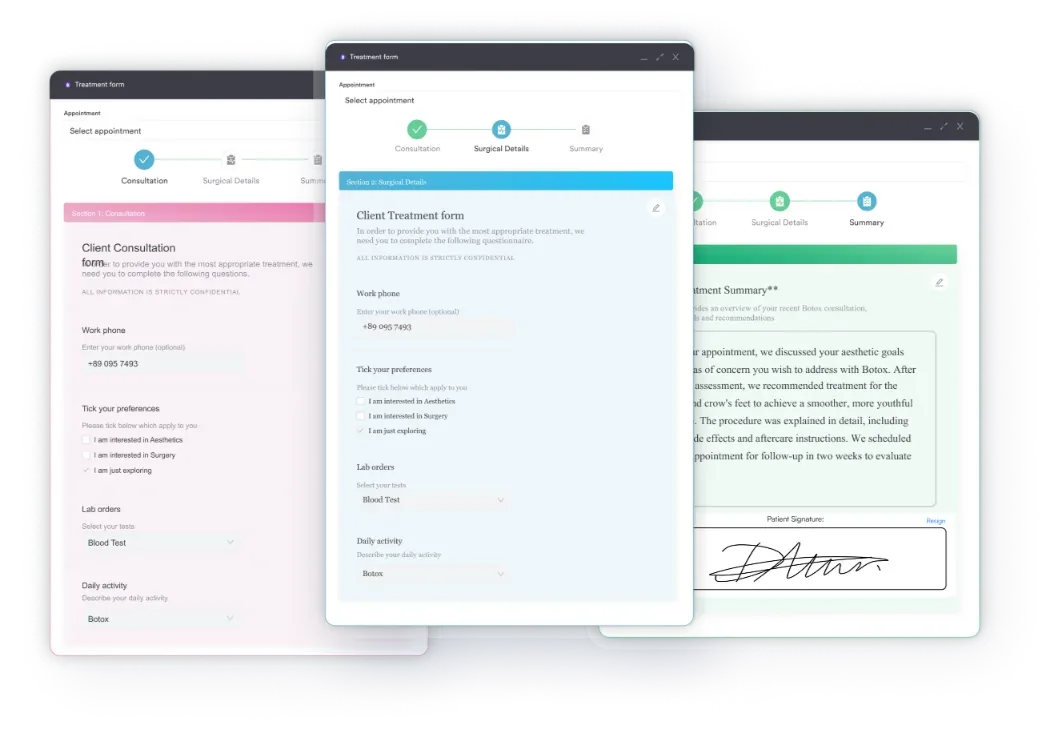
Practices using digital intake and consent forms can embed drug testing consent and order capture into the patient workflow, creating a time-stamped documentation trail that supports G0483 claims on audit. Pair that with a HIPAA compliance checklist review to ensure records are secured and accessible per retention requirements.
G0483 is billed primarily by clinical laboratories, substance abuse treatment facilities, and behavioral health practices that perform or order comprehensive drug panels as part of ongoing patient care. The code is not limited to inpatient settings, though providers should always confirm current state-specific payer policy before billing outpatient claims.
Definitive drug testing billing attracts OIG scrutiny because the reimbursement-to-cost ratio is high and the code selection is objectively verifiable from the lab report. Providers billing G0483 should structure their compliance programs around the specific risk factors this code presents.
OIG work plans have repeatedly flagged laboratory billing for definitive drug testing. The core patterns include: billing the highest-tier code regardless of actual drug class count, ordering reflexive 22-class panels for all patients without individualized clinical justification, and splitting a single panel across multiple dates to inflate reimbursement. All three patterns are identifiable through claim data analytics.
The clinical note must justify why 22 or more drug classes are medically necessary for this specific patient on this specific date. A standing order for all MAT patients to receive G0483 panels, without patient-level clinical documentation, does not satisfy medical necessity requirements.
Drug testing records for SUD patients carry additional federal confidentiality protections under 42 CFR Part 2, which is stricter than standard HIPAA requirements. Practices must ensure their patient data security protocols address Part 2 consent requirements for record disclosure, separate from standard HIPAA authorization.
Billing staff handling G0483 claims should receive specific training on Part 2 restrictions before releasing records in response to payer audit requests.
HCPCS code G0483 is the highest-tier definitive drug testing code in the CMS series, covering 22 or more drug classes per date of service using GC/MS or LC/MS methodology.
Three things determine whether a G0483 claim pays or gets denied: the confirmed drug class count reaching 22, the methodology being mass spectrometry with internal standards, and medical necessity documentation linked to a specific patient diagnosis.
Behavioral health practices and substance abuse treatment centers that bill G0483 regularly benefit from structured documentation workflows and integrated billing tools. Pabau’s practice management software helps clinical teams capture lab order data, manage compliance documentation, and reduce the claim errors that trigger denials and audits. To see how Pabau supports behavioral health billing workflows, book a demo.

Also billing a lens coating add-on? Anti-reflective coating billing guide covers billing anti-reflective coating applied to a single spectacle lens for vision care claims.
Also billing a CROS hearing aid? CROS hearing aid billing guide covers billing the dispensing fee for a contralateral monaural device that Medicare does not cover.
Choosing a payment system instead? Medical practice POS guide covers how a purpose-built POS system connects payment collection directly to the clinical record.
HCPCS code G0483 is a definitive drug testing code covering the analytical identification of 22 or more drug classes per date of service using GC/MS or LC/MS methodology with stable isotope internal standards in all samples. It is the highest tier in the CMS G0477-G0483 drug testing series and carries the highest Medicare Part B reimbursement within that series.
Presumptive testing (G0477-G0479) uses immunoassay methods to screen for the presence or absence of drug classes and produces qualitative results. Definitive testing (G0480-G0483) uses mass spectrometry (GC/MS or LC/MS) to identify and quantify individual drugs and metabolites, distinguish structural isomers, and produce results that meet a higher evidentiary standard for clinical and medico-legal use.
All four codes require GC/MS or LC/MS methodology with stable isotope internal standards. The only distinction is drug class count: G0480 covers 1-7 classes, G0481 covers 8-14 classes, G0482 covers 15-21 classes, and G0483 covers 22 or more classes. Code selection must match the exact count of drug classes confirmed by qualifying methodology in the lab report.
G0483 and presumptive codes (G0477-G0479) are not automatically bundled under NCCI edits, so both may appear on the same date of service in some circumstances. However, many payers require documentation of the initial presumptive screen before processing a definitive code claim, and some payer LCDs restrict same-day billing. Check the specific MAC and payer policy before billing both on the same date.
Required documentation includes a physician order dated the same date of service, a clinical note linking the patient’s SUD or OUD diagnosis to the rationale for 22-class testing, a lab report confirming GC/MS or LC/MS methodology with internal standards, a drug class count of 22 or more by qualifying method, and specimen validity testing results. Missing any of these elements creates audit liability.
NC Medicaid initially restricted G0481, G0482, and G0483 to emergency department and inpatient settings, effective December 1, 2024, under an October 10, 2024 bulletin. A March 11, 2025 bulletin reversed that restriction, restoring outpatient coverage, including CLIA-certified offices and labs, retroactive to December 1, 2024, for both NC Medicaid Direct and Managed Care.