



CCSD code G5100: Bypass of duodenum billing guide
CCSD code G5100 bills a bypass that leaves the duodenum in place CCSD code G5100...

Last Updated: Oct 16, 2026

CPT code 23650 covers closed treatment of a shoulder dislocation with manipulation, performed without any anesthetic agent.
The 2026 Medicare national rate is roughly $434 in a non-facility setting and $368 in a facility.
Always apply a laterality modifier, either -RT or -LT, on every 23650 claim you submit.
Billing 23650 after anesthesia was given is an upcoding risk, so use CPT 23655 instead.
Practice management software like Pabau validates code and modifier pairs before submission, which cuts shoulder dislocation denials.
The official AMA descriptor for CPT code 23650 is: Closed treatment of shoulder dislocation, with manipulation, without anesthesia.
The code applies when a clinician manually reduces a dislocated glenohumeral joint without any anesthetic agent. The patient stays conscious throughout. Common reduction maneuvers include the Cunningham technique, the modified Milch, and external rotation. No incision is made, and the joint returns to position through controlled force and positioning alone. Claim accuracy is cheaper to build at entry than to repair in an appeal. A paper claim is scanned before it is read, so alignment and legibility affect whether it processes.
This code sits in the Musculoskeletal System section of the AMA CPT code set, under shoulder fractures and dislocations. It is billed in emergency departments, orthopedic offices, sports medicine practices, and urgent care. The procedure covers anterior, posterior, and inferior glenohumeral dislocations treated without sedation or a regional nerve block.
The single differentiator for 23650 is that no anesthetic agent of any type was used. If IV sedation, a regional block, or general anesthesia was administered, the correct code is CPT 23655.
The boundary between 23650 and 23655 is the most common source of upcoding risk in shoulder dislocation billing. The table below shows when each code applies.
When a separate anesthesia provider handles the sedation for 23655, that service is reported on its own under 01620.
Every CPT 23650 claim needs a supporting ICD-10-CM diagnosis code. The right code depends on the direction of the dislocation, the side, and the encounter type. Use the seventh character “A” for the initial treatment visit. Wrong laterality is a leading cause of denial on this procedure.
Laterality guidance: Always code the specific side when the note documents it. The codes ending in 6 are the unspecified-side options, so they are a last resort. Payers increasingly deny them where the side is clinically determinable. At follow-up the seventh character changes, so S43.014D replaces S43.014A once active treatment ends.
Verify the seventh character before you submit. ‘A’ applies during active treatment. Once the patient moves to routine healing care, it changes to ‘D’ for subsequent or ‘S’ for sequela. Billing 23650 with a ‘D’ code on the reduction date will trigger an edit.
Medicare pays roughly $434 for CPT 23650 in a non-facility setting and $368 in a facility. Those national figures come from the 2026 conversion factor of $33.4009 applied to total RVUs of 12.99 and 11.01.
Confirm the rate for your own locality with the CMS Physician Fee Schedule lookup or the FastRVU 2026 RVU lookup. Your MAC’s published rates are the final word.
The difference reflects the practice expense component of the RVU calculation. In a physician office or urgent care, the practice absorbs the overhead directly, so the non-facility rate is higher.
When the reduction happens in a hospital ED or ASC, the facility bills its own overhead separately. The physician’s payment drops to the lower facility rate as a result.
Each RVU component carries its own geographic practice cost index, or GPCI, for your locality. The three components are work, practice expense, and malpractice.
Multiply each component by its GPCI, add the results, then multiply by the conversion factor. That gives your locality-adjusted payment. Medicare billing rules shift from year to year, so re-check the factor every January.
Modifier selection for 23650 depends on the setting, the laterality, and whether other services happened the same day. Physical therapy practices and orthopedic offices see the most modifier disputes when laterality is left off. The table below covers every modifier that applies to this code.
Payer-specific note: Medicare Administrative Contractors, known as MACs, publish local coverage determinations that can override national modifier guidance. Confirm your MAC’s requirements before billing -50 for a bilateral shoulder reduction. Some MACs want two line items, -RT and -LT, instead of a single -50.
Incomplete documentation is the main reason 23650 claims fail post-payment audits. The record has to support all three elements of the descriptor: closed treatment, manipulation, and no anesthesia. Digital intake forms that prompt for those fields save coders from digging through free-text notes.
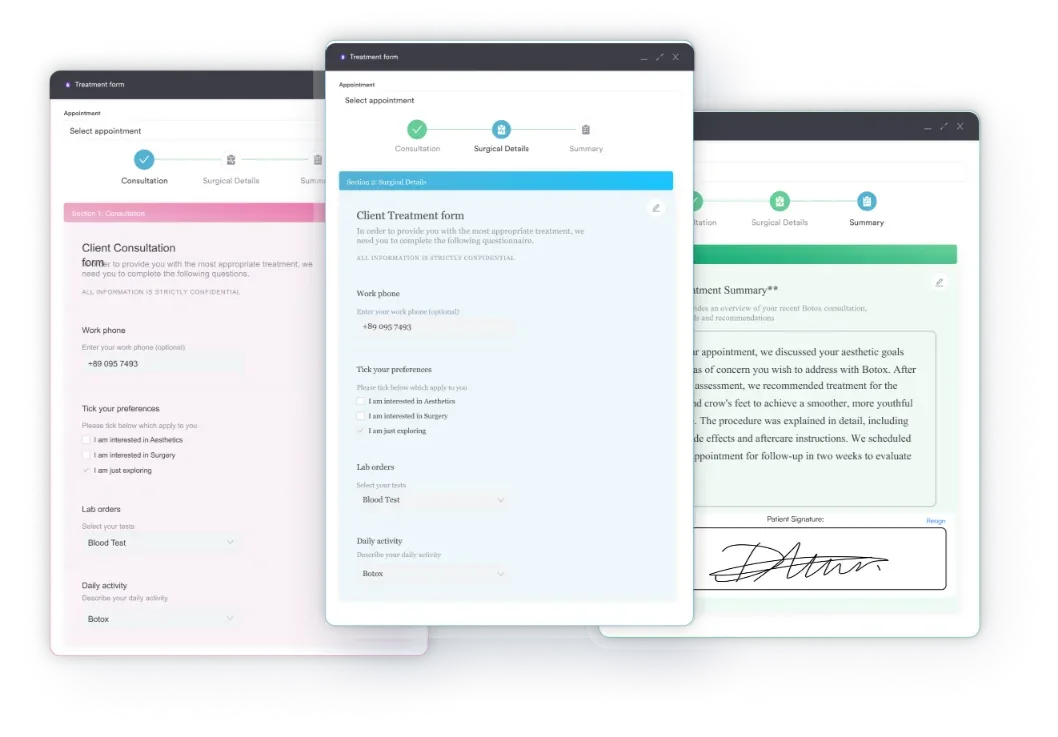
These elements support a clean 23650 claim:
Missing the anesthesia statement is the single most common audit finding for this code. A note that records the technique but says nothing about anesthesia lets the payer assume anesthesia was used. That assumption triggers a downcode or a denial.
The OIG Work Plan and MAC audit reports repeatedly flag shoulder dislocation codes for billing irregularities. These five errors recur most often with CPT 23650.
Run a quarterly audit of your 23650 claims against your MAC’s local coverage determination. Filter for claims returned for a missing modifier or for ICD-10 specificity. Both edit types are preventable with a pre-submission check, so track how many you see each quarter.
The 2365x family covers the full spectrum of shoulder dislocation treatment. Use the AAPC Codify CPT lookup to confirm current descriptors and any annual changes.
Use a CPT-to-ICD crosswalk tool to confirm medical necessity across the family. Crosswalk checks matter most when imaging finds a greater tuberosity fracture after the reduction. That finding moves the claim to moves the claim to 23670 when the shoulder goes on to open treatment.
Most 23650 denials start after the clinical work is finished, in the handoff between the note and the submitted claim. Three workflow failures drive the majority of them:
Practice management software like Pabau handles these checks at the point of claim creation. Our claims management software validates CPT and ICD-10 pairs and flags a missing laterality modifier before submission. It also surfaces the anesthesia field during coding review, so the coder can confirm 23650 in seconds.
For HIPAA-compliant billing, that means fewer manual checks and a shorter denial-resolution cycle. Automated recalls and follow-up scheduling keep the record current across a multi-visit musculoskeletal episode.
Post-reduction instructions go out from the same record, so sling advice and follow-up dates reach the patient without a second system. Strong patient education also cuts avoidable calls to the front desk.
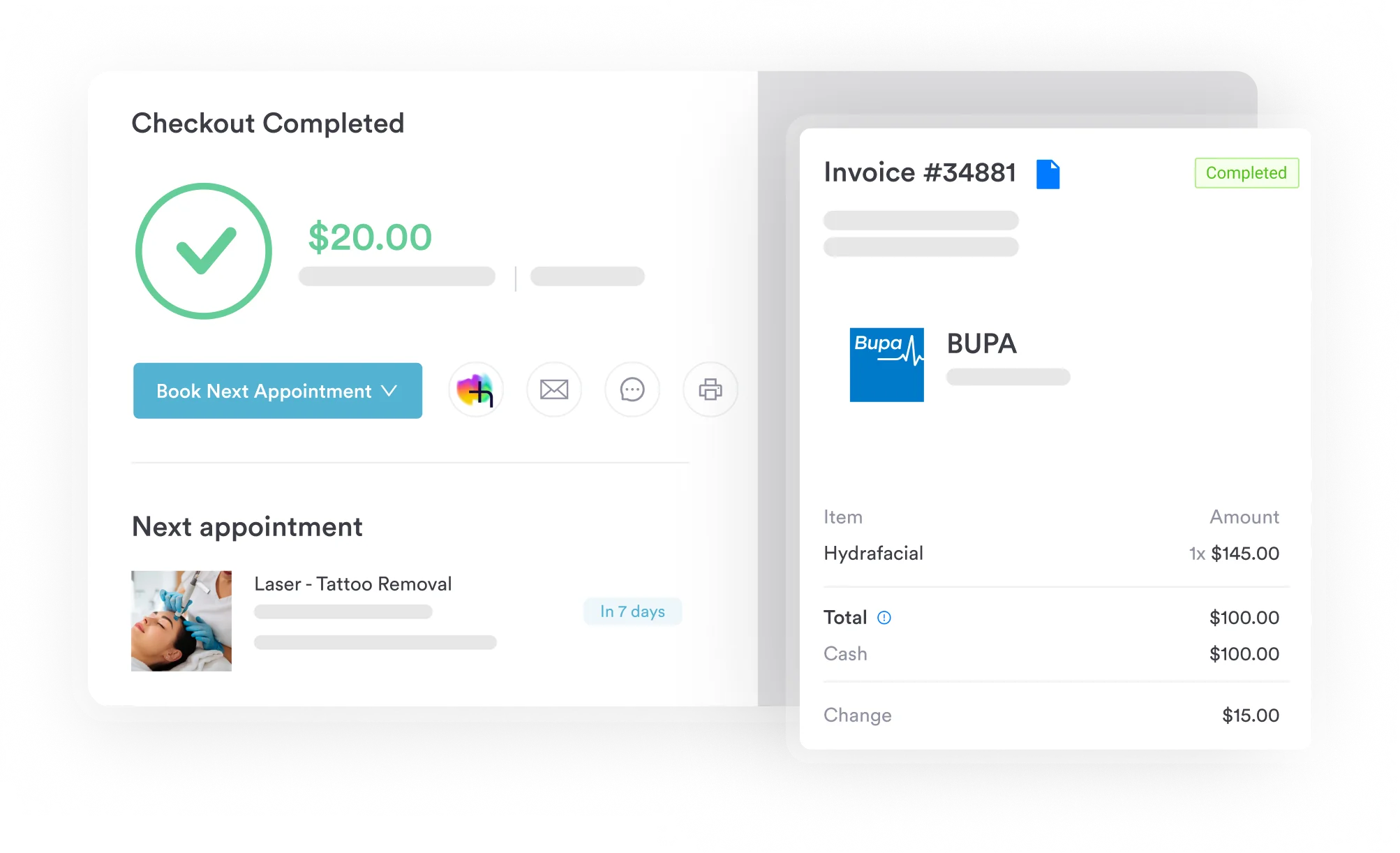

Pabau’s claims management software checks CPT and ICD-10 pairs, flags missing modifiers, and catches errors before the claim leaves your practice. See how it works for orthopedic and emergency medicine teams.

Three checks decide whether a 23650 claim pays on the first pass. Confirm the record states that no anesthetic was used, attach -RT or -LT, and code the specific side and direction.
Get those right and 23650 is one of the cleanest codes in the musculoskeletal section. Miss one and the claim lands in a queue that costs more to work than the payment is worth.
The practices that stay out of that queue build the checks into the workflow rather than the coder’s memory. Book a demo to see how Pabau catches missing modifiers before a shoulder claim leaves your practice.

Coding a humerus fracture that has not healed? S42.302K walks through the documentation a nonunion claim needs.
Billing a more complex humeral procedure? CPT code 24410 covers the reporting rules for multiple osteotomy of the humerus.
Handling spinal procedure claims as well? CPT code 22600 sets out the billing rules for posterior cervical arthrodesis.
Coding a subluxation rather than a full dislocation? S33.140A shows how partial displacement is coded and documented.
CPT code 23650 covers closed treatment of a shoulder dislocation with manipulation, performed without anesthesia. The physician manually reduces the dislocated glenohumeral joint while the patient stays conscious. Techniques include external rotation, the Cunningham method, and the modified Milch maneuver. No incision or anesthetic agent is involved.
The 2026 Medicare non-facility rate for CPT 23650 is approximately $434, and the facility rate is approximately $368. Both figures apply the 2026 conversion factor of $33.4009 to total RVUs of 12.99 and 11.01. Actual payment varies by locality, GPCI adjustment, and payer contract. Verify your rate with the CMS fee schedule lookup.
CPT 23650 applies when the reduction is performed without any anesthetic agent. CPT 23655 applies when the reduction requires IV sedation, a regional nerve block, or general anesthesia. Billing 23655 when no anesthesia was given counts as upcoding and creates OIG audit exposure. The note must state whether anesthesia was used.
The most commonly required modifiers are -RT and -LT, which record the side treated. Modifier -50 covers a bilateral procedure, though some MACs want separate line items for each side instead. Modifier -59 overrides an NCCI bundling edit when distinct services are documented. If an E/M service happens the same day, modifier -25 goes on the E/M code.
Yes. CPT 23650 is frequently billed in the emergency department when a physician reduces a shoulder without sedation. In a hospital ED the facility rate applies, which is roughly $368 nationally for 2026. The physician bills the reduction separately from any documented E/M service, which needs modifier -25 on the E/M code.
The most commonly paired codes are S43.014A and S43.015A for anterior dislocation of the right and left humerus. Posterior dislocations use S43.024A on the right and S43.025A on the left. S43.036A covers an inferior dislocation when the side is not specified. Reserve S43.006A for records that genuinely lack laterality.
The record needs the clinical indication and dislocation type, the reduction technique used, and an explicit statement that no anesthesia was given. It also needs pre- and post-reduction neurovascular checks, post-reduction imaging results, and the immobilization method applied. The absence-of-anesthesia statement is the element auditors find missing most often.



