



HCPCS code E0198: Water pressure pad billing guide
HCPCS code E0198 is a water pad for a standard mattress HCPCS code E0198 is the ...

Last Updated: Oct 13, 2026

CPT code 21432 describes open treatment of craniofacial separation (LeFort III type), with wiring and/or internal fixation.
The code belongs to the LeFort III ladder 21431-21436, not to a general facial-bone fracture range.
Fixation is part of the descriptor, so an open LeFort III repair without wiring or internal fixation does not meet the definition of 21432.
21432 carries a 90-day global period and 20.12 total RVUs, worth roughly $672 at the 2026 national rate.
Pair the claim with S02.413A or S02.413B, the ICD-10-CM codes for LeFort III fracture, or expect a medical-necessity denial.
Practice management software like Pabau validates code combinations and tracks prior authorization, which cuts denials on high-complexity surgical codes.
CPT code 21432 describes the open treatment of craniofacial separation (LeFort III type); with wiring and/or internal fixation. That is the descriptor published by the American Medical Association’s CPT Editorial Panel in the AMA CPT code set.
Two elements of it carry the whole code. The injury must be a LeFort III craniofacial separation, and the repair must involve wiring or internal fixation.
A LeFort III fracture separates the entire midface from the skull base. The fracture line runs through the nasofrontal suture, the medial and lateral orbital walls, and the zygomatic arches.
Patients typically arrive after high-energy trauma, often with an elongated face and a mobile midface. Repair is performed by oral and maxillofacial surgeons, plastic surgeons, and craniofacial specialists.
Surgeons reach the fracture through intraoral buccal sulcus incisions, or through subciliary, transconjunctival, or coronal approaches. The segments are reduced and then held with wires, miniplates, or screws.
Wiring for a condition other than a fracture belongs to 21497, so it never stands in for this code. Practices billing this work regularly run it through plastic surgery EMR software that keeps the operative detail attached to the claim.
21432 is the second rung of a five-code ladder for LeFort III craniofacial separation. The ladder runs 21431, 21432, 21433, 21435, and 21436.
Selection turns on two questions. Was the treatment closed or open, and what made an open repair complicated? The operative report has to justify the rung you bill.
RVU figures reflect the 2026 national unadjusted values. The allowable column applies the CY2026 conversion factor of $33.4009 for clinicians who are not qualifying APM participants. Your own payment will differ once the geographic practice cost index is applied.
Coders often assume the higher code number pays more. In this family it doesn’t. 21433 carries 45.70 total RVUs, while 21435 carries 37.77. A comminuted LeFort III repaired through multiple approaches is valued above one stabilized with a halo device.
Choosing by code number instead of by operative detail can cost several hundred dollars a case. It can also expose the practice to an upcoding finding.
Three lookalike errors account for most misrouted LeFort claims. The first is 21430, which is not a valid CPT code. Nasomaxillary complex fracture treated by closed reduction is 21345, and it belongs to the LeFort II ladder.
The second is treating 21432 as a general craniofacial fracture code, when the descriptor is tied to LeFort III separation. A complicated malar area fracture is coded from 21365 instead. The third is billing a LeFort I or LeFort II injury from the LeFort III range.
21432 covers an uncomplicated open LeFort III repair held with wires, plates, or screws. 21435 applies only when the case is complicated and external or internal fixation techniques are used. Those include a head cap, a halo device, or intermaxillary fixation. Bone grafting moves the case to 21436, not 21435.
Billing 21435 without documented complexity and fixation hardware is an upcoding error that the Office of Inspector General looks for. Verify the distinction against the AAPC Codify CPT lookup when in doubt.
The diagnosis that supports 21432 is a LeFort III fracture, coded from the S02.41 subcategory. S02.413 is not billable on its own and always takes a seventh character. That character records the encounter and, for an initial encounter, whether the fracture was open or closed.
Broader S02 codes such as S02.8 do not describe craniofacial separation and invite a medical-necessity denial. The same seventh-character discipline runs through every fracture code in the S chapter, including S42.302K.
Payers deny claims where the diagnosis is less specific than the operative report. A CT report that describes midface separation supports S02.413, so a generic facial fracture code on the claim is a mismatch.
Verify codes against the CDC/NCHS ICD-10-CM web tool for the applicable fiscal year before submission.
Medicare pays for 21432 through the Physician Fee Schedule formula. Each RVU component is adjusted by the geographic practice cost index for your locality. The adjusted total is then multiplied by the annual conversion factor.
Figures below are the 2026 national unadjusted values, and you should confirm them in the CMS Physician Fee Schedule lookup tool before contracting.
The two conversion factors come from the CY2026 Physician Fee Schedule final rule. Qualifying participants in advanced alternative payment models receive the higher figure.
That allowable pays the surgeon only. The anesthesia provider bills separately, and radical surgery on the facial bones maps to 00192. Commercial payers set their own schedules, usually as a percentage of the Medicare allowable, so check your contract for the rate that applies.
Before you finalize a fee schedule for CPT 21432, pull the MPFS data for your own MAC jurisdiction. Payment moves meaningfully with the Geographic Practice Cost Index. Also check which conversion factor applies to your clinicians, because the QP and non-QP figures differ by about $3 per case at this RVU level.
CPT 21432 carries a 090 global surgery indicator, which is a 90-day major surgery global period. Routine post-operative care in that window is bundled into the surgical fee. Knowing what sits inside and outside the window prevents both under-collection and compliance exposure.
Billing an evaluation and management visit during the global period without a modifier is a frequent denial trigger. So is billing complication management without modifier 78. Both are routinely recouped on audit.
Modifier selection for 21432 changes both payment and audit exposure. Every modifier has to be backed by something specific in the operative or clinical record. Panfacial cases often carry a second repair in the same session, such as session, such as 21452, which is where modifier 51 comes in.
Modifier 22 is the one most often misapplied on this code. It needs an operative report that explains what made the case harder than a typical LeFort III repair. Calling the procedure “difficult” is not enough. Most payers ask for a cover letter and read the full operative note before releasing extra payment.
Medicare rarely requires prior authorization for 21432, but commercial payers increasingly do. Requirements shift by plan year and contract. Maintaining HIPAA-compliant billing workflows includes tracking authorization status before any elective craniofacial case reaches the operating room.
The operative report decides whether a 21432 claim survives. A coder cannot assign this code without reading it, so the clinical and billing teams need the note to capture every required element. Using digital forms built for surgical documentation keeps pre-operative checklists and consent records in place before the day of surgery. A clean claim rate below the practice benchmark usually points at one recurring coding or eligibility error. Where a payer still requires a paper claim, the practice needs the current revision of the form. A clean claim rate below the practice benchmark usually points at one recurring coding or eligibility error. Where a payer still requires a paper claim, the practice needs the current revision of the form.
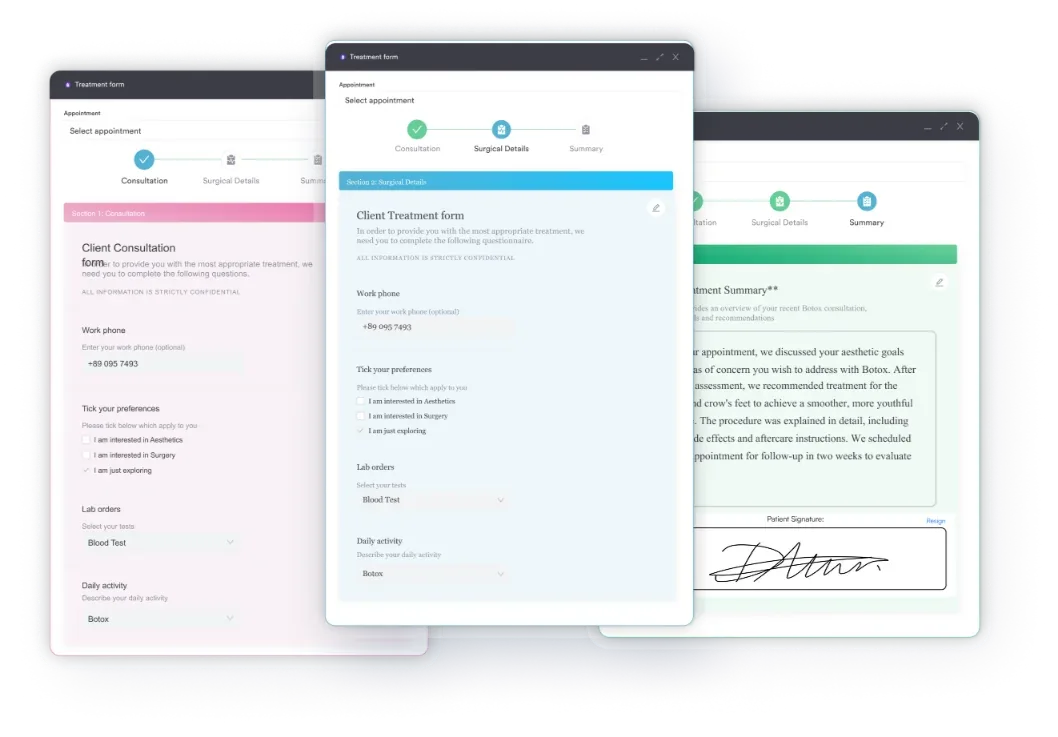
Facial trauma records get requested long after discharge. Insurers, attorneys, and payer auditors ask for the same operative note and imaging, so keep the two together from the start.
Practices with steady trauma volume handle those requests in medico-legal software instead of digging through paper files.
21432 denies more often than lower-complexity facial fracture codes. The documentation burden is heavier, and the neighboring codes are easy to reach for by mistake. These are the failure points seen most often in AAPC coding discussions and OIG audit guidance.
Run a quarterly internal audit of your LeFort claims. Pull the last 20, check each code against the operative report, and confirm the ICD-10 seventh character matches the documented fracture type. Pay particular attention to any claim coded 21433, 21435, or 21436, since those carry double the RVUs of 21432 and draw the most payer scrutiny.
A LeFort III claim touches more hands than a standard outpatient encounter. Pre-authorization tracking, operative report review, modifier selection, ICD-10 pairing, global period monitoring, and audit defense all sit on the same case. Handling each step manually compounds the error rate.
Practice management software like Pabau brings those steps into one system. Its claims management software flags a missing prior authorization before the procedure, and validates CPT and ICD-10 pairings against NCCI edit logic.
Missing detail in the operative note surfaces before the claim goes out. Teams get fewer denials, shorter reimbursement cycles, and an audit trail they can defend. Joining billing to clinical documentation also removes the rekeying step between the note and the claim.
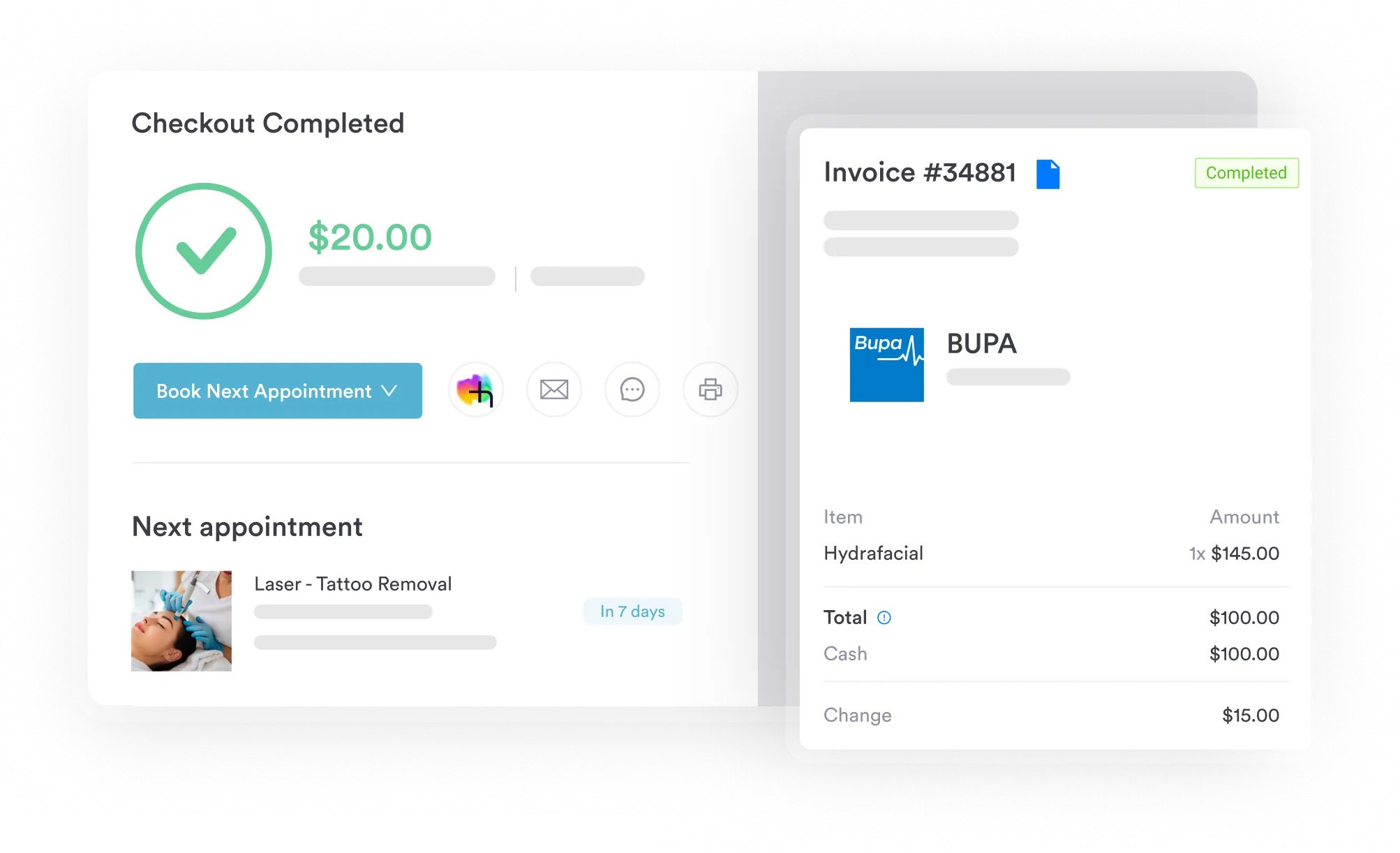
For oral and maxillofacial surgery practices, the practical wins are specific. You can track global period end dates across a whole caseload.
You can flag post-op visits that need a modifier review, and produce payer-specific authorization packets from one place. That takes a large share of the administrative load off high-acuity surgical codes.

Pabau’s practice management platform tracks prior authorization status and validates CPT and ICD-10 code combinations. It also flags documentation gaps before claims go out, so billing teams spend less time on rework.

CPT 21432 is a narrow code with a wide margin for error. It applies to one injury, a LeFort III craniofacial separation, and one repair, an open reduction held with wiring or internal fixation. Miss either element and the claim is wrong before it is submitted.
The 90-day global period, the RVU jump to 21433 and 21436, and the S02.413 diagnosis all rest on one document. Write the operative report so a coder can pick the rung without guessing, and the rest of the claim follows.
Pabau helps surgical practices track prior authorization, validate code pairings, and build the audit-ready trail these codes demand. To see how it fits your billing workflow, book a demo.

Coding a finger puncture wound instead? ICD-10 code S61.238A guide covers this code for a puncture wound without nail damage on a non-index finger.
Billing a graft in the same maxillofacial session? 21215 sets out the documentation and fee schedule detail for mandibular bone grafting.
Coding a head injury alongside the facial fracture? S06.6X1D explains the seventh characters and the loss-of-consciousness detail payers look for.
Want the Medicare rules behind these RVU figures? Medicare billing walks through enrollment, claim submission, and the reimbursement cycle.
CPT code 21432 reports open treatment of craniofacial separation (LeFort III type), with wiring and/or internal fixation. It applies when a LeFort III fracture has separated the midface from the skull base and the surgeon opens the fracture to reduce it. The segments are then stabilized with wires, miniplates, or screws. Fixation is part of the descriptor, so an open repair without it does not meet the definition.
CPT 21432 carries 20.12 total RVUs in 2026, made up of 8.60 work, 9.93 practice expense, and 1.59 malpractice. At the CY2026 conversion factor of $33.4009 for non-QP clinicians, that is about $672.03 nationally. Qualifying APM participants are paid at $33.5675. Your locality figure will differ once the GPCI is applied, so verify in the CMS PFS lookup tool before contracting.
The diagnosis that supports CPT 21432 is a LeFort III fracture, coded S02.413 with a seventh character. Use S02.413A for an initial encounter with a closed fracture and S02.413B for an open fracture. Subsequent encounters take D, G, or K depending on healing. S02.411 and S02.412 describe LeFort I and LeFort II fractures and pair with different CPT ladders.
No. 21430 is not a valid CPT code, and claims reporting it will reject. Closed treatment of a nasomaxillary complex fracture (LeFort II type) is CPT 21345. The LeFort III range begins at 21431 for closed treatment and runs to 21436. If a coding sheet or template in your system still lists 21430, correct it before the next claim batch goes out.
All four describe open treatment of a LeFort III craniofacial separation, and the complexity finding separates them. 21432 is the uncomplicated repair with wiring or internal fixation. 21433 covers a complicated repair through multiple surgical approaches. 21435 covers a complicated repair using internal or external fixation such as a head cap, halo, or intermaxillary fixation. 21436 is the one that includes bone grafting.
CPT 21432 has a 090 global surgery indicator, which means a 90-day major surgery global period. Routine post-operative care inside that window is bundled into the surgical fee. Separately billable services need the right modifier. Use 24 for an unrelated E/M visit, 78 for a return to the OR for a complication, and 79 for an unrelated procedure.
Medicare does not typically require prior authorization for CPT 21432, but many commercial and Medicaid plans do for elective craniofacial surgery. Requirements vary by payer and plan year. Emergency craniofacial repair is generally exempt when the emergent nature is documented in the record. Always confirm with the specific payer before an elective case is scheduled.



