ICD-10 Code S42.444P: Medial epicondyle fracture, right humerus
ICD-10 Code S42.444P: full descriptor and code validity ICD-10 Code S42.444P car...

Last Updated: Oct 13, 2026
Billable Code Specific Code
Z73.2 is the billable ICD-10-CM code for lack of relaxation and leisure.
According to the Centers for Medicare and Medicaid Services (CMS), Z-codes in the Z73 block represent factors influencing health status that aren't classified as diseases but remain clinically significant for comprehensive documentation. Clinicians documenting work-life imbalance, occupational stress, or chronic overwork frequently need this code as a secondary diagnosis alongside the primary reason for the encounter. Documentation that arrives after the claim raises audit risk even when the coding was correct. Practices still filing on paper carry this code on the CMS-1500 form, in the service lines.
Let Pabau's smart automation suggest the right codes, reduce claim denials, and keep your practice compliant—effortlessly.
Automate repetitive tasks and focus on what matters most—your patients.
Reduce coding errors and ensure compliance with the latest regulations.
Clean claims, fewer denials, and faster reimbursements.
Powerful insights and reporting to help your practice thrive.
HIPAA compliant SOC 2 certified GDPR-compliant Trusted by 4,000+ clinics worldwide

ICD-10 Code Z73.2 describes lack of relaxation and leisure, a billable Z-code under the Z73 category (Problems related to life management difficulty)
Z73.2 is POA (Present on Admission) exempt and valid for HIPAA-covered transaction submission in the current fiscal year
Use Z73.2 as a secondary diagnosis code alongside a primary diagnosis; it does not function as a standalone primary code
Practice management software like Pabau supports secondary Z-code capture, ensuring Z73.2 is recorded and submitted alongside primary diagnoses in a single workflow
ICD-10 Code Z73.2 is a billable ICD-10-CM diagnosis code with the official descriptor “Lack of relaxation and leisure.” It classifies a patient’s insufficient rest or leisure time as a health-relevant factor, not a primary disease. The CDC/NCHS ICD-10-CM tool confirms Z73.2 is valid for submission in the current fiscal year as a HIPAA-covered transaction.
Z73.2 sits within Chapter 21 of ICD-10-CM (Factors influencing health status and contact with health services, codes Z00-Z99). As a Z-code, it documents circumstances affecting a patient’s health without being a disease or injury in its own right.
Payers treat it as contextual information rather than a condition requiring treatment, which is why it nearly always functions as a secondary code.
The Z73 block groups together ICD-10 codes that document lifestyle and behavioral factors creating health risk or complicating care. None of the Z73 codes represent clinical disorders. They describe circumstances relevant to health management that a clinician has identified and documented as contextually significant for the encounter.
Z73 carries an Excludes2 note for problems related to socioeconomic and psychosocial circumstances (Z55-Z65). Excludes2 means “not included here”: the excluded codes describe a different condition, so a Z73 code and a Z55-Z65 code can be reported together on the same claim when both apply.
The two blocks are easy to confuse, since both cover non-disease factors affecting a patient’s health. Confirm which category the documented circumstance falls under before assigning a code. Inadequate or absent social support, for example, belongs on the Z55-Z65 side under Z60.8 rather than in the Z73 block.
The WHO’s ICD-10 classification places these factors in Chapter 21 because they affect health status without being pathological diagnoses. Understanding the full Z73 subcategory helps coders select the most precise sibling code and avoid the common mistake of defaulting to Z73.3 (Stress NEC) when a more specific code applies.
The same specificity question applies on the F-code side. Coders default to a general stress code when a more precise diagnosis.
Z73.0 and Z73.2 are closely related but not interchangeable. The distinction matters for code specificity and documentation support. Z73.0 (Burn-out) applies when a patient presents with chronic, exhaustive depletion, typically from sustained occupational or caregiver demands.
Research on burnout in healthcare settings describes this as a state of emotional exhaustion and depersonalization that goes beyond simple fatigue. Z73.2 applies when the documented issue is the absence of sufficient rest and leisure time, without the full exhaustion picture.
The most common coding error involving ICD-10 Code Z73.2 is confusing it with F43 codes (Reaction to severe stress and adjustment disorders). They serve fundamentally different purposes in the coding hierarchy. The table below compares Z73.2 with F43.2, the broader adjustment disorder category.
Per ICD-10-CM Official Guidelines Section I.C.21, Z-codes may only be used as the primary diagnosis when no other condition is the reason for the encounter. In practice, Z73.2 is nearly always appended to a primary F-code, preventive visit code, or another diagnosis that initiated the encounter.
According to the AAPC ICD-10-CM code reference, Z73.2 codes the circumstance (lack of rest) rather than the condition (stress disorder).

Pabau connects diagnosis code capture to billing submission in one platform, so secondary codes like Z73.2 are never missed. See how it works for wellness and mental health practices.

Z73.2 applies when the clinical note establishes that a patient’s lack of rest or leisure time is a relevant factor in the encounter, even if it is not the primary reason for the visit. The following scenarios are the most common contexts where appending Z73.2 is appropriate.
Z73.2 should not be used as the sole code on a claim. Every encounter requires a primary code that justifies the visit. Z73.2 enriches the clinical record by capturing a documented contributing factor.
Before appending Z73.2, confirm the clinical note explicitly references the patient’s lack of relaxation or leisure as relevant to the encounter. A generic note about stress alone is not sufficient; the documentation should specifically identify insufficient rest or leisure time as a contributing health factor.
Z73.2 is POA exempt, meaning the Present on Admission indicator is not required for this code on inpatient claims. However, the clinical documentation must still support the code’s use for audits and payer review. Using digital intake forms during the encounter workflow helps standardize the collection of lifestyle factors, including leisure and recovery patterns, before the clinician’s note is finalized.
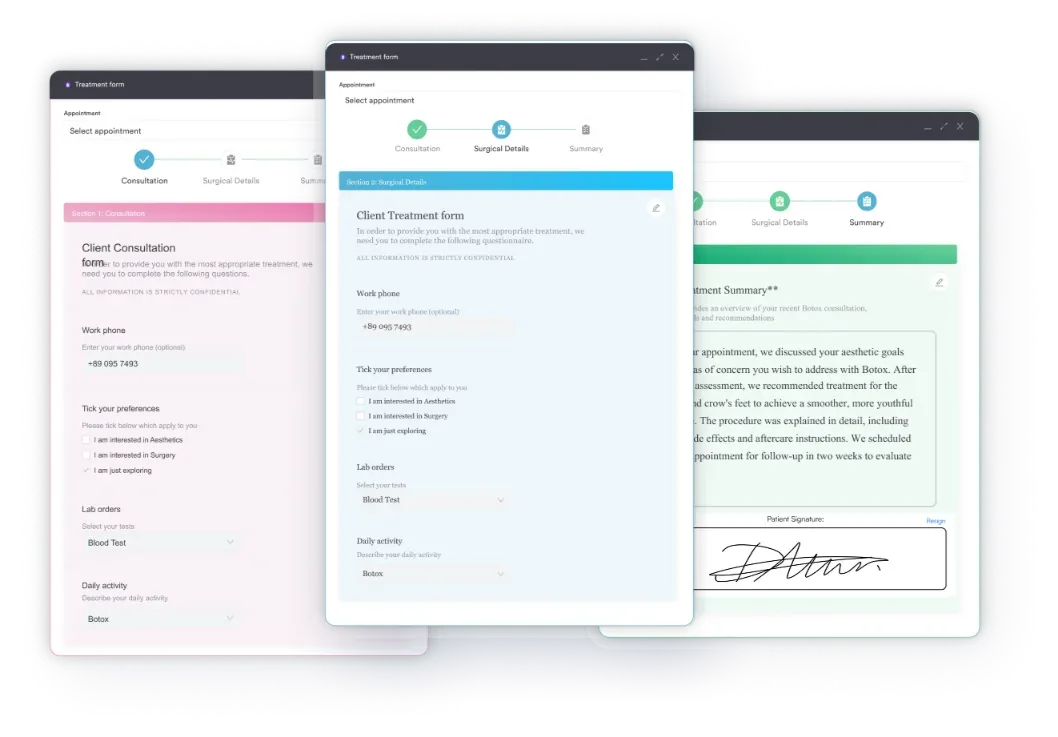
The following checklist reflects what the clinical record must contain to support Z73.2 per ICD-10-CM coding guidelines and documentation best practices. Maintaining HIPAA-compliant documentation practices is equally essential when capturing and storing these notes.
For encounters involving mental health assessment, a structured psychiatric evaluation documentation template helps ensure all relevant contributing factors, including Z73.2 circumstances, are captured systematically rather than as retrospective additions. For encounters that don’t need a full psychiatric workup.
ICD-10-CM replaced ICD-9-CM in the United States on October 1, 2015. Z73.2 maps approximately to V69.5 in ICD-9-CM, which carried the descriptor “Behavioral insomnia of childhood” in some references, though the code’s primary application overlapped with lifestyle and health behavior documentation. The transition to ICD-10-CM introduced significantly more granular Z-code classification.
For ICD-9 to ICD-10 crosswalk lookups, CMS’s official coding resources provide the authoritative General Equivalence Mappings. ICD-9 crosswalks are approximate, so always verify against those mapping files before a claims-level decision.
Standalone ICD-10 lookup tools confirm that Z73.2 exists, but they don’t help clinicians capture it systematically during encounters. That’s the common problem: Z73.2 is known but not coded, because there is no structured place to record it alongside the primary diagnosis before the claim is submitted.
Pabau’s mental health EMR functionality supports secondary Z-code capture directly within the clinical note, so Z73.2 is attached to the encounter record at the point of documentation rather than added retrospectively. The platform’s client records module allows clinicians to document contributing lifestyle factors alongside primary diagnoses in a structured format, reducing the likelihood of omission.
ICD-10 Code Z73.2 captures a clinically relevant but frequently underdocumented factor: the patient’s lack of relaxation and leisure. As a billable, POA-exempt secondary code under the Z73 category, it adds specificity to wellness, occupational health, and behavioral health encounters without requiring a primary coding role.
The key discipline is documentation: the clinical note must explicitly connect the leisure deficit to the encounter before Z73.2 can be supported on audit.
Practices looking to improve Z-code capture rates can connect documentation to billing in a single workflow. Book a demo to see how Pabau supports secondary diagnosis code documentation from the clinical note through to the submitted claim.

Coding a discontinued diagnostic radiopharmaceutical? satumomab pendetide billing guide It covers HCPCS code A4642 and why the product it names was withdrawn from the market.
Documenting insomnia alongside a life management difficulty code? F51.01 covers primary insomnia, a common companion finding when a Z73 encounter includes disrupted sleep.
Need a catch-all code for an unlisted surgical supply? surgical supply miscellaneous guide It covers HCPCS code A4649 and the three factors that decide whether a claim gets paid.
Z73.2 is a billable diagnosis code that documents lack of relaxation and leisure as a health-relevant contributing factor, appended as a secondary code in wellness, occupational health, and behavioral health encounters.
Yes. Z73.2 is billable and valid for HIPAA-covered transaction submission in FY 2026. It is also POA exempt.
Z73.0 (Burn-out) describes chronic exhaustive depletion, while Z73.2 describes insufficient downtime without reaching full burnout. Both can be coded together if the encounter documents both.
Use F43 when stress meets clinical diagnostic criteria for a disorder. Use Z73.2 when lack of rest is a documented lifestyle factor below that threshold. They can coexist, with F43 as primary and Z73.2 as secondary.
Generally no. Per ICD-10-CM guidelines, Z73.2 nearly always functions as a secondary code appended to the primary diagnosis that initiated the visit.
Yes. When a clinician documents during a wellness exam that a patient’s lack of leisure is a relevant health factor, Z73.2 is appended as a secondary code alongside the wellness visit code (e.g. Z00.00).