ICD-10 Code Y76.0: Diagnostic obstetric and gynecological devices
ICD-10 Code Y76.0: Definition and billable status ICD-10 Code Y76.0 is a valid, ...

Last Updated: Oct 23, 2026
Billable Code Specific Code
S76.202D is the billable ICD-10-CM code for unspecified injury of adductor muscle, fascia and tendon of left thigh, subsequent encounter.
Let Pabau's smart automation suggest the right codes, reduce claim denials, and keep your practice compliant—effortlessly.
Automate repetitive tasks and focus on what matters most—your patients.
Reduce coding errors and ensure compliance with the latest regulations.
Clean claims, fewer denials, and faster reimbursements.
Powerful insights and reporting to help your practice thrive.
HIPAA compliant SOC 2 certified GDPR-compliant Trusted by 4,000+ clinics worldwide

ICD-10 Code S76.202D is a billable diagnosis code for unspecified injury of the adductor muscle, fascia, and tendon of the left thigh at a subsequent encounter.
The 7th character ‘D’ signals that the patient is receiving routine care after the initial treatment episode, not that the injury is new or re-injured.
Coding S76.202D instead of S76.202A after the initial visit is one of the most commonly cited errors in musculoskeletal injury claim reviews.
Pabau’s claims management software helps physical therapy and sports medicine clinics submit musculoskeletal injury codes accurately to reduce denials.
ICD-10 Code S76.202D describes an unspecified injury of the adductor muscle, fascia, and tendon of the left thigh at a subsequent encounter. It is valid for use under ICD-10-CM, which replaced ICD-9-CM on October 1, 2015, per a Centers for Medicare and Medicaid Services (CMS) mandate.
The adductor muscle group spans the inner thigh and includes the adductor longus, adductor brevis, adductor magnus, gracilis, and pectineus. Injuries to this group are common in athletes and active patients, and follow-up coding must reflect the phase of care, not just the anatomy. Clinically, an adductor injury presents as inner-thigh or groin pain, so the same presentation is sometimes recorded against a groin strain ICD-10 code or a broader left thigh pain ICD-10 code before the documentation is refined to S76.202D. This reference covers the 7th character rules, code hierarchy, documentation requirements, adjacent codes, and billing guidance for sports medicine and physical therapy practices. Adjustment and remark codes on the ERA separate a contractual write-off from a genuine denial. Accounts receivable aging shows which codes are slow to pay long before anyone calls it a denial problem.
Understanding where ICD-10 Code S76.202D sits in the classification hierarchy helps coders apply it correctly and catch documentation gaps before claims go out.
| Code Level | Code | Description |
|---|---|---|
| Block | S70-S79 | Injuries to the hip and thigh |
| Category | S76 | Injury of muscle, fascia and tendon at hip and thigh level |
| Subcategory | S76.2 | Injury of adductor muscle, fascia and tendon of thigh |
| Code | S76.202 | Unspecified injury of adductor muscle, fascia and tendon of left thigh |
| Billable code | S76.202D | …subsequent encounter |
S76.202 is not billable on its own. A 7th character is always required to complete the code. The three valid 7th characters for S76.202 are A (initial encounter), D (subsequent encounter), and S (sequela). Without a 7th character, the claim will reject at the payer level before adjudication.
Coders working in chiropractic and physical therapy settings often see denials rooted in this hierarchy step. Many EHR systems allow a partial code to pass through internal validation, only for the payer to reject it on submission. Checking the full 7-character string before billing stops that from happening.
The 7th character is where most musculoskeletal injury coding errors occur. Getting it right requires understanding the clinical definitions, not just the code structure.
According to the ICD-10-CM Official Guidelines for Coding and Reporting, the three characters each carry a distinct meaning:
For ICD-10 Code S76.202D specifically, the clinical picture is a patient who has already been evaluated and treated for an unspecified left-thigh adductor injury and is now returning for ongoing rehabilitation, physical therapy, or monitoring. The injury itself is not new at this visit.
A common misconception: “subsequent encounter” does not mean the second visit. It means the phase of care has shifted from acute active treatment to routine aftercare. A patient could attend five visits under S76.202A if each one involves new clinical decision-making, then transition to ICD-10 Code S76.202D once care becomes rehabilitative and routine.
Document the phase of care clearly in your clinical notes. Phrases like ‘patient presenting for follow-up physical therapy’ or ‘continuing rehabilitative care for left adductor strain’ directly support the ‘D’ suffix and reduce audit risk. Vague notes that could read as a new acute evaluation invite coding disputes.
Payers auditing claims coded with the subsequent encounter suffix look for specific language in the clinical record. Missing documentation is the most common reason subsequent encounter claims are denied or clawed back after the fact.
Your clinical records and intake documentation should clearly support each of the following elements:
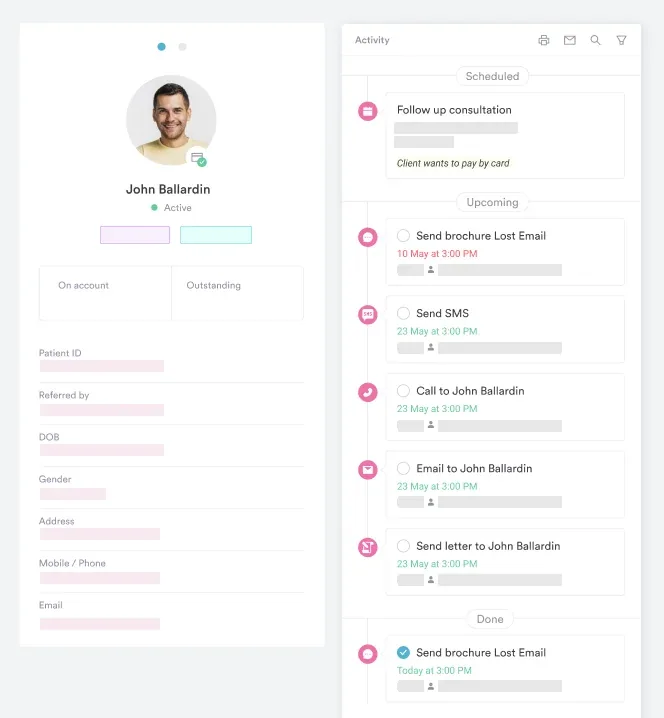
Physical therapy practices managing compliance for physiotherapy services should build these documentation elements into their SOAP note templates. Pulling them from memory at the point of care creates inconsistency across providers and locations.

Pabau helps physical therapy and sports medicine clinics document subsequent encounters accurately, submit claims with the right ICD-10 codes, and reduce denials from incomplete records.

Knowing the codes adjacent to ICD-10 Code S76.202D helps coders select the right level of specificity and avoid undercoding or overcoding. The table below covers the most frequently referenced codes in the S76.2 subcategory.
S76.209D is a common fallback code, but it should be used rarely. If the clinician has documented left-side involvement, there is no reason to use an “unspecified” laterality code. Using S76.209D when S76.202D is correct can prompt a medical necessity query from payers during audits.
Coders should also check whether a strain-specific code is warranted. Once documentation confirms the injury is a strain (rather than a contusion or unspecified soft-tissue injury), S76.212D applies. Continuing to use an unspecified injury code after the injury type is confirmed reduces coding accuracy and can affect reimbursement for some payers. You can search the full S76 code family via the ICD List free lookup tool or the CDC/NCHS official ICD-10-CM web tool.
Review injury specificity at each encounter. If a physical therapist’s notes now describe the injury as a confirmed adductor strain, the coder should flag this for the treating clinician. Upgrading from an unspecified code to a strain-specific code is not a correction; it reflects new clinical information. Flag and update rather than waiting for the next billing cycle.
S76.202D covers an unspecified adductor injury. Once the record names the injury type, a more specific code replaces it, and the phase-of-care 7th character carries over. Matching the code family to the clinical picture is where the adductor codes most often diverge.
When the note confirms a muscle strain, the strain-specific family applies. The adductor strain ICD-10 code for the left thigh is S76.212, or S76.212D at a subsequent encounter. The right-thigh equivalent is S76.211, or S76.211D. Move the claim to the strain code as soon as “strain” is documented rather than leaving it on the unspecified S76.202D. A documented cut through the adductor muscle, fascia or tendon moves the claim to the laceration branch of the same S76.2 family. For the right thigh at an initial encounter, that code is S76.221A.
Chronic overuse sits outside the S76 injury block entirely. Adductor tendinopathy and adductor tendinitis develop gradually rather than from a single trauma, so an adductor tendinopathy ICD-10 code or an adductor tendinitis ICD-10 code is not S76.202D. These are enthesopathy presentations, coded in the musculoskeletal (M) chapter under the lower-limb enthesopathy family (M76). Because M76 codes use their own laterality digits instead of a 7th character, confirm the exact left or right code in the CDC/NCHS ICD-10-CM web tool before submitting.
The distinction protects reimbursement. Billing an acute injury code like S76.202D for a gradual-onset tendinopathy invites a medical necessity query, because the record describes overuse rather than a datable injury event. Keep traumatic strains in the S76 family and move chronic tendinopathy or tendinitis to M76.
Claims filed with ICD-10 Code S76.202D are valid for dates of service on or after October 1, 2015, and remain billable in the 2026 ICD-10-CM edition. The code is confirmed as a valid billable code with no Type 1 or Type 2 Excludes notes at this level of specificity.
For subsequent encounter visits involving physical therapy or rehabilitation, ICD-10 Code S76.202D is commonly paired with therapeutic procedure CPT codes. Frequently used combinations include:
Always check medical necessity criteria for each CPT-to-ICD-10 pairing with the specific payer before submission. Coverage policies for musculoskeletal rehabilitation vary by plan. The AAPC Codify ICD-10-CM lookup provides crosswalk data to help match diagnosis codes to procedure codes for common payer edits.
Clinics using claims management software for musculoskeletal billing consistently encounter three denial patterns with subsequent encounter codes:
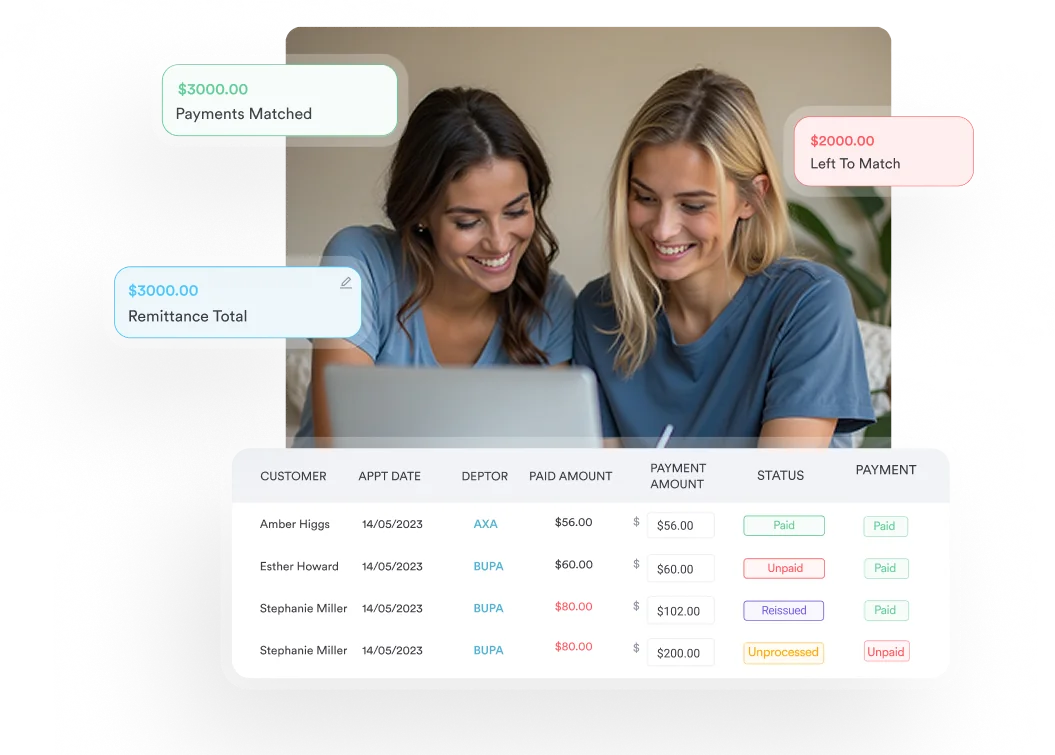
Practices managing ICD-10 code workflows across multiple clinicians benefit from automated workflows that prompt coders to confirm the encounter type and laterality at the point of billing, rather than relying on provider notes to self-correct. You can check fee schedule reimbursement for paired CPT codes using the CMS Physician Fee Schedule lookup.
The transition from S76.202A to ICD-10 Code S76.202D is not triggered by a visit count or calendar date. It is triggered by a clinical decision.
Clinicians managing adductor injuries should clearly document when the care plan shifts from acute management to rehabilitative monitoring. In practice, this often matches the moment the patient is discharged from emergency or urgent care and referred to ongoing physical therapy. But in outpatient and sports medicine settings, the same clinician may manage both phases, making clear documentation even more important.
When reviewing records for code selection, ask three questions:
If the answer to question 1 is no, and to questions 2 and 3 is “rehabilitative” and “yes” respectively, subsequent encounter coding applies. The 7th character rules apply consistently across all traumatic injury codes in the S00-T88 block, so this framework applies to other injury code families as well.
Clinics that have built consistent ICD-10 coding workflows across their clinical team see fewer corrections after submission and lower denial rates on musculoskeletal claims. Building the encounter-type question into every SOAP note template is one of the most effective steps a practice manager can take.
Musculoskeletal claims denied over 7th character errors are almost always avoidable. ICD-10 Code S76.202D is a precise, billable code with clear clinical criteria, and the documentation needed to support it is straightforward once coders and clinicians understand what “subsequent encounter” actually means.
Pabau’s claims management tools help physical therapy and sports medicine practices build documentation standards directly into their workflows, reducing the gap between what clinicians document and what coders need to submit clean claims. To see how it works for musculoskeletal billing, book a demo.

Billing a post-void bladder scan? Post-void residual measurement billing covers measuring post-voiding residual urine or bladder capacity by ultrasound, without imaging.
Billing testicular torsion surgery? Testicular torsion repair billing covers the surgical reduction of testicular torsion, with or without fixation of the other testis, under a 90-day global period.
Coding a prostate biopsy in 2026? Prostate biopsy code replacement explains the deleted prostate biopsy code and the eleven replacement codes sorted by approach and imaging guidance.
ICD-10 Code S76.202D is a billable diagnosis code for an unspecified injury of the adductor muscle, fascia, and tendon of the left thigh at a subsequent encounter. It is used when a patient returns for rehabilitative or follow-up care after the initial active treatment phase for the left-thigh adductor injury has concluded.
Use S76.202D when the patient is receiving routine rehabilitative care, physical therapy, or follow-up monitoring rather than active treatment for an acute injury. S76.202A applies when new clinical decisions are being made about the injury. The switch is not based on visit number but on the phase of care.
S76.202D specifies the left thigh; S76.209D is used when laterality is truly undocumented. If the clinical record identifies the left side, S76.202D is required. Using S76.209D when left-side documentation exists is a coding error that payers may flag during audit.
Yes. S76.202D is confirmed as a valid billable code in the 2026 ICD-10-CM edition and has been valid since ICD-10-CM implementation on October 1, 2015. There are no Type 1 or Type 2 Excludes notes restricting its use at this code level.
Common pairings include 97110 (therapeutic exercises), 97140 (manual therapy), and 97530 (therapeutic activities) for physical therapy visits. Physician follow-up visits may use 99213 or 99214. Always verify medical necessity criteria with the specific payer before submission, as coverage policies vary.
A documented adductor strain of the left thigh is coded S76.212, or S76.212D at a subsequent encounter, not the unspecified injury code S76.202D. Reserve S76.202D for cases where the injury type stays unspecified in the record.
Chronic adductor tendinopathy and tendinitis are overuse conditions rather than acute injuries, so they are not coded under S76.202D. They fall in the musculoskeletal chapter as a lower-limb enthesopathy in the M76 family. Confirm the exact left or right code in the CDC/NCHS ICD-10-CM tool, since M76 codes use laterality digits instead of a 7th character.