ICD-10 code S61.201A: Open wound of left index finger without nail damage
ICD-10 code S61.201A covers a left index finger wound of unstated type ICD-10 co...

Last Updated: Oct 16, 2026
S72 is the non-billable ICD-10-CM code for fracture of femur.
Femur fracture ICD-10 codes all live under category S72 (fracture of femur). Which exact code you assign comes down to three things: where the femur broke, which side, and whether this is the first visit, a follow-up, or a late effect.
Let Pabau's smart automation suggest the right codes, reduce claim denials, and keep your practice compliant—effortlessly.
Automate repetitive tasks and focus on what matters most—your patients.
Reduce coding errors and ensure compliance with the latest regulations.
Clean claims, fewer denials, and faster reimbursements.
Powerful insights and reporting to help your practice thrive.
HIPAA compliant SOC 2 certified GDPR-compliant Trusted by 4,000+ clinics worldwide

Femur fracture ICD-10 codes all fall under category S72, split by where the femur broke (neck, shaft, distal end), the side (right, left, or unspecified), and the encounter type.
Most S72 codes are non-billable until you add full specificity, including a 7th character. The parent code S72.91 needs one before it can be reimbursed.
S72.91XH is the specific billable code for a right femur open fracture (Gustilo-Anderson type I or II) that shows delayed healing at a subsequent encounter.
Pabau’s claims management software helps orthopedic and trauma practices submit femur fracture codes with the correct 7th character, reducing denials.
Every femur fracture ICD-10 code sits under category S72. The system subdivides it by the part of the femur that broke, then by laterality (right, left, or unspecified), then by a 7th character for encounter type and healing. Assign the code by working down those three axes in order. The table below maps the S72 subcategories so you can jump straight to the region you need.
| Femur region | ICD-10-CM subcategory | What it covers |
|---|---|---|
| Head and neck (femoral neck / hip) | S72.0- | Subcapital, transcervical, and other femoral neck fractures |
| Pertrochanteric (intertrochanteric) | S72.1- | Fractures through the trochanteric region |
| Subtrochanteric | S72.2- | Fractures just below the lesser trochanter |
| Shaft (femoral shaft) | S72.3- | Midshaft and diaphyseal fractures |
| Lower end (distal femur) | S72.4- | Supracondylar, condylar, and other distal femur fractures |
| Other fracture of femur | S72.8- | Fractures not classified in the subcategories above |
| Unspecified fracture of femur | S72.9- | Site not documented — S72.90 (unspecified), S72.91 (right), S72.92 (left) |
No S72 code is billable at the subcategory level. You add laterality plus a 7th character before it stands up on a claim. Confirmed initial-encounter examples for a closed fracture on the right side include S72.001A (femoral neck), S72.301A (shaft), S72.401A (distal end), and S72.90XA (unspecified part of the femur). When the location and side aren’t documented, S72.90XA carries the unspecified femur fracture ICD-10 code. The rest of this page focuses on one specific right-femur code within this family, S72.91XH.
ICD-10 code S72.91XH covers a specific and frequently coded scenario in orthopedic and trauma follow-up: an unspecified fracture of the right femur, at a subsequent encounter, where the fracture was open (Gustilo-Anderson type I or II) and healing is progressing more slowly than expected. CMS mandated this code for all HIPAA-covered transactions with dates of service on or after October 1, 2015, replacing the older ICD-9 structure. For orthopedic coders, getting the 7th character right is what separates a clean claim from a denial.
S72.91XH is a billable and specific ICD-10-CM code. The parent code S72.91 (unspecified fracture of right femur) is non-billable on its own; coders must append a 7th character to make it valid for claim submission. Among all the available 7th character options for this code, H is used when three conditions are simultaneously met: the encounter is a follow-up visit (not the initial injury presentation), the fracture involved a breach in the skin (open fracture), and healing is progressing more slowly than expected. For ICD-10-CM diagnostic coding accuracy, understanding what each element of the code string means is essential before submitting any claim.
| Code Element | Meaning |
|---|---|
| S72 | Fracture of femur |
| .91 | Unspecified fracture of right femur |
| X | Placeholder (required for 7th character extension) |
| H | Subsequent encounter, open fracture type I or II, delayed healing |
The 7th character system in ICD-10-CM fracture coding encodes three clinical variables into a single character: the phase of care (initial vs. subsequent vs. sequela), whether the fracture is open or closed, and the healing trajectory. For S72.91 codes, there are 12 available 7th characters. The H character occupies a very specific slot: subsequent encounter, open type I or II, delayed healing.
Delayed healing means the fracture is not progressing through the expected healing timeline. Clinicians and coders should not confuse this with nonunion (where the fracture has stopped healing entirely) or malunion (where bones have healed in a misaligned position). Each has its own 7th character and its own distinct clinical and billing implications.
Getting this distinction documented clearly in the clinical note is what enables the coder to assign H rather than E. If the provider’s note says the fracture is “healing well,” the documentation does not support H. The note must specifically describe slower-than-expected healing, persistent pain at the fracture site, lack of callus formation on imaging, or comparable clinical findings. Strong patient record documentation at every follow-up visit is the first line of defense against a coding error here.
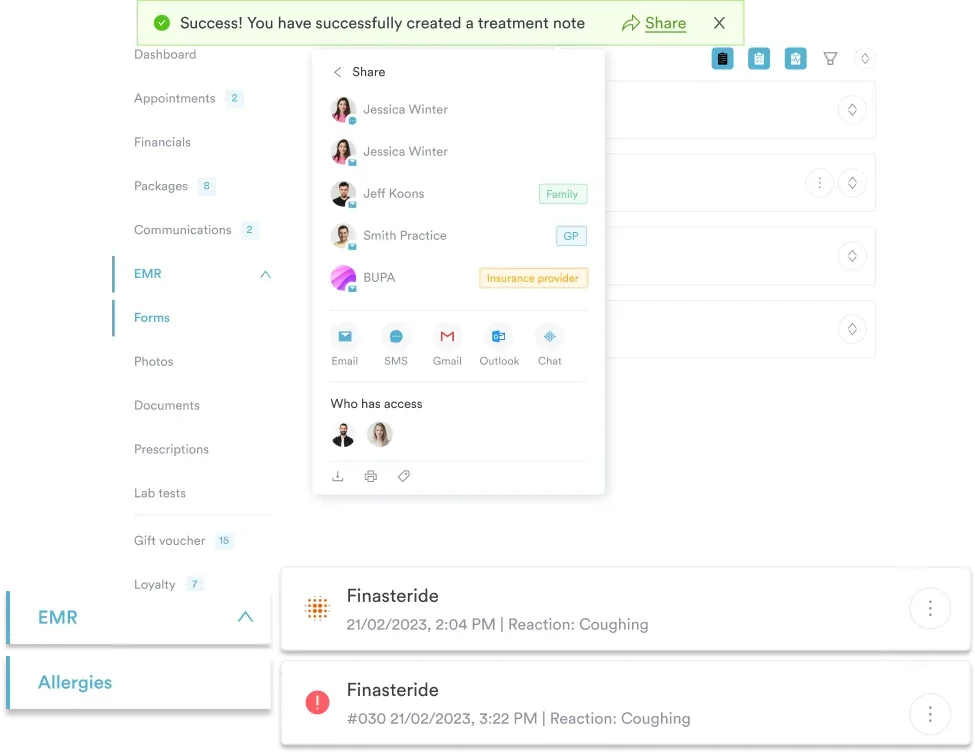
Document delayed healing explicitly in the clinical note. Phrases like ‘fracture site shows insufficient callus formation’ or ‘healing progressing below expected rate at X weeks post-injury’ give the coder a clear basis for assigning the H 7th character rather than the routine healing character E.
Clinics tracking fracture and sprain recovery in Jane often start comparing Jane App alternatives as caseloads grow.
ICD-10-CM’s open fracture typing is built directly on the Gustilo-Anderson classification system. This system grades open fractures by wound size, degree of contamination, and extent of soft tissue damage. For traumatic injury ICD-10 coding, understanding this classification prevents coders from misassigning open fracture types.
| Gustilo-Anderson Grade | ICD-10-CM Designation | Characteristics |
|---|---|---|
| Grade I | Open fracture type I | Wound less than 1 cm; minimal contamination; simple fracture pattern |
| Grade II | Open fracture type II | Wound 1-10 cm; moderate contamination; moderate soft tissue damage |
| Grade IIIA | Open fracture type IIIA | Wound greater than 10 cm; adequate soft tissue coverage despite extensive laceration |
| Grade IIIB | Open fracture type IIIB | Extensive soft tissue loss; periosteal stripping; bone exposure |
| Grade IIIC | Open fracture type IIIC | Vascular injury requiring repair regardless of wound size |
S72.91XH applies only to type I and type II injuries. Type IIIA, IIIB, and IIIC fractures with delayed healing at a subsequent encounter use S72.91XJ instead. The treating surgeon should document the Gustilo-Anderson grade at initial treatment and reference it at every follow-up visit. If the original operative report documented a Grade I or Grade II open fracture and a follow-up visit shows delayed healing, S72.91XH is the appropriate code. Coders who are unsure of the grade should query the treating provider rather than assign a code without adequate documentation. This is a core physiotherapy compliance requirement in musculoskeletal practices and applies equally to orthopedic and trauma settings. A paper claim is scanned before it is read, so alignment and legibility affect whether it processes. Missing a provider identifier or a diagnosis code sends a reimbursement claim straight back, so a reimbursement receipt lists both.
S72.91XH sits within a structured family of codes under S72.91 (unspecified fracture of right femur). Knowing the adjacent codes helps coders verify they have selected the most accurate option. The ICD List provides a full hierarchical view of this code family for quick reference.
The distinction between H and G is one of the most common confusion points: G applies to a closed fracture with delayed healing, while H applies to an open type I or II fracture with delayed healing. Similarly, H differs from J only in the severity of the open fracture (type I/II vs. IIIA/IIIB/IIIC). For subsequent encounter coding accuracy across all fracture types, applying this logic systematically prevents the most common assignment errors. Also note that S72.90 covers unspecified femur (laterality not specified) and S72.92 covers the left femur; S72.91 codes are right-femur-specific.
A femur fracture caused by tumor rather than trauma sits outside the S72 family. Report M84.551- instead, and code also the underlying neoplasm, with C20 covering a rectal primary.

Pabau’s claims management tools help orthopedic and trauma practices submit subsequent-encounter codes with the correct 7th character, flag documentation gaps before submission, and track claim outcomes across all fracture follow-up visits.

Payers scrutinize subsequent-encounter fracture claims closely, particularly when the healing trajectory is not routine. Three documentation elements must be present to support S72.91XH.
The CMS ICD-10 codes page provides the official ICD-10-CM/PCS update files and coding guidelines that govern these requirements. Coders working in orthopedic and trauma settings should review the ICD-10-CM Official Guidelines for Coding and Reporting, Section I.C.19, which covers injuries, poisonings, and external causes, including the fracture coding rules for 7th character assignment. Facilities using digital intake and assessment forms can standardize the collection of fracture-type history at every follow-up visit, so a coder isn’t chasing missing details that stall a claim.

Query the surgeon before coding if the follow-up note doesn’t reference the original Gustilo-Anderson grade. A physician query asking ‘Was the original open fracture classified as type I, II, or III?’ takes minutes to resolve and prevents a claim denial that can take weeks to appeal.
Claim denials for subsequent-encounter fracture codes most often stem from two sources: a missing or mismatched 7th character, or insufficient documentation in the medical record to support the selected character. A structured workflow reduces both risks. Practices managing high volumes of orthopedic follow-up visits benefit from claims management software that flags incomplete code strings before submission.

Practices operating under value-based or bundled payment arrangements should also check payer-specific policies on what constitutes a billable subsequent encounter versus a service included in the global surgical period. This varies by payer and by the CPT code under which the original procedure was billed. Maintaining HIPAA-compliant documentation practices throughout the episode of care is foundational to clean claim submission at every subsequent visit. For orthopedic clinic requirements in specific states, additional payer-specific documentation thresholds may apply.
Medicare and commercial payers treat subsequent-encounter fracture codes differently. Under Medicare, the CDC/NCHS ICD-10-CM tool confirms S72.91XH is valid for dates of service on or after October 1, 2015. Reimbursement depends on whether the visit falls within or outside the global surgical period of the originating procedure code. If the original surgical procedure had a 90-day global period, follow-up visits during that window may not be separately reimbursable with an E&M code.
For visits outside the global period or where no surgical procedure was performed (for example, a non-operative fracture managed conservatively), S72.91XH as a diagnosis on an E&M claim should be reimbursable under the standard fee schedule. Coders should also verify:
The AAPC Codify ICD-10-CM lookup is a useful cross-reference for verifying S72.91XH’s full description and adjacent code relationships before claim submission. Practices using integrated physical therapy practice management platforms can often automate the code validation step, catching placeholder omissions or invalid character combinations before the practice submits claims. For practices managing musculoskeletal caseloads more broadly.
Every femur fracture ICD-10 code starts in the same place: identify the region within S72, the side, and the encounter, then add the 7th character. For a delayed-healing open femur fracture at a follow-up visit, S72.91XH is the correct code when all three criteria align: subsequent encounter, open fracture type I or II (Gustilo-Anderson), and delayed healing documented in the clinical record. Confusing it with S72.91XE (routine healing) or S72.91XG (closed fracture, delayed healing) generates avoidable denials and may trigger payer audits.
Pabau’s claims management software helps orthopedic and trauma practices validate diagnosis code strings, track claim outcomes across fracture episodes, and surface documentation gaps before submission. To see how Pabau supports accurate coding workflows for musculoskeletal practices, book a demo.

List Item #1
List Item #2
Femur fractures are coded under category S72, then narrowed by location (neck S72.0, shaft S72.3, distal end S72.4, and so on), laterality, and a 7th character. When the exact part isn’t documented, S72.90XA covers an unspecified closed femur fracture at the initial encounter.
S72.9 is the subcategory for an unspecified fracture of the femur. It splits into S72.90 (femur, side not specified), S72.91 (right femur), and S72.92 (left femur), and each still needs a 7th character before it is billable.
ICD-10-CM has no single bilateral femur code. Code each side separately using its right (S72.91) and left (S72.92) codes, adding the correct 7th character to each based on that side’s fracture type, encounter, and healing status.
S72.91XH is a billable code for a follow-up visit where a right femur open fracture (Gustilo-Anderson type I or II) is healing slower than expected. Both the original fracture classification and current delayed-healing findings must be documented.
Type I/II fractures have smaller wounds and less tissue damage; type IIIA/IIIB/IIIC involve larger wounds, significant tissue loss, or vascular injury. Delayed healing for type I/II uses 7th character H; type IIIA/IIIB/IIIC uses character J.
Use H when the visit is a follow-up, the fracture was Gustilo-Anderson type I or II open, and the note documents slower-than-expected healing. Use E for routine healing, M for nonunion.
Yes — it is a complete, billable ICD-10-CM code valid from October 1, 2015. The parent code S72.91 is non-billable without a 7th character.
A subsequent encounter is any visit during the healing phase after active treatment — follow-ups, cast changes, therapy monitoring. It is distinct from the initial encounter and from sequela, which covers residual effects once the acute phase has resolved.
Delayed healing means the fracture isn’t progressing at the expected rate — typically shown by insufficient callus formation or a persistent fracture gap on imaging. The clinician must document this explicitly; it is distinct from nonunion, where healing has stopped entirely.