Seated flexion test
The seated flexion test is a palpation-based assessment of sacral motion at the ...

3
Last Updated: Oct 15, 2026
Billable Code Specific Code
S33.140A is the billable ICD-10-CM code for subluxation of L4/L5 lumbar vertebra, initial encounter.
Let Pabau's smart automation suggest the right codes, reduce claim denials, and keep your practice compliant—effortlessly.
Automate repetitive tasks and focus on what matters most—your patients.
Reduce coding errors and ensure compliance with the latest regulations.
Clean claims, fewer denials, and faster reimbursements.
Powerful insights and reporting to help your practice thrive.
HIPAA compliant SOC 2 certified GDPR-compliant Trusted by 4,000+ clinics worldwide

ICD-10 Code S33.140A is a billable ICD-10-CM diagnosis code for subluxation of the L4/L5 lumbar vertebra, initial encounter.
The 7th character A designates the initial encounter, meaning the active treatment phase. Use S33.140D for subsequent encounters and S33.140S for sequela.
S33.140A falls under category S33, which covers dislocation and sprain of joints and ligaments of the lumbar spine and pelvis.
Chiropractic billing needs care here, because Medicare’s chiropractic benefit rests on M99.03 rather than a traumatic injury code.
Pabau, practice management software with claims management tools, helps musculoskeletal and chiropractic practices pair S33.140A with the correct CPT codes.
ICD-10 Code S33.140A describes a subluxation of the L4/L5 lumbar vertebra during the initial encounter. It is a billable ICD-10-CM code, so it supports reimbursement without a second code to define the condition. The FY2026 edition confirms S33.140A as valid for diagnosis and billing, effective October 1, 2025.
A subluxation is a partial dislocation. The vertebral joint surfaces lose their normal relationship but stay in contact. At the L4/L5 level, it usually follows trauma such as a motor vehicle accident, a fall, or a high-impact sports injury.
Clinically, it differs from a full dislocation, where joint contact is lost entirely. It also differs from a lumbar sprain, where soft tissue is damaged but vertebral alignment holds. Many claims errors start with that distinction being missed at the coding stage.
The 7th character is the most operationally critical element of this code family. Using the wrong character is one of the most common causes of claim denials for lumbar subluxation encounters. The ICD-10-CM Official Guidelines define all three encounter types precisely. Pick the wrong one and you create a documentation discrepancy that payers flag during adjudication. Coding sits in the middle of the revenue cycle, between registration and payment posting. Practices that bill a narrow set of services keep a coding guide covering that set rather than the whole schedule.
The subsequent encounter designation (7th character D) applies when the injury has left the active treatment phase. Routine follow-up appointments, ongoing physical therapy or chiropractic care, and cast or brace checks all qualify. The provider does not need to be the clinician who delivered the initial treatment.
Sequela coding (7th character S) applies when the original injury has healed but left a residual condition. Chronic lumbar instability, persistent radiculopathy, and post-traumatic arthropathy at L4/L5 all qualify. Two codes are required. S33.140S identifies the causal injury, and a second code names the specific sequela condition.
Understanding where S33.140A sits in the classification tree helps coders navigate the tabular list quickly. It also confirms that no broader or more specific code fits the clinical scenario better. The hierarchy follows the standard CDC/NCHS classification structure, which organizes injury codes by body region and mechanism.
Category S33 carries its own Excludes notes, and fracture is not among them. Excludes1 covers obstetric damage to pelvic joints and ligaments (O71.6) and intervertebral disc disorders (M51.-). Excludes2 covers hip dislocations and sprains (S73.-) and lower back strains (S39.01-).
Fractures of the lumbar spine and pelvis are classified in S32 instead. When the record documents both a fracture and an L4/L5 subluxation, each injury gets its own code, as with as with S32.462B.
Selecting the right code from the S33 family means matching the vertebral level, injury type, and encounter phase precisely. The table below covers the codes most commonly confused with or used alongside ICD-10 Code S33.140A. The AAPC Codify lookup searches by keyword or code range across the full category.
Coders working across musculoskeletal specialties compare these codes against cervical-level subluxations and other spinal injuries. The same A/D/S logic runs through the whole injury chapter, so the pattern transfers once you learn it here.
When a patient presents with both L4/L5 subluxation and L4/L5 sprain documented in the same clinical note, code both S33.140A and S33.5XXA. Sequence the more severe condition first per the ICD-10-CM Official Guidelines. Never collapse both into S33.9 to save time. Specificity protects against claim edits and audit risk.
ICD-10 Code S33.140A is a diagnosis code. It describes what the patient has, not what was done for them. CPT codes cover the procedures and services delivered during the encounter. Pairing them correctly with S33.140A supports medical necessity and reduces payer edits.
The CPT codes below are the ones most often paired with lumbar subluxation diagnoses. Coverage policies vary, so verify each pairing with the payer before billing. Practices handling these workflows lean on physical therapy EMR platforms to map diagnosis-to-procedure pairings automatically.
Requirements for CPT-to-ICD-10 pairing differ across payers. Medicare adds local coverage determinations (LCDs) that decide which CPT codes are reimbursable. Check the Medicare billing rules that apply to your region before the claim goes out.
Setting matters too. Home health therapy visits carry their own HCPCS codes, including G0152 for occupational therapy time.
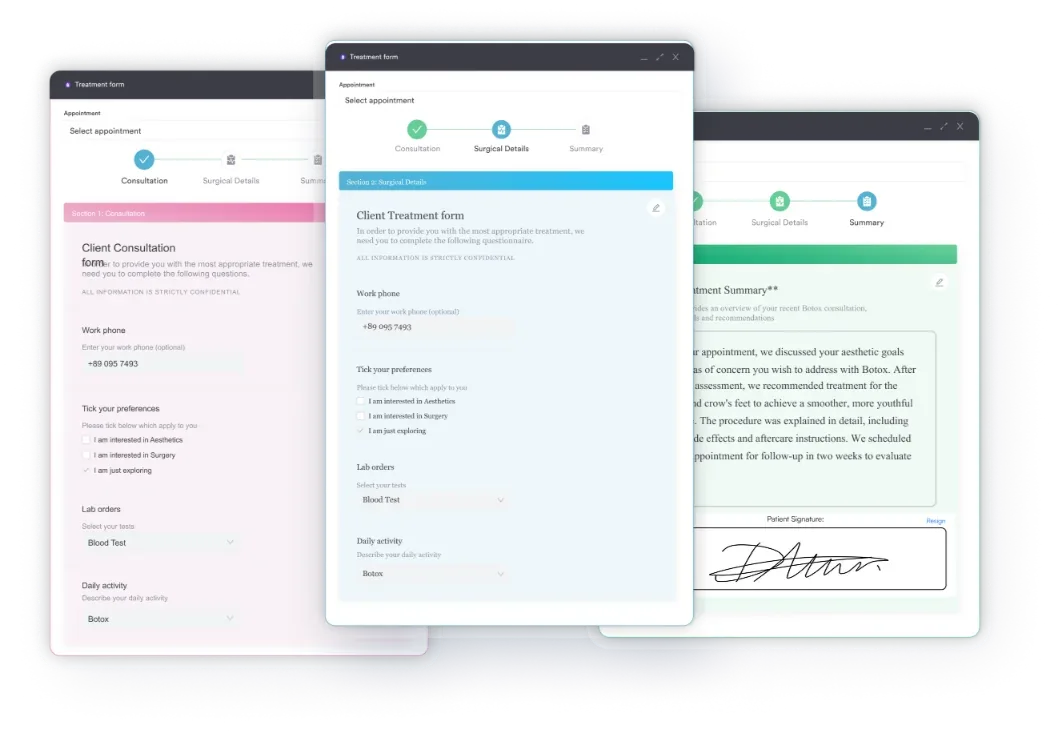
The ICD-10-CM Official Guidelines govern how S33.140A is assigned and sequenced. Several of those rules have direct consequences for everyday billing decisions. Practices using digital documentation forms can build intake and progress note templates around them. Capturing the required elements at the visit saves a follow-up request later.
Chiropractic billing is the most common context for ICD-10 Code S33.140A. It is also the trickiest, because Medicare applies documentation and coverage rules that standard medical billing does not. The code you choose decides whether the visit falls inside the chiropractic benefit.
Two codes describe what can look like the same finding. S33.140A is a traumatic subluxation injury code, and M99.03 is the chiropractic subluxation complex code. Pabau’s chiropractic intake form template covers what the first visit needs to record to tell them apart.
Practices running chiropractic care alongside physical therapy benefit from specialized chiropractic practice management software that ties coding to scheduling and documentation. State-level physical therapy practice requirements add another layer of documentation duty in dual-specialty settings.
If a chiropractic patient presents following a motor vehicle accident with imaging confirming L4/L5 subluxation, S33.140A is the correct traumatic injury code. For subsequent routine maintenance manipulation visits with no acute traumatic episode, M99.03 applies instead. Mixing these codes incorrectly triggers claim edits and potential overpayment audits.
Low back pain (LBP) codes are among the most over-applied codes in outpatient billing. When lumbar pain follows trauma and imaging confirms subluxation at L4/L5, the symptom code no longer fits. The specific traumatic injury code supersedes it.
The ICD-10-CM Official Guidelines are explicit on this point. Once a diagnosis is established, a symptom code is not assigned as a principal or additional code. The exception is a symptom that is not routinely associated with the condition. Pain is inherently associated with lumbar subluxation, so M54.50 is not reported alongside S33.140A.
Practices combining chiropractic, physical therapy, and pain management need the care continuum written down. A physical therapy return-to-activity protocol marks where active treatment ends and routine care begins. That line is exactly what the 7th character records.
Encounter type is easy to lose track of. The coder scans the last visit date, judges the care phase, and picks a 7th character. That is how an A ends up on a follow-up claim, weeks after active treatment ended.
Practice management software like Pabau keeps the whole encounter history in one client record. The diagnosis, the paired CPT codes, and the visit sequence sit together, so the care phase is visible at billing time.
Pabau’s claims management tools carry those codes onto the claim and track its status after submission. A denial that traces back to the wrong 7th character is easier to spot, because the encounter history sits beside the claim.

Pabau’s claims management tools keep ICD-10 and CPT codes together on the claim and track encounter types across visits. See how clean submissions work in your practice.

The hard part of S33.140A is rarely the diagnosis. It is proving which phase of care the visit belongs to, and keeping the chiropractic and traumatic pathways apart. Documentation written at the visit settles both questions.
Pin down the injury mechanism, the care phase, and the imaging or exam finding in the note itself. Do that and the 7th character picks itself, the CPT pairing follows, and audits stop being a coin toss.
Pabau’s claims management tools keep those codes and encounter records together on every claim. Book a demo to see how it works for a musculoskeletal or chiropractic practice.

Coding a spinal fusion next? CPT code 22600 walks through posterior arthrodesis billing and the documentation each level needs.
Need a 7th character beyond A, D, and S? S42.302K shows how nonunion changes the extension on a fracture code.
Billing chiropractic visits every week? Chiropractic billing cheat sheet lists the CPT and ICD-10 pairings that come up most.
Coding anesthesia for a knee cast? knee cast anesthesia code covers CPT code 01420 for anesthesia during knee cast application or removal.
Coding anesthesia for a knee vein procedure? knee vein anesthesia billing guide covers CPT code 01430 for anesthesia on veins of the knee and popliteal area.
ICD-10 Code S33.140A is a billable ICD-10-CM diagnosis code for subluxation of the L4/L5 lumbar vertebra during the initial encounter. It falls under category S33, which covers dislocation and sprain of joints and ligaments of the lumbar spine and pelvis. The code is valid for FY2026 reimbursement, effective October 1, 2025. It applies when a patient is receiving active treatment for a traumatic partial dislocation at the L4/L5 vertebral level.
Yes. S33.140A is a billable, specific ICD-10-CM code that supports a diagnosis for reimbursement purposes. No additional code is needed to define the condition. It became effective under the FY2026 edition on October 1, 2025.
Use S33.140A when a traumatic lumbar subluxation at L4/L5 has been confirmed by clinical examination or imaging. Do not assign a low back pain code (M54.50) alongside it, because pain is inherently associated with the subluxation diagnosis. The LBP code applies only when no specific traumatic structural diagnosis has been established.
Yes, S33.140A is used in chiropractic billing when the subluxation resulted from a documented traumatic event. For non-traumatic chiropractic subluxation complex (functional joint dysfunction), M99.03 is the appropriate code. Medicare’s chiropractic benefit has specific documentation requirements that determine which code is appropriate for coverage purposes.