ICD-10 code S61.201A: Open wound of left index finger without nail damage
ICD-10 code S61.201A covers a left index finger wound of unstated type ICD-10 co...

Last Updated: Oct 16, 2026
Billable Code Specific Code
S32.462B is the billable ICD-10-CM code for displaced associated transverse-posterior fracture of left acetabulum, initial encounter for open fracture.
In fact, this reference covers the code description, the 7th character options, the sibling codes worth ruling out, the Excludes notes, and the documentation each element needs.
Let Pabau's smart automation suggest the right codes, reduce claim denials, and keep your practice compliant—effortlessly.
Automate repetitive tasks and focus on what matters most—your patients.
Reduce coding errors and ensure compliance with the latest regulations.
Clean claims, fewer denials, and faster reimbursements.
Powerful insights and reporting to help your practice thrive.
HIPAA compliant SOC 2 certified GDPR-compliant Trusted by 4,000+ clinics worldwide

ICD-10 code S32.462B is a billable code for a displaced associated transverse-posterior fracture of the left acetabulum, initial encounter for open fracture.
The parent code S32.462 cannot be billed on its own, because every S32.4 code needs a 7th character.
The 7th character B applies for the whole active treatment period, not only the first visit.
The only Excludes1 under S32 is transection of abdomen, so a recorded hip fracture can share the claim.
Practice management software like Pabau keeps laterality, wound status, and treatment phase in the record the coder reads.
S32.462B is a billable and specific ICD-10-CM code. It is valid for FY2026, effective October 1, 2025. As a result, coders can use it directly on claims, because no more specific child code exists below it.
The classification itself is maintained by the National Center for Health Statistics at the CDC. You can also confirm the annual code set through the CMS ICD-10 code files. Also, HIPAA requires covered entities to use ICD-10-CM for all diagnosis reporting.
Every word in the S32.462B description carries coding weight. So, misreading any one component sends you to the wrong code.
The acetabulum forms the hip socket, where the ilium, ischium, and pubis meet at the triradiate cartilage. In turn, it is divided into an anterior and a posterior column. Together, those columns form an inverted Y that supports the femoral head.
In fact, transverse-posterior fractures are among the more complex Letournel patterns. The transverse part cuts across both columns, splitting the acetabulum into superior and inferior segments. A posterior wall or column fracture then sits on top of that split.
The combined pattern is what separates S32.46 from its neighbors. For instance, a pure transverse fracture codes to S32.45x, while an isolated posterior wall fracture codes to S32.42x, not S32.41x, which covers the anterior wall.
Rehab notes decide when the encounter type changes, so practices running physical therapy documentation or occupational therapy software should record the date the surgeon signs off on active treatment.
S32.462 needs a 7th character before it can be billed. Category S32 offers six, and there is no malunion character in this family. As a result, picking the wrong one is the most common reason these claims fail.
The same K character marks nonunion across other fracture families; for example, S82.232M applies the equivalent logic to a tibial shaft.
Use S32.462B when the operative or emergency report documents an open fracture. In fact, under the ICD-10-CM Official Guidelines, Section I.C.19, the 7th character B applies when bone or fracture hematoma communicates with the outside environment through a wound.
The initial encounter designation runs for the whole active treatment period, which may span several visits. For example, picture a patient seen in the ED, taken for open reduction internal fixation, then back a week later for a wound check. If the surgeon is still managing the fracture, the encounter is still initial.
Otherwise, move to D, G, or K only once active treatment has ended and the patient enters the healing or monitoring phase. The same fracture on the right side, healing slowly at follow-up, codes to S32.461G instead.
These three codes cause most of the confusion: specifically, A and B differ on wound status, while B and D differ on encounter phase.
Knowing where S32.462B sits explains why S32.462 cannot stand on its own. In other words, each level adds clinical specificity. S32 also sits beside S33, which covers dislocations and sprains of the lumbar spine and pelvis, including including S33.140A.
Choosing S32.462B correctly means ruling out its neighbors first, since the differentiators are laterality, displacement status, and fracture pattern.
Descriptions and billable status change with each annual update, so check the current entry in an ICD-10-CM code lookup before you submit.
Excludes notes decide what can share a claim with S32.462B. However, category S32 carries one note of each type, and coders routinely swap them around.
Excludes1, never coded together. An Excludes1 note means the two conditions cannot coexist in the same patient. Category S32 lists a single entry:
Excludes2, may be coded together. An Excludes2 note means the condition is not part of S32, but both may be reported when both are noted. Category S32 again lists a single entry:
That second note matters more than it looks: for instance, a recorded femoral neck fracture does not block S32.462B. Therefore, report both codes when the record supports each injury separately.
The Excludes1 and Excludes2 conventions themselves are set in the ICD-10-CM Official Guidelines, Section I.A.12. Also, the AHA Coding Clinic adds quarterly case-specific guidance on the harder pairings.
Read the notes at both the S32 category level and the S32.4 subcategory level before you code. Payer edits fire at every level of the hierarchy, not just the billed code. And remember the direction of travel: a hip fracture is an Excludes2, so it can sit on the same claim as S32.462B.
Section I.C.19 of the ICD-10-CM Official Guidelines governs fracture coding. In fact, it defines the encounter types behind characters A and B, D, G and K, and S. Even so, those definitions are stricter than their plain-English meanings suggest.
For reference, the CDC ICD-10-CM web tool is the official US lookup source for the current code set.
When more than one fracture is present, the UHDDS principal diagnosis rules decide which injury leads the claim.
S32.462B cannot be coded from a thin record, since every part of the description needs support from physician or operative notes. Miss one, and the coder has to drop to a less specific code, which can change the DRG.
That has a direct effect on payment, which is where Medicare billing rules bite hardest. In practice, keeping HIPAA-compliant documentation in orthopedic trauma means capturing every part the code requires, not just the diagnosis name.
Structured operative note templates and digital intake forms close those holes at the source, before a claim is ever generated. In turn, building the same prompts into your clinical documentation workflows keeps trauma intake consistent across the team.
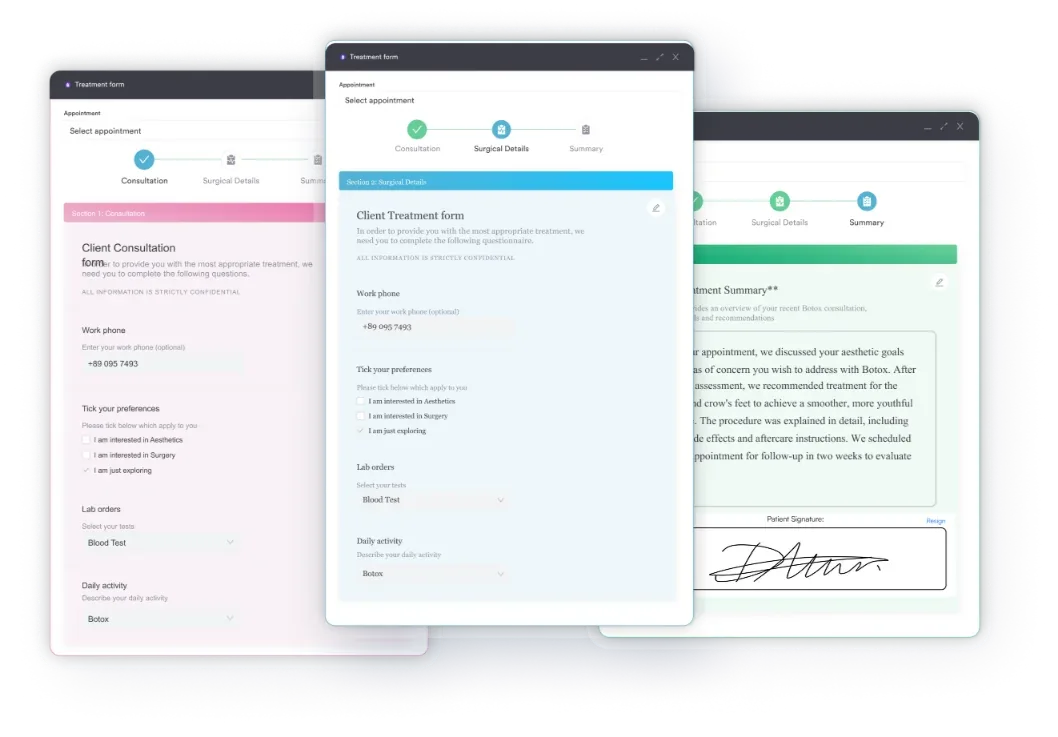
Most S32.462B claim errors trace back to one of five mistakes, so knowing where coders go wrong is the fastest way to stop repeating it.
The AAPC Codify lookup lets you confirm that the code you picked is the most specific one available for what the record says.
Flag any operative report that describes an acetabular fracture without naming laterality or fracture pattern. A physician query before submission costs minutes, while an appeal after denial costs weeks. Therefore, build a standard query template into your workflow for complex pelvic trauma.
In most orthopedic practices the coder has to go hunting. Laterality sits in the operative note, wound status in the ER chart, and the treatment plan somewhere else again. So, by the time all three are found, the claim is already late.
Pabau keeps that detail in one place. Structured treatment notes and digital consent forms capture displacement, laterality, and wound status at the point of care. Pabau’s patient records then hold those notes against the same file your biller opens, as a result.
From there, claims management pulls what is already on the record into a pre-filled claim, then submits and tracks it. Nothing gets retyped, so a recorded open left acetabular fracture stays that way all the way to the payer.
The outcome is fewer physician queries, fewer denials caused by a missing word, and a record that still reads clearly two years later at audit.
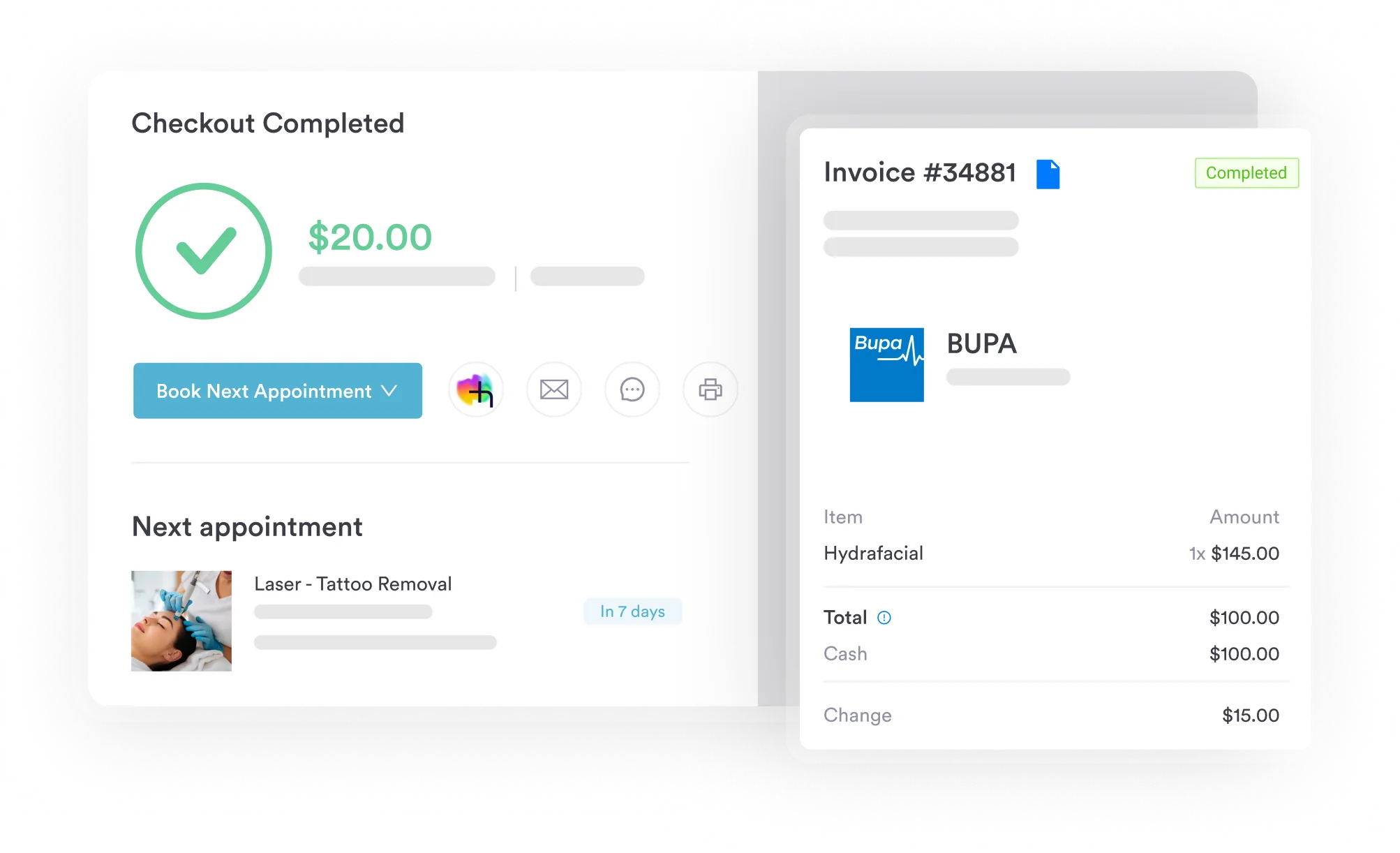

Pabau’s structured treatment notes and digital forms capture laterality, wound status, and treatment phase at the point of care. Book a demo to see how the record reaches your biller intact.

S32.462B is not a difficult code to assign. However, it is a difficult code to defend when the record is thin. The five parts it depends on are all things a surgeon says out loud in theater and then forgets to dictate.
So query before the claim goes out, not after the denial arrives. And read the Excludes notes in the right direction. A concurrent hip fracture is an Excludes2, which means it belongs on the claim rather than off it.
For practices handling high-acuity orthopedic work, Pabau’s practice management software keeps the records structured enough to survive an audit. Book a demo to see how it fits your coding process.

Coding another pelvic ring fracture this week? S32.311G walks through the same S32 category at a subsequent encounter.
Need the nonunion rules for a long bone? S82.232M shows how the 7th character changes once healing stalls.
Billing the orthopedic procedure alongside the diagnosis? 25492 covers the notes a prophylactic bone treatment claim needs.
Coding anesthesia for a closed femur reduction? closed distal femur anesthesia code covers CPT code 01340 for anesthesia during closed lower femur treatment.
Coding anesthesia for an ORIF of the femur? open distal femur anesthesia code covers CPT code 01360 for anesthesia during open lower femur repair.
ICD-10 code S32.462B is a billable diagnosis code for a displaced associated transverse-posterior fracture of the left acetabulum, initial encounter for open fracture. In short, it reports this combined pelvic fracture pattern while the patient is still in active treatment.
Yes. S32.462B is a billable and specific ICD-10-CM code valid for FY2026, effective October 1, 2025. However, the parent code S32.462 has no 7th character and cannot be submitted on claims.
S32.462A covers an initial encounter for a closed fracture, where the skin over the fracture site is intact. By contrast, S32.462B covers an initial encounter for an open fracture, where a wound connects to the fracture. Either way, the operative or ER note must state which applies.
The 7th character B indicates an initial encounter for an open fracture. In fact, it applies for the whole active treatment phase, not just the first visit. Once active treatment ends, the code then moves to D, G, or K depending on how the fracture is healing.
First, select the code that matches the fracture pattern, bone, laterality, and encounter type. For a displaced associated transverse-posterior fracture of the left acetabulum at an initial encounter for open fracture, that code is S32.462B. Sequence the fracture code first, then add external cause codes from V00-Y99 to capture mechanism and place of injury.
The laterality siblings are S32.461x for the right side and S32.463x for an unspecified side. Also, there is no S32.469 code. On the left, the 7th character variants are S32.462A, S32.462B, S32.462D, S32.462G, S32.462K, and S32.462S.
Yes, when both injuries are recorded. Fracture of hip NOS, coded to S72.0-, is an Excludes2 note under S32. In other words, an Excludes2 means the condition is not part of S32, but both may be reported together. By contrast, the only Excludes1 under S32 is transection of abdomen, coded to S38.3.