ICD-10 code S61.201A: Open wound of left index finger without nail damage
ICD-10 code S61.201A covers a left index finger wound of unstated type ICD-10 co...

Last Updated: Oct 16, 2026
Billable Code Specific Code
P60 is the billable ICD-10-CM code for disseminated intravascular coagulation of newborn.
P60 has one description, one block, and nothing below it to choose from. Most of the work therefore sits in the record rather than the code set, and the sections below cover both.
Let Pabau's smart automation suggest the right codes, reduce claim denials, and keep your practice compliant—effortlessly.
Automate repetitive tasks and focus on what matters most—your patients.
Reduce coding errors and ensure compliance with the latest regulations.
Clean claims, fewer denials, and faster reimbursements.
Powerful insights and reporting to help your practice thrive.
HIPAA compliant SOC 2 certified GDPR-compliant Trusted by 4,000+ clinics worldwide

ICD-10 Code P60 is the billable code for disseminated intravascular coagulation of newborn, also called defibrination syndrome of newborn.
P60 is valid for HIPAA-covered transactions in fiscal year 2026, which runs October 1, 2025 through September 30, 2026.
P60 sits in Chapter P00-P96 and block P50-P61, and it has no sub-codes to choose between.
A physician has to name DIC in the record, because abnormal coagulation labs alone will not support the code.
Practice management software like Pabau helps perinatal teams capture that detail at the point of care, so claims go out clean.
ICD-10 Code P60 is a billable ICD-10-CM diagnosis code that specifies disseminated intravascular coagulation of newborn. It is valid for submission under CMS guidelines for fiscal year 2026, covering October 1, 2025 through September 30, 2026. The code is valid for all HIPAA-covered electronic transactions.
P60 classifies a neonatal coagulation disorder that is separate from adult DIC. Before assigning it, confirm the physician has documented DIC in the context of the newborn or neonatal period. Without that clinical specificity, the record does not support the code on a claim.
Chapter P00-P96 covers every condition that originates in the perinatal period. Block P50-P61 narrows that to hemorrhagic and hematological disorders of newborn. P60 is the single code in that block for disseminated intravascular coagulation. It carries no sub-codes, so it is already the most specific level available, as the CDC/NCHS ICD-10-CM classification tool confirms.
Chapter P00-P96 applies only to conditions that begin before or shortly after birth, so DIC in an older child or an adult is coded elsewhere. The newborn’s record and the mother’s record are also kept apart. Maternal delivery codes such as O82 and O61.1 never belong on the infant’s claim.
Neonatal DIC is a coagulation disorder in which the blood’s clotting mechanisms activate abnormally throughout the body at once. Both the coagulation cascade and fibrinolysis fire together, consuming clotting proteins faster than the body can replace them. The result is bleeding from several sites at the same time as small clots form in the vessels.
In neonates, DIC is most often triggered by sepsis, severe birth asphyxia, respiratory distress syndrome, or necrotizing enterocolitis. It behaves differently from adult DIC because a newborn’s hemostatic system is still immature at birth. That immaturity leaves the coagulation cascade easier to tip out of balance.
For coding, the clinical confirmation is what counts. The attending physician has to document DIC of newborn, or an equivalent recognized term, in the medical record. Abnormal coagulation values on their own do not justify P60. Query the provider rather than assign the code from lab data.
ICD-10 Code P60 carries one “Applicable To” note in the official tabular list. The AAPC ICD-10-CM code reference gives that note as Defibrination syndrome of newborn. Documentation using that term maps directly to P60 and supports the assignment on its own.
Beyond the official note, coders meet other clinical terms in physician documentation that describe the same condition. The approximate synonyms recognized for P60 include:
Do not interpret laboratory findings or clinical notes to infer DIC yourself. If the documentation uses a term that is not listed here, query the provider before assigning ICD-10 Code P60.
P60 carries no formal Excludes1 or Excludes2 note of its own in the ICD-10-CM tabular list. The wider P50-P61 block and Chapter P00-P96 do carry boundary notes, and those shape how P60 works with other codes.
Key boundary principle: Chapter P00-P96 applies only where the perinatal period is the origin of the disorder. The perinatal period is generally taken as the first 28 days of life, though clinical context can shift that. A child who develops DIC after that window is coded from a different ICD-10-CM chapter.
Neonatal coagulopathy vs. DIC: Not every neonatal coagulation abnormality is DIC. Vitamin K deficiency bleeding, long known as hemorrhagic disease of newborn, is coded to P53. Inherited coagulation disorders that present in the newborn period have their own codes elsewhere.
Reserve P60 for disseminated intravascular coagulation as a distinct process. A general coagulopathy label does not qualify, and neither does bleeding from a single identified site.
P60 sits in a block that covers the full range of hemorrhagic and hematological disorders specific to newborns. Knowing these sibling codes helps you pick the most specific one when documentation describes a related but distinct condition.
When a neonate has DIC on top of an underlying condition such as sepsis, assign P60 alongside the sepsis code. Do not fold the two into a single code. Coding guidelines support separate codes where distinct conditions coexist and are both documented and treated.
For inpatient hospital billing, ICD-10 Code P60 maps to MS-DRG groupings in the neonatal and perinatal chapter. The assignment depends on whether P60 is the principal or a secondary diagnosis. Complicating and comorbid conditions, birth weight, and gestational age move it as well. Under Medicare billing rules, CMS revises those groupings every fiscal year.
As a principal neonatal diagnosis, P60 typically groups within MDC 15, which covers newborns and other neonates with perinatal conditions. Relative weights depend on the full code set submitted. Run the claim through a validated grouper on the current release. Fiscal year 2026 uses MS-DRG version 43, with v43.0 effective October 1, 2025 and v43.1 effective April 1, 2026.
POA reporting applies to inpatient claims only, so outpatient and physician claims do not use these indicators. The standard POA values all apply to P60. The table below summarizes the valid options for neonatal diagnoses under inpatient coding guidance.
Neonatal DIC is often present on admission, because it usually arises from birth asphyxia or sepsis at or near delivery. Delivery records, NICU admission notes, and physician attestations will show which indicator fits. Do not default to “Y” without documentation behind it.
Poor documentation is the most common reason P60 claims face denial or audit scrutiny. Work through the checklist below before assigning the code as a principal or secondary diagnosis.
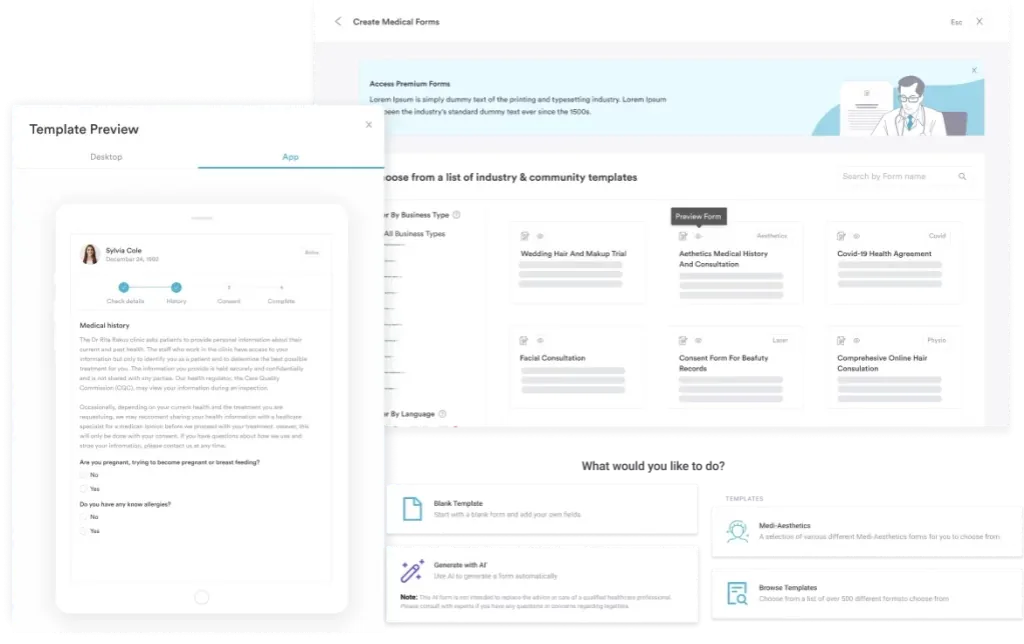
Digital documentation forms that prompt clinicians for diagnosis specificity at the point of care cut the volume of post-discharge queries. Teams working from structured medical record forms tend to lose less detail on high-acuity neonatal cases.
CMS and NCHS publish annual ICD-10-CM Official Guidelines for Coding and Reporting. Section I.C.16 covers perinatal conditions and is worth reading if you code in this chapter often. The same discipline applies to compliant medical office documentation across the rest of the patient record.
Most P60 problems start long before the coder opens the chart. A physician who writes “coagulopathy” instead of “DIC of newborn” sets off a query, and the claim waits until someone answers it.
Practice management software like Pabau supports the documentation habits that head those queries off. Clinical teams can build structured templates that ask for diagnosis specificity at discharge. A template can capture the trigger condition next to the DIC diagnosis and flag an incomplete entry before the record is finalized.
For practices running claims management workflows across neonatal and perinatal cases, the diagnosis recorded in the chart carries through to the claim without re-entry. That removes one common transcription error on OB/GYN and neonatal inpatient claims.
Records also have to stand up months later, when a payer asks a question. Teams using paperless clinical documentation can answer without pulling paper charts, and patient record management keeps the newborn’s history in a single view.
Care moves on after discharge, and primary care teams inherit the same problem list. A chart that already names the diagnosis saves them the same guesswork.
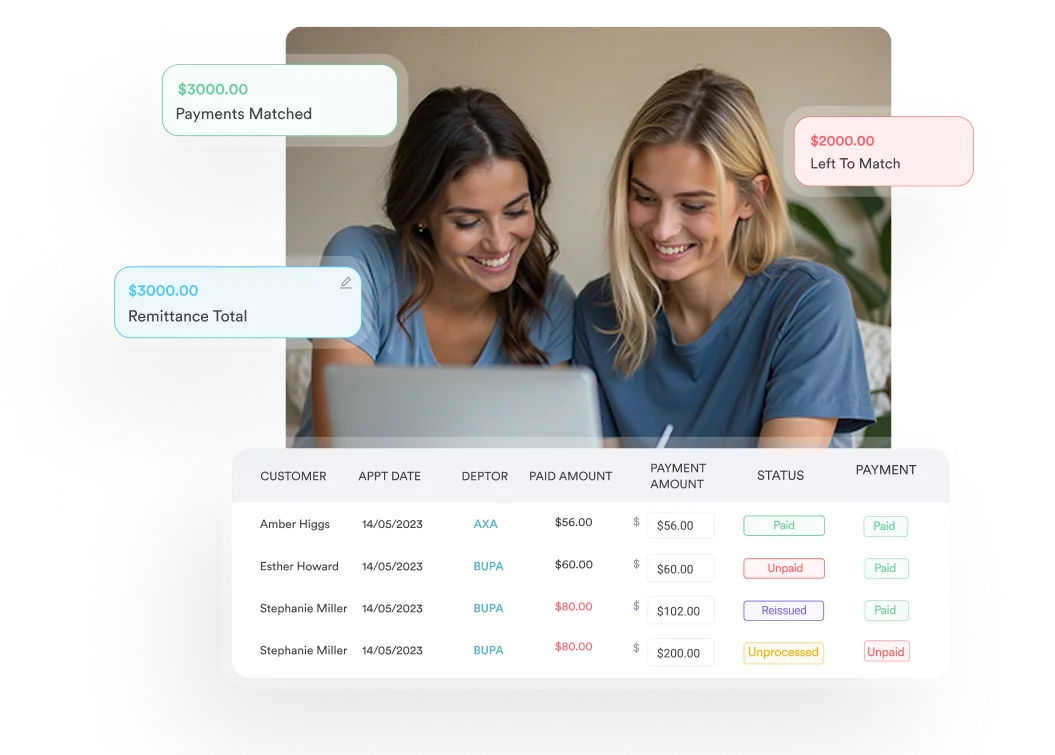

Pabau helps perinatal and neonatal teams record the diagnosis at the point of care, so the chart reaches your coders complete. Fewer post-discharge queries means fewer claims sitting in a work queue.

P60 is a short code with a narrow job, and the judgment it asks for is a documentation judgment. Where the physician has named DIC in a newborn, the assignment is straightforward. Where the chart carries only lab values, the honest next step is a provider query.
Fixing that at the source costs far less than appealing a denial three months later. Build the prompt into the template your clinicians already use, and the chart arrives ready to code. Book a demo to see how Pabau handles neonatal and perinatal documentation.

Billing a lupus antibody test? CCSD code 0046B for Sm antibody test covers the billing code for the Sm IgG antibody test ordered after a positive ANA screen.
Coding a bleed at the umbilical stump? P51.9 covers umbilical hemorrhage of newborn and how it sits against the rest of the block.
Documenting bleeding caused by birth injury? P10.3 explains what the record needs before the code goes on the newborn claim.
Billing a cardiomyopathy gene panel? CCSD code 0047G for the cardiomyopathy panel covers how to document, pre-authorize, and bill the pan-cardiomyopathy genetic panel without denials.
Avoiding denials on another CCSD claim? CCSD code 0048B coding guidance explains where the code sits in the schedule and the documentation that keeps the claim from denial.
ICD-10 Code P60 is a billable ICD-10-CM diagnosis code for disseminated intravascular coagulation of newborn. It sits in Chapter P00-P96 and block P50-P61, and its applicable term is defibrination syndrome of newborn. The code is valid for HIPAA-covered electronic transactions in fiscal year 2026.
Yes. P60 is a billable ICD-10-CM code valid for submission on HIPAA-covered transactions. It is confirmed billable for fiscal year 2026, which runs October 1, 2025 through September 30, 2026. It has no sub-codes, so nothing further is needed for claim submission.
P60 is not exempt from POA reporting on inpatient claims. The correct indicator is Y, N, U, or W, chosen on the strength of physician documentation. Neonatal DIC often arises from conditions present at delivery, so Y is common. It still has to be supported by the record rather than assumed.
The ICD-10-CM code for DIC in a newborn is P60, disseminated intravascular coagulation of newborn. It applies to the neonatal population within the perinatal period. Adult DIC is coded from a different chapter of ICD-10-CM and should not be confused with P60.
P60 does not apply to DIC outside the neonatal or perinatal period, or to general neonatal coagulopathy without a documented DIC diagnosis. It also excludes hemolytic disease of newborn, vitamin K deficiency bleeding, and transient neonatal thrombocytopenia, coded to P55, P53, and P61.0. Assign P60 only when the physician explicitly documents disseminated intravascular coagulation in a newborn.