ICD-10 Code S53.013D: Anterior subluxation of unspecified radial head
ICD-10 Code S53.013D: Quick reference summary Use the table below as your first ...

Last Updated: Nov 6, 2026
Billable Code Specific Code
S59.219G is the billable ICD-10-CM code for Salter-Harris Type I physeal fracture of lower end of radius, unspecified arm. It reports a subsequent encounter for fracture with delayed healing. Use it at a follow-up visit where the growth plate fracture is healing more slowly than expected and the record names no side.
The code sits in category S59, other and unspecified injuries of elbow and forearm. Each qualifier needs its own support in the note: the Type I fracture, the missing side, and the delayed healing behind the G.
Let Pabau's smart automation suggest the right codes, reduce claim denials, and keep your practice compliant—effortlessly.
Automate repetitive tasks and focus on what matters most—your patients.
Reduce coding errors and ensure compliance with the latest regulations.
Clean claims, fewer denials, and faster reimbursements.
Powerful insights and reporting to help your practice thrive.
HIPAA compliant SOC 2 certified GDPR-compliant Trusted by 4,000+ clinics worldwide

S59.219G is the billable ICD-10-CM code for a Salter-Harris Type I fracture of the distal radius growth plate, unspecified arm, at a delayed-healing follow-up.
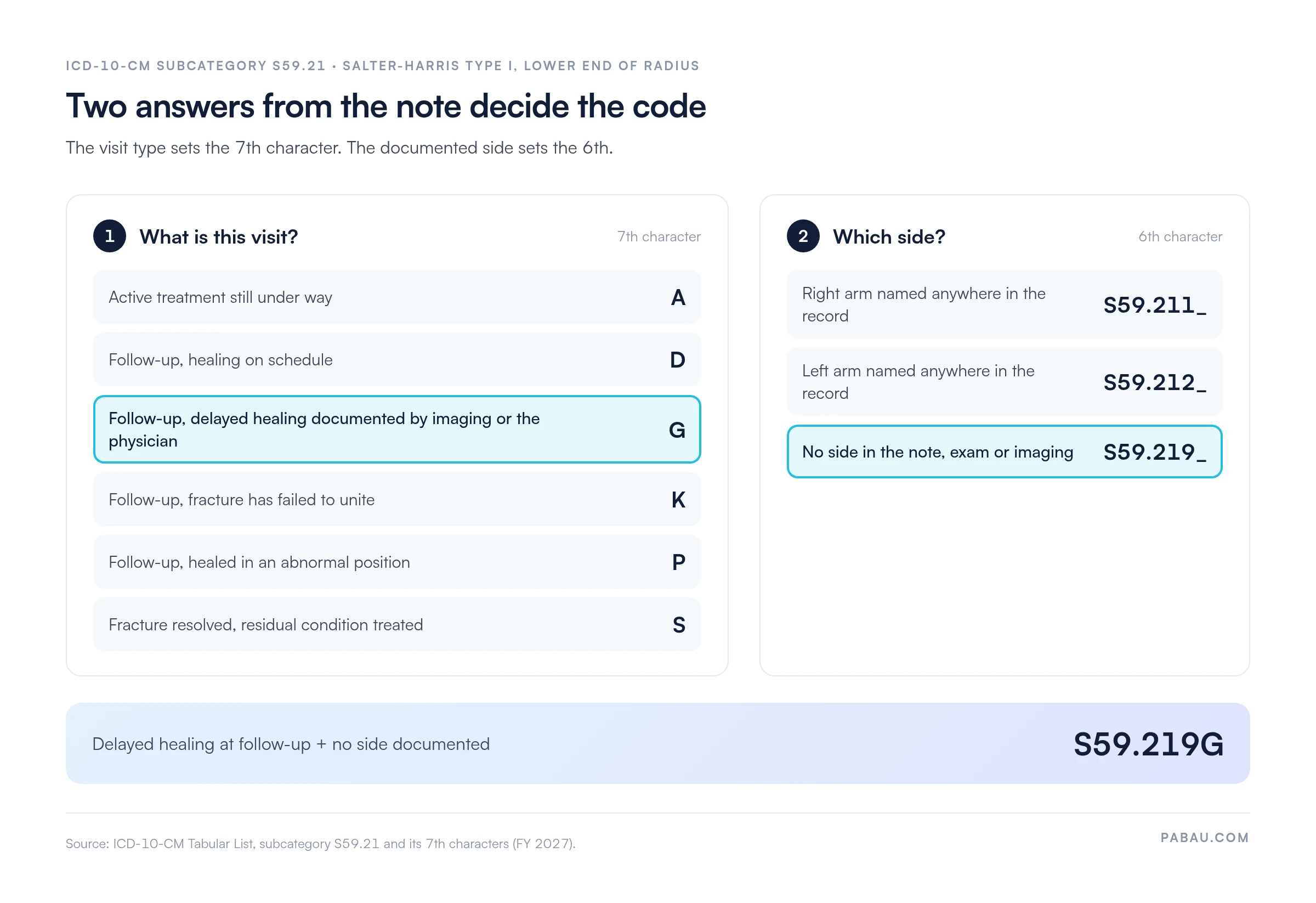
The 7th character G applies only when clinical or radiographic evidence confirms delayed healing. A routine follow-up visit takes D instead.
When the note, exam or imaging names a side, use S59.211G for the right arm or S59.212G for the left. S59.219G is only for a record with no side.
Pabau’s claim validation, part of the practice management platform we build, checks every claim for missing or invalid details before it reaches the payer.
ICD-10 code S59.219G is the billable ICD-10-CM code for a Salter-Harris Type I physeal fracture of the lower end of the radius, unspecified arm. It reports a subsequent encounter for that fracture with delayed healing.
Use it at a follow-up visit where imaging or the physician confirms slow healing, and the record names no side. The table sets out the billing facts to confirm before the claim goes out.
S59.219G covers one clinical situation. The patient is back for a follow-up visit after a Salter-Harris Type I fracture through the growth plate at the distal radius. Healing has fallen behind the expected timeline, and the treating physician has not documented which arm is affected.
Each of the four components has a coding alternative if the documentation changes:
Reclassify the fracture type, identify the side, or record a change in healing status, and a different code applies. Every other pediatric distal radius fracture, and every other encounter phase, has its own code.
ICD-10-CM assigns six 7th characters to the S59.21_ fracture group. Picking the wrong one is a common cause of denials on this code family. Repeated across many claims, it becomes a pattern auditors look for.
The G-vs-D choice deserves the most care on this code family. “D” means healing is progressing as expected, while “G” means clinical or imaging findings show it is not. Ongoing symptoms alone do not justify G. The treating physician must document delayed healing, ideally citing X-ray findings or a defined timeline deficit.
The G-vs-S choice catches out experienced coders too. “S” (sequela) applies once the fracture has resolved and a residual condition is the reason for the visit. A physeal bar or angular deformity is typical. While the fracture itself is still the active clinical problem, G or D applies.
Put together, the code comes from two answers in the note: what kind of visit this is, and which side was injured. The chart shows how those answers combine.
The Salter-Harris type decides which ICD-10-CM subcategory a growth plate injury codes to, so coders need to know what separates the five types. This matters most where sports medicine and pediatric orthopedic cases share one billing workflow.
Type I fractures are most common at the distal radius in children aged 10 to 14, typically after a fall on an outstretched hand. At this age the physis is weaker than the surrounding ligaments. So an injury that would be a sprain in an adult often presents as a physeal separation.
For physical therapy follow-up and rehabilitation visits, confirm the original fracture type from the acute-care record before assigning any S59.21_ encounter code.
Five neighbors of ICD-10 code S59.219G differ from it only on laterality or encounter phase. Check the comparison before filing to confirm you have the most specific code. For visits during active treatment, the initial-encounter code S59.219A applies instead.
S52 codes, such as S52.509_, cover fractures of the radius that do not involve the physis. When the record documents a Salter-Harris Type I fracture of the distal radius, use the S59.21_ group instead.
An S52 code on a confirmed physeal fracture misrepresents the injury. It can also understate the management involved, particularly growth plate preservation.
S59.219G inherits instructional notes from its parent categories. Review these before coding to avoid claim rejection on incompatibility grounds.
At the S59 category level:
At the S59.21 subcategory level:
Also confirm whether payer or institutional policy requires an external cause code from V00-Y99 to record the mechanism of injury.
Every element of S59.219G must be traceable to a specific statement or finding in the clinical record. The medical billing compliance risk on this code is concentrated in two areas: The delayed-healing designation and the unspecified laterality.
As a diagnosis code, S59.219G does not trigger prior authorization on its own. The procedures billed alongside it may. For delayed-healing fracture management, payers often ask for medical necessity documentation before approving more imaging, hardware removal or surgery.
Key payer considerations for delayed-healing fracture claims:
Denials on S59.219G tend to follow a small set of patterns, and each has a prevention step for the pre-submission workflow. For tracking and appealing ICD-10 denials more broadly, see the denial management guide. The denial codes reference defines each CARC and RARC code.
Run a quarterly audit of all claims filed with 7th character G across your S59.21_ code group. Flag any encounter where the physician note does not contain an explicit delayed-healing statement or imaging reference. Correcting the pattern before a payer audit is significantly less costly than responding to a focused review.
Each denial pattern above starts with a detail nobody checked before the claim went out. Catching those by hand means a coder rereads every follow-up note against the claim form.
Pabau keeps the follow-up note and the claim in one patient record. Its claims software with validation checks every claim for missing or invalid details before it leaves, such as a code sent without its 7th character.
Claims then travel through the Claim.MD clearinghouse, our US partner, to thousands of payers. Eligibility checks run before the follow-up visit, so a coverage or authorization problem shows up before the claim exists. When a payer rejects a claim, Pabau shows the reason so the team can correct and resubmit it.
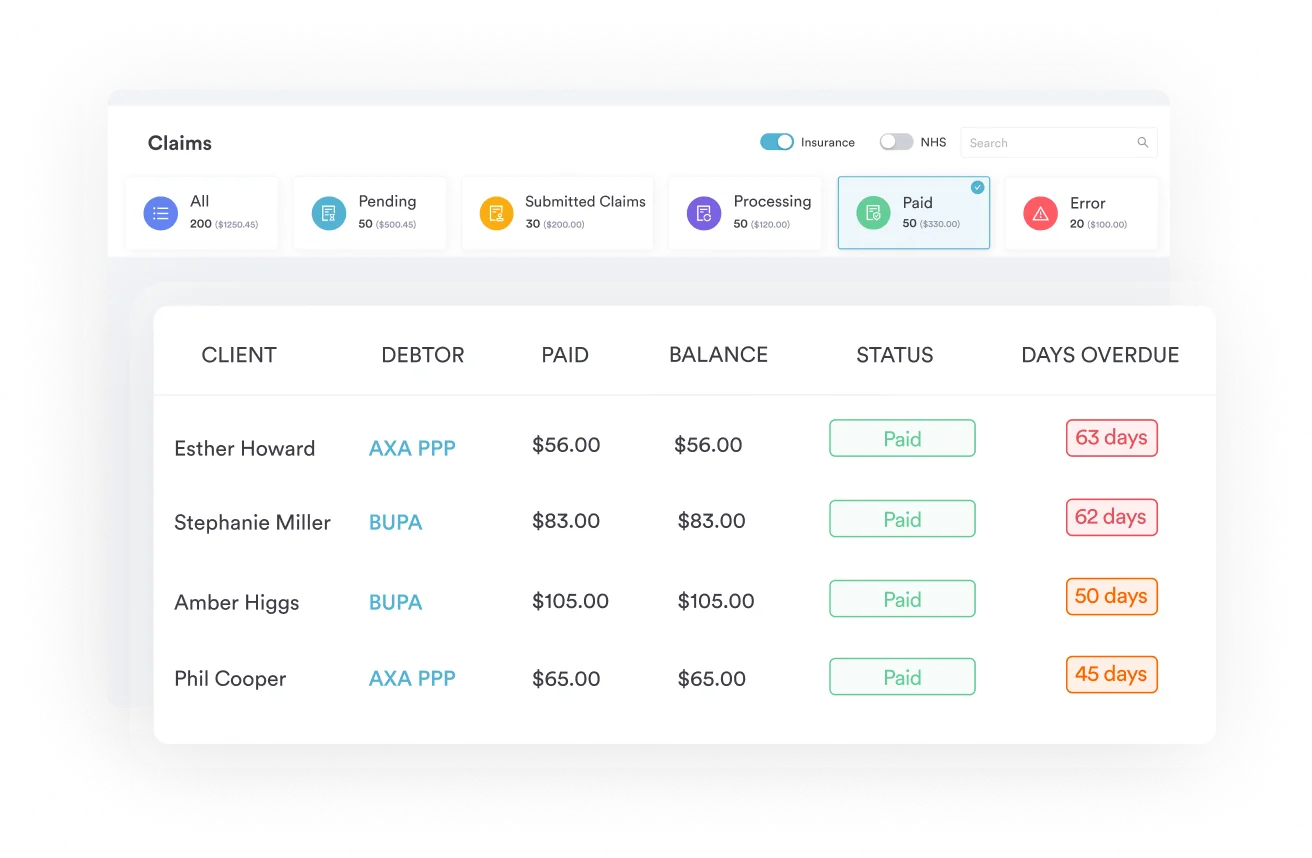

Pabau’s claim validation checks each claim for missing or invalid details before it leaves, and Claim.MD carries it to thousands of US payers. Rejections come back with their reason, ready to correct.

S59.219G holds up on audit only when the note supports all three qualifiers: the Type I fracture, the missing side and the delayed healing. Protect the G first. A radiology line about slow callus formation or a persisting fracture line is what separates it from D.
Then reread the note for a side before you file. If the chief complaint, exam or imaging names one, the claim needs S59.211G or S59.212G. Book a demo to see how Pabau keeps the follow-up note and the claim side by side, so that check takes seconds.

Coding the same delayed-healing stage on the ulna? ICD-10 code S59.032G covers a Salter-Harris Type III physeal fracture of the lower end of the left ulna with delayed healing.
Was the fracture reclassified as Type II? ICD-10 code S59.221S explains the sequela code for a Salter-Harris Type II fracture of the right distal radius.
Did the fracture line extend into the epiphysis? ICD-10 code S59.231S covers the sequela of a Salter-Harris Type III fracture of the right distal radius.
Was the physeal separation pinned percutaneously? CPT code 25606 covers percutaneous skeletal fixation of a distal radius fracture or epiphyseal separation.
ICD-10 Code S59.219G is the billable diagnosis code for a Salter-Harris Type I physeal fracture of the lower end of the radius, unspecified arm. It reports a subsequent encounter with delayed healing. Use it at a follow-up visit where the distal radius growth plate fracture is healing more slowly than expected and the record names no side.
A subsequent encounter (7th characters D, G, K and P) means the fracture itself is still the clinical problem being managed. A sequela (7th character S) means the fracture has resolved but left a residual condition, such as growth arrest or angular deformity. Use S only when that late effect is what the visit treats.
All three describe a Salter-Harris Type I physeal fracture of the lower end of the radius, at a subsequent encounter with delayed healing. They differ only on laterality. S59.211G is the right arm and S59.212G the left. S59.219G applies only when the record identifies neither side, so a side documented anywhere requires the specific code.
Use D if healing is progressing normally, G if clinical or radiographic evidence confirms delayed healing, and K if the fracture has not united. The 7th character reflects the healing status the physician documents at that visit. Never carry it forward from an earlier encounter.
Yes. S59.219G is valid for FY 2026 and FY 2027, and the FY 2027 update that took effect on October 1, 2026 left it unchanged. ICD-10-CM changes every October 1, so verify the code against the CDC/NCHS ICD-10-CM web tool at the start of each fiscal year.
S52 codes cover radius fractures that do not involve the physis, or where no Salter-Harris type is documented. S59.21_ codes, including S59.219G, are specific to Type I growth plate fractures of the distal radius in skeletally immature patients. An S52 code on a confirmed physeal fracture misrepresents the injury and can affect medical necessity review.