ICD-10 Code Y76.0: Diagnostic obstetric and gynecological devices
ICD-10 Code Y76.0: Definition and billable status ICD-10 Code Y76.0 is a valid, ...

Last Updated: Oct 23, 2026
Billable Code Specific Code
O62.4 is the billable ICD-10-CM code for hypertonic, incoordinate, and prolonged uterine contractions.
Let Pabau's smart automation suggest the right codes, reduce claim denials, and keep your practice compliant—effortlessly.
Automate repetitive tasks and focus on what matters most—your patients.
Reduce coding errors and ensure compliance with the latest regulations.
Clean claims, fewer denials, and faster reimbursements.
Powerful insights and reporting to help your practice thrive.
HIPAA compliant SOC 2 certified GDPR-compliant Trusted by 4,000+ clinics worldwide

ICD-10 Code O62.4 describes hypertonic, incoordinate, and prolonged uterine contractions: a billable, specific diagnosis code in Chapter 15 of ICD-10-CM.
Valid for fiscal year 2026 HIPAA-covered transactions; applies only to female patients aged 12-55 (Maternity Dx restriction).
O62.4 differs from O62.0-O62.2 (uterine inertia codes): those describe weak or absent contractions; O62.4 describes excessive, uncoordinated, or prolonged contraction patterns.
Pabau’s obstetric claims management tools support accurate O62 code submission and intrapartum documentation workflows.
Most labor complications coded in the O62 category involve too little uterine activity. ICD-10 Code O62.4 is the exception: it captures the opposite problem – contractions that are too strong, poorly coordinated, or abnormally prolonged. That distinction drives both clinical management and coding accuracy, so getting it right matters for every obstetric claim that involves labor dystocia.
Full code description: Hypertonic, incoordinate, and prolonged uterine contractions
Code: O62.4
Chapter: Chapter 15 – Pregnancy, childbirth and the puerperium (O00-O9A)
Block: O60-O77 – Complications of labor and delivery
Category: O62 – Abnormalities of forces of labor
The code covers three clinically overlapping conditions under a single classification. Hypertonic contractions have elevated resting uterine tone between contractions, which can compromise placental blood flow. Incoordinate contractions fire irregularly or from multiple uterine foci simultaneously, disrupting the coordinated fundal-to-cervical pressure wave needed for effective labor progress.
Prolonged contractions last beyond 90 seconds and can cause fetal hypoxia when sustained. All three patterns share the same coding, reflecting their shared clinical significance as excessive or dysrhythmic uterine activity.
Clinicians practicing obstetrics or maternity care can find full code hierarchy details through the CDC/NCHS ICD-10-CM web tool, which provides the official U.S. tabular list for the current fiscal year. For OB-GYN practice management software that integrates ICD-10-CM coding directly into clinical workflows, accurate code capture at the point of documentation reduces downstream claim errors.
O62.4 is a billable and specific ICD-10-CM code. It is valid for submission on HIPAA-covered transactions for fiscal year 2026 (effective October 1, 2025 through September 30, 2026). No further specificity is required: this is a terminal code with no child codes beneath it.
The Maternity Dx restriction (ages 12-55) and Female Dx restriction are applied automatically by claim-processing logic. Submitting O62.4 on a claim for a male patient or a patient outside the maternity age range will trigger an edit rejection.
Coders working in labor and delivery units should verify patient demographics against these restrictions before final submission. The CMS ICD-10 codes page maintains the authoritative list of coding edit restrictions by fiscal year.
O62.4 sits within the O62 category alongside six sibling codes. Selecting the wrong code from this group is a common cause of claim denials and audit flags, since each code describes a mechanistically distinct labor pattern. The table below maps the full O62 hierarchy with clinical indicators for each.
O62.4 vs O62.2: This is the most common selection error in the O62 group. O62.2 (other uterine inertia) covers weak, atonic, or arrested contractions. O62.4 covers the opposite: contractions that are pathologically strong, too frequent, or poorly coordinated.
If the intrapartum record documents “uterine tetany,” “contraction coupling,” or “elevated resting tone on tocometry,” O62.4 is correct. If it documents “arrest of labor,” “uterine atony,” or “poor contraction quality,” O62.2 applies. Where the record describes contractions that were adequate early and then weakened, O62.1 is the closer fit.
Coders handling labor dystocia claims can reference the AAPC Codify ICD-10-CM lookup for cross-referencing the full O62 group alongside official coding notes. When coding overlapping labor complications, using obstetric claims management software that supports multi-code submission helps avoid the sequencing errors that lead to edits at the clearinghouse level.
Payers audit obstetric complication codes aggressively. Submitting O62.4 without supporting intrapartum documentation puts the claim at risk of denial and exposes the practice to recoupment risk. The record must substantiate the specific contraction abnormality at the time of delivery.
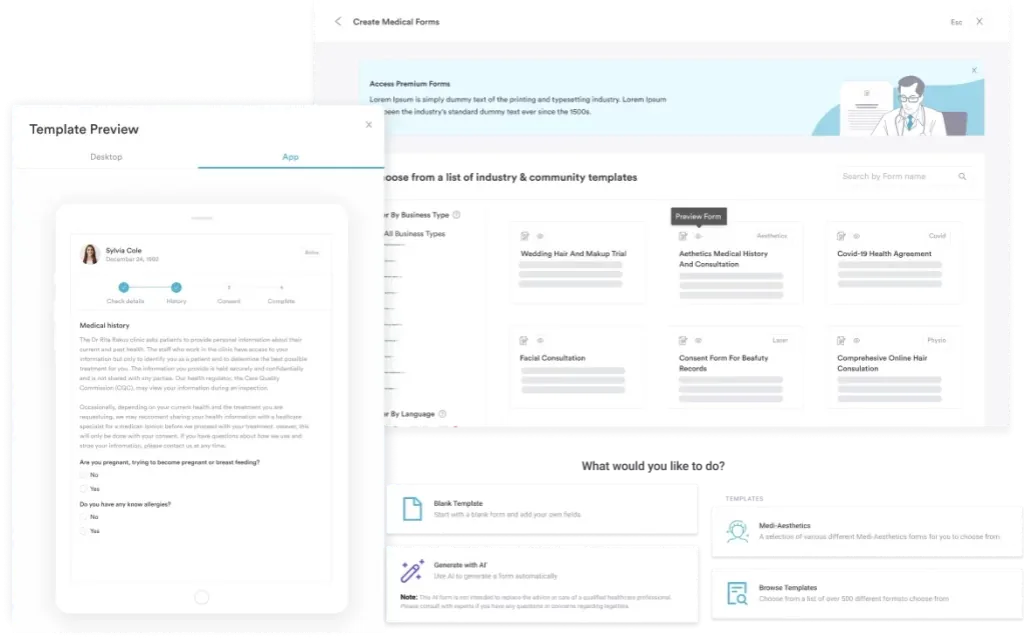
Practices managing high-volume intrapartum documentation benefit from structured digital clinical documentation forms that prompt clinicians to capture tocometry findings and contraction descriptors in a format that maps cleanly to ICD-10-CM specificity requirements. This reduces the retrospective query burden and supports first-pass claim acceptance.
ICD-10-CM Chapter 15 (O00-O9A) carries specific coding instructions that apply to all obstetric codes including O62.4. Under these guidelines, obstetric codes take sequencing priority over codes for the underlying condition when the pregnancy is the primary encounter reason. The following rules apply directly to O62.4:
Accurate intrapartum clinical records are the foundation of defensible obstetric coding. When documentation is captured in a structured EHR at the point of care, coder reliance on querying the delivering clinician drops significantly.
Review your intrapartum documentation templates for contraction descriptors. If your forms only capture contraction frequency and duration without prompting for resting tone and coordination pattern, coders cannot reliably distinguish O62.4 from O62.0-O62.2 without a physician query. Build those fields into the monitoring note template.
ICD-10-CM includes the following synonyms and clinical terms in the alphabetical index that map to O62.4. Coders who encounter these terms in the medical record should resolve to this code:
Terms such as “tachysystole” alone (frequent contractions without elevated tone) may or may not map to O62.4 depending on whether hypertonia is also documented. When tachysystole occurs following oxytocin augmentation and the record documents elevated tone, O62.4 is appropriate. When tachysystole is documented without elevated resting tone, the coder should query the clinician before defaulting to O62.4 versus O62.8. Coding compliance rests on the note supporting the code, every time, not on the code being plausible. Coders working across several specialties keep a coding reference to hand rather than searching the full manual.
The WHO ICD-10 browser provides the international classification hierarchy for these contraction abnormalities, which underpins the ICD-10-CM U.S. adaptation. Practices serving fertility and high-risk obstetric populations can find additional workflow context through fertility clinic software resources that address documentation requirements for complex maternity cases.
Several coding considerations are specific to O62.4 and its interaction with related obstetric codes.
When the reason for the intrapartum encounter is a contraction abnormality (for example, a patient admitted for monitoring of uterine tetany), O62.4 may serve as the principal diagnosis. When the primary encounter reason is delivery and the contraction abnormality is identified as a complicating condition, O62.4 is assigned as an additional code.
In both scenarios, the record must document that the condition was present, evaluated, and/or treated during the encounter.
O62.4 and O63 (Long labor) are not mutually exclusive. Prolonged uterine contractions that obstruct cervical progress can result in long labor as a separate, documentable outcome. When both are present and documented, assign both codes.
The clinician must document both the contraction pattern abnormality (O62.4) and the prolonged labor duration (O63.0 for prolonged first stage, O63.1 for prolonged second stage) for this combination to be coded correctly.
Oxytocin-induced uterine hyperstimulation is a recognized cause of hypertonic contractions. When O62.4 results from oxytocin augmentation, some payers and institutional guidelines require an additional code for the adverse effect of the drug. Review the applicable payer’s LCD and your institutional coding policy to determine whether an adverse effect code from the T-code range applies in your setting.

Pabau helps OB-GYN and maternity practices capture intrapartum documentation at the point of care, reducing coder queries and supporting first-pass claim acceptance for labor complication codes.

For practices reconciling historical records or legacy billing data, O62.4 traces back to ICD-9-CM category 661.4 (Hypertonic, incoordinate, or prolonged uterine contractions). Category 661.4 itself was never billable.
Claims required one of its fifth-digit subcodes: 661.40 (unspecified as to episode of care), 661.41 (delivered), or 661.43 (antepartum condition or complication). All three subcodes map forward to O62.4, so the crosswalk holds regardless of which fifth-digit variant appears in legacy data.
For research and data analysis purposes, the ResDAC ICD codes resource explains how ICD-9 and ICD-10 codes appear in Medicare claims data. This is relevant for practices conducting retrospective analysis across the ICD-9-to-ICD-10 transition period (October 2015 cutover).
Facilities coding for payer populations that still require ICD-9 legacy data for research purposes should note this crosswalk for data integrity. The same Chapter 15 sequencing principles apply to any other code carrying a maternity or female restriction flag.
When migrating historical obstetric records from ICD-9 to ICD-10-CM for quality reporting or population health analysis, verify that your crosswalk tool uses the forward GEM (ICD-9 to ICD-10) rather than the backward GEM for O62.4. The forward map from any 661.4x fifth-digit subcode (661.40, 661.41, 661.43) to O62.4 is clean and direct, but the backward map from O62.4 returns multiple possibilities across those subcodes.
O62.4 is an intrapartum complication code. It influences DRG assignment and maternal risk stratification in hospital billing, and it appears on professional claims for obstetricians and certified nurse midwives who document and manage labor abnormalities.
On the facility side, O62.4 assigned as a secondary diagnosis on a delivery admission can affect the Medicare Severity DRG (MS-DRG) assigned to the claim. Labor complications documented as complication or comorbidity (CC) level conditions affect DRG weight and therefore reimbursement. Other intrapartum complication codes.
Whether O62.4 qualifies as a CC for a specific DRG group depends on the full diagnosis profile. Coders should verify against current MS-DRG definitions in the CMS grouper software for the applicable fiscal year.
On the professional fee side, O62.4 supports medical necessity for intrapartum management services when the contraction abnormality requires additional physician or midwife attention beyond routine labor support. This includes additional evaluation and management visits, fetal monitoring interpretation, and tocolytic administration orders.
Each of these services requires O62.4 (or another O62 code) as the supporting diagnosis on the claim to justify the procedure code selected. Never code a more severe or less severe condition than what the clinician documented.
Practices that manage obstetric billing in-house benefit from compliance management workflows that include coding audit checkpoints for high-volume complication codes like O62.4. Regular internal audits comparing documented contraction descriptors to submitted codes catch selection errors before they become denial patterns.
Inaccurate selection within the O62 code group is one of the most common sources of avoidable obstetric claim denials. O62.4 captures a specific and clinically significant contraction pattern: excessive tone, incoordinate firing, or prolonged duration. Using it correctly requires intrapartum records that document contraction characteristics precisely, not just frequency and duration.
Pabau’s claims management tools support OB-GYN and maternity practices in building structured documentation workflows that reduce coder queries and support first-pass acceptance for labor complication codes. To see how Pabau handles obstetric documentation from point-of-care capture through claim submission, book a demo with the team.

Coding a contraceptive implant removal? Nexplanon removal coding guide covers the code for etonogestrel implant removal, whether routine, early, or complication-driven.
Coding an allergy immunotherapy encounter? allergen desensitization coding guide covers the correct diagnosis code for an encounter focused on allergen desensitization treatment.
Want to see how another Chapter 15 complication code is documented? O74.7 covers a related intrapartum complication, with its own documentation and billing rules.
ICD-10 Code O62.4 is a billable ICD-10-CM diagnosis code for hypertonic, incoordinate, and prolonged uterine contractions, covering labor abnormalities characterized by excessive uterine tone, irregular contraction firing, or contractions lasting more than 90 seconds. It is used for intrapartum complications in female patients aged 12-55 and is valid for fiscal year 2026 HIPAA-covered transactions.
O62.2 codes uterine inertia: weak, arrested, or atonic contractions that are insufficient for labor progress. O62.4 codes the opposite: contractions that are pathologically strong, uncoordinated, or prolonged. If the record documents elevated resting tone, uterine tetany, or contraction coupling, use O62.4. If it documents atony, slow labor, or arrested progress without elevated tone, use O62.2.
Yes. O62.4 and O63 (long labor) may both be assigned when hypertonic or incoordinate contractions are documented alongside prolonged labor duration. The clinician must document both the contraction pattern abnormality and the prolonged stage of labor independently. Assign O63.0 for prolonged first stage or O63.1 for prolonged second stage, as applicable alongside O62.4.
Yes. ICD-9-CM category 661.4 (Hypertonic, incoordinate, or prolonged uterine contractions) was the predecessor, but it was never billable on its own. Claims used one of its fifth-digit subcodes: 661.40 (unspecified episode of care), 661.41 (delivered), or 661.43 (antepartum). All three map forward to O62.4 without ambiguity, making this one of the more straightforward obstetric code transitions from ICD-9 to ICD-10-CM.
The intrapartum record must include tocometry data showing elevated resting tone, contraction duration exceeding 90 seconds, or incoordinate firing patterns, along with a clinician narrative using terms that align with O62.4 (hypertonic, uterine tetany, incoordinate contractions). The record should also document any clinical response such as tocolytic administration or oxytocin reduction to corroborate the diagnosis’s clinical significance.