

HCPCS code E0198: Water pressure pad billing guide
HCPCS code E0198 is a water pad for a standard mattress HCPCS code E0198 is the ...

Last Updated: Oct 13, 2026
E0189 is the HCPCS Level II code for lambswool sheepskin pad, any size.
The code itself is straightforward, but the file behind it is where claims come apart.
Denials for this code almost always trace back to paperwork that was incomplete on the day the claim went out. A late Standard Written Order, chart notes with no qualifying condition, or a missing modifier will each sink a valid claim. Some suppliers still chase a Certificate of Medical Necessity as well, and E0189 never had one. Co-claiming restrictions in the Australian schedule decide which items can appear on the same day. Common claim denial codes repeat by specialty, so the pattern is worth reading before reworking.
Let Pabau's smart automation suggest the right codes, reduce claim denials, and keep your practice compliant—effortlessly.
Automate repetitive tasks and focus on what matters most—your patients.
Reduce coding errors and ensure compliance with the latest regulations.
Clean claims, fewer denials, and faster reimbursements.
Powerful insights and reporting to help your practice thrive.
HIPAA compliant SOC 2 certified GDPR-compliant Trusted by 4,000+ clinics worldwide

HCPCS code E0189 is the Level II DME code for a lambswool sheepskin pad of any size, billed to Medicare Part B.
Coverage sits under LCD L33830, and the beneficiary has to meet one of its three Group 1 criteria.
A Standard Written Order must reach the supplier before the claim goes out, with proof of delivery kept on file.
Every claim line needs a KX, GA or GZ modifier, and no Certificate of Medical Necessity is required.
Practice management software like Pabau keeps the order, the chart notes and the delivery paperwork on one patient record.
The descriptor reads lambswool sheepskin pad, any size. It is a HCPCS Level II code maintained by the Centers for Medicare and Medicaid Services (CMS).
Size never changes the code, so one code covers the small heel pad and the full-length pad alike.
E0189 sits in the E0100 to E0199 range. That range holds canes, crutches and walkers with their attachments, such as E0155.
Next come commode and bath equipment like bath equipment like E0160, then the pressure-reducing pads and mattresses. Wheelchairs are coded elsewhere, in the E0950 to E1298 range.
Local Coverage Determination L33830 governs E0189 under Medicare Part B, and its title is Pressure Reducing Support Surfaces, Group 1.
CMS applies the policy through the Medicare Administrative Contractors (MACs). E0189 is named in it alongside the other Group 1 overlays and mattresses.
The CMS Medicare Coverage Database holds the current version. Read it once a year, because regional contractors revise these policies. What the LCD asks for is a documented immobility, or documented risk paired with a second clinical finding.
A Group 1 surface is covered when the beneficiary meets one of three criteria, each documented in the medical record:
The qualifying conditions that pair with criteria 2 and 3 are:
Limited mobility on its own does not qualify, and neither does a pressure ulcer on its own. For criteria 2 and 3, the record also has to show how severe the qualifying condition is. Severity is what demonstrates why a pressure-reducing surface is needed.
A signed order will not carry the claim on its own. For criteria 2 and 3, the chart has to state how bad the qualifying condition is. Naming it is not enough. A note that reads incontinent leaves the reviewer guessing. A note that reads fecal incontinence, barrier cream applied twice daily, does not.
The beneficiary should not bottom out on the surface. Reviewers describe that as feeling the coccyx or hip bone through the pad, with a flat hand underneath. Test it lying flat, lying with the head raised slightly, and on the side.
Claims are denied as not reasonable and necessary when the record fails those criteria. The same applies when the billing supplier is not enrolled with Medicare as a DMEPOS supplier. Routine preventive use, with no documented clinical indication, is not covered either.
Take a beneficiary recovering from a stroke at home. The nursing note records that two people are needed to turn her, which satisfies criterion 1 on its own. The wound assessment adds a stage 2 sacral ulcer, and the chart records fecal incontinence with the barrier cream used for it.
That file would clear criterion 3 as well, since the ulcer sits on the pelvis and a qualifying condition is documented beside it. The supplier holds the signed order, keeps those notes, and bills the line with a KX modifier. Nothing else needs to be attached.
The diagnosis on the claim has to reflect the condition the ordering practitioner documented. It also has to line up with the indication in LCD L33830.
Check it against the chart, not against a code list. These categories come up most often:
Always take the most specific code available. Reaching for an unspecified code when a staged or lateralized one exists is a routine denial trigger.
L33830 publishes no covered diagnosis list, so the chart is your only reference point. An annual policy review belongs in your practice management workflows.
E0189 is paid from the Medicare DMEPOS fee schedule, which CMS updates every year. Allowed amounts vary by locality code, so one national figure does not exist. A few payment rules shape what you collect:
For the 2026 figure, pull the CMS DMEPOS fee schedule file and filter by your locality code. Third-party rate listings drift, and they are not what your MAC pays from.
Thin documentation is the main driver of E0189 denials. Medicare expects the full package to exist before the claim is submitted, not after a request lands.
Structured patient care documentation that captures each element at intake cuts the number of incomplete files sharply.
Required documentation includes:
The order carries the practitioner’s individual NPI, while the claim goes out under the supplier’s organizational number, and the two NPI types are not interchangeable. Pasting the wrong one into the wrong field costs a rejection and a resubmission.
The policy article also describes the care plan a beneficiary on a pressure reducing surface should have. The treating practitioner or the home care nurse writes it, and it lives in the medical record.
Reviewers look for these elements:
Some of that detail sits outside the supplier’s own file. Notes from a physical therapy visit usually describe repositioning ability precisely, and an occupational therapy assessment often covers seating and transfers. Ask for them while the referral is fresh.
Keep everything on file for at least seven years. Recovery Audit Contractor reviews target DMEPOS regularly, and a thin record turns into a repayment demand.
A single medical forms workflow that collects each element before submission is the cheapest protection available.
No DMEPOS claim needs a CMN any more. CMS discontinued Certificates of Medical Necessity and DME Information Forms for dates of service on or after January 1, 2023.
The change came through MLN article SE22002 and change request 12734. Send CMN or DIF data with a claim today and the DME MAC returns it to you.
E0189 never carried a CMN of its own, even before that change. LCD L33830 and its policy article A52489 do not mention one, and no current CMS form covers lambswool sheepskin pads.
The DME MAC standard documentation requirements article dropped its CMN and DIF section entirely, effective January 1, 2023. If an intake checklist still asks for a signed CMN, that step is obsolete.
An E0189 claim follows the standard DMEPOS route. Four steps, in this order, keep it clean:
One field decides whether the line is processed at all. Add KX when every LCD criterion is met and the evidence sits in your files.
When the criteria are not met, the line needs GA if you hold a signed Advance Beneficiary Notice, or GZ if you do not. A line with none of the three is rejected as missing information.
Claims that clear those five points rarely come back on first submission. The ones that fail usually fail on the same handful of points every time.
Most denials are documentation and coding problems rather than anything to do with the code. Here are the patterns worth checking, with the fix for each:
Several codes sit beside E0189 in the same policy family. The right one depends on what was dispensed, and the policy article defines each product type by construction and height.
E1399 deserves particular caution. A claim for it must carry a narrative description of the item, plus the manufacturer and the product name or number. It also needs the reason the item is medically necessary.
If a lambswool sheepskin pad was dispensed, E0189 is the correct code, and reaching for E1399 only invites review. A replacement pad for an alternating pressure pad the beneficiary already owns bills as A4640.
Coding knowledge is rarely what sinks one of these claims. The order sits in a fax tray and the wound assessment sits with the nurse. The delivery slip sits in a folder by the van keys. Nobody notices which one is missing until the remittance arrives.
Practice management software like Pabau keeps all of it against one patient record.
Pabau’s digital forms capture the clinical detail at intake. A mobility finding or a wound assessment is typed once, and filed where you expect it. Structured patient records then hold the order, the notes and the delivery confirmation together.
Pabau also carries claims management for practices that bill insurers directly, while DMEPOS claims still leave through your DME billing system. The benefit for a supplier is the paper trail. When a reviewer asks for the file behind a claim, you open one record instead of three systems.
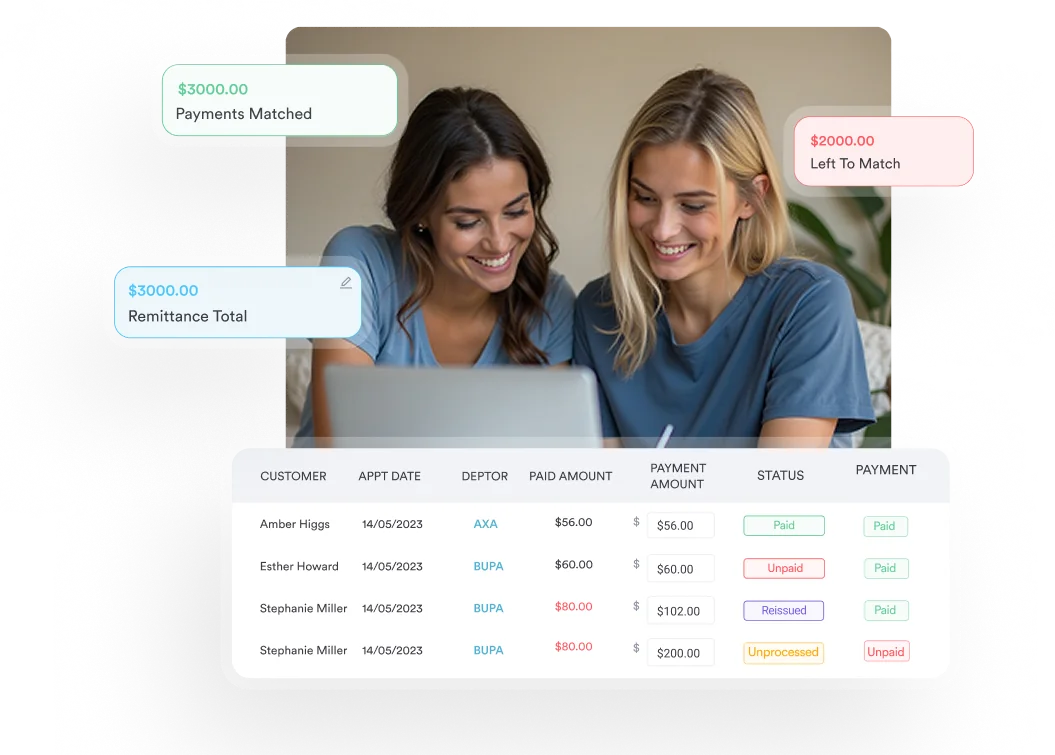

Pabau holds orders, clinical notes and delivery paperwork against a single patient record. The file behind a claim like E0189 is complete before it goes out.

E0189 is a small-dollar code with a full-size documentation burden. Medicare pays it when the record shows one of the three L33830 criteria. The order has to arrive before the claim, and the line needs the right modifier. The code itself causes nobody any trouble.
So the work sits upstream of billing. Suppliers with the cleanest first-pass rate collect the order and the clinical findings before the pad leaves the shelf. Rebuilding a file after a denial takes far longer than getting it right at intake, and appeals rarely recover the time.
If your documentation is spread across paper orders, scanned delivery slips and a separate records system, start there. Book a demo to see how Pabau keeps a patient’s forms, notes and documents on one record, ready whenever a payer asks for them.

Billing another surface in the same policy group? A4640 covers the replacement pad for an alternating pressure pad the beneficiary already owns.
Working through other equipment in the same code range? E0165 walks through commode chair coverage and the documentation Medicare expects with it.
Billing the wound care side of the same patient’s file? G0281 covers electrical stimulation for chronic wounds, including stage 3 and 4 pressure ulcers.
Billing non-emergency taxi transport for a patient? HCPCS code A0100 covers non-emergency taxi transport billing, including which payers cover the base per-trip rate.
Billing an emergency ambulance transport claim? HCPCS code A0427 covers billing for advanced life support ambulance transport and when the ALS-level requirement applies.
No. Medicare’s required prior authorization list covers five support surfaces: E0193, E0277, E0371, E0372 and E0373. E0189 is not one of them, so you can dispense and bill without waiting for a decision. The coverage criteria still apply in full.
Usually not. The Part B equipment benefit pays for items used in the beneficiary’s home. A hospital, or a skilled nursing facility providing Part A care, does not count as a home. In those settings the facility supplies the surface instead.
The treating practitioner signs it. That means the physician, nurse practitioner, physician assistant or clinical nurse specialist treating the beneficiary. A supplier employee cannot write the order, and a signature from anyone outside the patient’s care leaves the claim indefensible at audit.
Yes. DMEPOS suppliers have to meet Medicare’s quality standards through an approved accreditation organization. They also post a $50,000 surety bond for each NPI they bill under. Some licensed professionals are exempt from accreditation under the 2008 MIPPA rules.
It depends on the state. Some Medicaid programs mirror the L33830 criteria, while others set their own rules, require prior authorization, or exclude the item. Check the state program’s equipment policy first, because a Medicare-clean file is not automatically a Medicaid-clean one.



