ICD-10 code S61.201A: Open wound of left index finger without nail damage
ICD-10 code S61.201A covers a left index finger wound of unstated type ICD-10 co...

Last Updated: Oct 16, 2026
Billable Code Specific Code
D36.0 is the billable ICD-10-CM code for benign neoplasm of lymph nodes.
Let Pabau's smart automation suggest the right codes, reduce claim denials, and keep your practice compliant—effortlessly.
Automate repetitive tasks and focus on what matters most—your patients.
Reduce coding errors and ensure compliance with the latest regulations.
Clean claims, fewer denials, and faster reimbursements.
Powerful insights and reporting to help your practice thrive.
HIPAA compliant SOC 2 certified GDPR-compliant Trusted by 4,000+ clinics worldwide

ICD-10 Code D36.0 (Benign neoplasm of lymph nodes) is a billable, specific ICD-10-CM code valid for FY2026 (October 1, 2025 through September 30, 2026).
D36.0 requires a confirmed pathology report diagnosing a benign neoplasm before assignment; negative lymph nodes or lymphadenopathy alone do not support this code.
D36.0 is frequently confused with R59 (enlarged lymph nodes/lymphadenopathy) – the key distinction is histological confirmation of a true neoplastic process versus reactive enlargement.
Pabau’s claims management software supports accurate ICD-10-CM coding workflows, helping practices reduce claim errors and missing documentation associated with benign neoplasm codes.
ICD-10 Code D36.0 identifies a benign neoplasm of lymph nodes. It sits within Chapter 2 of the ICD-10-CM classification (Neoplasms, C00-D49), under the block D10-D36 (Benign neoplasms, except benign neuroendocrine tumors), as maintained by the World Health Organization’s ICD-10 browser.
Lymph nodes are small, bean-shaped organs distributed throughout the body as part of the lymphatic system. They filter lymph fluid and house immune cells. A benign neoplasm of the lymph nodes is an abnormal, non-cancerous proliferation of tissue within or immediately adjacent to a lymph node. It is distinct from both reactive enlargement and malignant transformation.
Common histological findings that support D36.0 include lymphangioma (a benign tumor of lymphatic vessels), lipoma within lymph node capsules, and certain fibrous or vascular growths. The code does not cover lymphadenopathy, enlarged lymph nodes with unclear etiology, or reactive hyperplasia – those fall under R59 and related codes.
D36.0 applies to benign neoplasms occurring in lymph nodes across all anatomical regions, including cervical, axillary, inguinal, mediastinal, retroperitoneal, and intramammary (breast) nodes. The code does not specify location, so the same benign lymph node ICD-10 code covers a benign axillary node and a benign intramammary node alike. When location specificity matters for documentation or surgical planning, capture the site detail in the operative and pathology reports, even though ICD-10-CM does not subdivide D36.0 by region.
Pabau’s claims management software helps clinical teams attach accurate ICD-10-CM codes to encounters at the point of documentation. This reduces the risk that a confirmed benign pathology result gets coded under a less-specific or incorrect diagnosis code at submission.
For practices managing oncology-adjacent coding, this workflow integration matters for audit readiness. The same precision applies to other benign neoplasm codes – compare how ICD-10 Code D35.7 (benign neoplasm of endocrine glands) also requires precise category selection to avoid crossover errors.

D36.0 belongs to the parent category D36 (Benign neoplasm of other and unspecified sites). Understanding the full D36 family helps coders avoid defaulting to the unspecified code when a more precise option exists.
Practices that code connective and soft tissue neoplasms (C49.6) alongside lymph node pathology — or hematology teams reconciling a blood-disorder code such as ICD-10 code D64.1 (Secondary sideroblastic anemia due to disease) against a lymphatic finding — will recognize the importance of code specificity across neoplasm categories. Defaulting to D36.9 when D36.0 is clearly supported by pathology results in a less-defensible claim submission and risks downcoding queries from payers.
D36.0 is a billable, specific ICD-10-CM code. According to the CDC/NCHS ICD-10-CM tool, D36.0 is valid for the submission of HIPAA-covered transactions from October 1, 2025 through September 30, 2026 (FY2026). Coders can use it as a principal or secondary diagnosis on claims without needing a more specific sub-code.
Several coding rules govern its correct application.
D36.0 may only be assigned after a confirmed pathology report documents a benign neoplasm of lymph nodes. Coding from a surgeon’s pre-operative impression, a radiology report describing a “suspicious mass,” or a clinical note citing enlarged nodes alone is not sufficient. The AAPC coding guidance – consistent with ICD-10-CM Official Guidelines for Coding and Reporting – requires a definitive histological diagnosis before this code is valid.
Negative lymph nodes found incidentally during excision or sentinel node procedures do not support D36.0 assignment either. A negative result is not a diagnosis. Coders should document the primary surgical diagnosis and leave the lymph node result uncodified when pathology returns negative.
Good client record management practices mean the pathology result and the resulting ICD-10 assignment stay linked at the encounter level, making retrospective audits far cleaner. The same pathology-before-code logic governs other benign neoplasm entries.
When the benign lymph node neoplasm is the primary reason for the encounter, D36.0 serves as the principal diagnosis. When a patient presents for treatment of a known malignancy and D36.0 reflects an incidental separate finding confirmed by pathology, it is sequenced as a secondary code behind the principal malignant diagnosis.
Coders should not sequence D36.0 ahead of an active malignant neoplasm code simply because the lymph node biopsy result was benign. Sequencing follows the reason for the encounter, not the most benign finding.
Run a pre-submission check: confirm the pathology report date and result are documented in the encounter record before D36.0 is attached to the claim. A missing or pending pathology note at the time of coding is the most common audit trigger for this code.
Inside software for GP practices, anemia and immune diagnoses drive recurring lab orders and reviews.
The most common coding error with D36.0 is using it interchangeably with R59 (Enlarged lymph nodes). These codes describe fundamentally different clinical situations, and payers will scrutinize claims where the supporting documentation does not match the diagnosis category.
The distinction matters clinically and financially. R59 codes sit in Chapter 18 (Symptoms and signs), which signals to payers that the diagnosis is still under investigation. D36.0 sits in Chapter 2 (Neoplasms), indicating a confirmed diagnosis. Submitting D36.0 on a claim backed only by a symptom-level note is a compliance risk that could trigger recoupment requests on audit.
Practices specializing in surgical oncology or complex soft-tissue cases benefit from using dermatology EMR software that flags coding category mismatches before claims go out the door. For reference, the same principle of separating symptom codes from confirmed-diagnosis codes applies when coding blood disorder manifestations (D77), where the distinction between definitive and uncertain findings drives sequencing decisions.

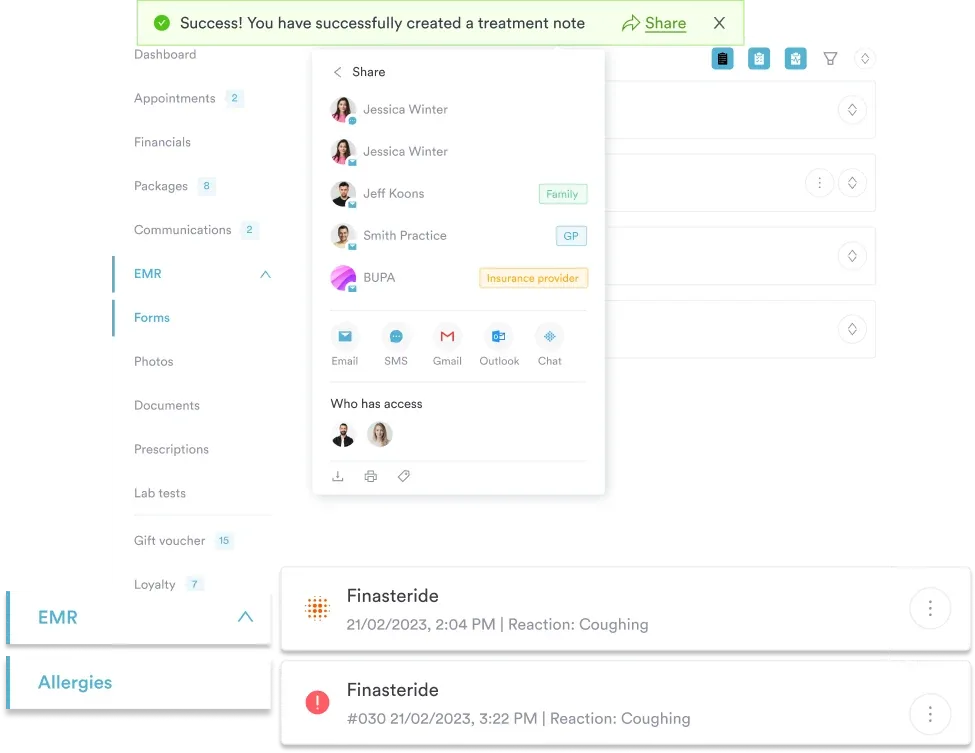
Pabau connects pathology documentation to billing workflows, so the right diagnosis code gets attached to the right encounter every time. See how it works for surgical and oncology-adjacent practices.

Accurate documentation is the foundation of a defensible D36.0 claim. Payers and auditors expect the record to contain several specific elements before this diagnosis code is assigned.
According to CMS ICD-10 coding guidelines, diagnosis codes are assigned to the highest level of specificity supported by the medical record. Using D36.0 when only reactive lymphadenopathy is documented – without a biopsy result – does not meet this standard and creates a denial risk at claim adjudication.
Managing these documentation chains is easier when clinical notes, pathology results, and billing codes are stored within the same HIPAA-compliant practice software environment. Practices that manage medical documentation workflows across paper-based and digital systems often find that pathology notes get separated from encounter records, creating exactly the kind of missing documentation that drives D36.0 audit findings.
Flag any D36.0 claim where the pathology report was finalized after the initial claim submission date. These require a corrected claim submission and an updated encounter note reflecting the confirmed benign diagnosis – submitting on the original date without updating the record is a common compliance mistake.
D36.0 most often appears as the supporting diagnosis code for lymph node excision procedures. The relevant CPT codes fall in the 38500-38530 range, covering superficial and deep lymph node biopsies and excisions. Pairing the correct CPT procedure code with D36.0 (when pathology supports the benign diagnosis) creates a coherent claim that payers can adjudicate without additional documentation requests. Keeping a cheat sheet of CPT category ranges nearby speeds up pairing a procedure code with this diagnosis.
Payer medical necessity policies for benign lymph node excision vary. Some payers require prior authorization when D36.0 is the primary diagnosis supporting an elective excision, particularly if the clinical notes do not document symptom burden (pain, size progression, functional impairment) alongside the pathology result.
Checking your payer’s or MAC’s active Local Coverage Determinations linked to D36.0 before submitting is a practical step for high-volume surgical billing teams. Aligning this check with sound healthcare revenue cycle management keeps benign neoplasm claims moving without avoidable denials.
Practices that bill a mix of surgical and diagnostic encounters benefit from practice management software features that support pairing procedure and diagnosis codes during charge capture, rather than relying on manual coder review at the end of the billing cycle.
Teams handling complex surgical documentation also use digital intake forms to capture pre-operative symptom history, which strengthens medical necessity documentation when payers request records for benign neoplasm excision claims.

The coding mistake most likely to cause problems with D36.0 is simple: assigning the code before pathology confirms it. Once that confirmation exists, the code is straightforward – billable, specific, and appropriately placed in the neoplasm chapter for a confirmed benign lymph node diagnosis.
Practices managing surgical oncology workflows, soft-tissue excisions, or incidental benign neoplasm findings benefit from documentation systems that keep pathology results, encounter notes, and diagnosis codes connected within a single workflow. Pabau’s plastic surgery EMR supports exactly this kind of documentation continuity, helping surgical teams move from confirmed pathology result to accurate claim submission without losing documentation integrity along the way. To see how Pabau handles coding workflows for oncology-adjacent surgical practices, book a demo. Practices reconciling payment posting against expected fees find short-paid claims that never appear as denials.

Billing for a retinal gene therapy procedure? CPT code 0810T billing guide covers this Category III code for subretinal injection and vitrectomy used in retinal gene therapies.
Want another confirmed-diagnosis coding walkthrough in the neoplasm and blood chapters? ICD-10 Code D45: Polycythemia vera shows how a confirmed hematologic diagnosis is documented and billed.
Billing for multiple biopsy lesions? CPT code 10010 billing guide covers this add-on code for each additional lesion sampled during a CT-guided needle biopsy.
ICD-10 Code D36.0 is the billable ICD-10-CM classification for a benign neoplasm of lymph nodes. It sits within Chapter 2 of ICD-10-CM (Neoplasms, C00-D49), under the D10-D36 block covering benign neoplasms excluding benign neuroendocrine tumors, and is valid for FY2026 claims submission.
The ICD-10-CM code for a benign lymph node is D36.0, covering a confirmed benign neoplasm of lymph nodes at any anatomical site. It is only valid once a pathology report documents a benign neoplastic process, so a reactive or enlarged node without a biopsy result does not qualify.
Yes, D36.0 is a billable and specific ICD-10-CM code valid for HIPAA-covered transactions from October 1, 2025 through September 30, 2026 (FY2026). It can be used as a principal or secondary diagnosis on claims without requiring a more specific sub-code.
D36.0 requires a confirmed histological diagnosis of a benign neoplasm from a pathology report, while R59 (enlarged lymph nodes) is a symptom code used when lymph node enlargement is observed but no definitive diagnosis has been established. Using D36.0 without pathology confirmation is a coding compliance error.
D36.0 is assigned when pathology confirms the lymph node neoplasm is benign. If pathology confirms malignancy, the appropriate code from the C77 range (secondary malignant neoplasm of lymph nodes) or a primary lymphoma code applies. The choice is determined entirely by the pathology result, not by clinical impression.
Required documentation includes a signed pathology report confirming a benign neoplasm of lymph nodes, an operative or procedure note describing the site and clinical indication, and a physician-authored diagnosis statement in the encounter record. Claims submitted without a finalized pathology report linked to the encounter are vulnerable to audit recoupment.
Directly related codes include D36 (parent category, not billable without a subcode), D36.7 (benign neoplasm of other specified sites), and D36.9 (benign neoplasm, unspecified site). Differential codes include R59.0 and R59.1 for enlarged lymph nodes without confirmed diagnosis, and the C77 range for malignant lymph node involvement.