ICD-10 Code S42.444P: Medial epicondyle fracture, right humerus
ICD-10 Code S42.444P: full descriptor and code validity ICD-10 Code S42.444P car...

Last Updated: Oct 13, 2026
Billable Code Specific Code
S76.129S is the billable ICD-10-CM code for laceration of unspecified quadriceps muscle, fascia and tendon, sequela.
The table below summarizes the code's key data points.
Let Pabau's smart automation suggest the right codes, reduce claim denials, and keep your practice compliant—effortlessly.
Automate repetitive tasks and focus on what matters most—your patients.
Reduce coding errors and ensure compliance with the latest regulations.
Clean claims, fewer denials, and faster reimbursements.
Powerful insights and reporting to help your practice thrive.
HIPAA compliant SOC 2 certified GDPR-compliant Trusted by 4,000+ clinics worldwide

S76.129S is a billable ICD-10-CM code for laceration of unspecified quadriceps muscle, fascia and tendon, sequela, valid for the 2026 edition.
The 7th character ‘S’ designates sequela. It means the patient presents with a residual condition left by an earlier quadriceps laceration, not an active injury.
A common coding error is applying S76.129S during active treatment. Use S76.129A for the initial encounter or S76.129D while the injury is still being treated.
The record must show the prior laceration, its healed status, and the residual condition being treated.
Practice management software like Pabau keeps the original injury note and the current rehab visit in one patient record. That is what a sequela claim needs.
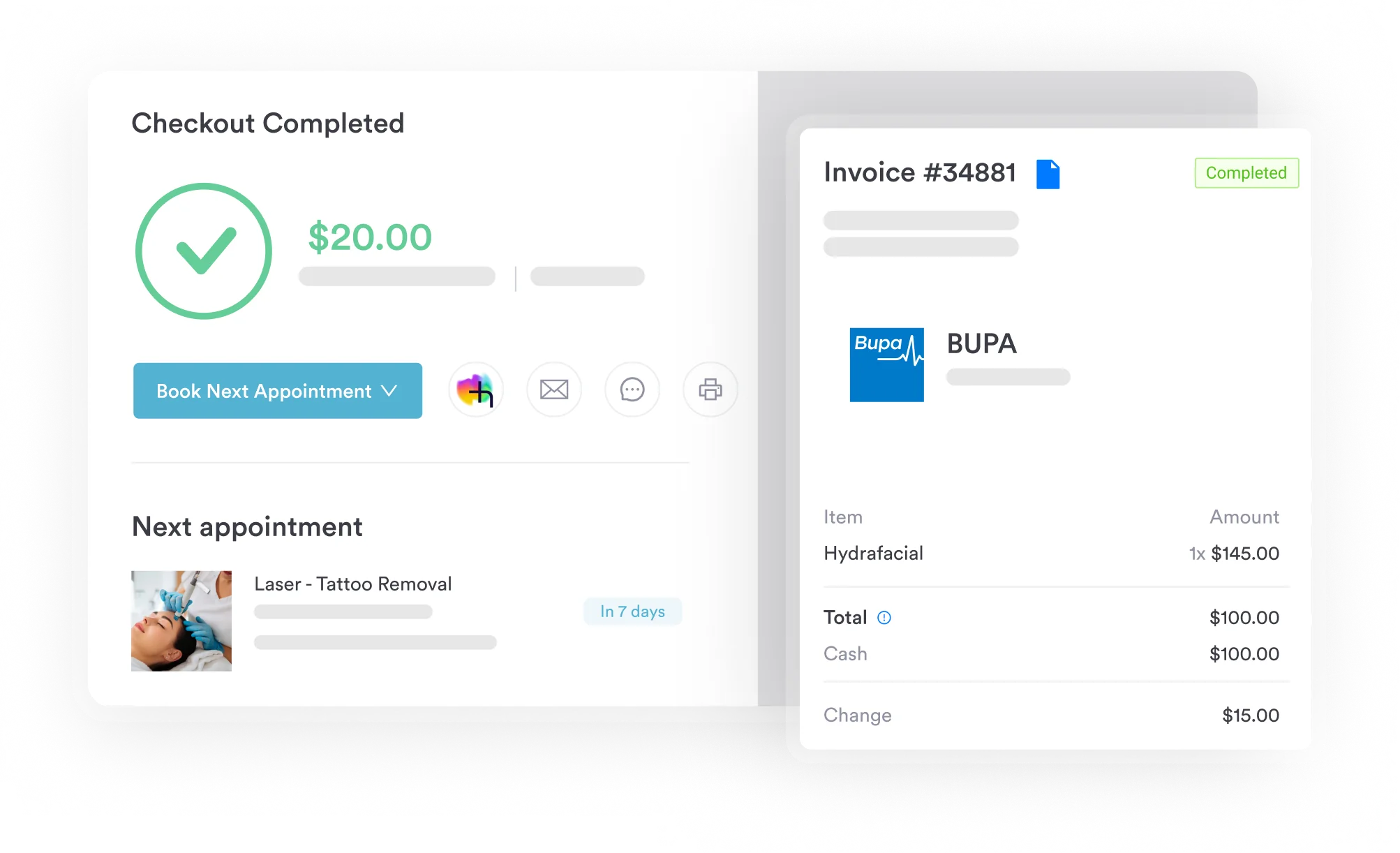
The 7th character in ICD-10-CM injury codes carries clinical meaning. It tells the payer whether the claim covers a new injury, ongoing treatment, or a late effect. Codes under the S76 category use three options: A, D, and S. Getting it wrong triggers denials and can flag the claim for audit.
The ‘S’ suffix signals that the original laceration has resolved. The patient is now seeking care for a condition caused by that prior injury. According to the WHO ICD-10 classification, sequela codes apply when treatment is directed at the late effect rather than the original injury.
The same A, D, and S ladder runs through other injury chapters, including nerve injury codes such as S64.31XS. Before submitting, coders can confirm current-edition validity with the AAPC code lookup.
The quadriceps femoris is a group of four muscles on the anterior thigh that together extend the knee. Those muscles are the rectus femoris, vastus lateralis, vastus medialis, and vastus intermedius. A laceration here may involve the muscle belly, the surrounding fascia, or the distal tendon. That tendon inserts at the tibial tuberosity through the patellar ligament. Denial management works backwards from the remittance to the step that caused it. A small billing team benefits more from a documented billing process than from extra hours. Denial management works backwards from the remittance to the step that caused it. A small billing team benefits more from a documented billing process than from extra hours.
“Unspecified” in S76.129S means laterality was not documented or is unknown. Practices running sports medicine software should record limb laterality in the clinical note whenever possible. Unspecified codes are valid for submission, but they attract more scrutiny in payer audits than S76.121S or S76.122S.
S76.129S sits at the fifth level of the ICD-10-CM hierarchy. Knowing that hierarchy helps coders pick the most specific code available and avoid upcoding or undercoding. The descent from category to billable code is below.
The S76 category excludes injuries of muscle and tendon at the lower leg level, which fall under S86. Verify the anatomical site in the clinical note before assigning any S76 code. Other injury categories follow the same pattern, including femur fracture codes such as S72.411S, where specificity increases at every level.
Unspecified options exist across the whole code set, not only in injury chapters. Z28.9 carries the same trade-off between a documented reason and a default.
ICD-10-CM instructional notes at the category level apply to every code within S76, including S76.129S. The notes define the scope of the category and prevent misassignment.
These instructional notes come from the ICD-10-CM Official Guidelines for Coding and Reporting, which CMS and NCHS maintain annually. Check the current-year tabular list before submission, because applicability notes change with each October update. Our medical coding cheat sheet collects the conventions coders reach for most often.
Chapter 21 carries its own notes and conventions, where Z21 reports a status rather than an episode of care. Reading them first saves a rebill later.
S76.129S is one of three billable 7th-character extensions under S76.129. Coders also need the laterality-specific siblings under S76.12 and the other S76.1 laceration codes to pick the most accurate option.
When laterality is documented, prefer S76.121S or S76.122S over S76.129S. The unspecified code is for cases where laterality cannot be determined from the documentation. Review the full S76.1 subcategory to confirm the injury type matches. Laceration codes (S76.12x) are distinct from strain codes (S76.11x) and other injury types (S76.19x).
The quadriceps mechanism also involves the patella, and patella fracture codes such as S82.036S carry a longer list of 7th characters. Fracture codes track healing status as well as encounter phase, so the sequela character is only one option among many.
Which code leads the claim is a separate decision from which codes apply. Coders meet that first-listed question again with Z08.
Sequela codes need a different documentation trail from active injury encounters. For S76.129S to hold up on audit, the record has to establish three things. Practices on a physical therapy EMR get structured templates that carry this information across encounters.
Structured patient record documentation that ties today’s visit note to the original injury encounter is what makes sequela coding defensible.
A patient working through a return-to-running protocol after a healed thigh laceration is a good example. Document the functional deficits under rehabilitation and their causal link to the prior injury. The safer clinical notes guide covers note-writing patterns that support this.
Follow-up visits carry their own documentation burden. Whoever assigns Z09 needs the note to state what the encounter follows.
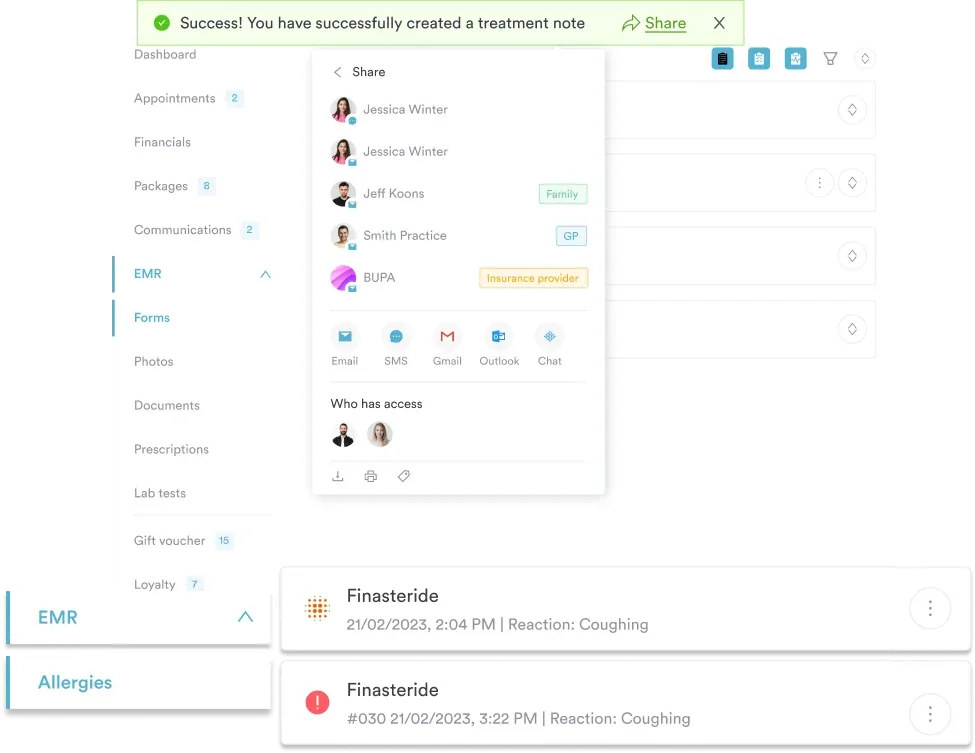
When reviewing a chart for sequela code support, look for the phrase ‘residual’ or ‘late effect’ in the assessment section. If the provider describes an ongoing acute wound or active surgical repair, the encounter likely warrants S76.129A or S76.129D rather than S76.129S.
The choice between A, D, and S is the most error-prone decision coders face with S76.129S. Each character marks a different phase of the injury episode. Picking the wrong one creates a medical necessity mismatch and exposes the practice to denial or audit.
Sequela applies when treatment addresses the consequence of the prior injury rather than the injury itself. If a provider is still treating the wound, the debridement, or the surgical repair, the encounter is not sequela. The CMS guidelines put routine follow-up and ongoing active care under ‘D’, so ‘S’ is reserved for the late effect.
Encounter type drives code choice well outside the injury chapters. Z04.9 turns on the same question of why the patient presented.
Three coding errors appear repeatedly in audits of S76.129S claims. Each has a straightforward fix.
Practices that build physical therapy compliance checks into the workflow catch these errors at the documentation stage rather than at claims review.
Coverage rules bite hardest on screening claims. A practice reporting Z13.1 confirms the payer’s policy before the visit, not after the denial.
Payers keep refining their medical necessity edits for musculoskeletal sequela codes. Accurate first-submission coding is cheaper than appealing. The AHA Coding Clinic and the CMS ICD-10-CM annual updates are the references worth keeping open.
Run a monthly audit of all S-suffix claims to check that prior injury documentation exists in the same chart. A sequela code submitted with no prior encounter note in the same EMR is vulnerable to payer challenge.
In a lot of practices, sequela coding problems surface at claims review, weeks after the visit. The coder pulls the chart, finds no reference to the original laceration, and has to chase the provider for an addendum. That is how a clean claim turns into a 30-day delay.
Practice management software like Pabau keeps the whole injury episode in one patient record. The original laceration note, the follow-up wound checks, and today’s rehab visit sit in the same chart, so the sequela link is already documented. Pabau’s claims management software then builds the claim from that record.
Custom note templates can prompt for the healed status and the residual condition at the point of care. You get fewer addendum requests, fewer denied sequela claims, and less time spent rebuilding a documentation trail after the fact.

Pabau helps orthopedic, sports medicine, and physical therapy practices reduce claim errors and document musculoskeletal injuries from the initial encounter through sequela. See how the claims workflow handles it.

Sequela coding errors are preventable. With S76.129S the risk sits in two places. One is the 7th character. The other is defaulting to unspecified when the note actually states a side. Both errors come from choosing the code before reading the documentation.
Read the chart first and S76.129S becomes one of the easier codes to defend. The prior injury, the healed status, and the residual condition are all a payer wants to see. Book a demo to see how Pabau keeps injury documentation and claim submission in one place.

Billing an unlisted abdominal laparoscopy? CPT code 49329 covers the catch-all code for laparoscopic abdominal procedures with no dedicated CPT code.
Billing a percutaneous renal biopsy? CPT code 50200 covers the laterality modifier and specificity rules that keep renal biopsy claims from denial.
Billing a major urinary reconstruction? CPT code 50825 covers the operative documentation and NCCI edit rules behind most continent diversion denials.
Billing a cystectomy with urinary diversion? CPT code 51580 covers the modifier and diversion-code rules that keep cystectomy claims from a lengthy denial review.
S76.129S is the ICD-10-CM code for laceration of unspecified quadriceps muscle, fascia and tendon, sequela. The code identifies a residual condition left by an earlier quadriceps laceration at the hip and thigh level, once the original injury has healed. It is valid for the 2026 ICD-10-CM edition, effective October 1, 2025.
Yes. S76.129S is a billable, specific ICD-10-CM code that can be submitted for reimbursement purposes. It is valid for the 2026 edition. The non-billable parent codes (S76, S76.1, S76.12, S76.129) all need a 7th character before they can be submitted.
Initial encounter (7th character A) is used when the patient first receives active treatment for an injury. Subsequent encounter (D) applies to return visits where active treatment of the same injury continues, such as wound care or follow-up physical therapy. Sequela (S) applies only after the injury has fully resolved. The patient is then treated for a residual condition caused by it, such as chronic thigh weakness or scar tissue.
The laterality-specific sibling sequela codes are S76.121S (right quadriceps laceration sequela) and S76.122S (left quadriceps laceration sequela). The other 7th-character extensions of the same base code are S76.129A (initial encounter) and S76.129D (subsequent encounter). Closely related injury type codes in the S76.1 subcategory include S76.119S (strain sequela) and S76.199S (other injury sequela).
The medical record must show three things. It needs evidence of the prior quadriceps laceration, such as an encounter note or operative report. It needs documentation that the original injury has resolved. And it needs a description of the residual condition now being treated, such as muscle weakness, restricted range of motion, or scar tissue. The treatment plan should link the current care to the late effect of the prior injury.
The direct parent is S76.129, laceration of unspecified quadriceps muscle, fascia and tendon, without a 7th character. Above that sits S76.12, then S76.1, and the top-level category S76. S76 covers injury of muscle, fascia and tendon at hip and thigh level. None of these parent codes are billable on their own.