ICD-10 Code S42.444P: Medial epicondyle fracture, right humerus
ICD-10 Code S42.444P: full descriptor and code validity ICD-10 Code S42.444P car...

Last Updated: Oct 13, 2026
Billable Code Specific Code
C49.6 is the billable ICD-10-CM code for malignant neoplasm of connective and soft tissue of trunk, unspecified.
The category C49 covers malignant neoplasms of connective tissue types including fibrous tissue, fatty tissue, muscle, vascular tissue, and synovial tissue. The full descriptor is "Malignant neoplasm of connective and soft tissue of trunk, unspecified," and C49.6 is fully billable.
To assign it, coders navigate the Alphabetic Index under "Neoplasm, connective tissue, trunk" before confirming the code in the Tabular List. The same index path leads to the regional sub-sites.
Soft tissue sarcomas in the trunk include histological subtypes such as liposarcoma, fibrosarcoma, leiomyosarcoma, rhabdomyosarcoma, and synovial sarcoma. The code does not specify which subtype is present; the histology is captured separately, typically through a companion morphology code where required by the payer or registry.
Let Pabau's smart automation suggest the right codes, reduce claim denials, and keep your practice compliant—effortlessly.
Automate repetitive tasks and focus on what matters most—your patients.
Reduce coding errors and ensure compliance with the latest regulations.
Clean claims, fewer denials, and faster reimbursements.
Powerful insights and reporting to help your practice thrive.
HIPAA compliant SOC 2 certified GDPR-compliant Trusted by 4,000+ clinics worldwide

ICD-10 code C49.6 is the billable diagnosis code for malignant neoplasm of connective and soft tissue of trunk, unspecified, effective October 1, 2015.
Use C49.6 only when clinical documentation confirms a trunk location but does not identify a more specific sub-site (thorax, abdomen, or pelvis).
C49.6 does not capture tumor staging or laterality; separate staging codes must be reported alongside it for complete claims.
Pabau’s claims management software and AI-assisted documentation tools help oncology practices code C49.6 accurately and reduce claim denials.
C49.6 is a valid, billable ICD-10-CM code. Payers accept it for reimbursement claims with a date of service on or after October 1, 2015, as confirmed by the CMS ICD-10 codes page. It carries no “Not Billable” or “Header Only” flag in the official Tabular List.
The code hierarchy for C49.6 is:
Because C49.6 sits within the ICD-10-CM classification for connective and soft tissue malignancies, it excludes certain tissue types that have their own dedicated codes. Carcinomas of the skin, breast, and internal organs are excluded, as are mesothelioma (C45), Kaposi’s sarcoma (C46), and peripheral nerve tumors (C47).
The C49 family offers specific codes for each region of the trunk. Use the chart below when choosing between C49.6 and a more specific code, and always assign the most specific code supported by documentation.
Query the record before defaulting to C49.6. If the operative report or imaging identifies the thorax, abdomen, or pelvis as the tumor site, C49.3, C49.4, or C49.5 applies. C49.6 is appropriate only when trunk location is confirmed but the specific sub-region is genuinely undocumented.
If a single tumor overlaps two or more trunk sub-sites, assign C49.8 (overlapping sites) instead .
Check the pathology report and operative notes before assigning C49.6. Radiologists and surgeons often document the thoracic, abdominal, or pelvic sub-site even when the ordering physician’s note is vague. Upgrading from C49.6 to C49.3, C49.4, or C49.5 reduces medical necessity flags and payer audits.
C49.6 records where the tumor sits, not what it is. There is no single ICD-10 code for sarcoma as a tumor type. The histologic subtype is carried on a separate morphology code, so a liposarcoma and a leiomyosarcoma in the same trunk location share the identical C49.6 site code.
That split is why claims research warns against using C49 codes on their own to identify a specific soft tissue sarcoma type. The site code tells the payer the region. The morphology code (ICD-O-3), which cancer registries record alongside it, tells them the cell type.
Each of these subtypes maps to the same C49 site codes. When the trunk sub-site is documented, the subtype codes to C49.3, C49.4, or C49.5. C49.6 applies only to a confirmed trunk tumor with no sub-region on record.
With organized digital medical records, each neoplasm code links back to the report that confirms it.
Payers auditing C49.6 claims look for three documentation elements: confirmation of malignancy, identification of the connective or soft tissue origin, and evidence that a more specific trunk sub-site could not be established.
Strong documentation for C49.6 includes the following:
Because trunk codes do not carry laterality qualifiers (unlike upper and lower limb C49 codes), there is no left/right modifier required. However, HIPAA-compliant clinical documentation practices still expect the physical location to be captured in the clinical note for audit trail purposes, even if it does not change the code selection.
Maintaining thorough patient record documentation within your practice management platform ensures the coding team always has access to the operative notes, pathology reports, and imaging results needed to support C49.6 at audit. Practices using digital intake forms and clinical notes capture this information at the point of care rather than reconstructing it retroactively. An appeal filed after the timely filing window is denied on timeliness alone, whatever the coding showed.
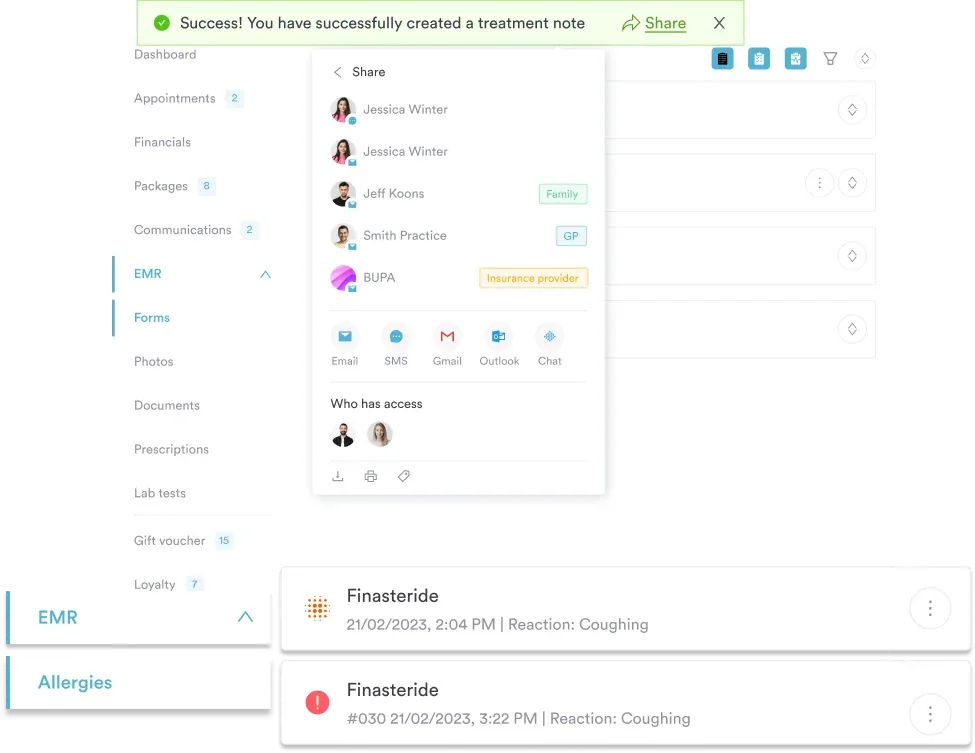

Pabau centralizes clinical notes, pathology attachments, and diagnosis coding in one place, so your billing team always has the evidence trail to support ICD-10 code C49.6 and every other diagnosis on the claim.

Practices that transitioned from ICD-9-CM can map C49.6 to the legacy 171.x series, specifically codes in the range covering malignant neoplasm of connective and other soft tissue in the trunk region. The conversion is approximate; clinical interpretation may be needed because ICD-9-CM trunk codes were less granular than the current C49 family.
For ongoing coding reference, the CDC/NCHS ICD-10-CM web tool provides the official 2026 code set with tabular list navigation and index search, along with crosswalk data and related codes for C49.6.
Related codes frequently reported alongside C49.6 include staging and encounter codes. Coders working across the neoplasm chapter also reference site-specific malignancy codes such as C73 (thyroid), C50.411 (breast).
Flag C49.6 claims for prior authorization review before submission. Many commercial payers and Medicare Advantage plans require pre-authorization for surgical resection, radiation, or chemotherapy tied to soft tissue sarcoma diagnoses. Document the medical necessity rationale in the clinical note to support the authorization request and speed up approvals.
Soft tissue sarcoma claims under C49.6 are a frequent target for medical necessity reviews. Three coding practices reduce denial risk consistently.
Pair with appropriate CPT procedure codes. Common procedures billed alongside C49.6 include wide local excision codes (CPT 27615-27619 for soft tissue tumors of the trunk depending on depth and size), radiation therapy planning codes (CPT 77261-77263), and chemotherapy administration codes (CPT 96400-96416). Wide excision defects sometimes need donor skin coverage, and rejection of that allograft is reported with ICD-10 code T86.820.

Apply sequencing rules correctly. When C49.6 is the principal diagnosis for a surgical encounter, sequence it first. For chemotherapy or radiation therapy encounters, the encounter code (Z51.11 or Z51.0) sequences first, with C49.6 as an additional diagnosis code.
Use AI-assisted documentation tools at the point of care. AI-assisted clinical documentation tools that generate structured SOAP notes ensure the tumor location, tissue type, and malignancy confirmation are captured in the clinical note before the encounter closes.
This is where most specificity losses occur: the coder receives a note reading “trunk mass” rather than “anterior abdominal wall fibrosarcoma,” defaulting the claim to C49.6 when C49.4 was the correct code.
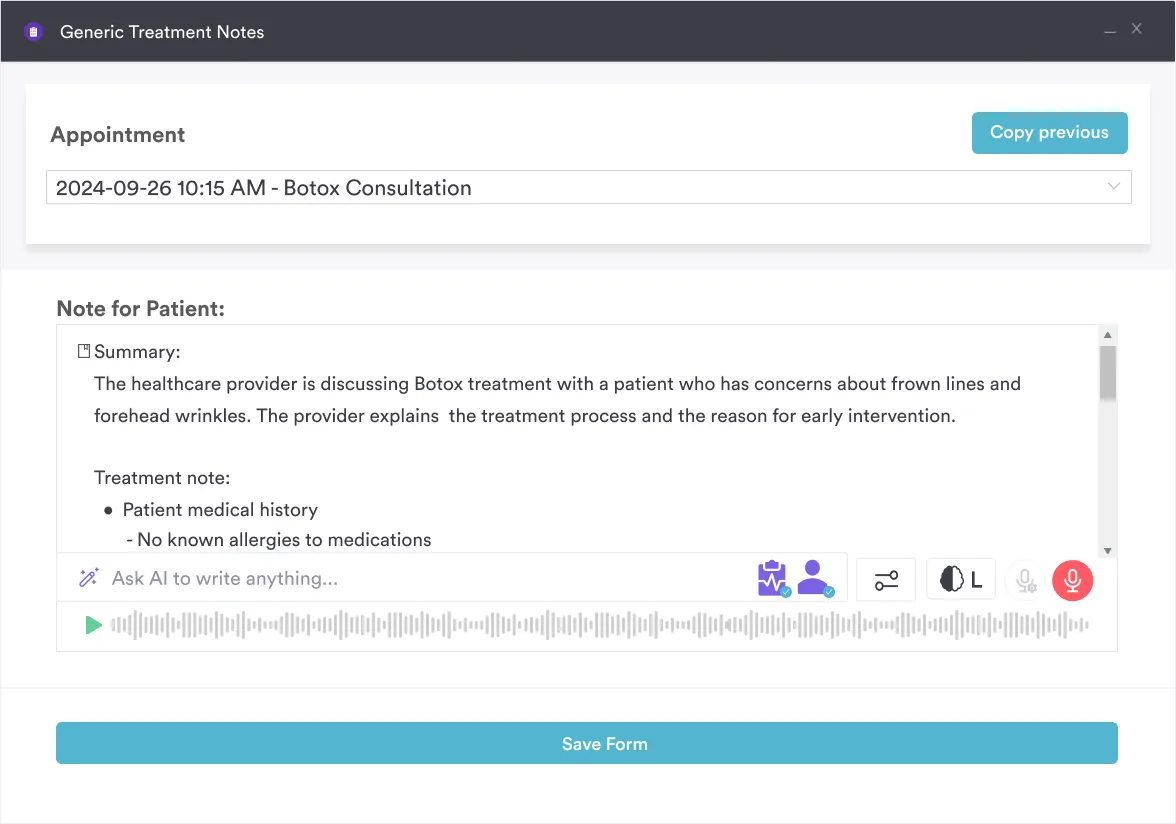
For practices needing a full documentation and billing workflow. Combine this with compliance management tools that track payer-specific LCD (Local Coverage Determination) policies for soft tissue sarcomas.
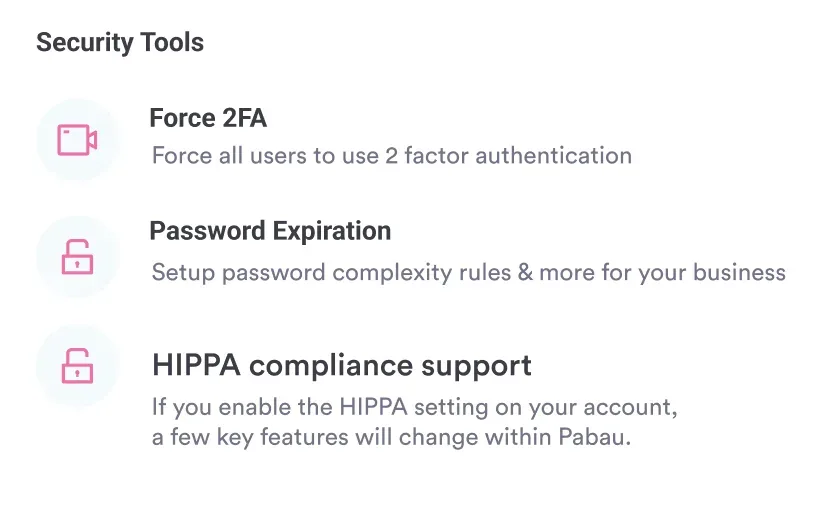
Coding accuracy for diagnoses like ICD-10 code C49.6 depends on having the right documentation in the right place at the right time. Missing details in the clinical record at the point of care become coding errors at the claim level.
Pabau’s platform connects clinical documentation, diagnosis coding, and claims submission in a single workflow. Specialists working in dermatology EMR software environments and oncology-adjacent practices use Pabau to:
For practices managing oncology-focused EMR systems alongside general clinical workflows, Pabau’s multi-specialty record structure keeps sarcoma documentation separate from routine encounters while feeding the same billing queue.
ICD-10 code C49.6 is the correct diagnosis code when soft tissue sarcoma is confirmed in the trunk but the specific sub-region (thorax, abdomen, or pelvis) cannot be identified from clinical documentation. It is billable from October 2015, requires companion staging codes, and should only be assigned after ruling out a more specific C49 sub-code.
Accurate assignment starts with structured clinical documentation at the point of care. Pabau’s integrated clinical notes, AI documentation tools, and claims management workflow give specialist practices the infrastructure to code C49.6 correctly and defend every claim at audit. Book a demo to see how Pabau supports oncology and specialist billing workflows.

Need the I61.x hemorrhage code series? Intraparenchymal hemorrhage code guide walks through the I61.x code series with documentation tips and coding best practices for practices.
Managing compliance documentation for specialist procedures? Pabau compliance management tools help practices track LCD policies, payer-specific requirements, and audit readiness for high-scrutiny diagnoses.
Coding a healing foot abrasion visit? Left foot abrasion coding guide covers S90.812D for follow-up wound checks and dressing changes as a left foot abrasion heals.
ICD-10 code C49.6 is the billable diagnosis code for malignant neoplasm of connective and soft tissue of the trunk when the specific trunk sub-site (thorax, abdomen, or pelvis) cannot be determined from clinical documentation. It is effective for dates of service on or after October 1, 2015, and belongs to category C49 within block C45-C49 of the ICD-10-CM classification system.
Use C49.6 only when the clinical documentation confirms a trunk location but does not specify thorax, abdomen, or pelvis. If imaging, operative notes, or pathology identify the thorax, use C49.3. For the abdomen, use C49.4. For the pelvis, use C49.5. Always assign the most specific code supported by the available documentation.
No. Trunk codes in the C49 family do not carry laterality qualifiers. Unlike upper and lower limb sub-codes (C49.11, C49.12, C49.21, C49.22), C49.6 has a single code covering both sides of the trunk. The physical location should still be captured in the clinical note for audit purposes even though it does not affect code selection.
C49.6 does not capture tumor stage. Oncology practices typically report a companion staging encounter code or include staging documentation in the clinical record per payer and registry requirements. Common companion codes include Z51.11 (encounter for antineoplastic chemotherapy) or Z51.0 (encounter for antineoplastic radiation therapy) when the encounter purpose is treatment rather than diagnosis.
C49.6 maps approximately to the ICD-9-CM 171.x series covering malignant neoplasm of connective and other soft tissue in the trunk region. The conversion is not exact; clinical interpretation is required because ICD-9-CM trunk coding was less granular. The CDC/NCHS ICD-10-CM tool provides forward and backward crosswalk data for transition verification.
Soft tissue sarcoma is coded to a C49 site code that reflects the tumor location rather than a single code for the cancer type. A confirmed trunk sarcoma with no documented sub-region uses C49.6, while the thorax, abdomen, and pelvis take C49.3, C49.4, and C49.5. The specific subtype, such as liposarcoma, leiomyosarcoma, or rhabdomyosarcoma, is recorded on the accompanying morphology code.