ICD-10 Code S42.444P: Medial epicondyle fracture, right humerus
ICD-10 Code S42.444P: full descriptor and code validity ICD-10 Code S42.444P car...

Last Updated: Oct 13, 2026
Billable Code Specific Code
S40.022A is the billable ICD-10-CM code for contusion of left upper arm, initial encounter.
The coding rule behind it is simple. Three documentation details decide whether the claim pays. You need the side, the arm segment, and the stage of treatment, all named in the note.
Miss one of those and the claim usually stops at the clearinghouse, before a payer ever sees it. Fixing that is a documentation job more than a coding one, which is where most of this page is aimed.
Let Pabau's smart automation suggest the right codes, reduce claim denials, and keep your practice compliant—effortlessly.
Automate repetitive tasks and focus on what matters most—your patients.
Reduce coding errors and ensure compliance with the latest regulations.
Clean claims, fewer denials, and faster reimbursements.
Powerful insights and reporting to help your practice thrive.
HIPAA compliant SOC 2 certified GDPR-compliant Trusted by 4,000+ clinics worldwide

S40.022A is the billable ICD-10-CM code for a contusion of the left upper arm, initial encounter, valid for FY2026.
The 7th character A covers the whole active treatment phase, not only the first visit.
S40.022 already specifies the left side, but it is an incomplete, non-billable parent code without a 7th character.
The note has to name the side, the upper arm segment, and the stage of treatment.
A contusion drops off the claim when a more severe injury is coded at the same site.
S40.022A covers a closed bruise of the left upper arm while the patient is under active treatment. The upper arm is the segment between the shoulder joint and the elbow. Above that line you are in shoulder territory, and the forearm has its own contusion codes under S50.1-. Practices that treat injuries like this one and also offer aesthetic services can compare charting tools in our guide to med spa software.
That boundary matters more than it sounds. A note that says “bruised left deltoid” describes the shoulder region, so it does not support this code. Here is the rest of the code at a glance.
S40.022 takes one of three 7th characters, and every claim needs one of them. A means active treatment, D means routine care during healing, and S means sequela. The CMS ICD-10-CM guidelines set the rules for all three.
A does not mean the first visit. It covers every encounter while treatment is still aimed at the injury, including casting, aspiration, or a change of plan. Once the goal shifts to watching it heal, move to D.
Here is how that plays out. A patient is struck in the left upper arm on Saturday and seen on Monday, so that visit is S40.022A. Two weeks later she returns for a range-of-motion check with no new treatment, and that visit is S40.022D.
Sequela works differently again. You report the lasting condition first, then the injury code with S, the way S63.615S is used. So a firm calcified lump at the impact site gets its own code, followed by S40.022S.
One thing worth flagging: not every injury category stops at three characters. Fracture codes carry a longer list, which is why S62.291B can mark an open fracture at the first visit. For superficial injuries, A, D and S are all you get.
Three codes cover contusions of the upper arm, split by side. Only the versions carrying a 7th character can go on a claim.
A contusion is also the mildest thing that can happen to that segment. If the note describes a nerve deficit in the same arm, the nerve injury carries the claim. A code such as code such as S44.42XA replaces the bruise.
Auditors read the tree from the top down, so it helps to know the chain by heart:
The CDC ICD-10-CM web tool confirms that chain for the current fiscal year, which is worth a check each October.
Excludes2 means the condition is not part of this code, though a patient can have both at once. Under S40, the Excludes2 notes point you to:
At block level, S40-S49 also excludes injuries of the elbow and forearm, S50-S59. So a bruise that runs from the upper arm past the elbow needs a second code, not a wider one.
Clinicians rarely write “contusion of left upper arm” word for word. These descriptions all land on the same code:
A contusion is a closed soft tissue injury from blunt impact. The force crushes capillaries under the skin, which produces the bruising, swelling, and tenderness the patient walks in with. What sets it apart from an open wound is that the skin stays unbroken.
In practice these arrive from falls, sporting impacts, car accidents, and direct blows. Most settle within a few weeks. A minority stiffen up or calcify, which is when rehab enters the picture and a physical therapy EMR starts carrying the documentation load.
Write the mechanism into the note every time you code S40.022A. Payers request records to confirm the injury is a contusion rather than a fracture or a strain. One line usually does it: blunt impact to left upper arm, skin intact, no bony tenderness.
S40.022A is a diagnosis code, so it never travels alone. It tells the payer what is wrong, and a CPT code tells them what you did about it.
Practices seeing a steady flow of these injuries often run them through sports medicine software. It keeps the encounter note and the claim on the same record.
Level selection follows the documented medical decision-making, not the diagnosis. 99213 sits at a low level of decision-making and 99214 at moderate, so the note has to earn the difference. Payer rules vary, and the AAPC code lookup is a quick way to check a crosswalk before you submit. Where a practice bills both markets, mapping between code sets is manual, so MBS item numbers are checked separately. A coding error surfaces as a cash flow problem weeks later, which is why the healthcare revenue cycle is measured end to end.
S40.022A shows up in two places on a claim. It goes into Box 21 of the CMS-1500. That box holds twelve diagnosis fields, lettered A through L. Box 24E on the service line then points to the one you used.
Set the ICD indicator in Box 21 to 0 for ICD-10. Electronic claims carry the same information in the 837P, so nothing changes if you never touch paper. A superbill heading to an outside billing service needs the side spelled out too.
From there, the claim can fail in two different ways. An incomplete code like S40.022 trips the clearinghouse edit and bounces back as a rejection, usually within a day. It never reached the payer, so there is nothing to appeal and nothing to write off.
A payer denial takes longer to surface. The code passes the format check, then adjudication flags something else. A common one is a side mismatch. The procedure line carries RT while the diagnosis says left, so the payer asks for records first.
That last point catches people out. ICD-10-CM does not require an external cause code with S40.022A, but plenty of payers want one, and workers’ compensation programs usually insist. When you do report them, the place of occurrence and activity codes belong on the initial encounter only.
Four elements decide whether S40.022A survives a records request. Miss any one of them and the claim is exposed, even when the code itself was right.
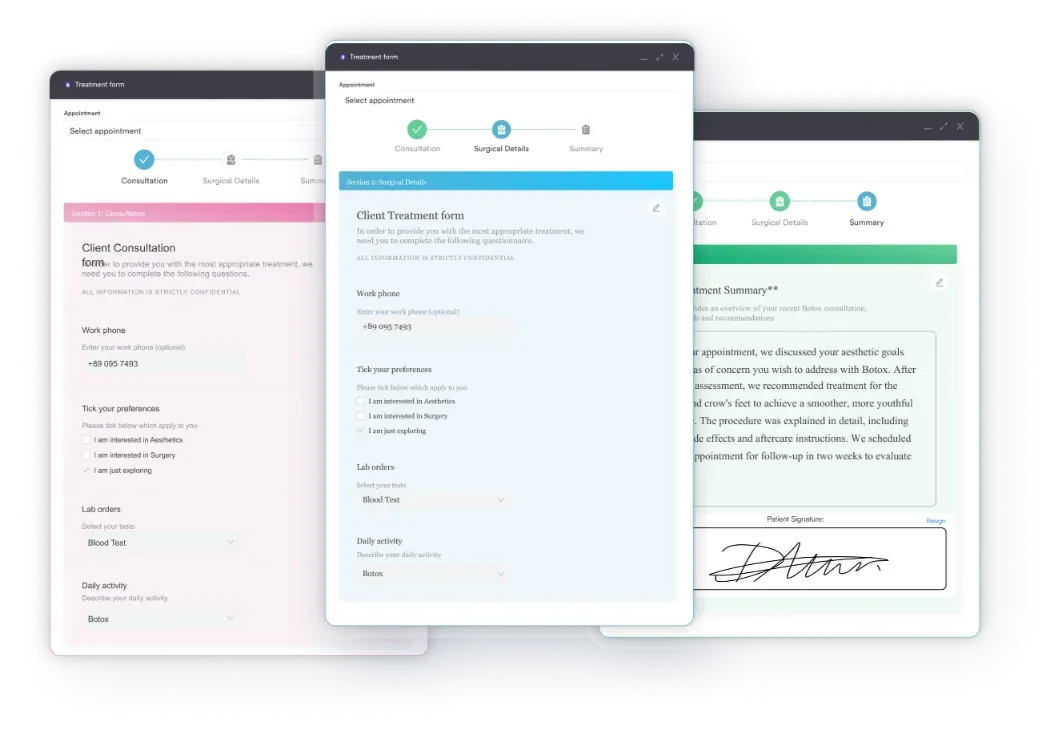
Chasing this information after the visit is slow and often fruitless. Structured digital intake forms can ask for the injured side and the mechanism before the patient sits down. The coder then inherits the answer instead of hunting for it.
Audit the S40.022 family once a quarter. Pull every claim where the 7th character A landed on a third or later visit for the same injury. That pattern draws payer attention, and it is one of the quickest corrections a billing team can make.
Encounter type is the harder one to keep straight, because it depends on what happened at earlier visits. A patient records system that shows the whole injury on one timeline lets a biller confirm the right character without reopening five notes.
Records requests bring their own obligations, so keep HIPAA-compliant documentation habits in place for anything you send out. Teams reviewing their setup can also compare options for clinical documentation software before the next audit lands.
Most practices keep the clinical note in one system and the claim in another. Someone reads the note, retypes the diagnosis into a billing screen, and hopes nothing was lost on the way. Laterality is exactly the detail that goes missing in that handoff.
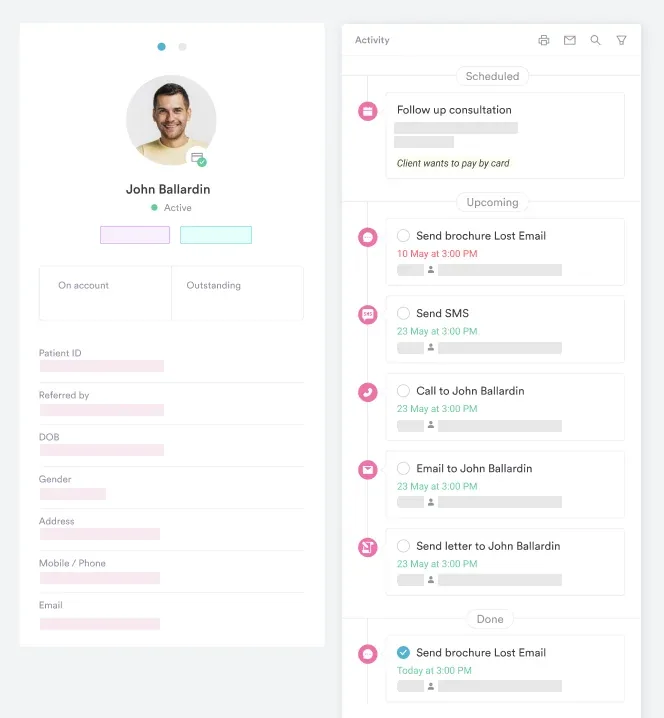
Pabau puts both on the same record. The intake form, the treatment note, the injury photos, and the invoice all sit against one patient file. When a biller opens the claim, the note naming the left arm is one click away.
Pabau’s claims management software then keeps each claim tied to the encounter behind it. A biller can confirm the side and the stage of treatment without opening a second system. That check takes seconds, and it catches the two errors this code is rejected for most.
The result is a shorter denial list and less rework at month end. Your billing team spends its time on the claims that genuinely need judgment.

Pabau links each claim to the encounter note behind it, so billers can confirm the side and the 7th character before submitting. That means fewer rejections and less rework at month end.

S40.022A rewards practices that write notes the way they bill. Name the side, name the segment, and name the treatment phase, and the code more or less assigns itself.
The trade-off worth remembering is speed against specificity. Reaching for S40.029A because the note was vague gets the claim out today, and it shows up in your denial report later. One clarifying question at intake almost always costs less than a rework.
If your notes and your claims live in separate systems, that question keeps getting skipped. Book a demo to see how Pabau keeps injury documentation and claim submission on one record.

Working out how to code a late effect? S82.036S walks through sequencing a sequela claim, which is the same pattern S40.022S follows.
Need the 7th characters beyond A, D and S? S72.041B shows how fracture codes handle open and closed encounters.
Struggling with subsequent encounter documentation? S06.6X1D sets out what a follow-up visit note needs to carry.
Billing an ultrasound-guided FNA biopsy? FNA biopsy add-on billing guide explains why this add-on code only reports alongside primary code CPT 10005.
Coding an FNA biopsy under CT guidance? FNA biopsy with CT guidance guide covers the denial traps around bundled imaging and the 10004-10012 code series.
The closest ICD-9-CM code is 923.03, contusion of upper arm. ICD-9 had no left or right split, so the official crosswalk lands on S40.029A, the unspecified-side code. Pull laterality from the note rather than trusting the crosswalk.
No. Aftercare Z codes do not apply to injuries. For a healing contusion, keep the injury code and switch the 7th character to D instead. That tells the payer the visit was routine recovery care.
There is no bilateral option here. Report S40.022A for the left arm and S40.021A for the right on the same claim. Each one needs its own diagnosis pointer on the service line it supports.
Modifiers never attach to ICD-10 diagnosis codes, and laterality already sits inside S40.022A. If a payer wants LT or RT, it belongs on the CPT or HCPCS line instead of the diagnosis.