ICD-10 code S61.201A: Open wound of left index finger without nail damage
ICD-10 code S61.201A covers a left index finger wound of unstated type ICD-10 co...

Last Updated: Oct 16, 2026
Billable Code Specific Code
G63 is the billable ICD-10-CM code for polyneuropathy in diseases classified elsewhere.
Let Pabau's smart automation suggest the right codes, reduce claim denials, and keep your practice compliant—effortlessly.
Automate repetitive tasks and focus on what matters most—your patients.
Reduce coding errors and ensure compliance with the latest regulations.
Clean claims, fewer denials, and faster reimbursements.
Powerful insights and reporting to help your practice thrive.
HIPAA compliant SOC 2 certified GDPR-compliant Trusted by 4,000+ clinics worldwide

ICD-10 Code G63 (Polyneuropathy in diseases classified elsewhere) is a billable, specific ICD-10-CM code valid for FY2026 claims, effective October 1, 2025.
G63 is a manifestation code: the underlying disease (amyloidosis, non-diabetic endocrine disease, metabolic disease, neoplasm, or nutritional deficiency) must be sequenced first on the claim.
Diabetic polyneuropathy is Excludes1 from G63. When diabetes is the cause, code from E08-E13 with .42 instead. Using G63 for diabetic neuropathy is one of the most frequent coding errors.
Pabau’s claims management software supports ICD-10 code lookup within the billing workflow, helping coders flag sequencing issues before claim submission.
ICD-10 Code G63 describes polyneuropathy in diseases classified elsewhere. It covers peripheral nerve damage that occurs as a direct manifestation of an underlying disease coded in a different ICD-10-CM chapter. G63 sits within the G60-G65 block (Polyneuropathies and other disorders of the peripheral nervous system) under Chapter 6 (Diseases of the nervous system).
G63 is valid for submission on HIPAA-covered transactions for fiscal year 2026. Per the CMS ICD-10 codes page, code-first conventions apply and are enforceable at the claim level. Coders should verify the current FY2026 code files directly through the CDC/NCHS ICD-10-CM web tool when confirming specific edition changes.
G63 follows the etiology/manifestation convention. The underlying disease is always the principal or first-listed diagnosis, and G63 appears second to indicate the nerve involvement. Sequencing G63 first, without the etiology code, is a claim-level error that payers will reject or deny on audit.
The ICD-10-CM tabular lists the following diseases in the official “code first” instruction for G63:
Practices managing patients with multiple chronic conditions, common in functional medicine and integrative care settings, will encounter these pairings frequently. Each requires the etiology code to appear on the claim before G63, or the claim will fail sequencing edits.
The Excludes1 note means the listed conditions cannot be coded with G63. The code for that specific condition already includes the polyneuropathy component, and it’s the correct code to use instead. Using G63 alongside an Excludes1 code is a sequencing error.
Conditions excluded from G63 per the official Excludes1 instruction:
Diabetic polyneuropathy deserves particular attention because diabetes is the most common underlying cause of polyneuropathy in clinical practice, yet it is explicitly excluded from G63. This is the single most frequent G63 coding error seen in denial management reviews.
The decision between G63 and G62.9 comes down to whether a causative underlying disease has been identified and documented. Using G62.9 when a cause is documented, or G63 without sequencing the cause, are both coding errors that affect reimbursement and audit exposure.
Say a patient’s record documents hypothyroidism, and the provider notes it as the cause of the polyneuropathy. The correct sequence is the hypothyroidism code (from E00-E03) first, then G63. Using G62.9 in that scenario is a specificity failure that downcodes the encounter. Practices reviewing their ICD-10 diagnostic coding accuracy should audit this distinction across neurological complication codes.
This table provides a practical pairing reference. Each row shows the underlying condition, its ICD-10-CM code range, and the correct two-code sequence for claim submission. The underlying condition code always appears first.
Note: diabetic polyneuropathy (E08-E13 with .42) is NOT in this table because it is excluded from G63. When diabetes is the cause, use the combination code from E08-E13, which already captures the neuropathy complication.
G63 requires more documentation support than a standalone code because the causal relationship must be explicitly established in the medical record. Payers will look for this link during medical necessity reviews and audits.
Per ICD-10-CM Official Guidelines for Coding and Reporting, published annually by CMS and the NCHS, clinical documentation must include:
Coders cannot infer causality. If the documentation only lists both conditions without a connecting statement, query the provider before assigning G63. Proper documentation protects against audit recoupment and supports billing compliance across the practice.
Run a quarterly audit of G63 claims against encounter notes. Pull claims where G63 appears and confirm the underlying disease code appears first on every claim. Cross-check that each note contains an explicit causal statement – not just co-documentation of two conditions. Flag any encounters where the causal language is absent and route them back to the provider for clarification before the next billing cycle.
Three errors account for the majority of G63-related denials and audit findings. Each maps to a specific step in the coding workflow.
Systematic ICD-10 coding reviews across neurological codes often surface these same patterns. Practices with high volumes of polyneuropathy encounters should consider a periodic coding audit focused specifically on sequencing compliance for manifestation codes. Refer to the AAPC Codify ICD-10-CM lookup for cross-referencing code relationships and excludes notes in real time.
G63 sits within a block of closely related peripheral nerve disorder codes. Coders working across neurology, nephrology, endocrinology, and oncology encounters will encounter these codes alongside G63.
G62.2 carries a tabular code-first note, so the toxic agent from T51-T65 is sequenced ahead of it. An accidental carbon disulfide sequela, for example, is reported with T65.4X1S listed ahead of G62.2.
For reference on related neurological coding, the ICD-10 diagnostic code library covers additional codes from Chapter 6 (Diseases of the nervous system). The international classification context for these codes is available through the WHO ICD-10 browser.
G63 is valid for HIPAA-covered transactions in FY2026. However, payer-specific policies add requirements beyond what the ICD-10-CM tabular mandates. Coders and billing staff should verify reimbursement coverage with each payer individually, since Medicare, Medicaid, and commercial insurers apply their own medical necessity criteria.
Key billing considerations for G63 claims:
Practices submitting claims through a clearinghouse should confirm that their clearinghouse performs diagnosis code sequencing validation before transmission. Pabau integrates with Claim.MD, our US clearinghouse partner, which processes claims across thousands of US payers and runs real-time eligibility checks.
Claim.MD also returns electronic remittance advice (835 files), catching sequencing and code-level errors before they reach the payer. Supporting clean claim submission for codes like G63, where sequencing is mandatory, is where that pre-submission validation pays off. For more on the fundamentals of medical billing as they apply to diagnosis code sequencing, the NCHS provides annual guidance updates alongside CMS.
Standalone coding reference sites provide accurate information, but they pull coders out of the clinical workflow. Coders must look up the code, then manually transfer the sequencing logic into the billing system. That context-switching is where errors happen, particularly for manifestation codes like G63 where sequencing is non-negotiable.
Integrated practice management platforms address this differently. When ICD-10 lookup is embedded in the documentation and billing workflow, the coder can verify code-first requirements at the point of entry. Pabau’s claims management software connects clinical documentation to claim submission in one system, reducing handoff errors between coding and billing.
The electronic remittance advice returned after claim processing also surfaces denial patterns by code. That lets practices identify recurring G63 sequencing issues and address them at the documentation level.
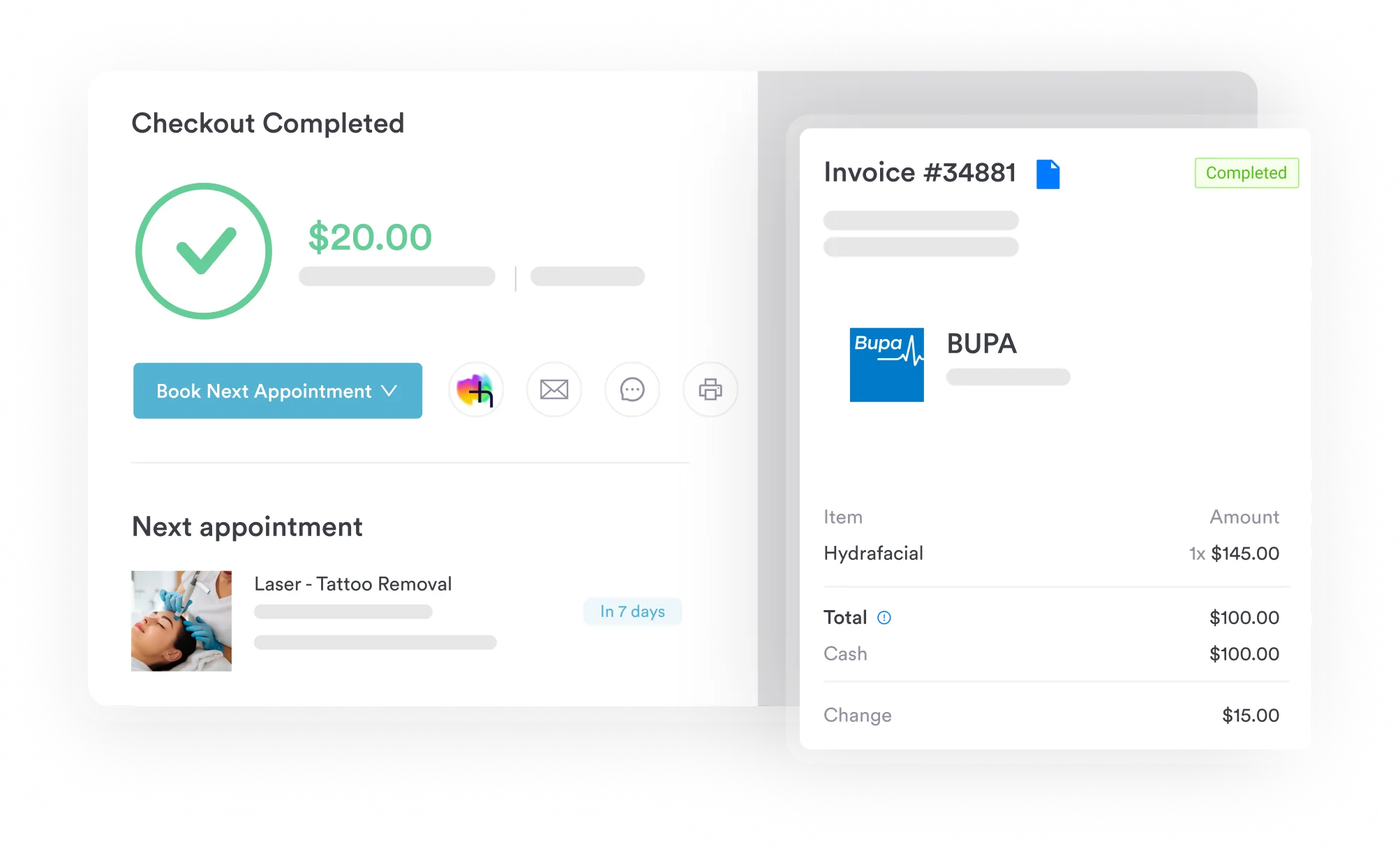
Practices with high volumes of polyneuropathy encounters, across nephrology, oncology, or endocrinology, benefit most from this approach. A billing workflow that enforces sequencing at the point of entry is more reliable than a post-coding review.

Pabau’s claims management module supports ICD-10 code lookup and sequencing within the billing process, helping your team catch diagnosis errors before claims reach the payer.

G63’s sequencing rule is non-negotiable: the underlying disease code goes on the claim first, or the claim comes back. That single habit, checked at the point of documentation rather than after a denial, removes most of the risk this code carries.
For practices with steady polyneuropathy volumes across nephrology, oncology, or endocrinology, that habit is easier to build into the workflow than enforce through manual review. Book a demo to see how Pabau’s claims management software flags G63 sequencing issues before a claim reaches the payer.

Need guidance on medical billing fundamentals? What is medical billing covers the end-to-end billing workflow, including how diagnosis codes flow from documentation to claim submission.
Want to understand clearinghouse claim processing? Claim.MD clearinghouse overview explains how electronic claims are validated and transmitted to payers for practices billing on CMS-1500 forms.
Looking to reduce billing errors systematically? Superbill documentation guide explains how structured superbills support accurate diagnosis and procedure code capture at the point of care.
ICD-10 Code G63 is a billable diagnosis code for polyneuropathy that occurs as a manifestation of an underlying disease classified elsewhere in the ICD-10-CM system. It applies when peripheral nerve damage is directly caused by a documented condition: amyloidosis, non-diabetic endocrine disease, metabolic disease, neoplasm, or nutritional deficiency. G63 always requires the underlying disease code to be sequenced first on the claim.
Yes, G63 is a billable and specific ICD-10-CM code valid for FY2026 (effective October 1, 2025) for HIPAA-covered transactions. However, G63 cannot appear as the principal or sole diagnosis on a claim. It must always be paired with and sequenced after the underlying disease code that caused the polyneuropathy.
G63 is used when a specific underlying cause for the polyneuropathy has been identified and documented. G62.9 (polyneuropathy, unspecified) is used when the cause is unknown or undocumented. Using G62.9 when a cause is documented is a specificity failure. Using G63 without sequencing the underlying disease code first is a sequencing error. The distinction comes down to what is documented in the clinical record.
The “code first” instruction means G63 is a manifestation code under the etiology/manifestation convention. The underlying disease (the cause of the polyneuropathy) must appear as the first-listed or principal diagnosis code on the claim. G63 is then listed as a secondary code to indicate the peripheral nerve complication. Reversing this order or using G63 alone will result in claim rejection or denial.
No. G63 is a manifestation code and cannot be the principal or primary diagnosis on a claim. By definition, it requires a preceding etiology code identifying the underlying disease that caused the polyneuropathy. Claims submitted with G63 as the sole or principal diagnosis will fail automated sequencing edits and be returned or denied by the payer.
A manifestation code identifies a condition that is the result or complication of another underlying disease. In ICD-10-CM, manifestation codes are always sequenced after the etiology code (the code for the underlying cause). G63 is a manifestation code because polyneuropathy in this context is a complication of another primary disease. The peripheral nerves are affected as a result of that condition, not as a standalone illness.