ICD-10 Code S82.242H: Displaced spiral tibial shaft fracture, delayed healing
ICD-10 Code S82.242H: Definition and code details ICD-10 Code S82.242H designate...

Last Updated: Oct 15, 2026
Billable Code Specific Code
H52.4 is the billable ICD-10-CM code for presbyopia.
Let Pabau's smart automation suggest the right codes, reduce claim denials, and keep your practice compliant—effortlessly.
Automate repetitive tasks and focus on what matters most—your patients.
Reduce coding errors and ensure compliance with the latest regulations.
Clean claims, fewer denials, and faster reimbursements.
Powerful insights and reporting to help your practice thrive.
HIPAA compliant SOC 2 certified GDPR-compliant Trusted by 4,000+ clinics worldwide

H52.4 is the sole billable ICD-10-CM code for presbyopia, valid for FY 2026 (effective October 1, 2025)
No subcategory codes exist under H52.4 – it is the terminal, fully specific code for age-related loss of near accommodation
CPT 92015 (refraction) and 92004/92014 (comprehensive eye exams) are the most common codes paired with H52.4; payer policies vary
Pabau’s claims management software and Claim.MD integration help optometry and ophthalmology practices submit H52.4 claims cleanly and track remittances
ICD-10 Code H52.4 describes presbyopia, the age-related loss of the eye’s ability to focus on nearby objects. According to CMS ICD-10-CM coding and billing guidance, H52.4 is a billable and specific diagnosis code. It is valid for reimbursement under the FY 2026 edition, effective October 1, 2025.
H52.4 sits within Chapter 7 of the ICD-10-CM Tabular List, Diseases of the Eye and Adnexa (codes H00-H59). It falls under the H52 subcategory for disorders of refraction and accommodation. It is the only code for presbyopia in ICD-10-CM – there are no H52.40, H52.41, or any further breakdowns. When presbyopia is the documented diagnosis, H52.4 is the code.
Presbyopia is not a disease in the traditional sense. The crystalline lens of the eye stiffens gradually with age, reducing its ability to change shape and bring near objects into focus. Most patients notice it between ages 40 and 45, typically when they start holding reading material at arm’s length. The condition is universal among aging adults and bilateral in almost all cases.
For coders, the clinical distinction that matters most is accommodation loss versus other refractive errors. Presbyopia is specifically about the dynamic focusing mechanism failing, not about the static refractive state of the eye (myopia, hypermetropia, or astigmatism). A patient can be myopic AND presbyopic simultaneously, in which case both H52.1x and H52.4 may be reported. Understanding this distinction prevents the most common coding error in this category: collapsing all near-vision complaints into one vague code.
The H52 category covers all disorders of refraction and accommodation. H52.4 is one of eight distinct conditions in this family. Knowing the sibling codes helps coders pick the right one when a patient presents with overlapping refractive conditions.
H52.7 (unspecified) is the most commonly miscoded fallback. If a patient’s record clearly documents age-related near-vision loss, H52.4 is the correct and more specific choice. Defaulting to H52.7 when H52.4 is supportable is a documentation error that can trigger payer audits.
ICD-10-CM does not carry any Includes notes specific to H52.4 itself. At the parent H52 category level, the Tabular List groups disorders of refraction and accommodation as one block. No Excludes1 or Excludes2 notes prevent H52.4 from being reported with other refractive codes in the same encounter.
Two coding guidance points apply directly to H52.4. First, it is appropriate to report H52.4 alongside other H52 sibling codes when a patient has documented coexisting conditions (for example, concurrent myopia and presbyopia). Second, H52.4 does not require laterality specification. Presbyopia affects both eyes simultaneously, so one code covers both without a bilateral qualifier. This is different from most H52.0, H52.1, and H52.2 codes, which require laterality subcategory selection.
The ICD-10-CM Official Guidelines for Coding and Reporting direct optometrists and ophthalmologists to code to the highest specificity the documentation supports. For presbyopia, that specificity ceiling is H52.4 itself. No additional character is needed or available.
A claim submitted with H52.4 needs the clinical record to support the diagnosis. Payers reviewing optometry claims want documentation that ties the code to a genuine clinical encounter, not a reflexive presbyopia stamp. Here is what the record needs to contain:
Proper documentation also supports submitting a clean claim on first pass. A record that names “presbyopia” explicitly, with supporting near-vision findings, is far less likely to trigger a medical necessity query. A record documenting only “near vision complaint” forces the coder to infer the diagnosis.
Staying on top of medical billing compliance practices for eye care reduces both claim denials and audit exposure. Optometry practices seeing high volumes of presbyopia patients benefit from a documentation checklist built into their intake workflow.
Build a presbyopia documentation shortcut in your EHR. Include a structured near-vision section: (1) chief complaint in patient’s own words, (2) near point of accommodation measured in centimeters, (3) near visual acuity uncorrected and corrected, (4) treatment recommended. This captures every element payers need to validate H52.4 without adding chart time.
H52.4 is a diagnosis code, not a procedure code. It goes on the claim alongside the CPT procedure code that describes what the clinician actually did during the visit. The CPT codes most frequently submitted with the presbyopia diagnosis code fall into three main groups, reflecting standard ophthalmology and optometry billing practice.
CPT 92015 (refraction) deserves a specific note: Medicare Part B does not cover routine refraction. Practices submitting 92015 to Medicare must be aware it will not be reimbursed and should communicate this to patients in advance. Tracking refraction coverage by payer is an important part of pre-visit eligibility verification.
The FDA approved Vuity (pilocarpine HCl ophthalmic solution 1.25%) for the treatment of presbyopia in 2021, creating a new billing dimension for H52.4. When a clinician prescribes or administers a pharmacologic presbyopia treatment, H52.4 remains the applicable diagnosis code. The coding challenge here is less about the ICD code and more about the procedure and drug billing that surrounds it.
Vuity is no longer the only option. Three more FDA-approved presbyopia eye drops have since reached the US market. Qlosi (pilocarpine HCl 0.4%, Orasis Pharmaceuticals), approved in 2023, reached US pharmacies in April 2025. Vizz (aceclidine 1.44%, LENZ Therapeutics) was approved in July 2025. Yuvezzi (carbachol and brimonidine tartrate, Tenpoint Therapeutics) followed in January 2026. All four drugs bill under H52.4 as the diagnosis code. Each carries its own NDC number, so the claim’s drug-identification line changes by product.
Prior authorization requirements vary considerably by payer for any of these presbyopia drops. Commercial plans with pharmacy benefit coverage may process the drug under the pharmacy benefit rather than the medical benefit, which changes the claim pathway. When submitting a medical-benefit claim for any of these presbyopia drops, H52.4 goes on the diagnosis line. The claim also carries the appropriate drug HCPCS or NDC code, plus the administration CPT code if applicable.
This billing scenario is one where clean, complete documentation at the encounter level pays dividends. Practices that capture presbyopia symptoms and treatment history during intake arrive at the billing stage with the record already structured for the claim.

Medicare’s position on presbyopia billing is straightforward but frequently misunderstood. Medicare Part B explicitly excludes routine vision examinations and the correction of refractive errors. This means that a visit where presbyopia (H52.4) is the sole reason for the encounter is generally not covered by Medicare. The prescription of reading glasses or contact lenses is also excluded from Medicare coverage.
Exceptions apply when a Medicare patient also has a covered medical eye condition, such as glaucoma monitoring, diabetic eye disease, or cataract evaluation. The portion of the visit tied to that condition may be reimbursable. In those cases, the claim should reflect both diagnoses, and the primary reason for the visit drives coverage. Verifying eligibility before the appointment helps practices catch these coverage exclusions before they turn into billing surprises. Coverage for presbyopia exams varies among non-Medicare commercial payers. Many vision benefit plans, including VSP, EyeMed, and Davis Vision, cover comprehensive eye exams and refraction under the vision benefit rather than the medical benefit. Coders need to know which benefit is being billed to select the right code set and modifier.
Optometry and ophthalmology practices see presbyopia patients across every age cohort over 40. The administrative burden of accurate H52.4 documentation scales with volume. A practice doing 30 or 40 refraction visits a day needs the coding workflow automated, not checked manually at the end of each chart.
Pabau’s claims management software integrates clinical documentation with billing submission, so the diagnosis captured in the clinical note flows directly into the claim without re-entry. For practices billing H52.4 with presbyopia eye drops, the structured record also simplifies prior authorization documentation. The Pabau integration with electronic claims via Claim.MD connects optometry practices to thousands of US payers. It supports real-time eligibility checks, electronic remittance advice, and clean claims for H52.4 encounters.
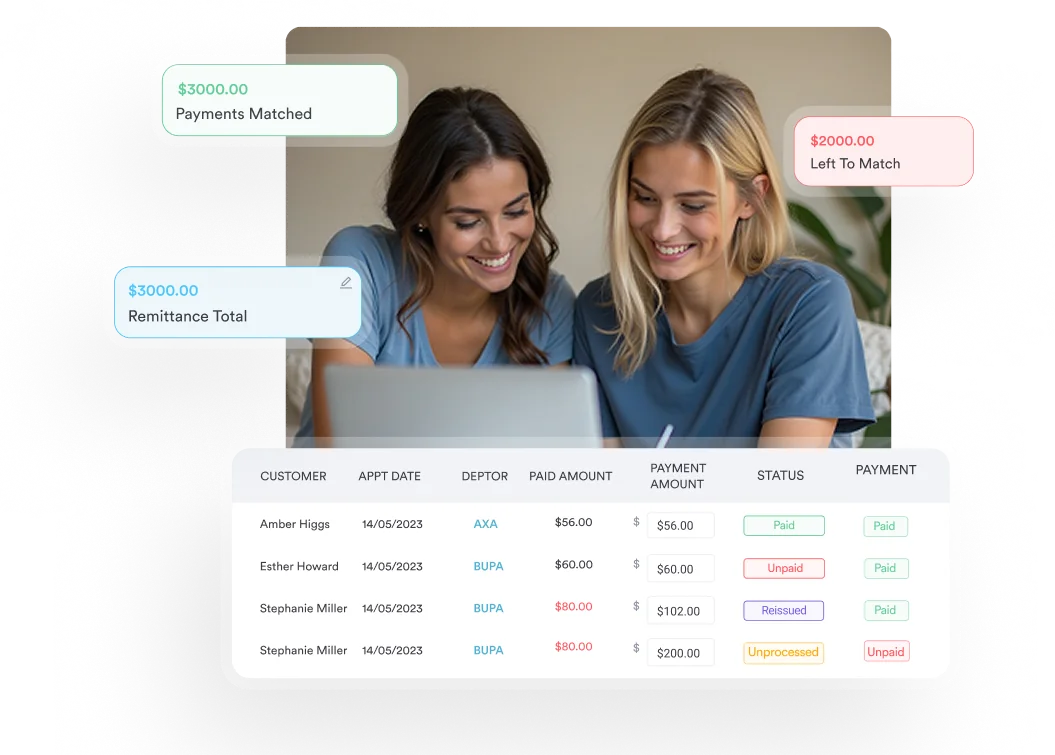
When an H52.4 claim is denied – most commonly because the payer classifies the visit as routine – Pabau’s denial management workflow tracks the CARC reason code. It then routes the claim for appeal or write-off. Practices also benefit from structured digital consent and intake forms that capture the clinical details supporting medical necessity before the visit even begins.
Run a monthly audit of your H52.4 claims: filter for denials coded as ‘routine vision’ by the payer, then check whether the underlying records document a covered medical eye condition alongside presbyopia. Even one rediscovered billable condition per day adds meaningful revenue at scale.

From ICD-10 code capture to claim submission, Pabau connects your clinical documentation to your billing workflow. Book a demo to see how practices reduce claim errors and speed up reimbursement.

H52.4 is the simplest code in the H52 family to select – one code, no laterality, no subcategories. The complexity sits in the documentation and billing layer around it. That means knowing when Medicare excludes the visit and which payers require prior authorization for eye drops. It also means pairing the code correctly with CPT procedure codes. Getting those details right at the clinical documentation stage, before the claim is generated, is where optometry practices cut their denial rate.
Pabau’s integrated billing and documentation platform helps practices capture H52.4-compliant records and push clean claims through the Claim.MD clearinghouse. Book a demo to see how Pabau simplifies H52.4 billing for your optometry practice.

Need to understand how clearinghouse submissions work? 837 file submission guide walks through the electronic claim format used for eye care and all other specialties.
Tracking remittances after H52.4 claims are adjudicated? Electronic remittance advice explained covers how ERAs work and how to reconcile payments automatically.
Want to reduce denial rates across your entire practice? Denial codes in medical billing breaks down the CARC codes you’ll see most often on optometry claims.
H52.4 is the ICD-10-CM diagnosis code for presbyopia, the age-related loss of the eye’s ability to focus on nearby objects. It is a billable, specific code within the H52 category for disorders of refraction and accommodation. It is valid for FY 2026, effective October 1, 2025.
Yes. H52.4 is a billable and specific ICD-10-CM code with no further subcategory breakdowns. It can be submitted directly on a claim without appending any additional characters. It is valid for reimbursement under the FY 2026 edition of ICD-10-CM.
The most common CPT codes paired with H52.4 are 92004 and 92014 for comprehensive ophthalmological services, and 92002 and 92012 for intermediate services. Refraction uses 92015, though Medicare does not cover it for routine refraction.
Generally no. Medicare Part B excludes routine vision exams and the correction of refractive errors, so an H52.4-only visit typically isn’t reimbursed. Coverage may apply when a medically necessary eye condition, such as glaucoma or diabetic retinopathy, is also documented and addressed during the same visit.
Yes. H52.4 is the diagnosis code for any FDA-approved presbyopia eye drop, including Vuity, Qlosi, Vizz, and Yuvezzi. Prior authorization requirements vary by payer, and the drug may process under the pharmacy benefit rather than the medical benefit.
The most frequent errors are defaulting to H52.7 (unspecified disorder of refraction) when H52.4 fits, and omitting near-vision exam findings from the clinical note. Another common error is failing to code a coexisting refractive error, such as myopia, separately when both conditions were assessed.