









CPT Code 20700: drug delivery device billing guide (2026)
Add-on codes are where billing errors quietly accumulate. CPT Code 20700 enters ...

Last Updated: August 19, 2026


HCPCS code E0249 is the durable replacement pad for a water circulating heat unit, and the descriptor limits it to replacement only.
Medicare denies E0249 as not reasonable and necessary under LCD L33784, because the E0217 system it belongs to is not covered.
No ICD-10 code and no KX modifier change that, since policy article A52502 lists both as N/A.
A replacement pad built for shorter term use belongs on A9999 instead, per the coding guidelines in A52502.
Get the ABN signed before delivery and append GA, so the pad lands on the patient’s invoice rather than your write-off column.
Pads wear out faster than pumps. Channels crack, a seam starts to leak, and the patient calls asking for a new pad rather than a new unit.
E0249 is the code for that pad, the durable replacement for a water circulating heat unit. Medicare denies it every time, and the reason has nothing to do with your diagnosis or your modifier.
LCD L33784 rules out the water circulating system itself, and it names the replacement pad in the same sentence. So the money on this line turns on the conversation before delivery, not on the claim form.
The official descriptor for E0249 is “pad for water circulating heat unit, for replacement only”. Two words carry the limit, replacement only.
The pad itself is flexible and holds a series of channels. Water heats in an external reservoir, and an electric pump pushes it through those channels against the patient’s skin.
Policy article A52502 defines the whole system under code E0217, which already includes the pump, the pad, and every accessory the pad needs to work.
So E0249 has no place on an initial supply. Bill E0217 and E0249 together for one delivery and you have billed the pad twice.
The denial comes from policy, not from anything on your claim. LCD L33784 compares the water circulating system to a plain electric pad and finds no case for it.
“It has not been established that a moist electric heating pad (E0215) or water circulating heat pad with pump (E0217) is reasonable and necessary.”
The measure it fails is “compared to a standard electric heating pad (E0210)”. Both alternatives lose on that comparison alone.
The policy calls a water circulating heating pad system “not medically necessary”. On that basis, “a replacement pump (E0236) or pad (E0249, A9999) will be denied as not reasonable and necessary.”
Your pad is named there, by code. There is no indication list to satisfy and no qualifying diagnosis to find, because Medicare settled the question at the level of the system.
Parts inherit the status of the equipment they belong to. Medicare will pay to keep a covered item running, and it will not fund upkeep on an item it never accepted.
Two objections come up at the front desk. Here is what each one is worth.
One code in this family carries genuine coverage. The policy calls a standard electric heating pad “reasonable and necessary” for four purposes:
E0210 has its own product definition to meet. The pad needs a fabric cover, a timing device for automatic shut-off, and certification by Underwriters Laboratories.
One patient group is ruled out by name. The policy treats a heating pad as not reasonable and necessary for pain from peripheral neuropathy, diabetic neuropathy included.
That gives your front desk a straight answer. A chiropractic practice sending a patient home with heat can bill E0210 and expect payment. Reach for the water circulating version and the claim dies, as does the moist pad under E0215.
Before you pick a code, the pad has a product test to pass. The coding guidelines in policy article A52502 set it out, and it turns on what the pad is made of.
E0249 is the durable pad for an E0217 system. It is made of rubber, heavy plastic, or durable fabric, it can be cleaned, and it is designed for long term use.
A replacement pad made of other material, built for shorter term use, must go on A9999 instead. So the pad on your shelf decides the code, not the system it fits.
Both replacement codes deny, so the choice looks academic. It is not. Your claim should describe the item on your invoice, and a contractor reading both together will notice when they disagree.
Two neighboring codes get grabbed by mistake. A4639 is the replacement pad for an infrared system under E0221, and E0239 is a portable hydrocollator unit rather than any kind of pad. Neither substitutes for E0249.
Write the pad’s material and expected life into your product records, not just its part number. That single field decides E0249 against A9999 on every future replacement, and it answers the coding question for whoever bills the next one.
With the code settled, the next instinct is to hunt for a diagnosis that unlocks payment. There is none. Policy article A52502 lists the ICD-10-CM codes that support medical necessity as N/A, and it lists the CPT and HCPCS modifiers as N/A too.
Suppliers still try. Here are the diagnoses that show up most on denied pad lines, and what each one achieves.
Accurate coding still earns its keep everywhere else you bill. Use the most specific code the record supports, and clear retired entries out of your templates. M54.5 has not been billable since October 1, 2021.
If the diagnosis cannot move this line, the modifier is the next place people look. Two modifiers matter here, GA and GZ. KX belongs to a different kind of policy and changes nothing on this claim.
The modifier says the coverage criteria in a policy have been met. L33784 sets none for E0249, and A52502 lists its modifier field as N/A.
The modifier does have a job elsewhere. On a policy that spells its criteria out, like the glucose monitor rules behind E0607, KX is how you attest that the patient met them.
Here it moves nothing, and it records a statement your file cannot support. That is a poor habit to spread across a book of DME business.
GA is the modifier with consequences. It shifts liability to the patient, so the remittance comes back as patient responsibility instead of a supplier write-off.
A predictable denial is not a reason for a thin file. Four records belong in it, and each one does a different job.
One old item no longer belongs on that list. CMS discontinued Certificates of Medical Necessity and DME Information Forms for dates of service on or after January 1, 2023.
Sending one now costs you time. Medicare returns claims that still carry CMN or DIF information, which delays the denial you need before you can bill the patient.
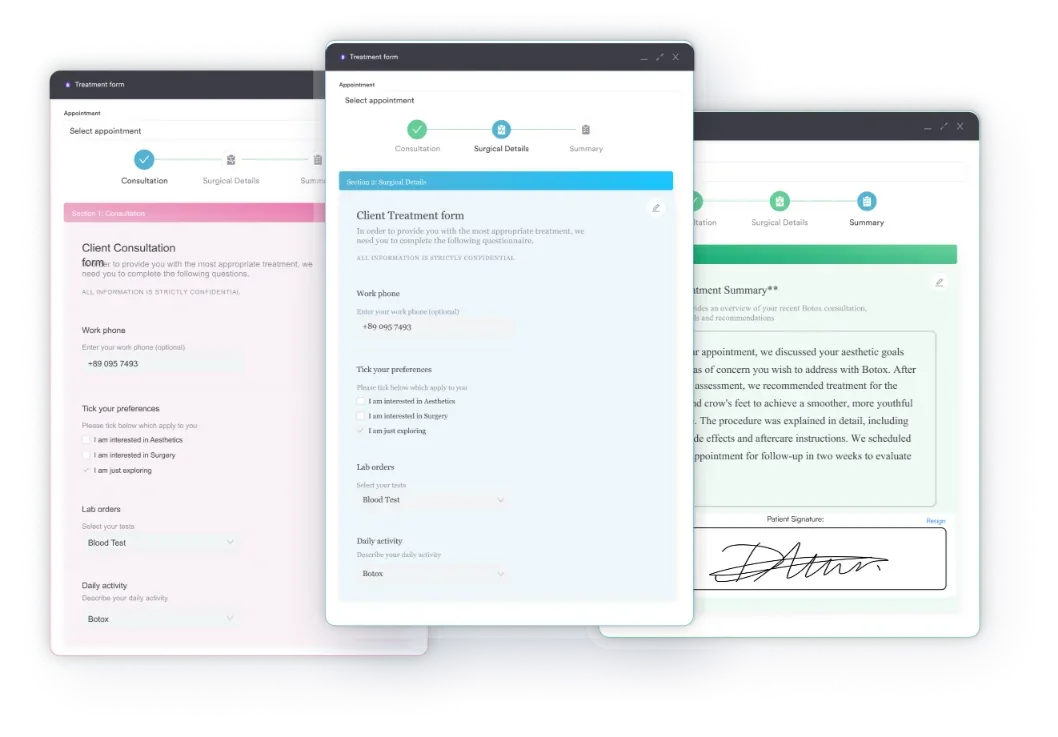
Neither L33784 nor A52502 asks for a CMN anywhere. If your checklist still does, it belongs to a workflow that ended in 2022. Digital intake forms in practice management software like Pabau make that correction quick to apply in one place.
There is no allowable amount to build a margin around. The line denies before any fee schedule figure comes into play, in 2026 as in every year before it.
One figure in the HCPCS record does look like payment. It classifies E0249 as inexpensive or routinely purchased equipment. That describes how Medicare would pay for a covered item in that class, and nothing more.
So price the pad yourself, and put that number on the ABN before the patient signs. Never quote a Medicare rate for this item, because there is no payment for the patient to share.
Covered rates for E0210 are a separate lookup. They live in the CMS DMEPOS fee schedule files rather than the physician fee schedule, and they vary by state. Those files carry the rest of the equipment list too, from a heating pad to a hospital bed under E0296.
Prior authorization applies to the items on the CMS Required Prior Authorization List, where it works as a condition of payment. It never creates coverage that a policy has already ruled out.
So an approval number would not change an E0249 remittance. L33784 answers the question for this pad before any authorization step begins.
Check the current contractor list while you are there. Two DME MACs now cover all four jurisdictions. Noridian handles A and D, while CGS handles B and C.
Older billing manuals still name NHIC and Palmetto GBA as DME MACs. Neither administers a jurisdiction today, so a checklist that routes your questions to them will send staff to the wrong place.
The sequence is short once you treat the denial as a step rather than a surprise. A physical therapy practice that stocks pads runs the same seven steps every time:
Put numbers on it and the workflow makes sense. Say the durable pad costs you $60 and you price it at $135 on the ABN.
The patient signs at that figure and takes the pad home. Medicare denies the line with patient responsibility on the remittance, so you invoice $135 and write off nothing.
One step carries the whole thing. Collect the signature after the pad has left the building and the sequence collapses, because a late notice transfers no liability.
Run one check before the pad leaves your shelf. The written order is on file. The ABN is signed, with your price on it. The delivery receipt is ready. GA is queued for the claim line, and KX is nowhere near it.
Losses on this code come from working the claim instead of working the conversation. Five errors account for most of them.
Practices that supply equipment alongside clinical care feel these twice, once in the write-off and once in the rework. Keep the policies straight as your shelf grows, because a lambswool pad under E0189 answers to a different coverage rule entirely.
Nothing about E0249 is a coding puzzle. The money turns on what you capture before delivery, and what you chase after the denial. That is where Pabau earns its place.
Pabau’s digital forms hold the written order, the priced ABN, and the signed delivery receipt on one patient record. The clinical note sits beside them, so a records request takes minutes instead of an afternoon.
Payment happens on the patient side. Pabau raises the invoice against that record, takes the card payment, and keeps the outstanding balance in view until it clears.
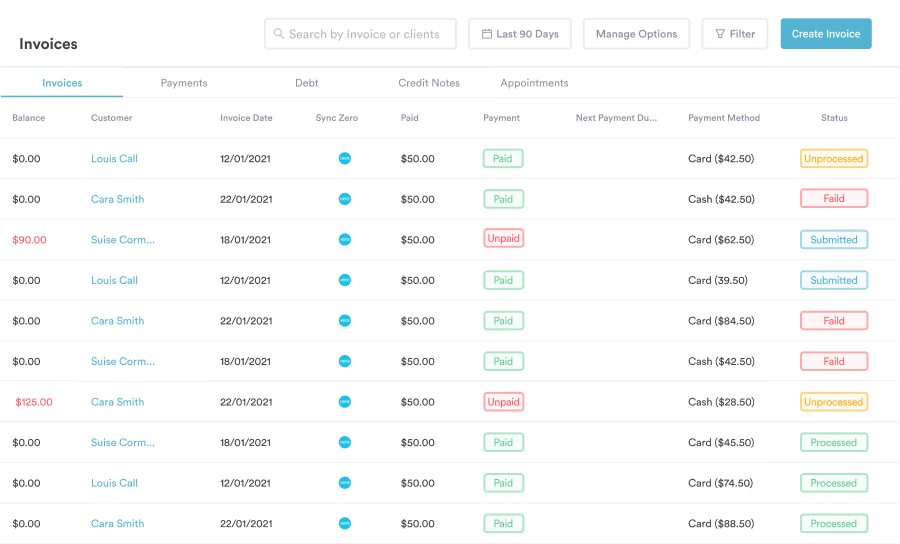
Be clear about where the Medicare claim itself goes. Pabau’s claims management is built for private insurer billing, so a DMEPOS line still leaves through your Medicare billing channel.
What Pabau holds is the file behind that claim, and the invoice in front of it. Built-in reporting then shows which items keep landing as patient balances, so a pattern like this one surfaces in weeks.

Pabau holds the written order, the signed notice, and the delivery receipt on one patient record, then raises the invoice against it. A predictable denial reaches the patient’s bill instead of your losses.

E0249 is a retail sale with a claim form attached. The policy names the pad, the denial arrives on schedule, and no amount of coding skill moves it.
So build the workflow around that. Offer E0210 when a heating pad is clinically appropriate, check the pad’s material before you pick the code, and get the ABN signed before delivery.
Then append GA, leave KX off the line, and raise the invoice the day the remittance lands. Pabau’s medical practice management software keeps notes, forms, and invoices on one record. Book a demo to see how it keeps DME paperwork ready before the claim goes out.

Supplying the whole system rather than the pad? HCPCS code E0217 covers the parent water circulating heat pad and the patient conversation that goes with it.
Is the pump the part that failed? HCPCS code E0236 walks through the replacement pump and the same ABN workflow from the motor’s side.
Supplying cold therapy as well as heat? HCPCS code E0218 explains how a fluid circulating cold pad with pump is treated, which is a separate policy question.
Replacing a pad on an infrared system? HCPCS code A4639 is the replacement pad code for infrared heating pad systems, and it is often grabbed by mistake.
Heating a body part before therapy instead? HCPCS code E0239 sets out the portable hydrocollator unit, which is a device rather than a pad.
Because option 1 on the ABN asks Medicare for a written decision. The remittance is what turns the charge into patient responsibility, and it gives the patient appeal rights. Choose option 2 instead and no claim goes out, so the patient simply pays you.
No. Medigap helps with deductibles and coinsurance on items Medicare covers, so it follows the same decision. A supplemental plan sold outside Medigap may work differently, so read its exclusions before you promise the patient anything.
An Advantage plan must cover at least what Original Medicare covers, and its reviewers apply the same coverage policies. Some plans add benefits on top of that. Call the plan and check its own equipment rules before you quote a price.
Possibly. State Medicaid programs run their own equipment lists and authorization rules, and commercial payers write their own policies. Check the plan’s coverage first. For a patient with both, Medicaid wants the Medicare denial before it looks at the line.
Keep the original for five years after you finish delivering the care, unless state law asks for longer. Retain it even when the patient refused to sign or declined the pad. An electronic scan of the signed paper counts.
Yes. The line goes to a DME MAC, which pays enrolled DMEPOS suppliers only. Enrollment runs on form CMS-855S, and a practice handing equipment to its own patients still needs it. Without it the claim is rejected before anyone reads the policy.