

HCPCS code E0198: Water pressure pad billing guide
HCPCS code E0198 is a water pad for a standard mattress HCPCS code E0198 is the ...

Last Updated: Oct 13, 2026
E0218 is the HCPCS Level II code for fluid circulating cold pad with pump, any type.
Most DME billing denials for cold therapy equipment come down to one preventable mistake: submitting HCPCS Code E0218 without complete documentation of medical necessity.
Medicare Administrative Contractors (MACs) routinely flag these claims for review, and missing a single element in the patient record can delay or forfeit reimbursement entirely.
Let Pabau's smart automation suggest the right codes, reduce claim denials, and keep your practice compliant—effortlessly.
Automate repetitive tasks and focus on what matters most—your patients.
Reduce coding errors and ensure compliance with the latest regulations.
Clean claims, fewer denials, and faster reimbursements.
Powerful insights and reporting to help your practice thrive.
HIPAA compliant SOC 2 certified GDPR-compliant Trusted by 4,000+ clinics worldwide

HCPCS Code E0218 describes a fluid circulating cold pad with a pump, any type — a durable medical equipment (DME) code under HCPCS Level II.
Medicare Part B covers E0218 subject to medical necessity criteria under CMS Policy Article A52460, and a physician order is required.
Reimbursement rates for E0218 vary by locality, so always verify against the current CMS DMEPOS fee schedule before submitting claims.
Pabau’s claims management software helps practices track HCPCS E-code claims, documentation requirements, and DME billing workflows in one system.
HCPCS Code E0218 identifies a fluid circulating cold pad with a pump, any type. It is a claims management staple for practices billing durable medical equipment to Medicare and commercial payers following orthopedic, sports medicine, or post-surgical care.
The code sits within HCPCS Level II, the code set maintained by the Centers for Medicare and Medicaid Services (CMS). HCPCS Level II covers products and services not captured by CPT codes.
The “any type” qualifier in the long description is significant. It means E0218 covers any device that circulates chilled fluid through a pad on the body, regardless of brand or mechanism. Any such device qualifies as long as it meets the DME definition.
Practices billing for physical therapy or sports medicine services frequently encounter this code in post-treatment DME provisioning workflows.
Medicare Part B covers HCPCS Code E0218 as durable medical equipment when medical necessity is established and documented. Coverage is governed by CMS Policy Article A52460, which applies across the Medicare DME cold therapy code group. Meeting coverage criteria is a prerequisite for clean claim submission, not an afterthought.
Medical necessity for E0218 typically requires a documented diagnosis involving acute pain, post-surgical recovery, or musculoskeletal injury where cold therapy is a clinically appropriate intervention. The patient’s treating physician must determine and document that the equipment is necessary for the patient’s condition in the home setting.
Practices serving chiropractic or occupational therapy patient populations should pay particular attention to MAC-specific LCDs, which can differ significantly from one jurisdiction to another.
Submitting HCPCS Code E0218 correctly requires attention to place of service, bill type, and claim structure. Most DME claims for E0218 are submitted by DMEPOS suppliers rather than treating clinicians. The treating practice is still responsible for generating the documentation that makes the claim defensible. Here is what billers need to know.
One common billing error with E0218 is submitting without confirming the supplier is enrolled as a Medicare DMEPOS supplier. The supplier’s National Provider Identifier (NPI) must be linked to an active DMEPOS enrollment. A claim from an unenrolled supplier will be denied regardless of how well the rest of the claim is prepared.
Use the AAPC HCPCS code reference to confirm the current official description before each annual billing cycle. CMS updates the HCPCS Level II code set each January, and while E0218 has remained stable, verifying active status annually is good practice.
When billing HCPCS Code E0218 to commercial payers, request a copy of their DME coverage policy before submitting. Many commercial payers follow Medicare’s medical necessity framework but have their own prior authorization requirements or quantity limits. Getting payer-specific rules upfront avoids the most common commercial DME denial reasons.
Before submitting an E0218 claim, run a quick pre-submission audit. Confirm the supplier’s DMEPOS enrollment is active and verify the MAC’s LCD for diagnosis-specific coverage restrictions. Also check that the physician order on file matches the diagnosis code on the claim. These checks catch most preventable cold therapy DME denials.
Documentation failures are the leading reason E0218 claims are denied or sent to audit. Medicare requires the treating physician to generate specific records before or at the time the equipment is dispensed. Retroactive documentation created after a claim audit almost never satisfies CMS reviewers.
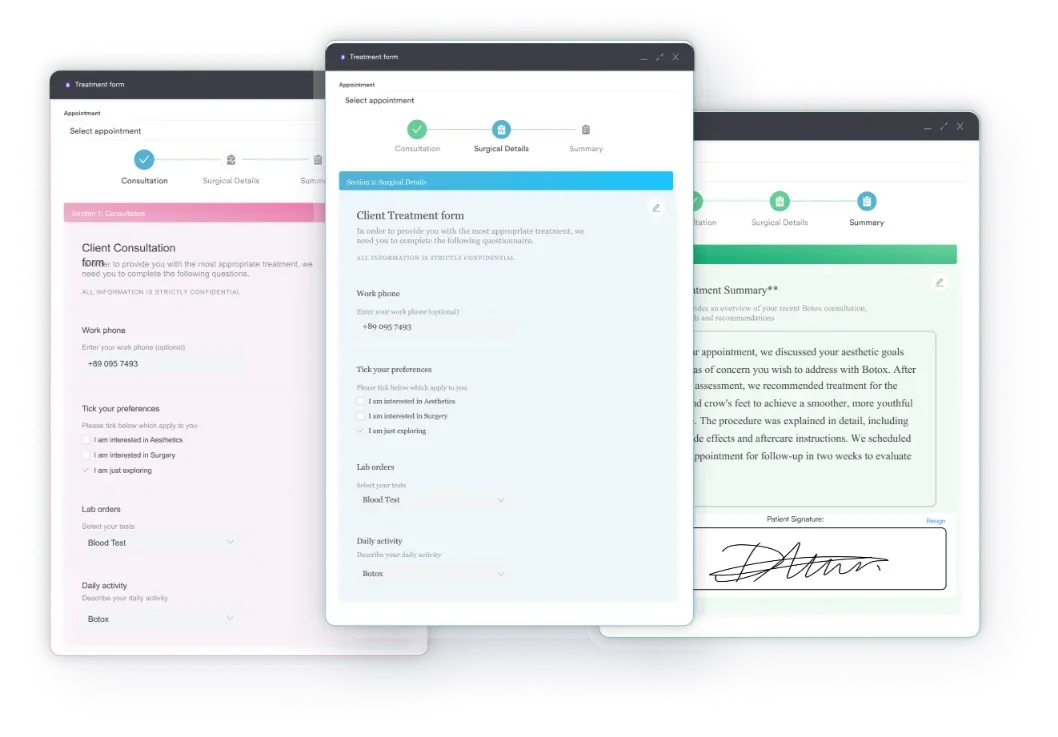
Practices that use digital intake and consent forms can structure their clinical documentation workflows to capture these elements at the point of care. This reduces the administrative burden of post-hoc documentation retrieval during audits. Keeping complete patient records is also foundational to broader HIPAA compliance for clinic software environments.
Medicare reimbursement for HCPCS Code E0218 is governed by the CMS DMEPOS fee schedule, which CMS updates annually. Rates vary by payment locality, so the allowable amount for a claim submitted in California will differ from one submitted in Ohio.
CMS publishes these rates each year in the DMEPOS fee schedule files available through its website.
Locality-specific allowable amounts for E0218 can shift based on annual fee schedule adjustments and geographic practice cost indices.
Billers should pull current figures directly from the CMS fee schedule lookup tool rather than relying on third-party figures that may lag behind official updates. CMS also publishes annual fee schedule release files alongside its standard coding overview materials.
One detail billers sometimes overlook is competitive bidding areas (CBAs). Established under the Medicare DMEPOS Competitive Bidding Program, CBAs can result in lower reimbursement rates than the national fee schedule in affected localities.
If the patient’s service address falls within a CBA, the competitive bid amount takes precedence over the standard fee schedule rate for covered items. Verify using the CGS Medicare coding verification guidance.
Selecting the right code from the cold therapy HCPCS E-code group is critical. Using E0218 when a related code more precisely describes the equipment supplied can trigger a denial or a request for additional documentation. The crosswalk below covers the codes listed in CMS Policy Article A52460 plus the miscellaneous fallback option.
The most frequent coding confusion in this group is between E0217 (water circulating heat pad) and E0218 (fluid circulating cold pad). The clinical distinction is straightforward: temperature. The equipment supplying chilled fluid for cold therapy maps to E0218; equipment supplying warm fluid maps to E0217. Submitting E0217 for a cold therapy device is a coding error that will generate a denial when the clinical notes reference cold application. Billing compliance asks a narrower question than coding accuracy: can the practice defend this claim on review.
Practices billing DME across physical therapy, sports medicine, and chiropractic specialties benefit from a structured crosswalk reference in their internal coding workflow. This reduces the risk of mis-selection.
A medical forms and documentation workflow captures equipment type at the point of prescription. This helps ensure the right code reaches the billing team every time.
Practices that bill HCPCS codes like E0218 across multiple payers face a familiar challenge. The clinical record lives in one system, and the billing workflow lives in another. Documentation errors creep in whenever staff move information between the two. Pabau’s claims management software keeps both in the same place.
Within Pabau, teams can attach physician orders, medical necessity documentation, and delivery confirmations directly to the patient record. When a claim is prepared, the billing team works from the same record without re-entering data or chasing down clinical staff for supporting documents.
This is particularly useful for practices managing DME billing alongside clinical appointment workflows, such as patient compliance tracking and post-treatment follow-up protocols.
Physical therapy, chiropractic, and sports medicine practices routinely prescribe DME as part of treatment plans. Keeping billing and clinical records in one system reduces per-claim administrative overhead for these teams.
Teams can also use Pabau’s scheduling tools to coordinate equipment handoffs with treatment appointments. Pabau’s billing code reference library also covers related guides such as HCPCS Code E0197.

Pabau’s claims management tools bring HCPCS E-code claims, documentation, and DME billing into one integrated system. Billing staff never switch between separate software and patient records.

Submitting HCPCS Code E0218 correctly is more a documentation exercise than a coding one. The code itself has stayed stable, but reimbursement depends on the paperwork built around it. Practices that treat the physician order and medical necessity note as part of the equipment order see fewer of these claims returned. Waiting to assemble that paperwork only after a denial arrives is the costlier path.
Pabau’s digital forms and integrated claims management workflows help practices keep documentation audit-ready from the moment a physician order is created. To see how Pabau handles DME billing documentation in a clinical setting, book a demo with the team.

Billing a related DME equipment code? HCPCS Code E0197 walks through Medicare’s coverage and billing rules for air pressure pad equipment.
Billing an ampicillin injection? Ampicillin injection billing guide explains how to bill a 1 gram dose as two units under Medicare ASP.
Billing an injectable drug on the same claim? The HCPCS code J0745 billing guide covers how to report a codeine phosphate injection billed per 30 mg.
Billing an antibiotic infusion too? Daptomycin injection billing guide explains how to bill daptomycin injections per 1 mg for serious bacterial infections.
HCPCS Code E0218 is a durable medical equipment (DME) code under HCPCS Level II. It describes a fluid circulating cold pad with a pump, any type. DMEPOS suppliers use it to bill Medicare and commercial payers for cold therapy devices applied to the patient’s body. These devices typically support post-surgical recovery or musculoskeletal injury management in the home setting.
Yes, Medicare Part B covers HCPCS Code E0218 when medical necessity is established and properly documented, per CMS Policy Article A52460. Coverage requires a physician order, a supported diagnosis, and documentation confirming the equipment is medically necessary for home use. Additional conditions may apply under the applicable Medicare Administrative Contractor’s Local Coverage Determination.
Required documentation for HCPCS Code E0218 includes a physician order predating equipment delivery and clinical notes establishing medical necessity. It also requires ICD-10-CM diagnosis codes supported by the clinical record and a signed delivery receipt from the patient. Some MACs also require documentation of a face-to-face encounter between the patient and the treating practitioner.
Reimbursement rates for HCPCS Code E0218 vary by CMS payment locality and are updated annually in the DMEPOS fee schedule. Billers should retrieve current locality-specific rates directly from the CMS fee schedule lookup tool rather than relying on static third-party figures. Competitive bidding areas may also affect the allowable amount in certain ZIP codes.
E0218 (fluid circulating cold pad with pump) is used for cold therapy. E0217 (water circulating heat pad with pump) is the matching code for heat therapy. The distinction is temperature: if the device delivers cold fluid to the pad, E0218 is the correct code. Submitting E0217 for a cold therapy device is a coding error that will generate a denial when clinical notes reference cold application.
HCPCS Code E0218 applies to the durable medical equipment (the fluid circulating cold pad device) provided to the patient for home use. Cryotherapy CPT codes apply to in-office procedures where a clinician applies therapeutic cryotherapy directly to tissue during a clinical encounter. Use E0218 for DME billing when the device goes home with the patient. Use the applicable cryotherapy CPT code for in-office treatment procedures performed by a clinician.



