

HCPCS code E0198: Water pressure pad billing guide
HCPCS code E0198 is a water pad for a standard mattress HCPCS code E0198 is the ...

Last Updated: Oct 13, 2026
E0292 is the HCPCS Level II code for hospital bed, variable height, hi-lo, without side rails, with mattress.
That one distinction sets up everything else about the code, from the coverage test to what the medical record has to prove. Here is how each piece works.
Let Pabau's smart automation suggest the right codes, reduce claim denials, and keep your practice compliant—effortlessly.
Automate repetitive tasks and focus on what matters most—your patients.
Reduce coding errors and ensure compliance with the latest regulations.
Clean claims, fewer denials, and faster reimbursements.
Powerful insights and reporting to help your practice thrive.
HIPAA compliant SOC 2 certified GDPR-compliant Trusted by 4,000+ clinics worldwide

HCPCS code E0292 is a hospital bed, variable height, hi-lo, without side rails, with mattress, paid as capped rental DME under Medicare Part B.
Side rails are not part of E0292. They bill separately as E0305 (half length) or E0310 (full length). A hi-lo bed with rails built into the frame is E0255.
Coverage takes two findings. The patient must meet a criterion for a fixed height bed and need a bed height a fixed frame cannot provide for transfers.
CMS retired CMNs and DIFs for dates of service on or after January 1, 2023. A Standard Written Order now carries the order requirement.
E0292 is not on the face-to-face and written order prior to delivery list. E0290, E0301, and E0304 were added to it on August 12, 2024.
Practice management software like Pabau keeps the order, the clinical notes behind it, and the delivery record on one patient file for audits.
The official long descriptor for HCPCS code E0292 is: Hospital bed, variable height, hi-lo, without side rails, with mattress. It is a Level II HCPCS code maintained by the Centers for Medicare & Medicaid Services (CMS). Level II codes bill durable medical equipment, prosthetics, orthotics, and supplies (DMEPOS).
The frame raises and lowers as a whole, which is the hi-lo mechanism, and a mattress comes with it. Drop the height adjustment and the bed is fixed height, coded E0290 or E0291. Drop the mattress and it is E0293.
Nothing in that descriptor mentions rails, and the omission is deliberate.
Rails are separate items with their own codes: E0305 for half length rails and E0310 for full length rails.
The E0250 to E0266 family covers the same four bed types with rails written into the descriptor. E0255 is the hi-lo bed with any type side rails and a mattress. That descriptor gets pasted onto E0292 more often than any other error in this family.
So the decision comes down to the equipment itself. If rails are an integral part of the frame you deliver, the with-rails code describes that bed. If the frame has no rails and the patient’s condition calls for them, E0292 plus E0305 or E0310 is the accurate pairing.
Rails are covered as an accessory when the patient’s condition requires them and the bed they attach to is itself covered. Above E0301 the pattern flips again. The heavy duty extra wide beds, E0301 through E0304, carry side rails in the descriptor, so no rail code is added.
Photograph the delivered bed at setup and file the image with the delivery note. A picture of the frame, bare or with rails fitted, settles the E0292 versus E0255 question later. Reviewers do ask what was actually delivered to the home.
Medicare pays for E0292 only when the record shows the patient needs a height-adjustable bed. The DME MAC local coverage determination for hospital beds and accessories (L33820) sets a two-part test, and both parts have to be met.
First, the patient has to meet at least one criterion for a fixed height hospital bed:
Second, on top of one of those, a variable height bed needs its own finding. The patient must require a bed height a fixed height hospital bed cannot provide. The reason has to be transfers, to a chair, a wheelchair, or a standing position.
That second finding is where E0292 claims most often fail review. Notes that justify a hospital bed in general, with nothing said about transfer height, support E0290 instead. The reviewer downgrades the code and recovers the difference.
The diagnosis driving medical necessity belongs in the treating practitioner’s own records, not only on the order. Conditions that commonly support E0292 include advanced COPD, severe congestive heart failure, post-surgical recovery that requires elevation, and musculoskeletal disease that makes transfers unsafe.
Incomplete documentation is the leading cause of hospital bed denials, and most of it is a filing problem rather than a clinical one. Digital forms and structured records make an audit-ready package far easier to keep for every DME claim.
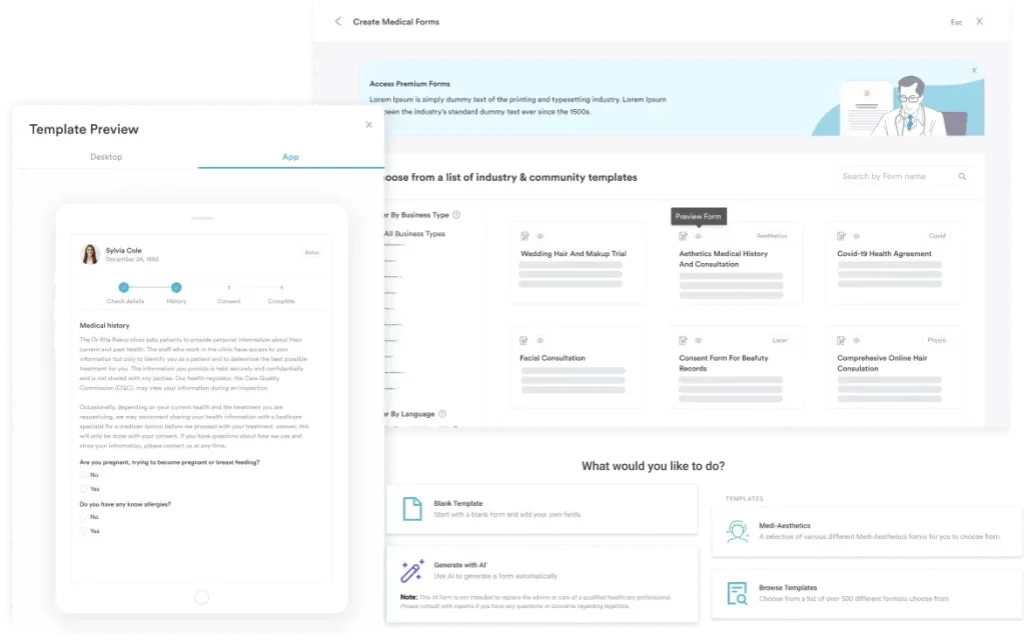
One item on the old checklist is gone. CMS discontinued Certificates of Medical Necessity and DME Information Forms for dates of service from January 1, 2023, in MLN Matters article SE22002. A file still built around a CMN, or around the older Detailed Written Order, is documenting to a retired standard.
Keep the whole package for the duration of the rental and for the CMS retention period after the last date of service. Standardized medical forms cut the risk that a required field is missed at the encounter. A compliance checklist turns that into a repeatable routine.
HIPAA rules govern how those records are stored and transmitted through the billing process. The guidance on HIPAA compliance covers what your storage and transmission practices have to meet.
E0292 does not sit on Medicare’s required face-to-face encounter and written order prior to delivery (WOPD) list. Three codes in the same bed family do, which is where the confusion starts.
Effective August 12, 2024, CMS added E0290, E0301, and E0304 to its national face-to-face and WOPD list. That came through the DMEPOS Master List update published in May 2024, so it applies in all four DME MAC jurisdictions. Each DME MAC then issued its own notice, which is why the change often reads as a local one. Patients who claim reimbursement themselves need an itemized receipt, which is what a superbill template sets out.
For those three codes, the supplier must hold a valid SWO before delivery. The practitioner also has to document a face-to-face encounter within the six months before the order date.
None of that is prior authorization. Prior authorization is a separate CMS program with its own list of codes and its own submission process. Check that list on its own terms rather than assuming a face-to-face requirement implies an approval step.
Medicare pays E0292 through the DMEPOS fee schedule, which CMS updates each year.
Hospital beds fall under the capped rental methodology, so Medicare pays a monthly rental amount rather than a lump sum. Verify current amounts in the CMS DMEPOS fee schedule files, not the physician fee schedule lookup.
Suppliers in competitive bidding areas bill contract supplier pricing, and non-bid rates do not apply there. Confirm which rate category governs the patient’s ZIP code before the first claim. Medicare billing overall runs through several claiming channels and payment models beyond this fee schedule.
Refresh the DMEPOS fee schedule file every January. CMS posts updated amounts for the new year, and rail codes E0305 and E0310 change alongside the bed codes. Load all three into your billing system at once so a rail line never prices off last year’s file.
Modifier choice decides whether a bed claim pays or denies. On an E0292 line, the modifier tells the payer what kind of transaction this is and whether the medical necessity documentation is on file.
Most rental claims carry KX and RR together. KX is only appropriate when the criteria are met and the records are already in the file at billing. Appending it out of habit creates audit exposure rather than avoiding it.
Picking E0292 over an adjacent code is the most common coding error in this family. Each code pins down a specific combination of height adjustment, side rails, mattress, and weight capacity, and the equipment delivered has to match all four.
Two patterns in that table are worth committing to memory. Everything from E0290 to E0297 excludes rails, and everything from E0301 upward includes them.
E0294 and E0295 are the semi-electric pair in this block, so a semi-electric bed with rails built in belongs to E0260 or E0261 or E0261 instead.
The total electric codes carry a coverage trap rather than a coding one. L33820 treats powered height adjustment as a convenience feature, so E0296 and E0297 are denied as not reasonable and necessary. A patient who genuinely needs a hi-lo frame is coded E0292, not upgraded to total electric.
A bed furnished under E0292 will eventually need a repair or a replacement, and the rules differ sharply from new equipment billing.
Paperless records make it far easier to retrieve the original order, the delivery note, and the service history that these claims depend on.
Start with the modifier, because the one most often quoted for repairs no longer exists. CMS deleted modifier RP from HCPCS effective December 31, 2008. Use RB on the part replaced during a repair, and RA when the whole item is replaced.
Record the title transfer date in the patient’s file the month it happens. That date is the line between supplier-owned repairs and billable repairs under RB. Hunting for it years later is what turns a simple repair claim into a denial.
An E0292 claim runs through five steps, and two of them account for most denials. The order has to exist before the bed is delivered, and the transfer finding has to exist before the order.
Run these checks on the first claim of every hospital bed rental. Each one takes a minute, and together they catch the errors that cost a month of rent.
The most expensive mistake is coding from the invoice instead of the frame. A hi-lo bed with rails built in is E0255, so billing E0292 with a rail code describes equipment nobody delivered.
Next comes the note that justifies a hospital bed and stops there. Reviewers read it, find nothing about transfer height, and pay E0290 instead. The difference between the two codes comes back out of your payment.
Third is KX appended out of habit. Adding it before the supporting records are on file misstates what the supplier can produce on request. A clean denial would have been cheaper.
Most E0292 denials trace back to paperwork that exists somewhere but cannot be produced on request. Practice management software like Pabau keeps the order, the clinical notes behind it, and the delivery record on the same patient file.
Pabau’s digital forms capture the practitioner’s findings at the encounter, including the transfer limitation that a variable height bed depends on. Custom fields let you record the make, model, mattress, and any rails supplied, so the equipment detail is written down once instead of reconstructed later.
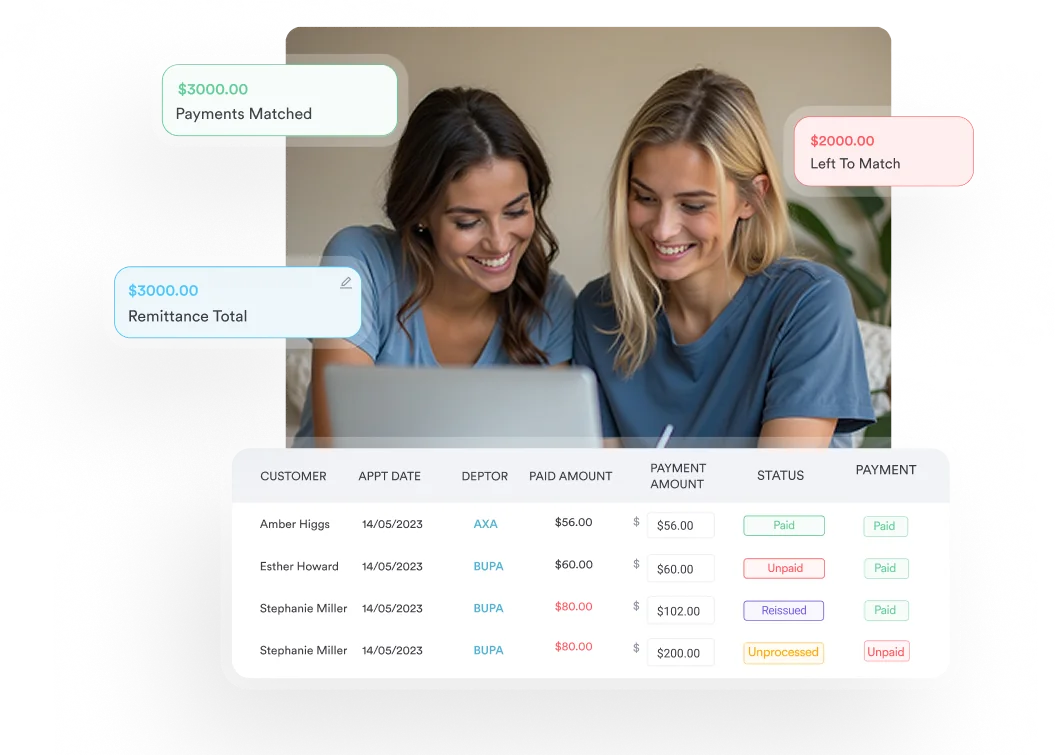
On the insurer side, Pabau’s claims and billing tools validate insurer details before a claim leaves the practice. Medicare DMEPOS claims still go out through your DME billing system, with Pabau holding the clinical record that sits behind them.

Pabau keeps orders, clinical notes, and delivery records on one patient file, so the documentation a reviewer asks for is already assembled.

Code the bed you delivered, not the bed on the invoice. Walk out to the frame, look at whether the rails belong to it, and let that answer pick between E0292 and E0255.
Then ask for the transfer finding while the patient is still in front of the practitioner. No amount of later paperwork can add a note that nobody wrote. That one line is what separates a paid E0292 from a downgrade to E0290.
Get those two habits right and the rest of the bed rules become routine. Pabau holds the intake form, the clinical note, and the signed delivery record in one place for each patient. To see how it fits your documentation workflow, book a demo.

Need the same frame without a mattress? HCPCS code E0293 covers the hi-lo bed billed when the mattress is not supplied.
Billing the rails alongside the bed? HCPCS code E0310 explains the full length side rail code and when half length rails apply instead.
Patient needs frequent position changes rather than transfer height? HCPCS code E0260 covers the semi-electric bed and its own coverage test.
Coding hematemesis or coffee ground emesis? Coffee ground emesis coding covers this code for vomited blood signaling upper gastrointestinal bleeding that needs immediate attention.
E0292 is a hospital bed, variable height, hi-lo, without side rails, with mattress. It is a Level II HCPCS code billed as capped rental durable medical equipment under Medicare Part B.
No. Rails are not in the descriptor. Bill E0305 for half length rails or E0310 for full length ones, on separate lines. A hi-lo bed with rails built in is E0255.
E0290 is a fixed height bed with a mattress and no rails. E0292 adds the hi-lo mechanism. To bill E0292, the record must show the patient needs a bed height a fixed frame cannot provide for transfers.
A Standard Written Order, practitioner records supporting the L33820 criteria, face-to-face encounter notes, signed proof of delivery, and evidence of continued need during the rental. CMNs and DIFs ended in January 2023.
E0292 is not on Medicare’s face-to-face and written order prior to delivery list. CMS added E0290, E0301, and E0304 to it effective August 12, 2024, in all four DME MAC jurisdictions. Check the current list before delivery.
KX and RR cover most monthly rental claims. NU applies to new purchases and UE to used equipment. GA and GZ handle expected denials. Repairs use RB, replacements use RA, and modifier RP was deleted in 2008.
E0292 is a capped rental item, so Medicare pays a monthly amount from the DMEPOS fee schedule for up to 13 months. Amounts vary by jurisdiction and competitive bidding status, and CMS updates the files each January.



